Getting the transcript
Reading the captions from YouTube. A video nobody has opened here before takes 10 to 30 seconds; this page fills in on its own.
Getting the transcript
Reading the captions from YouTube. A video nobody has opened here before takes 10 to 30 seconds; this page fills in on its own.
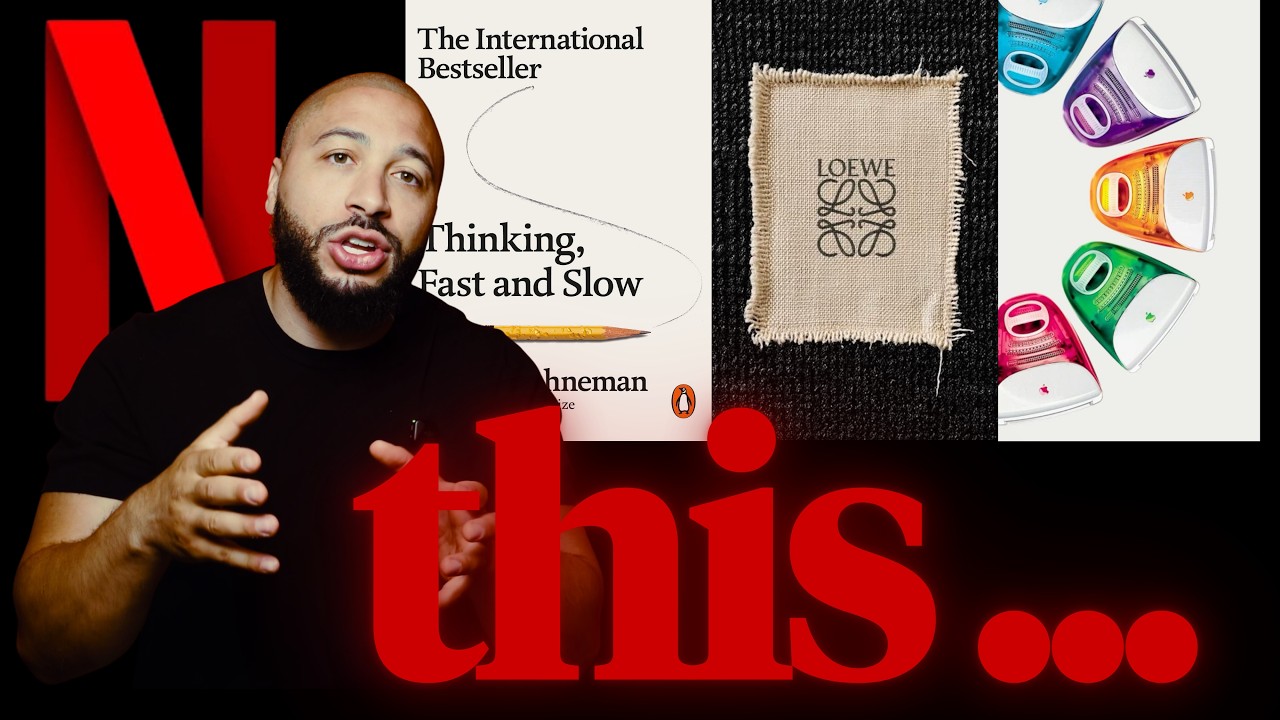
Stefan James · @stefanjames.brandbuilding
Words
4,266
Runtime
22:46
Speaking pace
187wpm
Reading time
18min
187 words per minute, between the 181 median and the 201 75th percentile of 349 measured videos. That distribution comes from the 349-video hook study.
Opening (first 30 seconds)
If you're building a premium or luxury brand, you need to be doing this. See, most founders spend their time improving the product. Premium founders spend their time improving perception, because perception changes everything. See, the same product can feel cheap or premium. It can feel mass market or it can feel luxury, exclusive, limited. And often, the difference has very little to do with the product itself. It has everything to do with psychology. See, in the last video, I showed you five psychological principles that premium brands use to engineer desire. And
94 words, the words spoken in the first 30 seconds at 187 words per minute.
Free, no signup. See how the first 30 seconds hold attention, with rewrites.
Sentence shape
| Measure | This transcript |
|---|---|
| Sentences | 351 |
| Average words per sentence | 12.2 |
| Longest sentence | 50 words |
| Questions asked | 29 |
| Sentences containing a number | 19 |
Most used terms
Filler phrases
30 in total: like 12 · you know 6 · kind of 3 · I mean 2 · actually 2 · basically 1 · right? 1 · sort of 1 · uh 1 · um 1.
A literal whole-word count of the same phrase list the Prepublish browser extension uses, so a phrase inside another word is not counted and a phrase used in its ordinary sense still is. It is a count and not a judgement.
Free, no account. See where attention is likely to drop, with a rewrite for each weak line. The free check shows the scores and the one issue costing the most. Or run it on the words above first.
Free · No login · See a sample audit first if you prefer.
What this transcript is
Every word below is the caption track YouTube publishes for this video, pulled from the video itself and reproduced unchanged. It is not Prepublish's writing, not a summary, and not a re-transcription: it is the video's own published captions. English captions, generated automatically by YouTube, in the video’s original language. Source: the video on YouTube. A channel that would rather this page did not exist can ask for its removal through the contact page, and it is removed.
No Script X-ray for this video: YouTube shows a Most replayed graph only once a video has enough views.
If you're building a premium or luxury brand, you need to be doing this. See, most founders spend their time improving the product. Premium founders spend their time improving perception, because perception changes everything. See, the same product can feel cheap or premium. It can feel mass market or it can feel luxury, exclusive, limited. And often, the difference has very little to do with the product itself. It has everything to do with psychology.
See, in the last video, I showed you five psychological principles that premium brands use to engineer desire. And today, we're going to go deeper, because there are another five behavioral biases that influence what people buy, how much they're willing to pay, and which brands they ultimately trust. And by the end of this video, you'll understand why some brands feel expensive before you've even seen the price, and why some brands feel premium before you've even touched them.
And most importantly, what this channel's about is how you can apply these principles to your own brand so customers perceive much more value on what you do, you can charge more prices, and position yourself as a premium or luxury option. All this stuff is built out of over a decade of branding experience working with some of the biggest brands, working with top London agencies. I jacked all of that into becoming an entrepreneur, built a couple of brands myself, couple of premium brands.
Some died, some went on to do well. But my most successful one is one that I took my price point from 200 pound a unit to 10,000 unit to 16,000 unit. And I have a waitlist of people ready for the next release. This stuff works. I don't talk about [ __ ] I don't know. So, if that sounds like a bit of you, you want to hear more, I'm going to go through all these psychological principles that you need to install into your brand and layer on top of each other.
Let's get into it. Number one, the halo effect. See, one of the most powerful shortcuts in human decision-making is something psychologists call the halo effect. When one thing appears to be exceptional, we assume everything else must be exceptional, too. So, in other words, if it looks premium, we assume the product's quality and service is premium itself. We judge these by things called heuristics. See, psychologist Edward Thorndike first identified this over a century ago, and it's still influencing purchasing decisions today.
Just look at brands that we all know. Let's take Apple, for example. The packaging feels premium. The photography feels premium. The art direction feels premium. The stores feel premium. The website user experience feels premium. The customer service is premium. The way the phone and the and the Mac is designed feels premium. You know, you can tell they've sweat over the small stuff. Every inch of detail has been considered.
So, before you've even used the product, you've already formed an opinion. The design and everything I've just discussed create a halo around everything else. See, Aesop does the same thing. Minimal packaging, beautiful stores, sophisticated language. Every touch point reinforces quality. The sense, the smells, the experience. Dyson is another great example. The engineering, they took about 5,127 prototypes that went into making the first Dyson, okay?
A lot of effort expended. The engineering is visible. The design is distinctive. It's unlike any other Hoover you've ever seen before. The product might be made of plastic, but it looks expensive, which makes customers assume it performs better. That it's way better than your crappy hand Hoover that you've had for 10 years. And often, they're willing to pay significantly more because of it. See, the lesson is simple.
People judge books by their covers, okay? We've all been told we should never do that, but we do it day in day out. People judge books by their covers and brands by their presentation. But, as you know, appearance alone is not enough. See, I refer to this stuff as layers. You layer this stuff onto your brand. Little micro improvements, little tweaks here and there. Layer by layer, start to create a beautiful, premium, and luxury perception around what you're doing, okay?
This is just one layer. I call these luxury and premium signals. You're signaling through little micro actions, little things, that your brand is premium and worth the high price tag, okay? This is just number one, the halo effect. Number two, the price-quality heuristic. See, most people think lower prices make products easier to sell. Sometimes the opposite is true. You lower the price, you sell more units, but you're completely destroying the perception around your brand.
See, clever luxury and premium brands, they rarely ever have things on sale. Psychologists have repeatedly found that people use price as a shortcut for quality, as a mental shortcut. When we don't have complete information, our brain jumps to conclusions. We assume expensive means better. So, our brain is making the calculation that is basically, this must be worth the price tag because they wouldn't have put so much effort into making sure the product is that great that they can command that price for it.
And we do this within milliseconds. And this is known as the price-quality heuristic. Just look at Rolex. Part of the reason Rolex feels valuable is because it's expensive. The price itself becomes evidence. Look at Brunello Cucinelli. Look at Patek Philippe. Look at Loewe. Their pricing isn't simply about margins. It's not about maximizing margins. It's part of the positioning, the brand positioning. Price communicates information that works in milliseconds.
A 50-pound handbag sends one message, but a 2,500-pound handbag sends another. And they can equally be made of exactly the same material. It's just the way it goes. So, whether consciously or subconsciously, customers interpret these signals, these luxury or premium signals. Premium brands understand this deeply. See, price isn't merely what people pay. Price itself shapes perception. A higher price tells a story. It tells a story about quality, craftsmanship, exclusivity, desire, confidence [clears throat] in your product.
And customers often use that as a story to justify their decision about spending way more than they know they should on this product. Before you raise your prices, you've got to have a lot of other things in place. A lot of those things I teach in this channel. I also do a 33-day email sequence. Every day I send out some valuable practical tips on how you can elevate your brand using these premium or luxury signals. So, the link's in the bio.
Jump into that. If you like the stuff, you're going to love the email send out and subscribe. Number three is social proof. Humans are social creatures. When we're uncertain, we look to other people. Psychologist Robert Cialdini built much of his work around this principle, okay? He's one of the most influential people on the psychology of persuasion. So, if lots of people want something, we assume there must be a reason for it.
This is called social proof. We see it day in day out. Whether it's the likes on your Instagram feed, whether it's the 500 reviews on the Amazon product that you're going to buy, whether it's your friend telling you about how great this brand is while you're having a coffee, social proof is everywhere. We can't get away from it. What you want to do is strategically position your brand into that social proof arena. So, you've got many micro signals of social proof going on around your brand.
And I teach you how to build that on this channel. But for now, look at Represent, a great brand, one of the most successful brands coming out of the UK. Over a decade doing this, and they're just going from strength to strength. Every sold-out drop reinforces demand. I did this with my own brand. I would launch a small amount of product, sell out, make sure everyone knew it sold out, make sure I had messaged the waitlist to say, "Hey, this sold out immediately." And then what I would do is start teasing over the next couple of months the next release.
And the next release was maybe 20, 30% higher in price. So, every time I would play with supply and demand, you release, you sell out, you build anticipation, you raise the price, and then you release again, and you sell out. And that whole marketing that you did in between that period should guarantee that you sell out. And I'm not talking about one or two units. I'm talking about collection of like 30 different pieces.
And every sold out drop reinforces that demand, that desire, that need, that want. That is the biggest signal or social proof is sold out. Not we're out of stock. That kind of signals incompetency that you can't even keep enough stock in. Sold out means that people are rushing to get what you have, okay? So, you always want to use that terminology. Every queue, every launch, every customer photo, every review, every influencer wearing the brand, micro influencers, big influencers, even if it's just a mate, all of it signals value.
And the popularity becomes part of the product. And let me take you to another brand totally outside of this. Netflix does something similar. They do top 10 waiting list. They do most watched categories. So, if you're browsing, you don't really know what to choose, you will by default go to the most watched categories or the top 10 lists. Or now you're starting to see it over the last 2 years, it's number one in the UK or number one in the USA, cuz they're trying to socially prove the fact that a lot of people watch this and they love it and it's number one.
A lot of the time it's just number one because everything else on the platform is pretty [ __ ] and no one else wants to watch that stuff, okay? So, this is the best of the bad bunch. But, you see this stuff in action. They do stuff like trending content. See, popularity becomes persuasion. A totally separate brand that uses this, Secret Escapes, the holiday um travel agent. They leverage this massively. When you see thousands of people booking the same destination that you're kind of interested in, the uncertainty about it, the apprehension about booking it, significantly decreases.
See, confidence increases when you see a lot of social proof, and buying becomes easier. The trick is though, with premium and luxury brands, you want to generate a load of social proof, but you want to make sure the product is limited in supply. You don't want to have massive social proof where everybody wants it and everybody gets it. Okay, that's a recipe for branding disaster. Okay, you want to elevate your brand.
You don't want it to be easily available. In this video, I'm going to teach you some other stuff of how to do that, and on this channel I'll teach you how to do that. And in the 33-day email sequence I send out, you're going to learn more of the stuff too. People trust what other people already trust. That is a major lesson here. When customers see evidence that other people value something, they're more likely to value it themselves.
Inherently, it's just what we do. We have a tribe and a pack mentality. It's how we're wired. Number four, the contrast effect. One of the biggest mistake I see founders make is presenting products in isolation. Humans don't evaluate value absolutely. What do I mean by that? Well, we evaluate it comparatively. We're always comparing. Psychologists call this the contrast effect. I'll give you an example. A £200 bottle of wine feels expensive until it's placed next to a £2,000 bottle of wine.
Suddenly, it feels a bit more reasonable. Your brain makes that mental calculation. If you look at Apple, the Pro models make the standard versions feel more affordable. If you're willing to pay £3,500 for a MacBook Pro, like I just did, the £1,200 MacBook Air kind of feels reasonably priced, even though you could probably get the equivalent machine from Dell or someone else for £500-600. Look at Rolls-Royce. Compared to a Bentley, a Rolls-Royce feels ultra-luxury.
Compared to a private jet, it feels almost sensible. The comparison changes the perception. So, what you want to do as a premium or luxury brand builder is constantly align yourself with the right comparisons, the right comparative products. Nothing about those products that I mentioned changed, only the context. See, if you go into your local corner shop and you go to buy a bottle of water and the guy says it's £5 for a liter bottle of water, you'd look at him like he's insane.
But, if you're in a hotel and it's 1:00 in the morning, you've just got in from a night out, and you desperately need a glass of water, you're definitely going to pay 5 to 7 pound for that room service to bring up that bottle of water. That is context. The value changes with the context. And premium brands, they really understand this. They don't just control the product, they control the comparison set. The smartest brands don't ask, "How do we make this look valuable?" See, the smartest brands don't ask, "How do we make this valuable?" They ask, "What do we place this beside to make it feel valuable inherently without us having to say it?" This is a very different question, and something you should be asking yourself every time when you're looking at your brand.
And now, we're going to get on to one of the most overlooked psychological forces in branding, okay? It's not scarcity, it's not pricing, it's not design. In fact, it's something so simple that most people completely ignore it. And yet, it influences almost every buying decision you make. Number five, the mere exposure effect. See, the more often people encounter something, the more they tend to like it. They become warm to it.
This is known as a the mere exposure effect. See, familiarity, it creates preference, which explains why some brands feel trusted before you even purchase them. Look at Coca-Cola, look at Nike, look at Netflix, look at Apple. They're everywhere, not because they're lucky, but because repeated exposure builds familiarity. So, we've all heard that classic thing of, you know, you your customer needs to spend x amount of time with you before they purchase.
Or, when I was working at Google, it would be they need to have uh seven different touch points before they purchase from you. And the reason for that is familiarity reduces risk. The customer, once he's warm to you, it's a less riskier option to purchase from you. And the same principles applies to premium brands, luxury brands, founder-led brands. However, it's got to be done very carefully because if you're overexposed, your brand becomes generic, less special, less exclusive, and more or less luxury.
This has got to be done strategically. If you're building a mass market brand, yeah, all day long you want to put your product here, there, and everywhere. What you want to do as a luxury or premium brand builder is constantly show up in the right places. Remember I mentioned the context effect. So, you want to take the different contexts and places that you want your product to be in. So, mine was luxury hotels, luxury events, luxury car brands.
It was around certain network of collectors. It was aligned with certain disruptive brands. This was all strategic, and I would show up consistently in these places with the same messaging aligned in the same context, in the right context that I wanted to go into. And eventually, you become aligned with that, and you become familiar, and you become trusted among elevated brands. See, premium brands aren't always the best brands.
Often, they're simply the most familiar brands in the right context. And consistency becomes a competitive advantage. This is how you beat your competitors. See, the problem is most businesses and founders quit before familiarity has a chance to work. Most brands that stay visible long enough are often the brands that win. But, you want to stay visible in the right places, not here, there, and everywhere. So, let's bring it full circle because under- standing the psychology, yes, it's interesting, but applying the psychology is actually profitable.
If I was building a premium brand tomorrow, here's exactly what I would do. And this is the sort of stuff I do in my brand and have done for the last few years. Step one, remove the signals of cheapness. Anything that you look at survey your whole brand, the whole landscape around your brand, anything that slightly signals cheap or not great quality or doesn't elevate what you're doing, remove it. See, most brands are trying to look premium while simultaneously doing things that destroy premium perception.
Whether it's constant discounts, endless sales, too many product variations, poor photography, generic packaging, generic copywriting, if you're positioned in the wrong places, if you're aligned with the wrong brands, all of that stuff. See, cheap brands compete for attention and they will be here, there, and everywhere because they're just trying to grab as much market possible. Premium and luxury brands compete for the right perception and compete for a specific segment of the market.
See, with my brand, the way it was so successful is I was willing to turn off 99% of people that would maybe buy my product so I could capture the 1% that really loved it, really got behind it, and were willing to pay the high price for it. They become a cult-like audience and a cult-like fan base of buyers that really wanted to hear what I was going to release next. Did they always buy? No, but they were always receptive and willing to listen to what I was ready to say or wanted to release.
And we're talking about a real physical product business here. We're not talking about a content business, all right? So, before you add anything new, remove everything that makes your brand feel ordinary. You know, I had to go through this very difficult period when I was brand building. I'd suddenly become present in loads of different places and stores because I thought that I could be in as many if I could be in as many places as possible that I capture more sales.
But, what happened is it started to erode the exclusivity, the brand perception. So, I went on a mission to buy back all the stock that I'd sold to these retailers so I can remove it from them and so that they no longer could exhibit it, show it off, advertise it because I didn't want to be aligned by them. I was willing to sacrifice over 50, 60 grand to purchase all of my stock back so that I could then systematically re-release that through different retailers, elevated retailers.
This is the lengths that you have to go to to control your brand perception. Step two, build a visual world. You're not just a logo, most founders obsess over logos. Premium brands obsess over worlds. So, when you're thinking about world building, think about Disneyland. They build a whole world around what they're doing. Think about Netflix. Think about Sonic sound, sound logo, da-dum, every time [music] you start up Netflix.
The interface, the cinematography, think about the high level of actors that they're affiliated with. Think about the user experience. Then, look at brands like Loewe. Think about the art direction, you know, they put up massive pieces of fruit that is totally left field to what other luxury brands are doing. The photography, the design, the manufacturing processes, the cultural collaborations. Think about brands like Tiffany.
The color became one of its most powerful assets. Ask yourself, if I remove my logo tomorrow, what would people still recognize as my brand? Would they still recognize it? Because premium brands are recognized long before the logo appears. All of that stuff I just mentioned, they are premium luxury signals. Again, they layer and layer on top of each other. Step three, increase perceived value before increasing price.
See, most founders want to raise their prices. The better question is, have you increased perceived value? Can customers see the craftsmanship? Can they see the process? Have they been drip-fed this process over weeks and months? Can they see the expertise, the love, the care and attention that goes into it? Can they see the obsession? A brand I'm loving at the moment, I just ordered some stuff from the Made In, a cookware brand, high-end cookware brand.
Well, I'm going to say high-end, premium cookware brand. Constantly show the materials, the production process, the top chefs using them, factories and production methods, all of that good stuff. You know, you get pulled into the brand world. And, you're seeing how obsessed they are about making the best possible cookware at a price point that I can afford. Rolls-Royce, they showcase craftsmanship. They showcase the meticulous effort that goes into making sure the car glides over any potholes, that everything feels smooth, that the interior is the most luxurious interior that you could ever sit in.
Craftsmanship to its core. Premium and luxury brands, they don't just claim quality, they demonstrate it over and over and over. So, what you want to do is make your value visible. Then, increase your prices. Again, if you're loving this stuff, jump into my email send out. I send out 30 free practical ways that you can implement all of this stuff. It's going to get you thinking about ways you can elevate your brand. It's free.
Normally, I charge for this, but I just want to provide value and I'm going to be building a a practical workshop at some stage to be able to do this live and direct to people. But for now, this is the best way I can help you. Step four, engineer social proof. See, people don't tell people that you're good, okay? They don't instinctively do that. So, you need to create evidence. You need to create customer stories. You need to create testimonials, case studies, proof of concept.
Waiting lists. At some of my shows and exhibitions, I used to film the queues to get in from around the corner. User-generated content. Show the people using this stuff. Media features. If you've been featured in any PR. Sold-out launches. Represent, a brand that I'm loving again at the moment, didn't become desirable because they kept saying they were desirable. The market demonstrated it. They released small collections, sold out, released bigger collections, sold out.
They created a narrative and a story around it. And the strongest premium and luxury brands allow other people to do the talking for them. Because people trust customers more than they trust brands. So, if you can get people talking about your products in a way that's desirable, you're absolutely [ __ ] winning. Step number five, stop selling products and start selling identities. See, this is where most founders get stuck.
Nobody wakes up wanting electrolytes. They want energy, performance, health. They want longevity. They want to feel at their best. Nobody wakes up wanting a hoodie. They want to feel belonging. They want to feel part of a certain tribe, a status. They want confidence. They want identity. They want to look in the mirror and think, "Fuck, I look really cool." So, the question is, what do I sell? The question is, who does my customer become after buying it?
The bigger the identity transformation, the stronger the brand. So, you want to transform their identity through your product and service. Step number six, create a category of one. What do I mean by that? Well, most businesses spend their lives trying to be better. Premium brands try to be different. Netflix became a premium entertainment platform. Loewe became the artistic luxury art house. Boxraw, a wicked brand in the boxing niche, become a symbol of discipline, grit, resilience, hard work, effort, champion mindset.
Cadence, a great brand at the moment specializing in hydration, became the symbol of optimization. So, don't ask, "How can I be better?" Ask, "How can I become impossible to compare?" Because when customers compare, price becomes important. You want to elevate above comparison. You don't want to be those brands that people compare to. When customers can't compare, perception becomes important. And number seven, you want to give customers a story that they can join.
See, the strongest brands in the world aren't just products, they're belief systems. Apple is about thinking differently, Represent is about ambition, Nike is about human potential. People don't just buy products, they buy participation, meaning they buy stories. The most valuable question you can ask yourself is, what story does my customer get to tell about themselves after buying from me? Because that's what they're actually purchasing.
If you like this, I dive into another five psychological biases that you can use to build onto this in the next video. Click the link. Peace.
The words are the caption track's own and nothing is reworded or re-transcribed. Paragraph breaks are placed between sentences so the text reads as prose.
Free tools for your own script: paste a draft and see where it stands before you record it.
Paste your draft and see where viewers are likely to drop off, with a rewrite for each weak line.
Paste the first 30 seconds of your own draft for a hook score and rewrites.
Check your draft against YouTube's advertiser-friendly guidelines before you record it.
Read this channel's public videos and transcripts, and download a writing brief for it.