Getting the transcript
Reading the captions from YouTube. A video nobody has opened here before takes 10 to 30 seconds; this page fills in on its own.
Getting the transcript
Reading the captions from YouTube. A video nobody has opened here before takes 10 to 30 seconds; this page fills in on its own.
The Andrew Faris Podcast · @andrewfarispodcast
Words
13,087
Runtime
58:44
Speaking pace
223wpm
Reading time
55min
223 words per minute, above the 201 75th percentile of 349 measured videos. That distribution comes from the 349-video hook study.
Opening (first 30 seconds)
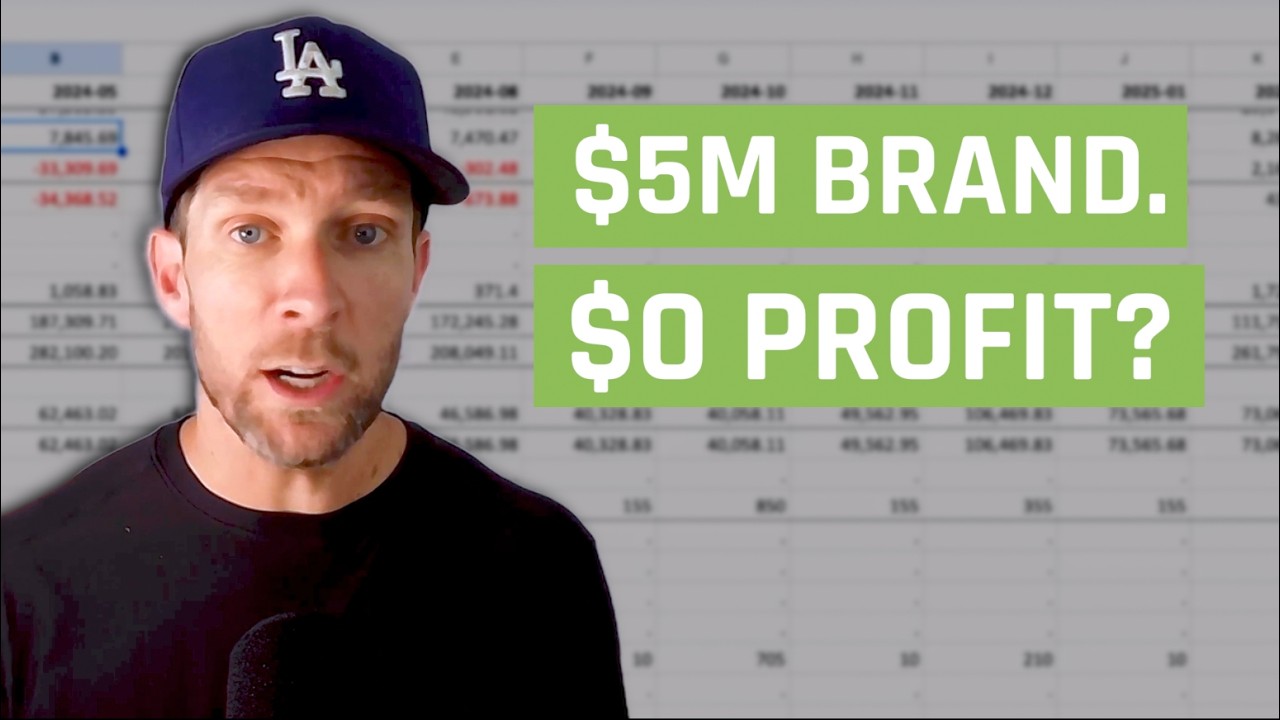
I have one of the coolest episodes I have ever done today. And it's because I have a real P&L from an e-commerce business on Shopify doing about $5 million in revenue. And I'm going to walk through for you exactly what I told the business operator about their P&L. So, I'm going to show you how I analyzed the P&L, show you how I thought about all of it, every section of the P&L, and what I think this person should do next to really push towards massive profitability. It's a really fascinating business in a lot of different ways that I think is going to be relatable for a lot
112 words, the words spoken in the first 30 seconds at 223 words per minute.
Free, no signup. See how the first 30 seconds hold attention, with rewrites.
Sentence shape
| Measure | This transcript |
|---|---|
| Sentences | 770 |
| Average words per sentence | 17.0 |
| Longest sentence | 141 words |
| Questions asked | 49 |
| Sentences containing a number | 109 |
Most used terms
Filler phrases
623 in total: um 200 · uh 139 · like 123 · actually 72 · you know 51 · right? 15 · kind of 12 · basically 8 · sort of 2 · I mean 1.
A literal whole-word count of the same phrase list the Prepublish browser extension uses, so a phrase inside another word is not counted and a phrase used in its ordinary sense still is. It is a count and not a judgement.
Free, no account. See where attention is likely to drop, with a rewrite for each weak line. The free check shows the scores and the one issue costing the most. Or run it on the words above first.
Free · No login · See a sample audit first if you prefer.
What this transcript is
Every word below is the caption track YouTube publishes for this video, pulled from the video itself and reproduced unchanged. It is not Prepublish's writing, not a summary, and not a re-transcription: it is the video's own published captions. English captions, generated automatically by YouTube, in the video’s original language. Source: the video on YouTube. A channel that would rather this page did not exist can ask for its removal through the contact page, and it is removed.
No Script X-ray for this video: YouTube shows a Most replayed graph only once a video has enough views.
I have one of the coolest episodes I have ever done today. And it's because I have a real P&L from an e-commerce business on Shopify doing about $5 million in revenue. And I'm going to walk through for you exactly what I told the business operator about their P&L. So, I'm going to show you how I analyzed the P&L, show you how I thought about all of it, every section of the P&L, and what I think this person should do next to really push towards massive profitability.
It's a really fascinating business in a lot of different ways that I think is going to be relatable for a lot of people. Let's walk through a real e-commerce business's P&L right now. Okay. This is one of those episodes where I'm going to do my very very best to uh to tell you each part of it as I go. So, if you are listening to this and not watching it, you will hopefully be able to follow along. That said, probably better if you can watch at least parts of this.
So, um, so just just for the record, cuz I'm going to show you the P&L in a second, okay? Um, and the constraint here is that I'm just not going to tell you what the business actually is, but that's okay. You're still you're going to know enough about this business to where it's fine. So, let me give you some basic pictures of the business. It's pushing about 5 million in revenue, you know, four to five and trailing 12 months.
And I have the trailing 12 months P&L that I'm going to show you. The category is uh CPG, basically consumables. Okay? So, consumable CPG and um and that's really all you need to know. personal care kind of kind of space. Uh that's really all you need to know and um and that will give you a lot of the information you need to understand what's going on in this business. So I'll just I'll just tell you straight up that when the entrepreneur who operates this business reached out to me.
They said, "Hey, I have some concerns about the value of my business. I listened to your episode with fan buy about how so many businesses are getting valued poorly and I've been thinking about profitability in general and I'm just not sure that this business has gotten me um you know that this business really has a hope or a future in in the way that I want it to have. Um and so I said well listen if you send me the P&L I'll look at it as long as I can make some content out of it.
And so we're doing that right now. Uh and I'm I'm going to show you this actual P&L um and show you whether or not this person ought to be optimistic. Now the other fascinating thing is this is not the first time he's had this thought of really pushing towards profitability. It's another important piece of context you need to know is that this operator raised money uh sort of uh I think it was on 2021 something like that um and raised raised a decent amount of money at the time and of course the environment in which he raised um was really different.
So there was still businesses getting some revenue based valuations at the time that was starting to really fade away. I certainly wasn't thinking about revenue based valuations too much at the time. In fact, in some ways, maybe I should have been more um but but uh but you know really uh some changes in the way that the business has um has interacted with the marketplace because now it is clearly incumbent on the business to be profitable and to be growing profits and that's the way e-commerce businesses will be valued. this this operator wants an exit.
And so, um, I, you know, said said he had heard my podcast, like I said, and he's he's thinking about how do you build profit in the business to get an exit. He's got some really good things going. So, let's let's dive into it. So, that's that's basically all the context you need. He'd raised money at one point, tried to grow it um without too much concern about profitability, and has now changed that. Um, and so so let's get into it.
So, I'm going to share my screen now, and we're going to um we're going to see here. Let's see. All right. So, here is the piano. Now, I'm going to start with is the original. Okay. This is what was sent to me because before, so like the whole goal I had here was this person is telling me they have concerns about their P&L and uh and is it actually going to work and like what can I do about that, right? Um, so I, you know, at that point want to look at the P&L and the the first job for me is to kind of get my head around, uh, what is actually happening in the business.
Okay. And uh, and so let's see, let me go there. Freeze that. And um, and so that's that's job number one is is actually organizing the material to figure it out. If you know anything about my content, you know I'm thinking about a P&L in a few different buckets. Okay. So, I see here a few different things to start, right? Sales of product income separated from return between returning and first-time customers. A little thing I I noticed immediately in this business is that there's much more returning customer revenue than first-time customer revenue.
So, the the section of the P&L I have pulled up right now is May and June of 2024. In May, it was 330K in returning customer revenue, 91 first time. In June, it was 300K versus 71. In July, it was 371 versus 68. So you can see like dominated 80% something like that of the revenue is coming from returning customer revenue. And so immediately without knowing anything about the business, I thought that's a good sign. That means this business has some LTV and therefore that's good.
One of the things I'm looking for in any e-commerce business to be successful is returning customer revenue. It just makes your life much much easier. Okay. So I'm starting to think about that right away. And and then as I go down the P&L, you know, there's like lots of little things. Okay. a little bit of Amazon business is maybe the next thing that pops out to you. Um, you know, 13 grand on Amazon in May last year.
You go through the year, it's right around there most months, you know, 11 to 13K. So, it's very small. So, I'm thinking about this really as a DTOC only business compared to, you know, again, uh, you in the 400s in in in Shopify revenue. So, the Amazon business is small. Um, and you know, there's like a few things that you see um on top of that, some shipping revenue, etc. And then let me tell you one of the things I did right away with this business, which is I went and looked at um how the uh revenue is recorded on the P&L.
Because if you look here, you've got revenue sorted between returning customer revenue and first-time customer revenue. And then you have shipping revenue um separated along those two lines and separated out as its own line item. And then separately, farther down the page, something I didn't even realize at first was discounts. Now, there's a huge amount of discounts on this. Um, you know, most P&Ls will have that discounting right towards the top, right next to the revenue, so you can see it.
And in fact, most P&Ls also aren't going to separate out first-time and returning customer revenue. So, I went and thought like, okay, now we're seeing these huge discount numbers. Again, to use the numbers from May, just because I'm pulling them up right now. Um, those May numbers are showing that uh 430 there's 430 grand in revenue before uh shipping, another 40 in shipping revenue. So you put it at about 470 except that when you go down to discounts there's 116,000 of discounts.
So the actual revenue being collected from from the brand is like way lower. It's like 33% of it or something like that. Maybe maybe not quite that much. No, no, like 20% of it is uh or 25% of it is going out in discounts. Okay. Obviously I could add to the cell to calculate the percentage for me. But uh again huge huge amounts of revenue that is not actually being realized because of discounts. Okay. So I note that right away and then I want to start organizing the rest of the P&L into different buckets.
And so so before I'm not going to walk through much more of this uh right away um because it's kind of all over the place. Like if you were to if you're looking at this what you'll see is that like you know even under cost of goods under that header you've got um supplies and materials as COGS. That's great. Right next to discounts. Okay. Affiliate marketing is somewhere under costs of service. Um, shipping and freight and delivery is also um is somewhere near cost of goods sold.
That seems reasonable to me. Amazon costs being in there seems reasonable to me as well. Shrinkage being in there. That's fine. But then you go to like advertising, which is why why are affiliate fees not in advertising? I'm not sure. And then it turns out as you go further down that you have warehousing and fulfillment as their own line items. And I can't remember even where they are on this one. Uh so don't worry about it.
Um but warehousing and fulfillment are separate. And so I learned through looking at the P&L something I didn't know in my initial email uh interactions, which is that this business is self-fulfilling their um their orders. Okay, so that is a little light that goes off uh right away for me. I actually had uh recorded before this episode and before looking at this um an episode with Chad Carlton, which has not been released yet, but will be soon.
You should subscribe wherever you're watching or listening to this. You're not going to want to miss that. Chad runs a 3PL in Missouri, has great thoughts on um on how businesses can work with 3PL's together to have a really good relationship and have that be a great service. And that's really the whole reason I did the conversation was to think about operators like this and what are the trade-offs. This is the first question we talked about.
What are the trade-offs between 1PL and 3PL shipping. Okay. So, what I did was I went to go organize the P&L. And I'm going to um hide a few rows here actually because those are not so important for the sake of the initial conversation. But the very first question to me was like um like how do I think about this not just like with a whole bunch of numbers on a page but through a framework that can help me analyze where this business is working and where this business is not.
So I started moving some things around the page and adding in some percentages. Okay. The first thing I did is uh on the sales side of things, I actually I know that standard accounting, okay, um means that you need to include discounts as their own separate line item, but discounting that almost assumes that the gross value of a product is money that you actually can get. Like the MSRP is is money that you actually can get and that if you just like lowered the discount amount, you would get more money.
That's just often not true is the problem. like the actual amount of money you're charging is the thing that I'm interested in. The actual amount of money you're receiving. And frankly, I don't really care if it's shipping revenue or if it's um order revenue or whatever. Like it doesn't matter to me because that's still revenue. Okay? So, as long as you get that and we'll get we'll leave tax out because tax is not revenue.
Okay? But um but as long as you are collecting money from the customer, how you charge for that between shipping and product sales is just a conversion rate game. You know, ultimately you're charging for revenue. So, the AOV of your product is really about uh the AOV of your website is really about how much revenue you collect on average per order. That's it. I don't really care if it's shipping or not. Okay. So, so I combined all those into what is actually more like Meta's or excuse me, Shopify's total sales uh number.
And now I have an actual total sales amount that gets me to 4.3 million for the year. Okay. Um and and it's comes down to now May of last year looks like $353,000 in revenue. That's shipping revenue, regular order revenue, and takes the discounts out because that's the number I'm actually interested. How much money did you get from there? Okay. The next thing I want to do is organize the P&L into three different buckets.
Um, and you've heard me say this before. This is definitely something I learned from Taylor Holiday and have continued to think about a lot. And those three buckets are cost of goods sold, which is every variable cost associated with getting the customer um the product. In fact, cost of goods sold is not really the best language for this. The best language for this is cost of delivery because um fulfillment costs and shipping costs, not just the cost of goods themselves are in that bucket, right?
So that's one bucket. That's every variable cost again associated with getting an order to a customer including some um allowance for returns. Number two, CAC, right? So it's advertising cost that is highly variable. Um it's not the same no matter how much of the product you sell. And so CAC will put in its own bucket even though it is associated per order and some of those things um are are semi- similar to variable costs but but much more um uh sort of uh easier to affect on at the per order level.
Okay. Um opex which is all the fixed costs left over after that. That's usually going to be things like rent and people. Those are the main costs. There's some software costs in there as well. Okay. So I start organizing the P&L in terms of those things. So what you'll see now if you're looking at this is that I've got COGS its own thing. Okay. So the first thing I see is the COGS is a percent of revenue is about 10%.
Okay. Uh so that's really interesting. This brand has killer margins at the level of raw COG. So they have 90% gross margin to start things off. That's really really good. Now you have to ship the product. And one of the things I knew about this um brand is that it was going to be in a category that had some some challenges in related uh related to shipping. uh the the product is not particularly light. You have to um it takes up a lot of space in a box.
So um high dimensional weight or high dimensions in general, right? Um larger dimensions in general, which means shipping it is not that high and it's a pretty low AOV product. So I'll pull these back out. And what you'll see is at least on new customers, um if you uh actually check the new customer order AOV, you're around $35. Okay? So, a $35 AOV net of the actual money you actually receive um is going to be expensive to ship because pretty much no matter what, it's going to cost you at least $5 to ship something.
And I was assuming this product would actually be closer to uh $6 or $7 to ship at least to get to the customer. And so now you look and say on the one hand you have this massive value in this category. Okay? And and this again I had some assumptions about this and and the P&L confirmed this. Okay. um which is that it's extremely high margin at the level of product itself, but it's much lower margin at the level of shipping.
And so shipping really eats up a bunch of a bunch of your money. And so um and so the postage is a percentage of revenue for the year ends up being about 14%. Okay, so you're paying much more shipping the product to the customer than you are actually paying for the raw materials and the cost of goods themselves. Okay, but nonetheless, those add up. Okay, Amazon cost separate bucket. Not going to worry about those too much just because of all the aforementioned reasons that Amazon is probably not even worth their time. the way this business is looking.
We'll leave that aside. Next, merchant account fees. Okay, merchant account fees would be um basically the cost of running the credit card. Uh in this case, it's a little bit high as well at 3.76%. Um that's probably because of things like um Afterpay and and some of that where you're paying higher fees per order, but reasonably high. And again, that's associated with every order. So, at 3.76%, you got to apply that to your cost of delivery because again, that's a variable cost associated with each order.
Let me be really clear, really direct. If you are trying to grow and build a profitable e-commerce business, you should consider switching your customer service software to Rich Panel. And that is because especially if you are on Gorgeous, Rich Panel promises a 30% savings for anybody switching from Gorgeous to Rich Panel. So that's basically reason to take the call right there because that can be a major savings. But it's not just about cheaper, though that is great, too.
It's also about the fact that Rich Panel is fantastic software. It was built more recently than the legacy players. And that's good news for you because it was built AI first. And if there's any part of e-commerce businesses that can benefit from leveraging AI in really good quality ways to make customer experiences great, it is obviously customer service because customer service with AI can help uh your customers get answers to their questions faster while reducing costs for you.
It is a gigantic win-win. In fact, on average, Rich Panel sees customer service tickets get reduced by 30% uh when brands switch over to them from their from other software. And the reason for that is partly because their um chatbot assistant that is on your website uh that functions as like the help the the the customer help center is so so good by being based on AI. Instead of customers going and searching through all kinds of, you know, long threads about how to go find the help that they need to get the thing that they want and you know, searching through some giant library of stuff, they just interact with uh Rich Panel's AIdriven uh help software and they can get the answer to the question they need and uh speed right along to check out uh uh faster and easier than ever before.
And uh and that's why they say a 30% reduction in customer service tickets. On top of that, you see um your agents be able to answer questions faster and more easily because of AI assisted uh responses. There's also uh tons of value in their AI social comment moderator. Man, I've been running meta ads for a long time and I've endlessly heard people talk about the frustration of trying to stay on top of bad comments on Facebook ads.
Uh a rich panel's AI social comment moderator will do that for you and will do that really really well. It's automated. It's amazing. I know of other brands who've who have uh significantly reduced the human uh output against that particular problem. Rich Panel is really great software. At the very least, you should get on a call. It's only a twoe transition to go from your current setup to theirs. They're going to hold your hand through it.
Make sure it's nice and easy. They know you don't have time to waste. I really love this company. Richpanel.com is the place to go. Go check it out today. Uh, and so now when you roll all that together, you get a cost of delivery that ends up being uh that ends up being about $79,000 against 352 total um in product. Actually, that math is wrong. Hold on. All right. So, if we look at the year total, you've got a couple little weird moments here, but you're looking at about 30% in um uh total for the year, about 30% uh in excuse me uh cost of delivery.
Okay, so 70% margin left over after cost of delivery. So even with the high shipping, even paying more for merchant account fees than a lot of folks are paying, um you still are in a spot where you have really good margins, right? 70% landed to the customer is really really good. So I'm feeling great about that uh all the way around. And so I I keep scrolling down and I keep looking at the rest of the business. I go, let's go on to CAC.
Now, CAC is wild in this business because um for many brands, right, uh meta ads is like the highest uh thing is one of the uh high top two line items in your business. But this business is just not there. They over the course of the year, they only spent 18.6% of their revenue on ads. And I've got that laid out for the year. And it's a really fascinating thing because you would think a business at this stage would be spending much much more on ads.
So that that was another thing I noticed kind of right away like why are they spending so little on ads? And one of the realities here of course as I talked about earlier is that uh the returning customer revenue is such a high percentage of the revenue that um that something else is is going on here because uh or that they that's how they generate a whole bunch more margin. But there's also a question about like should they be spending more because they have so much returning customer revenue that maybe something is is weird here and maybe they ought to be spending more money.
So I have CAC laid out here, but I'm also going to add another metric to this right now, which is AMER. Okay, so new customer revenue over total ad spend. And if we uh if we do that and we say new customer revenue over total ad spend and um and we and we run that for the year, we're going to do this as a ratio metric. Okay. Um what you see is actually something really really really promising here about how this business ought to go in particularly in relation to growing ad spend. and that is that over the course of the year as they have they have both spent more and seen AM go up.
Okay, so I'm just going to read these AM numbers by month. 1.45 1.1 1.08 1.5 1.4 1 point uh almost two. Okay, 1.22 1.2 1.1 all of those are there while they're averaging ah something like 40 to 60 grand in spend kind of varying there. But then at the end of last year and the beginning of this year their spend numbers go up. So they go from 40 to 60 grand a month in spend to 106 73 73 808 85 and while they do that their AME goes from 1.2 to 1.5 to all the way to 2.2 and on their most recent month spend.
Okay. And that's uh again a really awesome thing to see because it suggests to me that uh that they have some room to keep scaling. they're growing their ad spend and uh and yet they're not seeing uh any like real slowdown in revenue. Um in fact they're seeing or in efficiency. What they're in fact seeing is a more efficient spend as they go which is really really good. So um so for the course of the year it's a 1.51 am with their margin.
That looks like a perfectly healthy number to me. They've got some money left over afterwards making a little money on first purchase and again some good things happening over the last couple months. Okay. So um so you're seeing those things uh as as part of the business. CAC low as a percentage of the total revenue here. And um and so there's that. Okay, so that's the first thing we noticed. Cost of delivery is very low. 70 points of landed margin to the customer.
CAC even lower. You've got only about 20% of the money going out the door, even a little less than that. Um into advertising. Probably want to figure out how to get that up if anything actually to be spending more money and acquiring more customers. Talk about that more in a minute. And then we get to the killer. So you look at this business first of all and you think they must be smashing. That's what I would think, right?
What I just told you is that CAC is 30% of the business and we'll just make the numbers round. Excuse me. CAC is 20% of the business. Cost of delivery is 30% of the business. And you go, "Holy cow, this business must be printing." Because what you all know about running an e-commerce business is that they run at a very low cost of um a very low fixed opex. Okay? And so you can run a business really really lean. But then when you when you add all these numbers together, you run into a different you you see something very very different. you hear see a very different story.
Okay, and that story is uh is this is the opex is a percentage of revenue. The fixed costs everything left over is a percentage of revenue at this stage of the business. Okay, I'm just going to read the percentages by month for you so you know how high this number is. 55 58 45 57 64. You get the idea. Very very very high. Okay, now the number goes down over the last couple months of the year. I'm going to talk more about that in a second, but it's 48% of the revenue uh has gone out the door in fixed costs.
So, what in the world is going on there? And this took me a minute to figure out what was going on. The first thing I saw was I got all of the costs related to the office that they have and the building that they have. Okay? And what you see there is that over the course of the year about 9% of the money is set in office and uh fixed costs. Okay? Rent, utilities, cleaning, trash, like all of that kind of stuff. Even allowance for depreciation on some machinery or something like that.
Like there's there's all that, okay? which we're going to come back to that in a minute. That's something I didn't catch uh catch on to right away, but it's an interesting thing. Okay. And then salaries and contractors. And there's a specific note here if you're looking at the P&L non-wearhouse. And so now maybe you're starting to see what the what the issue is here. The non-warehouse salaries are um are uh are about uh let's see, for the course of the year, it's about 21% of the revenue.
Okay, 880 grand over the course of the year off 4.2 million in revenue. earlier last year like on further back on the trailing 12 it was closer to 28%. Okay. Um so it actually has gotten better over time. Now again we'll talk more about that in a little bit. Um and and what's going on there. Um okay. And then after that warehouse and fulfillment. Now this is one of the things I noticed right away is that they're paying a whole bunch of money in expenses labeled warehouse labor and production and fulfillment.
Now that is um that is an interesting cost. So that warehouse and and fulfillment is 16% of their revenue. And you put all those together and you get this really big number and then there's a little bit left over for another one and a half percent. Okay, but that's not really so important between subscription fees and some of those kinds of things. Okay, so the three big buckets are office like the the building, salaries and contractors and then warehouse and fulfillment.
And so this led to what was for me the central part of thinking about what's going on in this business and the way that it's going to generate revenue. Um, and my almost immediate thought was you got to fire people. That's actually why I'm not doing this as a coaching call. uh because uh and why I'm doing it as a solo episode and because the the operator was actually willing to share what the business was. But I realized pretty quickly that I was maybe going to have to get on a call and tell him that he needed to fire people and if that was the case that would be a really frustrating and sad thing to see uh published on the internet if you were part of this company.
Okay. So she didn't want to do that and so we're doing it a slightly different way. Uh so at the level of warehouse so at each of these then when when we had our call to talk about all these numbers we began to dig into this and what I came to discover was the first the first thought I had was the fulfillment costs in the business the warehousing cost seemed extremely high and I saw this labeled as fulfillment and I just thought like why in the world is this something like 16% of your revenue going out and fulfillment that doesn't make any sense at all like there's just no way fulfillment if you go to a 3PL it's going to be like two bucks per order or something like that.
Even if there's some customization, maybe it goes to three, but it's not going to be um anywhere close to these numbers. Now, $3 per order on a $33 AOV is actually still 10, you know, almost 10%. That's still really high. And so, who knows what the deal is there. And and I figured that out. But I came to discover something else about this business, which is that it is not in fact just a warehouse and fulfillment cost.
Um it is a first-party production cost. So, this business is manufacturing themselves. And maybe some of you were latched on to that right away and you saw this and you were out in front of me and good for you if so. But I didn't put that together. I assumed they were ordering through a manufacturer had incredible cogs and and that was that. But it's not. It it's actually not the case. So um so instead of it being something where they were um were doing that, they actually both um manufacturing in-house and then fulfilling inhouse.
And when you do that, that's how you end up with 50 to 55% of the revenue that is that is marked as like a fixed cost. Okay? And so what it really means is my cost of delivery calculation is worthless. It's totally meaningless. It doesn't mean it like now I'm going to come back to how they can raise their AOV later because there's a really important point about that. But um and and I think you're going to be interested in what I have to say about that because it's a really fascinating customer acquisition issue.
Um and so that would also help with this situation. But um but this is just not operating like a normal e-commerce business. And when you think about the profitability of the business, this is definitely one of the things that's going on. Okay. So, um, so let's talk about this first, then we'll talk about the rest, uh, of the business. So, um, what I ended up, the conversation I ended up having with this operator was, "Do you have any expertise in manufacturing?" And he says, "No, actually, this is a product that we made, me and my wife, in our house." Okay.
And uh, and we started scaling up production because maybe we thought own manufacturing was a good thing. Um, and and we're doing something a little bit different. But, you know, when I looked at the product, it didn't seem to me there was any real proprietary knowledge here in this. So far as I can tell, it's just that that's just the way they had built things. Okay. Um and then at the same time, because they have their fulfillment or their their warehouse, their facility there, they're also just shipping it right out of there after they make it.
Now, there's some real advantages to this. Okay. The first is you can make claims around we make the product ourselves. Okay, that's good. And if there is anything proprietary, in fact, that may be something you really want to hold on to even if you don't have expertise in manufacturing. Because this is what I was saying to the operator was essentially like you are trying to run three businesses at once right now, right?
You're trying to run an e-commerce business, okay, and a manufacturing business and also a 3PL and and you actually didn't come into this with expertise in any of them and they are all different businesses and they are all hard, okay? Because every business is hard to be really great at it. So you are playing the game on hard mode right away just like from from the jump. Okay? So why would you do that? Well, there are reasons to do it and I just want to be clear like I I had one hour with this guy.
I didn't have a chance to go into every possible detail of the business. But with one hour with him, um you know, uh the place where I told him to think about this at least is are you actually providing value at your um uh to to your business as the manufacturer or are you just a cost center in the business? And that can be in a few places like like it's it is actually possible first of all that your cogs get straight up cheaper when you go to a better manufacturer because they're just going to be better at it than you are.
Okay. So aside from any time cost and opportunity cost on your brain space. Okay. Because again running a warehouse and running a manufacturing facility is difficult. Um, like it it really may be the case that a manufacturer's ability to buy ingredients in bulk, to do uh to do all kinds of different things like just to have better machinery, that kind of stuff, uh, better access to labor cost depending on where they are.
You actually may be able to get the same or or even cheaper um, cogs by outsourcing and manufacturing. That's like that's like really possible. Okay, it's not not necessarily normal, but it's really really possible. So the first thing was like what I told him about that was you need to think you need to understand more clearly how much time and uh how much the total costs are. This is going to be actually a little bit of a difficult calculation um how much your cogs actually are in this business instead of these two different things which is cogs in the P&L which turns out to basically just be raw materials.
So now it turns out it's not true landed cogs is 10% of the revenue it's just raw materials that's 10% of the revenue. Okay. But then secondly um you know the labor costs the the um the uh machinery costs and the time costs all those things involved any other ingredients that are involved with making the actual product. If if how much is that actually costing you to make per unit and then that needs to be a separate line item that you think of so that you can actually understand where the scale opportunities are here.
Certainly, it is not the case that at a $4 million business, you're getting real economy of scale. And what every manufacturing business knows is that manufacturing businesses make money at scale. And so, what he needed to do is figure out how much this was actually costing him to make, okay? And then and then start shopping manufacturers and going like, okay, if I if I tell you the exact recipe and I own the recipe and and the manufacturer does not own the recipe, okay, but you just have to get the materials and all those things, how much would this actually cost?
Now, again, I have worked with brands that had first-party manufacturing, and there's advantages. And here's the other advantage. The other advantage is you're going to reduce inventory risk. If you go to a big manufacturer, you're probably going to be a small fish in a big pond at $4 million in revenue. You're just not doing that much volume. Um, you're going to have to order out ahead. You're going to have to deal with payment terms.
A whole bunch of stuff that happens as you outsource. So, it is not so obvious that you definitely ought to um to outsource this. Most likely the tradeoffs are worth it in my view in a business like this where there doesn't seem to be anything proprietary about it. There's no there's no real specific reason to to manufacture yourself and you have no particular expertise in this part of the business. Much more likely uh what you actually want is to go work with a manufacturer who can help you actually scale this up and who can um who can do that with uh potential uh volume discounts and some of those kinds of things.
Especially in a category where there's going to be plenty of manufacturing competition, there's going to be plenty of folks who can make this product. So, you can go shop a whole bunch of them. Get on the horn with my friends at at Move Supply Chain, right? Just like added bonus here like and have them go find 50 manufacturers who can make this product, start getting samples and see what the costs come in at. So, that's the first thing that I said.
Okay. Secondly, the exact same dynamic is in place at the level of fulfillment. Okay. Now, um now this brand sells a lot of uh products to new customers uh on well, okay. So first of all the brand is coastal uh okay and so being coastal that means they are shipping some amount of their products all the way across the country which also means that uh they are paying to some number of customers they are paying like zone 7 or whatever it is costs for a decent amount of the volume that they are moving uh they're paying high amounts of postage and could probably save on postage meaningfully just by having their 3PL in a different location because being coastal makes it harder to ship across the uh it does it it makes it makes things more expensive.
Okay, so there's that like at a baseline straight up postage cost based on location whether you're 3PL or 1PL that can be the case. Okay, you've heard me talk about them before and I'm so glad to be telling you again about Vermont. Vermont is the best landing page funnel building software I know of in e-commerce for a very simple reason which is that you can build extremely customizable really really good high-erforming landing pages really really fast.
The mission basically at Vermont is to empower growth marketers to be able to build really high performing funnels without having touched the website because you know if you've tried to build funnels um for a client at some point that you want to go and mess with a PDP or launch some test there there's like a million people who are going to throw the flag and tell you no you can't do that you can't change this you can't change that.
Well, Vermont allows you, whether you're an in-house growth marketer, an agency, or whatever else, to very quickly and easily hammer out landing pages. They've got all kinds of great AI tools to make that really fast. And they've built on top of Shopify in a way that allows you to do really really cool stuff like custom upsells, custom carts. Um, you you can uh build custom PDPs with custom bundles all on without having to go mess with anything at the product level in Shopify.
And with the result is that you can uh test all of that in V for Vermont's testing environment which gives you um really easy AB tests whether you're testing in Vermont or Vermont pages against external pages um that are really easy to set up and it the the net result of it is that it allows you as a growth marketer to rapidly iterate all kinds of pages. Sometimes what that means is just building a funnel where you take a very specific value proposition and ad and you match the value proposition to the landing page or you more you tighten things up.
I got a brand for example recently that took an approach to one of its products that was like instead of talking about how great the product was, we started talking about recipes that used the product. Okay. Well, we changed the lander extremely quickly and easily to go create a recipe-based version of the lander that goes from recipe to product and in an explicit way, but that allows the the customer to have a seamless experience on the back of the page.
We're going to test that against the standard version of our lander and the standard version of our funnel, and it's going to be really easy to do. We've done all kinds of offer testing, crazy gift with purchase offers, different discounting, free shipping, subscription offers, all of it. It's super fast, it's super easy, and you'll love working with it. If you want to, if landers are a serious part of your growth marketing playbook in your business, if that's a real way to move the needle forward, you should be considering Vermont, you should at least be doing a few month trial.
Go to vermontcommerce.comf vermontCommerce.comf to get a look at Vermont and get started today. But secondly, uh, a warehouse is another thing where if you have no expertise in running a warehouse, you are almost certainly losing out on all kinds of, um, efficiencies that people who know how to run warehouses run. And this is why I've seen smart operator after smart operator go from, you know, fulfilling their own products in the early days to outsourcing to 3PL basically as soon as they possibly can.
And it's fine in the early days if you want to ship your own products. Like for the brand I'm starting, we're planning on shipping out of a garage to start, right? That's just like what the early days of business are. But pretty much as soon as you can, as soon as it makes sense. Going to a 3PL makes a huge difference. Again, there are challenges here. You have to plan for things in different ways. You have to find a good 3PL.
You have to find the right relationships, all those things. But there's a lot of ways to do this. There's even possibilities, by the way, of of working with 3PLs in Mexico or Canada where the labor costs are drastically reduced and can actually ship um in a way that that um is is really advantageous. So like there's there's all kinds of potential solutions here but almost certainly you are not getting the best price that you can on shipping products out and crucially you have to run a warehouse.
Okay. Now what I this was actually an easier one to calculate. I told him you need to find out how many labor hours and how much space in uh you are taking up and how much rent there is in your fulfillment cost and and and assign a per unit fulfillment cost per order fulfillment cost to your orders. And if it's anywhere above like two bucks, you should be considering going to a 3PL because the product doesn't have any need to be very complicated to ship.
It should be relatively commoditized and something that that should be relatively easy. Um there's some storage temperature things, but I don't think it'll be a huge issue for most places. Uh and and uh there's one bit of customization that could create a problem um which is that they they are acquiring a lot of customers through a build your own sample pack. But I actually think even there it's possible that there's a couple of problems that they are letting themselves have because they fulfill themselves.
So So each um unit here and there's typically five units per order um is going to be its own pick which is going to add up in cost for 3PL. So maybe doing that yourself makes it a little bit cheaper. I I don't know, you know, um maybe not also. But um but why do that? Why not actually? And and they also have like 18 different possible variants of this product that you can uh that you can use. And so what this um what I was saying to this operator was what if you did two things at once.
First kill your slowest moving SKUs. Okay, just get rid of them. So you should get down to like probably 13 maybe even 10 depending on like how much volume of each one is moving. And I didn't have time to look into that. Okay. But um basically anything uh that's less than 5% uh that's in less than 5% of your orders probably is not really helping you that much. So you can reduce some complexity there at the level of manufacturing and fulfillment.
Okay, so there's that. But then secondly, um you could start pre-kitting your orders. Um and that way you could actually if you wanted and again there's trade-offs here um at both the level of the customer and the fulfillment. possible that giving a customer 18 different variants to choose from on as they build their free as they build their sample pack, okay, is actually hurting conversion and that you should pre-seelelect three or four different bundles that are like, you know, the best sellers bundle and the, you know, whatever explorer bundle and and whatever.
Just make them up yourself, okay? Um, and you pre-select those and you may actually find that by pre-kitting you get better conversion and better operational efficiency at the same time. do that with a 3PL and now you've saved a bunch of money per order there. Put that all together. Okay? And what you potentially have a solution for here, and this won't happen overnight, but what you potentially have a thing here, solution for here, is cutting your warehouse completely.
Okay? So, that goes away. Instead, you have a 3PL. Okay? Cutting your in-house manufacturer. Instead, you have a co-man or a manufacturer, depending on how you set it up, right? Just a straightup third party. Okay? And go work from home. and now cut your office space. Okay? Um or get a smaller office for those things. You do those three things together and it is feasibly possible that you drastically reduce the fixed cost in your business while at the same time making it so that no look, a bunch of that cost is going to have to get reassigned into the cost of delivery bucket to be sure.
You're not just going to get 40 points of margin back here, right? That's not what I'm saying. But what you may be able to do is get to a point where the business just works much much better. Okay. Above all of that, and this is maybe the most important thing, getting the brain space back can be a huge deal, less people to manage, less space to worry about, um, less businesses to think about operating efficiently. Instead, you outsource all that stuff to people who have real expertise and understand it.
And as you do that, you get a bunch of brain space back to focus on the thing that you can do better than anybody else, which is acquire customers in your business. think about who your customer is and how you can serve them and how you can grow the business. Okay, so that is like this core shift that I think needs to be at least addressed in the business and and again maybe they do some of that, maybe they do all of that like it's it was it's too much for me to say with one look at their P&L or whatever, but it's really really worth um considering I think.
Okay, so um so uh that's a huge part of uh of how to move forward. Now let's talk about some other parts of it and we'll go back to the P&L here to look at it to see. Now thankfully um your friend in mine Matab Bogle had already had a coaching call with this person and this person talked to MAB and Matab said really clearly hey you got to cut some salaries. Uh, okay. And now, so in all of this, if you have fixed costs as a um, and I'm going to come back to that comment from MAB in a second, but if you have fixed costs that are a high percentage of the revenue, one of the ways that you can um, generate more margin is really simple is to generate more revenue.
Okay, so there's two sides of the equation here because because if you scale up revenue, but your fixed costs are truly fixed or even somewhat fixed, right? All that's going to do is increase margin. Okay, so um, so there's two things at the same time here. Um there was a a move where you need to cut salaries and run leaner and at the same time you need a little more volume. And while that sounds like those are in some ways opposed to each other, they're often not.
Almost everybody has some amount of bloat that where they don't really actually need somebody that they think they need. I come back to my interview with Ben Perkins a lot where Ben said that they ended up cutting half their staff at one point at an callers and when they did their revenue wasn't negatively affected at all and they just and and for a lot for a lot of reasons again it's not about people being bad or lazy or dumb or any of those things. what it's about is that it's really hard to manage people and it's really hard to be great at utilizing talent.
And so, um, and so one of the things you can do is just like be careful about adding too much talent because people will find work to do. Uh, as Taylor Holidayiday says, work is a gas. It expands to fill the space allotted to it and the time allotted to it. And so people will just kind of find stuff to do even if it's not actually moving the needle. So, um, so cutting some salary and growing revenue at the same time is actually pretty doable.
And that's exactly what this operator did. And it's so good to see. So what you see in the last couple months of the year is that uh is that the revenue was growing even while they cut. And so you see in March and April um serious increases in revenue averaging about 420 in revenue per month. That's up from an average the previous bunch of months of 337. So meaningful revenue increase. So that's going to help a lot. And of course in point of fact um you got a bunch of margin back.
So if you look at uh the opex as a percentage of revenue, it went from 45 or 49% to about 35 to 36%. Okay? And because of that, that opened up profit. So we actually haven't talked about this part yet, but the profit really did increase throughout the year. Um through uh last year, the last bunch of months of last year, May through December, so not trueing 12, they they lost $13,000. Starting in January and February, they started to make some moves and g and um actually had profit of about $38,000 7% and 3% month uh for those two months.
But then when they made the move of actually cutting um some salary and at the same time increasing revenue, they were able to get to 18% and 12% profit margins, 80 grand and 46 grand, and were on pace to a whole bunch to like a really profitable year. So they really turned it around. Now you're talking about a $5 million business doing between 11 and 18% profit with clear steps forward for how to generate a bunch more.
That's a really good business. And you can see again expenses um are uh uh and more of the money is going towards CAC at the same time. So as they fix as they change focus over those couple of months, they suddenly started spending a bunch more money and $85,000 generating new customers, seeing better ad performance as attention went to those places. Um and and really things look a lot better all the way around. By the way, at the salary level for those two months, March and April, they did just over 51 grand in salaries, 63 in February.
Before that, they were averaging between 79 and 100,000 in in salaries. Okay. Um so, we'll just actually pull the actual average number here. It was Yeah. Uh 79,000. Okay. 795. They went all the way down to 512. that difference that uh that that gap of $27,000 is a huge portion of their profit in the last couple of months. And you can see it really made a big impact on the business. So that one-two punch of increasing revenue to get more volume and decreasing and and decreasing salaries by um just getting leaner as a team has a massive impact on the way this business works.
And now they can move their attention towards growing the business with CAC um uh growing the business with ad spend um and trying to maintain a decent CAC while doing it. If they can do that, then they can really be cooking. So now what you end up with is a picture of a business that's pacing towards it did about 4.2 million last year. It's pacing the last couple months more towards 5 million um off that trailing 12.
You've you've made yourself a little leaner. Your CAC is going the right way. your AMER is going the right way. There's more focus in that place and you've got a little more volume and and now you're actually really and and you're strongly profitable between 11 and 18% profit over the last 2 months. You put that together and that's a really optimistic outlook for a business that not very long ago was not even profitable.
Um, now I and I I think there's potentially some challenge with if they were if they were growing unprofitably and acquiring customers unprofitably, those customer that's that's they're being buoied by that right now because they're reaping the returning customer revenue that they had uh probably driven from unprofitable ad spend earlier on in the business. So, there's a challenge there, but almost certainly that was also really underoptimized.
And if you get into the actual ad account, and I'm going to talk about one core part of that in a second, there's probably some some big gains still to be had. Uh, and you know, the more I've thought about this business, the more that I think it probably is the case. If I just think about the potential margin profile in their category, the more likely it is that cleaning up the things I started by talking about, the fulfillment and in-house manufacturing stuff that you probably actually will get margin back.
Like I I just think this category really does that. And so so the operational side of the business has this big potential impact on profit. And I really want to highlight that in this conversation because I'm going to talk about offers in a second and some of those things that are more ad account focused. I'm not going to actually show the ad account in this case. Um just I I can't do that here. Um but it's also in some ways worth pausing and thinking about because like so many people all the time want to put all their attention on the ad account and they want to say how do we squeeze more out of the ad account?
And listen, I make a ton of content about that. I think that's really good. I'm never going to be a person who thinks that's a bad idea to put attention there because a lot of money goes there. But when you look at this a business like this, like they actually have a lot of things where if there's just a little more operational efficiency, then they'd be set up to be there. And in fact, by cleaning up some of the operational things, they may have more oper more operational attention and money to put into improving the ad account.
Like you, if you're getting between 12 and 17% profit, you may be able to bring on, you know, um some a bunch of influencers, for example. That's actually one thing we talked about. You able to really start saying like how do we start coordinating influencers and get really serious by generating a bunch of influencer content and seeding at real scale which I think really matters and this brand has a little bit of a niche element to it to some degrees to where like influencers I think could be a really big impact.
Well, I mean that means somebody's got to organize it and send out the product and get the posts and all those things and potentially like there's there's it's not overwhelmingly expensive but you know it takes time, it takes effort again it takes management attention. Uh, and if you're spending all that on the in in-house um manufacturing on the and on the in-house fulfillment, like it's going to be harder to do those things.
And so that's and then of course all that stuff can create content in the ad account. That can be a really big deal. So there's something like that. And and you know, uh, thinking about being able to spend more on like just increasing the volume of your creative production and things like that to see what you can accomplish there. And maybe there's an agency that's a really good fit for a brand in this stage, you know, um, and and probably don't want something prohibitively expensive still.
You don't want to just like turn around and plow all that money back into an agency that's going to cost you a ton of money. But I, you know, it's it it's there's a lot of opportunity because of cleaning up the operational side of the business. And one of the things I really wondered after looking at this business is just how many businesses are out there that actually have this opportunity in front of them if they can just get some help cleaning up those things and and reducing some bad costs and and and getting a lot leaner.
Cuz when I look at this, like before I say anything about offers, I'll just tell you like I'm really optimistic about this business. I look at it and say there's a real way forward. I think they raised at like a few million dollar valuation. Um and so not not a crazy valuation. like it seems really reasonable to me to sell this business for 15 or 20 million bucks at some point and who knows what you know if everything goes great more than that now it's not going to happen today you need to run up a bunch of profit to do that but like you know I don't know it seems seems not crazy to me or or even 12 to 15 you know investors could 4x their money or something um and and I think everybody feel really good about that if you're not looking for like venture scale like and you know founders can do really really well life-changing you know you never have to work again kind of money even if you don't own 100% of the business like just really really good possible outcomes in this business.
And I think if they can keep that going forward, I I I'm optimistic about it. Lean out. You've got some stuff there. LTV, um probably solid margin even after all the work is done, you can really get somewhere really good and and and clean up OPEX, especially again with that LTV part. Um that can really help make CAC a small percentage of revenue. So many brands would kill to have CAC be less than 20% of revenue. Um and this brand has that opportunity to do that because of the LTV component because that returning customer revenue pool is big.
Okay, let's talk about one other thing. as we um wrap this up and that is um offers. Okay, there's another element in this business that's really interesting to look at and and I just want to talk a little bit about it. It's a little bit of a tack on relative to the P&L, but I think it's an interesting thing. This brand is actually running something I haven't seen anybody run for a while, which is a free plus shipping offer.
So, they they they say they say, "We'll send you our sample pack for free, and you if you do that, um you you just pay for shipping, and they expect the LTV numbers to work themselves out." So, I'm going to show you Shopify's cohort report. And so, you're going to see now um how that is working out for them. Okay. So, I'm going to share my screen again. All right. So, what I want to show you first is the total last 12 months in the customer cohort analysis.
If you look into your reports and look for this phrase, customer cohort analysis, you can pull this exact same report up. And it's a really helpful thing. Um it gets you really, really far on like customer cohort information. Okay. So, here is um here are the last 12 months, trailing 12 months. Okay. Um overall what you see is um and I've got by the way I've got this set so that right here what it's showing is the amount spent per customer.
It will actually op uh if you've never used this report it will opt you into customer retention rate but these are two different things and they're both really important. The retention rate is the percentage of customers who come back. Okay. Um but that's different than the amount spent per customer and how that changes. Um, and one thing I like to do, especially something like this, is to go click on to show first order because what that will do in this amount spent per per customer tab is it will show you the first order, the AOV on some of these orders.
Okay, so if you look last 12 months, the amount spent per customer um is, you know, $52 or whatever, but the AOV is actually between, you know, is actually 34. Okay, so that's on average. Now, these averages, I don't know exactly how they play out with the fact that some of these cohorts, you know, mo all of them but one are incomplete cohorts, but um but what you could see, right, is that that AOV is at 34 bucks and it ranges some, goes up and goes down, etc.
Um and and so there's that. Now, the first thing you notice is to the point that we mentioned earlier about their retention if especially if we get some larger cohorts that are more complete, right? Like starting last year, your 12-month cohort of $63 on average, some of these going up to 72, um you know, that's off of a first order of 33. So nearly doubling the value of a customer uh over the course of a year. That's just like all customers blended together with these different groups.
Okay. Um so that's great to start. Uh there's there's uh some really strong LTV in the business and and probably projectable LTV. You can see down here those numbers actually get quite a bit bigger. Um and what you'll also notice is that the first order number is uh is bigger than they are back over here. And that's because this brand is running a free plus shipping offer. Okay. So, I'm going to show you right and I'm going to filter this by that free plus shipping offer.
Okay. So, what you see is I I changed the coordinates and I've blurred it here. Uh my editor has Thank you Jared probably. Um appreciate it. Um my I've blurred it so that you can't see what it is, but this is what it is. It's a it's a free shipping. And so now you see the first order is $15. Okay. Um now it had gone up some over time. Maybe they got some more money on shipping collection or something like that, but or or had some upsells or something.
But the the first order is 15 bucks on there. And what you could see about these customers is no no surprise, right? They're they're actually um they're not terrible customers uh at $34 in value over the course of 12 months in the sense that like they are more than doubling in their value over that time. So if you can get these at enough scale, it it could work. But what I can just guarantee you is that they are getting obliterated on margin at this point.
Obviously that giving away the product for free is really brutal. Um, you know, the AOV is low. Everybody's going to complain about that. You can actually make a really low AOV work on um on Meta in general. Although, like at the Meta level, it doesn't concern me as much. What concerns me is that it's already an expensive product to ship relative to the average order value that you get. And you can see they've acquired a lot of customers through this deal.
Now, at the same time, you can also see they went away from it from July to November over that time period. We'll actually pull back up last 12 months. And they kind of came back to it a little bit um over this time, which is maybe not something that you like to see quite so much. Um, and so, so they've they've gone back and forth and maybe that's even part of how they did increase their ad spend when they did. But at the same time, if we go to this and we switch it to does not contain, what you'll see is that they're also acquiring lots and lots of customers, in fact, more than ever before without the free plus shipping offer.
And um, and and so these numbers actually look, you know, much healthier. And now you get a $47 average order value, which is really within the range of reasonable. I also think there's some things this particular brand can do that uh you know they don't have a post-purchase upsell for example there's real money to be made there um and and so there's there's a possibility of actually pushing that forward in the ad account.
What's more of course these customers on first order at $47 you get to uh month 12 again let's pull back the 2024 so we get some more complete cohorts here on month 12 you see again uh around doubling in value some of them a little bit more. So they're actually not increasing in value quite as much. Part of that's probably just a reality of the math here that if you go from free plus shipping to one additional order at all and it is impressive to me that they're actually getting any retention rate on those free plus shipping customers.
If we go pull the retention uh in this case you've got um you know month zero month one for these these are the of course um customers who uh who are who are not getting the the free plus shipping offer. But if we go back go to the free plus shipping you see they get way lower. Okay, way way lower retention rates and that's for the obvious reason that they're worse customers. So, it's just that the small retention rate produces very big second order AOVs and therefore even though only a few of the customers actually come back, the math works such that like the value on that second purchase skews the average because the first order is such a low is such a low number relative to the average.
If you didn't follow that, don't worry about it too much. But, um but there you go. The point is one one thing that I think this brand has a possibility of really unlocking is ditching that uh free plus shipping. Now, I didn't have time to dig into the cogs all the way down and understand exactly what's happening here. But I can just about guarantee you that those free plus shipping customers are really not working out very well on the whole and that there's not a lot of money being made there.
Now, if you do it enough volume, you can make a low AOV work. Like I said, like people, you know, big businesses sell a whole lot of gum at the supermarket, for example. But um but but that's that's really not I think probably the best way forward for this brand. That's why brands so many brands have gone away from this as an old tactic of doing things. So again when you look at this business and you think about adding margin back into the profile of the business like it looks to me like a business where just by getting rid of that offer then you are going to end up being in a place that is much much healthier.
And now you can run a more traditional ad account. You can run it with regular money. you it's going to make your cash flow way easier because of course you're losing money for a long time on that free plus shipping offer. That's going to make things really really difficult. And then at the same time, uh you potentially would be acquiring customers who are much much more more valuable to you. Not potentially, you will you will acquire customers who are much more valuable to you, better customers, people who aren't just looking for things for free.
Um you add that into the mix and now again you've got a brand that I'd feel really really optimistic about even without having even dug into the ad account or anything like that. Um so that's the picture. Um, there's, you know, a couple of other little things that I could definitely think about in this business that that I told them um across across the board. But at the P&L level, what I really want you to see there is the way that by organizing the P&L into those four buckets, having a model for what a good P&L looks like.
Thinking about the way that customer increases in revenue over time should affect the way CAC looks in the P&L. understanding how all those dynamics are moving, salaries, rents, the relationship between um you know how increasing volume can sometimes get you away, especially in that $5 million range that this business is in. Like they're really in a spot where getting to seven is going to really open up a lot of um a lot of uh operational efficiency in the sense of like you know even getting to seven to eight especially to 10 like just that that fixed cost is going to look much lower against the total business even after you work out the manufacturing and fulfillment issues I've talked about.
So, I want you to see all those dynamics in the business. Huge huge thanks, huge shout out to um to this brand for sharing this. Incredibly kind of them. I I really was thinking about this and I don't even think it matters that much exactly what the brand is for this to be a really useful exercise. So, it's a big big thanks to them. And um and uh and yeah, if you have questions about this particular um episode and this and the P&L and some of these things, I would really love to hear them.
Maybe you noticed something that I didn't see there. Um, and and you know, there's a lot of numbers on that P&L, so I'd love to see it. Uh, ultimately though, a business that's profitable over the last couple months, pretty strongly so throughout the year, and is going to have a chance to really succeed. I'm excited about it. I'm optimistic about it. I know if you are the person who's watching that, I I assume the person who sent me this is going to be watching this video as well.
You're doing a great job. Uh, it's a hard thing to get to where you've gotten to. And so, there you go. If this episode was helpful to you, you should subscribe wherever you are watching or listening. I would love for you to do that. And I would love to hear back from you about it. podcast at ajfgrowth.com. Like I said, if you have questions about it, thoughts about it, the comments are an even better place to do that so we can interact where other people can see it or even publicly at Andrewj Ferris on X is a great spot to do those kinds of things.
And if you would like me to analyze your P&L, I'd love to do that. I can do it just like I did here where uh I'm doing it anonymously and just naming the category and that's it. Um so just reach out to me podcastfgrowth.com. Let me know if that's something you want to do. Of course, everything I'm doing is at afgrowth.com including if you want to work with me. my there's it's still a wait list right now, but um there's the possibility that that would open up at some point down the line.
So, um so so reach out to me there or I may have a great recommendation for you for someone who would be a good agency fit for you. Uh and what else? Oh, my sponsors are great. Rich Panel, you should definitely be talking to Rich Panel because especially if you're on Gorgeous or Zenes, what are you doing? Save 30% guaranteed on your uh customer service help desk with an AI first um product with Rich Panel. Really awesome stuff there.
And Vermont, I love working with Vermont. I use them with my clients. They're great. Um, and the best way to build lots of landers at real speed. Um, full funnels, all kinds of customization. Yeah, it's great. You heard me talk about earlier. I don't need to rehash it. Subscribe wherever you're watching or listening. I got so many good episodes coming up. A bunch of them are actually already recorded. You're not going to want to miss them.
Thanks again. I'll talk to you soon. [Music]
The words are the caption track's own and nothing is reworded or re-transcribed. Paragraph breaks are placed between sentences so the text reads as prose.
Free tools for your own script: paste a draft and see where it stands before you record it.
Paste your draft and see where viewers are likely to drop off, with a rewrite for each weak line.
Paste the first 30 seconds of your own draft for a hook score and rewrites.
Check your draft against YouTube's advertiser-friendly guidelines before you record it.
Read this channel's public videos and transcripts, and download a writing brief for it.