Getting the transcript
Reading the captions from YouTube. A video nobody has opened here before takes 10 to 30 seconds; this page fills in on its own.
Getting the transcript
Reading the captions from YouTube. A video nobody has opened here before takes 10 to 30 seconds; this page fills in on its own.
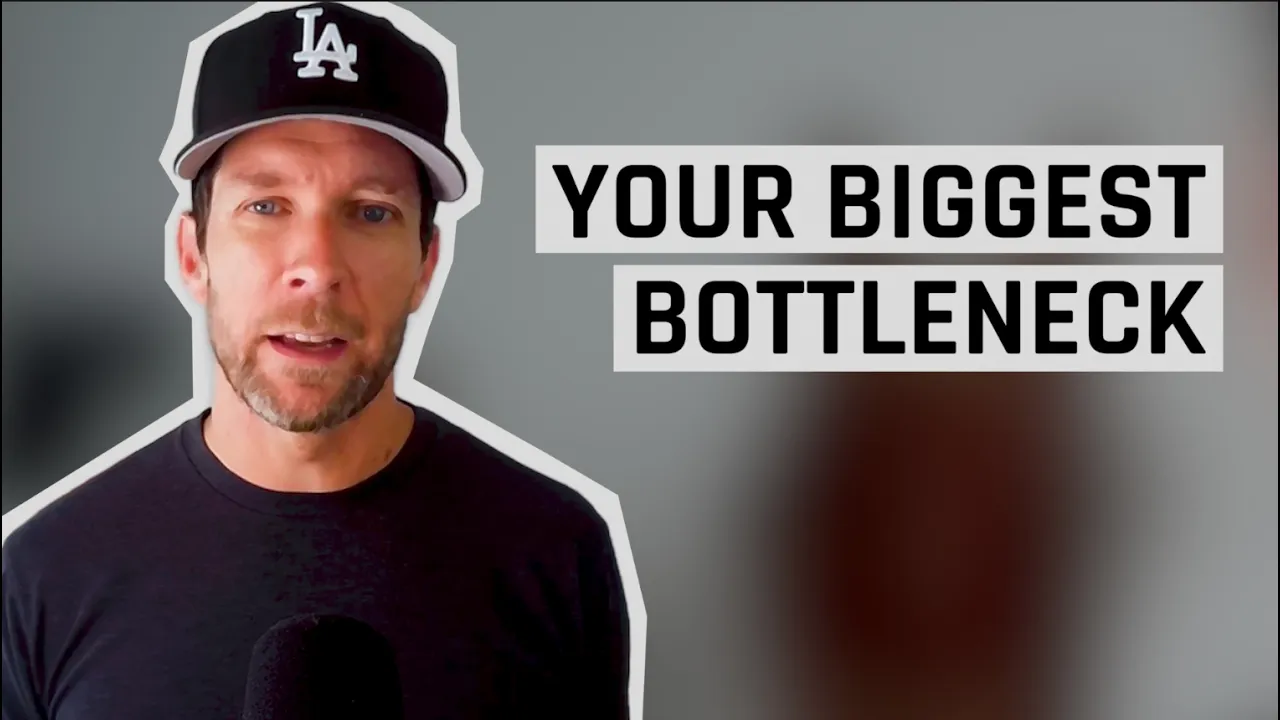
The Andrew Faris Podcast · @andrewfarispodcast
Words
9,155
Runtime
40:07
Speaking pace
228wpm
Reading time
38min
228 words per minute, above the 201 75th percentile of 349 measured videos. That distribution comes from the 349-video hook study.
Opening (first 30 seconds)
In this episode of the Andrew Ferris podcast, I'm going to tell you about the biggest problem facing your business without knowing you. And I know what it is because I'm facing it in mine and I'm building my business all around trying to solve it so that my service, my product, and my business at AJF Growth can get better all the time. In fact, can get its very best. I'm going to tell you what that problem is, exactly how I'm solving it. I think this will help you. If you are a brand and you have worked with agencies before, you have almost certainly been frustrated by your experience at some
114 words, the words spoken in the first 30 seconds at 228 words per minute.
Free, no signup. See how the first 30 seconds hold attention, with rewrites.
Sentence shape
| Measure | This transcript |
|---|---|
| Sentences | 515 |
| Average words per sentence | 17.8 |
| Longest sentence | 158 words |
| Questions asked | 86 |
| Sentences containing a number | 6 |
Most used terms
Filler phrases
327 in total: um 88 · like 76 · uh 58 · actually 41 · you know 20 · right? 19 · sort of 12 · kind of 7 · I mean 4 · basically 2.
A literal whole-word count of the same phrase list the Prepublish browser extension uses, so a phrase inside another word is not counted and a phrase used in its ordinary sense still is. It is a count and not a judgement.
Free, no account. See where attention is likely to drop, with a rewrite for each weak line. The free check shows the scores and the one issue costing the most. Or run it on the words above first.
Free · No login · See a sample audit first if you prefer.
What this transcript is
Every word below is the caption track YouTube publishes for this video, pulled from the video itself and reproduced unchanged. It is not Prepublish's writing, not a summary, and not a re-transcription: it is the video's own published captions. English captions, generated automatically by YouTube, in the video’s original language. Source: the video on YouTube. A channel that would rather this page did not exist can ask for its removal through the contact page, and it is removed.
No Script X-ray for this video: YouTube shows a Most replayed graph only once a video has enough views.
In this episode of the Andrew Ferris podcast, I'm going to tell you about the biggest problem facing your business without knowing you. And I know what it is because I'm facing it in mine and I'm building my business all around trying to solve it so that my service, my product, and my business at AJF Growth can get better all the time. In fact, can get its very best. I'm going to tell you what that problem is, exactly how I'm solving it.
I think this will help you. If you are a brand and you have worked with agencies before, you have almost certainly been frustrated by your experience at some point. Many many many brands in the e-commerce space have gone on what I call the agency carousel or merrygoround or whatever where you are going from agency to agency to agency and uh struggling to to sort out um what is going on and why your agency service is so bad.
And that could be in any space. It happens a lot with meta ads agencies, but really it can be in all kinds of different spaces. And if you are an agency, um, uh, by the way, the same experience is true for software companies. You grab a different piece of software and they just don't do the thing they promise. And so you churn it or you stop using it or whatever it is and it's frustrating. If you are a software provider or an agency, you have had the same experience with the brands you're working with.
You've had brands come on and plenty of them are good and and whatever, you know, uh uh clients and and um partners in the business, but you've had the experience of having them say they're going to do certain things, say they're going to move their business in certain ways forward, but just never seem to get there. And therefore, the partnership goes badly, and they blame it on you, and you blame it on them, and there's just this mix.
And um and I think that there is a fundamental challenge to every kind of business that has become extremely clear to me lately that uh that I am seeing in my business and seeing as the reason that we haven't really tried to grow that much and seeing as the fundamental thing to solve and I want to break down for you what I think actually not only businesses but what basically any organization needs in order to thrive.
Okay? And I think you can break it down into three different components that I think is at the root of why agency relationships go wrong, business relationships go wrong, why you are not profitable, like why why you are struggling on meta ads, why you are hitting growth walls, etc. Okay? And here's what it is, and this is going to be high level, but I think uh I think it can help you. Okay? So, um so here's what it is.
There are three things you need to make your business work. Okay. Uh, whichever side of the fence you are on, number one, you need the right ideas. So, you need strategy. You need to know that when you are efforting in your business towards something, you're efforting towards the right thing. I think almost everybody underrates this. You can work extremely hard at building the right thing, but if you have the wrong fundamental idea, you can actually be running really fast in the wrong direction.
It would be like exactly that, like the fastest runner in the world, somebody who has trained incredibly well to be a great runner going into a race and running away from the finish line, right? Imagine somebody running a 100 meter sprint, okay? Just like something like that. And they're the fastest runner in the world, but they just don't run a straight line. If they do that, they're going to lose the race even if they're Usain Bolt.
And so there's something that that is core here where you you have to have the right ideas and strategies in AJF growth as a meta ads performance agency that does financial forecasting, media buying and creative as the core of our service. Okay, that means just to put the some legs on this, okay, we need to have the right cohort forecasting method. In fact, we need to have the right financial models for our brands to succeed.
Like we we need to know that they are they're building a business that makes sense in order to accomplish their goals. Like what I mean is if the goal is to exit in three years, we need to be able to build a model that gets them the maximal money for their exit and that actually accomplishes that. Right? It's not good enough just build a model. The model has to actually produce the outcomes. Has to be organized around the outcome of the business they're trying to pursue.
For creative, we don't just need to produce a lot of creative and produce that creative efficiently. We need to produce good creative creative that actually sells or good offers, right? or whatever. In fact, we need to know that we're efering the right kind of thing in the first place. Maybe our whole business ought to be organized around, you know, meta ads with some creative, but really it would be better if we put more of our effort into CRO and offers or something like that.
I'm not saying that's true. I'm just saying if that was a better use of our time to more fully move the needle strategically for our clients, then that's what we should be building processes to support. Okay? So, it's not just good enough to be efficient and to have good process. You actually have to have the right ideas. And when I talked to Olivia Corey on this podcast a while ago, we had this conversation where she had listened to one of my podcasts, Olivia from House Analytics, right?
Uh she she'd had this podcast where or she had listened to a podcast of mine where I said like this is why I think trust the experts is actually really good advice. But of course she illustrated she also articulated what the exact problem with trust the experts is. Um it's that it's hard to know who an expert is. It's hard to it's hard to validate that. That's why I look for in the thinkers that I admire clarity to the principles guiding their thinking.
Some people call that dogmatism. I call that clarity. Okay? That's why I that's why I look for and why I tend to articulate strongly stated ideas because strongly stated, clearly stated ideas are ideas that you can argue with. They're disprovable. And if the idea is not disprovable, uh it's a problem because I want to go and look and say, how can I actually evaluate a strategy? It's really hard to know truth and to discern truth in the world.
And so finding ways to articulate and then evaluate that truth is is is critical to me. It's what I'm really drawn to. It's what I try to do on this show all the time. Uh is is try to do those things. And so yeah, but it's really it's really important and and and so much of what's happening in your business right now might be a problem of simply being honed in on the wrong ideas. So you could be efforting really hard.
Maybe the classic example of this is like brands that um raised a bunch of debt at some point in order to grow their business. They had this idea in mind where they could they could um speed up their growth by grabbing a bunch of debt and then as they grab that debt they could uh they could use that debt to speed to um yeah to fund their growth, right? Okay. Well, that's fine except that if it's bad debt and even if the debt is efficiently applied to your business, it's actually it's actually sending you running the wrong way for most brands, okay?
It's like a really bad way to use your money and in most cases, not always. Sometimes those those loans make sense, but articulating that and understanding that why is really important. So, as best as you can to know strategically what the right ideas are in your business. Okay. Number two, then something I've alluded to a few times already in this conversation, it's the right processes. So, it's not actually just good enough to have the right idea to use my running analogy, right?
You don't just need to make it. You don't need to just know where the 100 meter um race goes. You don't need just to to um understand where the finish line is. You actually need to be able to train and to to run the race to do that, right? You need to be able to execute on the plan of doing the things that you want. And this is another place where things go extremely wrong. So, uh, Patrick Adu, my, um, the the the person who's come into my business and is going to function as something like a COO.
You know, we haven't even articulated the final title, but I'll talk more about that in a little bit. But if you listen to my interview with Patrick, my conversation with him recently where we're talking about sort of him coming into my business, what we're doing, he, you know, so much of his role is around doing this. And just this week, he sent an email internally to my team saying, "Okay, we had a conversation with a client where something went wrong.
And here's one of the problems. We told the client on the call we would do X and then we did not deliver X. And the problem was not our intentions. The problem was not that X was a bad idea. The problem was at the level of process and organization. We did not follow through. Um and we did not actually execute those ideas well. And certainly this was my fault, right? I probably either overpromised or didn't follow through on the management level to do the things we needed to do.
And this is where things go wrong so much of the time. so many of your agency relationships that have gone bad if you are on the brand side is this uh so like is that is that you get on a sales call with somebody who tells you here's what our agency believes and here's what we can do okay and uh and you know it's a CEO or a founder or whatever it is and they say um yes this is what our agency believes here's the way to buy media here's the way to generate creative etc um and that's what we're going to do for you and then you get into the actual relationship and of course they deliver a service that is very different from that or delivered um delivered in bits and pieces.
That's not because they're mean or bad or lying to you or chasing money or whatever. It's because it's really hard to bring people into an organization and drip good strategy through that organization and get other people to replicate that idea. But that's that's the gap. The gap is not an and at that point the it's maybe not an idea problem. It's gap. That's that's why some organizations really really struggle to deliver things because it's really really hard to do.
Uh it's hard to do very well. But that's the crucial thing that's actually happening even on the brand side as well. Many brand operators are listening to lots of podcasts like mine, okay? And they're they're hearing a million ideas all the time and they go chase them all down and they bring up the idea in a meeting and they you know and I'm certain certainly prone to this and they have no ability to organizationally follow through on the idea.
And so it's just really hard to do that because also by the way like there's competing priorities and limited time. And so you don't only have to articulate, you don't not only have to follow through on the idea, you have to actually um you actually have to to move around priorities to follow through on the idea. And you have to be able to rearrange things and project management and all that kind of stuff. And so that's that's the uh the fundamental challenge of so many of the businesses that I see is that they actually do have good ideas.
I see both of these problems actually. People have bad ideas and so they go really hard after the wrong idea. They're going in the wrong direction. Sometimes they have good ideas that they're not going the right they're not able to actually execute on. Okay, there's a third thing and that's the right people. U the right people is a really big problem and a really big challenge and I'm going to actually spend a little less time on this one, but I just wanted to state it because I think it's clear.
Great people can um cover over a lot of the problems in the first two things that I said. Great people have good ideas or just work really hard to generate great um to to accomplish the things they want sometimes by brute force. This is certainly why AJF Growth has stayed small so far because we've just said like we're just going to kind of have great people. I'm a bad process builder, so we're going to have great people who in meetings talk about ideas and who figure it out and sort of brute force our way into into getting those things done and delivering a high quality service for our clients, but we're just not going to like we're not going to um think that uh we are going to have the smoothest greatest processes in the world.
And I've even been clear about this with clients at times like we're just going to to cover over that. Now, that's not going to be scalable. It's not going to work. the more people you add, the harder it is to cover over process problems with like another meeting or something like that. Okay? And just just a comment in a Zoom call. But that's that's the thing. Okay? So those are the three those are the three things. Okay?
Uh the right ideas, the right processes, the right people. If you give the right people an ability a great system where they can execute those where they can execute the right ideas, okay, which which is to say you give the third thing, the top two things, that's how you have an organization that's humming. If you are an e-commerce brand and you have a customer service software or help desk software that is not rich panel, what are you even doing?
If you're on one of the legacy pieces of software, very simply, there's a reason right away you should be considering going to rich panel and that is that they guarantee at least 30% off if you switch from Gorgeous or Zenesk to Rich Panel. So, right away that just means you should take the call if you are trying to reduce uh OPEX, reduce software costs in your business. But it's not just cheaper, it's really awesome.
Rich Panel was built from the ground up with AI. It is AI first software. It is not AI layered onto legacy software. It was built AI first. And if there's any part of your business that can benefit from leveraging AI to make the experience for your customers and your team better. It is very obviously customer service. They allow you to um to work very quickly to reduce ticket load from your customers with an incredible um self-help center that sort of jumps right over on top of your website, layers right on top of your website.
They see on average a 30% ticket reduction from customers uh when customers switch from other pieces of software to them. So that means customers are finding answers to their questions faster, which allows them to check out faster. It's just really wellexecuted customer help desk software while also being meaningfully more affordable than the main options in space. You should go right now to richpanel.com/jaf. richpanel.com/ ajaf or just follow the link in the show notes in the description of this episode to go check it out for yourself.
It is great software. Multiple of my clients are using it. You will like it too. Um it's what I plan to use when I launch my brand because it's really great. bridgepanel.com/jaf. Go check it out today. And the best organizations do those things extremely well. they apply their resources towards that towards that out outcome. And I I've thought a lot recently about um Common Thread Collective and their experience because they have announced recently, right, that they have partnered with a private equity group, which is another way to say that they have um they've been acquired, right?
Uh and and you know, they're not ending or anything like that. They're they're thinking about how they're going to grow and go into the future. And I've been really close to that organization and watched it take a lot of different uh shapes over a lot of times. And one of the things I've watched happen really clearly is these three things happen altogether. I think actually ideas was never really the problem there. Taylor at the Taylor Holiday the the lead in that organization has always been extremely smart and um and as the as the intellectual capital and the collective DDC balance sheet as I like to say like as there's been more knowledge over more time for people uh that uh that you know Taylor's been at the forefront of that and has been able to articulate that and do those things.
The ideas I think have been good for a very long time in a lot of ways. Um, but it was really challenging to watch them build processes. That's why they scaled to, you know, over 100 people or whatever and then came way back down before hitting a a a new period in their history where they were able to deliver their process better. And what I watched happen there was Taylor take the ideas that he had, the very best ideas, and get deadly, deadly serious about executing those ideas at scale via great process, building their own software tools, um, you know, building incredibly detailed Google Sheets, etc.
Um, in order to to to uh deliver those over and over again and to to to hand that to the right people. And that's the other thing that happened is that um Taylor has always attracted high quality talent to him, but he seems to have been able to in the last bunch of years, especially as there have been more talent and more growth in the DDC space, uh been able to attract even better people all the time and give them those tools and that's made the organization thrive and you see it in the outcome that they just achieved.
So just watch that happen. That's an agency outcome and I know for a fact that like Taylor has built a system to like to build and grow his agency profitably. Uh that that has been part of that. is just drilling down into ideas, processes, and people over and over and over again. And as I've watched that happen, it's made me realize that's what my organization has to do, whether I'm talking about AF growth or the brand I'm going to start on the side or or whatever.
And that's what your organization has to do as well. Um efering towards the right ideas, the right strategies with the right processes. Okay. So, here's how I am trying to solve that at AJF Growth. Okay. Um, I'm trying and and and what I'm really wanting you to do with this episode is to take a moment and think about which one of those three or which multiple of those three, maybe even all three of them is your problem.
Do you have the wrong ideas? Do you have bad process or do you have bad people? All of them are possible. In fact, and certainly in some way, all of them are happening. But where is that happening? Are you sure you're efforting towards the right thing? Are you sure that your efforts towards those things are good? Okay. Are you sure that the people on your team are motivated and move and and compensated and incentivized and all those things to do the right thing?
Are they high integrity people? All that. Okay. Here is the ways that I am trying to solve this in my organization if you have honed in on that. Okay. I think we we're trying to effort all of them. Okay. So um so number one above all and this has been a light bulb moment for me and I want desperately to pass it on to you was um was this u was bringing Patrick Kadoo into the organization as within the visionary integrator EOS framework so entrepreneurial operating system EOS a lot of people use that as a way of solving number two here like the process problem okay organizing people's behaviors and rhythms around um around the ideas they have and actually trying to move move people to the right EOS is great.
Um, you know, you can go read traction. I actually haven't read it. I've just watched businesses use EOS, but you can go read traction and sort of learn about how this is working in businesses. I just read Rocket Fuel. And if you hear what I am saying right now and it resonates with you and you are thinking about your role in the business that you are in, um, you may want to read Rocket Fuel. If you're a CEO or COO in your business, you may want to read that book.
It was a really eye openening for me. Very easy read. Um, thanks to Patrick for recommending it. Um, I'm not a big business book reader, but this this was very helpful to me very fast. And the basic principle here, right, is that there's a visionary and an integrator at the top of most organizations. Very rarely, there's somebody who is both. Okay, it exists, but it's rare. And the visionary tends to be the sort of outandup person, the person who's looking down for like where is this organization going to go next?
How are we going to get there? Really focusing their opinions on some of the idea phase of things, but is operationally weak, processoriented weak. I am probably this person. Okay. And then there's an integrator type who's really operationally strong and who can help not only shape those ideas certainly and speak into them, but also can help actually with the process and execution of the ideas. That's not a crazy wild thought, but the thing that freed me so much as a leader in this business was just sort of relieving myself of the burden of trying to be both if we were going to try to grow.
Like within a week of seeing Patrick join my organization and I mean that within a week I've just been amazed at how much he is able to operationally accomplish because he is so much better at it than me. And instead of me trying to be that or pretend I am that or whatever it is like you know that stuff just like building good process and operations is just extremely difficult for me and I need to speak into them strategically and all that of course but like I just I just it's just not really my skill set and and there's this part of me that feels guilty about that almost like I'm passing off work that I should be doing or something but instead what if instead of feeling guilty about it I say like no that's a weakness of mine I'm going to find somebody with a strength of mine who's aligned with me at the vision of the organization and you know culture and all those things and and do that and amazingly that's so far what has looked like with Patrick who knows how it'll play out.
Patrick and I both recognize that this could go all kinds of directions and we've talked about the challenges that we will inevitably face of course including relationally and all that stuff. That's the normal part of doing things together. But um but that has been so helpful. If you're driving serious amounts of traffic, spending serious amounts of money on ads in your business, you should be thinking about doing that with help from Vermont.
Vermont builds the best, highest quality funnels, landing pages that you can possibly find uh for any tool that I know of in the ecom space. They do an incredible job building this unbelievably robust tool that is u really fast and really easy to use so that you as a performance marketer can build the kind of really tight funnels you want to very very quickly with all kinds of help from them with baseline templates and AI tools to help you deliver those things really fast.
The real value for mod is this. If you're messaging some highly specific angle for your ad, don't just send that traffic to a generalized landing page. send it to a landing page that actually has an offer and content and that sort of thing that uh that allows you to message that angle all the way through the funnel, right? So, you actually consistently message all the way through your funnel and then build offers specific to that funnel without ever touching the website.
So, you can build highly specific bundles, upsells in cart upsells, um specific PDP carousels. You all know if you've looked at any heat map ever of how people are interacting with your PDP that that's what customers look at all the time so you can build specific carousels really fast and easy test those for your funnels. That's what Vermont allows you to do. It allows you to do it at the best speed and with the most freedom possible while also being insanely fast loading and a great experience for customers.
They're also a great team who really helps you succeed, helps you thrive. They are there for you when you are struggling with different things and can help give you some strategic direction, some direction on um actually building and using their tool. They're really, really great. Go to ver for vermontcommerce.com/af to get started with Vermont today. ver for vermont.com/af. It just has allowed me to think that way. I want to really commend this idea to you if you're at the top of an organization and you're finding yourself struggling to find that forward movement.
Who is the integrator and who is the visionary in organization? A lot of times the visionary is, you know, CEO and the integrator COO. Um, and maybe that's the terminology you want to use, but it's just really critical. Um, it the one who can do it all, like I said, is so rare and it really has felt so freeing immediately and I just can't wait to see how this plays out over the next three to six months as we actually carry out this process a little bit more.
Okay, so that's number one at doing this trying to or trying to solve this at the organizational level with who the people are and what their jobs are. Okay, and um and for me um well, I'll talk more about that in a second. Okay. So that means number two, a big thing that we are trying to do is actually build much better and more ongoing process. And and that sounds in some ways too broad, but what I want to say about this is that it means getting incredibly specific about the things that you believe and then building tools, software, AI stuff to actually help you carry those things out.
And an example of this, what I mean is is like um like I I watched I watched CTC do this really well. Like I said, like at at CTC, I know that Taylor had built a tool. If they forecast in in their forecast, if they say, "We want to we want to give you a forecast and then execute that forecast." Okay, if we want to do that, then you need a forecast for let's say it's a I don't know a million dollars in ad spend one month.
Okay, to spend a million dollars in a month, okay, on meta ads, you need to spend that at the level of X number of campaigns. Okay, so how many campaigns and how much is each of those campaigns going to spend per day? Well, you can actually forecast down to the campaign level to figure that out and then you can track that day overday and see how you're pacing towards your goal. Hey, by the way, if you have any thoughts about what I am saying in this video, leave a comment, would you?
Um, and and uh like and and subscribe to the channel. Really helps me to grow it. And also, I love to interact with you in the comments. I'd love to answer them. I try to answer as many comments as I possibly can. Thanks. Basically what I'm saying is you you push deeper and deeper and deeper and deeper into the thing that you are trying to do and you build more and more clarity and more and more measurement so that you can understand that as well as possible all aligned towards the right business outcomes.
And that way of thinking about process is something that's extremely difficult for me but it's something I want to see and we're we're we're making a bet of doing much better. Patrick and I the bet we're making at AF Growth is that we can do this at the level of creative first and it will have the biggest impact. Okay. Patrick talks about from his days running an e-commerce business at supply. He said like I could have dealt with a lot of stuff from my agency.
If they were um consistently producing high volume, high quality, highly diverse creative if they were giving me that, okay, then I could solve then I then I could deal with a lot of other things. And I think that is right. And so then my job as a visionary or whatever becomes, okay, how do I go and find the best things in creative? There's a lot of talk right now about whitelisting creators. Okay. Well, if that's what we need to do, how do I make how do I go and and figure out, do we help brands go get whit listing creator relationships?
Do we have the brands do it? Do we give them a playbook? Do we charge them and do it for them? Like, what's the answer? Okay, so I got to help think about that. And then Patrick will help build a process for us to do that. Okay, how much do we charge uh for that service? How much should a brand spend in that service? And then how do we um create the relationship? What are the snacks like? What are the contracts going to look like?
And how much should you um and and how do you make sure that money gets transferred? How do you get whitelisting access, which is ends up being this huge pain? And you see what I'm saying? There's all of these things. How does the how does a a strategist on our account know when to use that um in in the business's life cycle? And is there something that's triggering that for them? Do we have a library of ad formats that we are trying to produce?
Right? That would be another way of looking at this. If we think X ad format works really well, let's just make one up. Let's just say the Post-it note ad. Okay? Let's just say we were all in on Post-it note ads. Okay? We do some text and context ads like we talked about. We're not all in on Post-it note ads, but let's just say we were. Okay? Or maybe let's let's take the long form explainer because I've talked about that a lot.
Okay, the long form explainer I still believe is one of the most valuable assets you can make uh for ads. Okay, so how do you make a long form explainer? H what are the different sections of a long form explainer? Are we writing things to do that? And we and and how many of them should we make and how long should it take? You see what I'm saying, right? There's a lot of these questions that goes from the right idea, make the long form explainer to the right process.
And it's not easy. You have to drill in and drill in and ideally you want to push all of your efforts towards the things that generate the highest value to you as you define value, right? Which is probably enterprise value in your business. Okay? So, um, so for example, at the agency level, if we are trying to build X dollars on the bottom line as the way we are being valued, let's say we want to get our EBA to a million dollars a year, whatever.
Okay? I'm just making that up. Let's say we wanted to get there. Then you work backwards and say, "Well, if our creative service is going to generate the most value for our clients and our clients are at X margin, okay, then then I need to do these long form explainers because that's the way that's the bet I'm making that uh that is going to that's going to generate value for the client. It's going to keep the client paying us and that's going to get us towards that million dollar per year IBIDA number." Okay, you get the idea, right?
If that's the thing, if that's where the effort should go, that's where the effort should go and we should go do it. This is what an agency does and like I said, this is why so many agency experiences are so bad. And I just caution you um if you are on the brand side in particular um and and for that matter on the agency side I watched the sales pitch goes in both directions that I've had brands who said to me like this is what we are going to do.
We are going to pay you x amount and they've come from four and five agency relationships and at some point you say maybe the brand is the problem not the agency. Okay. And and so they actually can't deliver on the promise of being a good partner. All right. Um or the brand you know very commonly a brand will come to an agency and say this is what we want you to do for us. the agency says this is what we can do for us and then they can't actually do it and that's where the break is so much of the time you know lots of people who are running agencies are smart and have good ideas and even where I disagree with them there they're still generally trying to move the right direction right and they they do those things it's just really hard to deliver the service at scale and so that's the thing you have to test for in that relationship and I would also just recommend going towards EOS here I'm almost certain we're going to do that at AJF growth um but having an actual system this is another thing I've heard Matab Bogle talk a lot about recently and I've been really helped by just his book recommendations and things like that five or six clear business books where it's like just build the system.
Mab talks about like traction. He puts that into his companies that he's working with. So they just are implementing EOS as the management system. So you have a real like organizational operating system to move you forward. Um a compensation structure and that makes sense, a hiring plan and a hiring process that makes sense, a supply chain negotiation process that makes sense. He's got all these things really clearly articulated, including some books to do that. um go follow Mab on X and and learn from him about how to do those things.
I've been really helped by some of those comments from him. But having those systems in place is great and most of them are solved problems. Okay, the way to organize your weekly meetings as a team is a solved problem. The way to organize your leadership meetings and your accountability as a team is a solved problem. Just go learn it and do it. Okay, that's what we're going to go towards. And again, this is what I see really good businesses do.
I'll just use CTC as an example again. I've watched them build an agency management system using the best inputs from the best sources to make it so that everything they're doing is actually a giant repeatable process from sales call all the way through delivering the service all the way through retention etc. Um that's the that's the goal that AF growth is trying to get to how to do this well. Okay. So number one visionary integrator EOS number two ongoing process generation number three ongoing idea generation.
So it's not just process problems it's idea problems. I've been asking myself this question recently. What are the most likely ideas I have wrong? You know, maybe my creative testing strategy is wrong and I just need to go revisit it. Some some smart people say that who are spending a lot of money on meta ads. I need to interrogate that a little bit more. Maybe my um maybe the kinds of creative we make could be better.
I don't think they're wrong per se, but maybe it could be better. Um maybe uh maybe I'm uh wrong about how to generally think about u growth stages in a business and forecasting a business, right? Maybe I should be pushing harder for brands to grow faster and less profitably in the earlier stages of their business until they get to 20 or 30 million bucks. Um, and I'm and I'm too profit focused in the early stage. I don't know, you know.
Um, there's just h how do I make our media buying and better, etc. Those are the kind of key questions for me, right? If if AF growth delivers forecasting, um, creative and media buying, then uh, then how do we how do I make sure I'm I'm on the right ideas to do this? I just did this recently where I had a forecasting mistake for a brand of mine that highlighted for me that I had a wrong idea about how to do a forecast.
It actually wasn't a process problem. I just had a m I just had a I was thinking about how to forecast old cohorts in a way that was incomplete. I would say not so much wrong as just incomplete. And making this mistake highlighted that for me and has really helped me forecast better and more appropriately. Okay. So because of that now uh now I have solved that problem and now I have to create a process to make sure that um other people in my organization who are going to be forecasting can do the same thing but that's that the idea was the first problem to solve.
Um how about like the use of AI like understanding the best places and uses of AI in a business is like a critical strategic question right now for brands. Well how do we think about that? Okay. Um and and just being able to answer that question all the time. Uh so ongoing idea generation is is a critical part of this and it means just like paying attention and and giving some amount of my time all the time towards interacting with the best sources that I can possibly find and then bringing those to Patrick in conversations and saying how do we work together to prioritize these and build the right things in the organization so that the tools and the people and the processes that we are building and working with uh are are um are delivering the right idea the most.
And this is a hard thing to do. Again, finding truth is hard sometimes, but as best as you can to work through those concepts as clearly as possible. Um, so that's that's number three. And actually, this is another place where bringing on an integrator is is really exciting to me because it's going to free my time to spend more of it thinking through how do we make sure that we have better ideas? Not just better strategy, not just good enough ideas, but like better.
How do we make it better? I thought about this with offers a lot. Like it's not really my strongest strong suit. like why don't I go and and just download all the information I can from people like Russell Brunson and Alex Formosi who've just done this at massive scale and use AI to help me you know get the best of their information and say like okay here is our framework for offers that make sense for our brands I can't articulate that clearly enough right now and that's part of my job okay that's a weakness for me right now so how do I go and uh and solve that weakness at the level of ideas and then work with Patrick to figure out how to do the process again this applies to any organ organization in any way.
If you're a brand, this might be happening at the supply chain level. You might have the wrong idea about what's possible for you in negotiating the supply chain. If you go listen to my episode with Roman Khan, you'll hear him talk about a strategy for negotiating supply chains that he has built, which is to get a bill of materials from his supplier and then to start interrogating that bill bill of materials bomb boom to get that bomb and to start interrogating it line by line and thinking through that.
That is actually a strategy and idea that will be followed by the process of doing the interrogation. Okay. Um but it starts with that idea knowing what the supplier has, how their business works, understanding strategically what is important there. Understanding whether it's not whether or not it's worth your time to even go do that and then pursuing that there. Knowing what those ideas are is really important and staying close to that knowledge is really important.
Okay. Lastly, number four, building AI into this. Um I saw um both Triple Whale AJ AJ from Triple Whale I think it was maybe it was Max um and and Taylor uh interacting recently on X about um sort of the overlap of their opinion which is that software companies are becoming agencies like they're building services to deliver the software and agencies are becoming software companies they're building software to deliver their services um and that's the future is more sort of AI integrated software integrated stuff as software development becomes more accessible with AI as tools become easier to build with AI that's where things are going Okay.
And I think that's the most obvious place where um AI is helpful in this process. And the way that I'm fundamentally thinking about AI, okay, is I'm thinking about it in terms of uh in terms of how do I use AI to deliver the services that we believe in the most effectively. Okay. Um now I'm also think AI can help us surface the best ideas. So it can help with the process generation and the idea generation. Okay. But I also think that the the and and when and when you get this right, okay, when you get this right, when you have AI tools doing this, what AI creates is leverage.
I'm actually starting to wonder and I'm going to do another episode about this with Alex Cooper very soon. So, if you like this episode, like just just make sure you subscribe because Alex and I are going to talk about this soon. It's going to be really helpful. He's really really good on this stuff. AI might actually help uh organizations in the aggregate hire more people not less people because if AI fundamentally creates additional leverage and makes every person more valuable in your business not less valuable.
Like what it might do is is make it so that so that you are trying who are trying to build a big organization can go from a million dollars in revenue per head to a million and a half dollars in revenue per head that you hire. That's an incentive to hire, not to fire, right? It's an incentive to add more heads if you can make each head worth more money. Okay. Um and and so so maybe I mean we'll see. I like I could easily see it going the other way.
I'm not going to state a very strong opinion here, but I could imagine that happening because what I've watched happen so far is that when talented people get really good tools, they do better work faster. And that means that it's really good. And so then the goal is like figure out how to get talented people in the organization, right? And and then and then give them those tools. Um but at the same time, the fundamental problem with AI as far as I can see is the errors.
Uh AI makes mistakes. uh AI can give you and and it makes those mistakes with a lot of confidence. It reminds me a little bit of like um attribution software in this way where attribution software will tell you extremely confidently what's happening in your business and how people are finding it except that it can be wrong or it can be like confused and tell you the sort of wrong direction in your MM or your MTA especially your MTA whatever right so uh so then you then you have this problem of like having the wrong strategy and building a pro and having better process to deliver you the wrong strategy.
I've seen this happen a lot of times where like brands go running after the wrong thing really hard and really fast and really efficiently. That's a big problem in your business if that happens. And so um AI I think has the same fundamental problem which is that it will deliver you this beautiful report stated with confidence and clarity about the thing you should do and then it will be wrong. It will just be wrong like and and it can design you the landing page that converts extremely poorly and it will design it with a lot of confidence and speed.
Okay. Um and so uh so fi use finding you finding ways to use AI to source truth and then to deliver as best as possible the the actual best ideas is important. I'm not saying it can never help you with good ideas. Of course it can help you surface great ideas. It can help you a lot surface great ideas. Again it can make some sort of laborious work happen faster and easier for sure. But uh but that to me is the fundamental problem.
It's the it's the same problem as the creative problem with AI, right? Where AI will deliver slop or well, it takes so long sometimes to get AI to give you really really good creative that uh that actually you would have just gone faster and cheaper just having a human do it, okay? Because you had to do so many edits or whatever it is. So, um to me, look, I'm pro AI. We're like finding ways to use it all all the time.
I don't want to sound too negative here. In fact, what I'm saying in part is that we want to use AI in our system. And this is so far at AF growth that the number one use of AI that we have found is to be a um co-writer taking our creative strategy and our and our sort of scripting ideas and helping us to create scripts as variations of our winning ads as good as possible. Like there's a very common problem, this is actually a good illustration of what I'm talking about.
Okay, there's a very common problem where a brand has a winning ad in an ad account and then they say, "Okay, this ad is winning. let's go make more ads like that. Okay? And so they say, so they start doing that, okay? Or they want to do that, but then the ball gets dropped and you make one or two and it doesn't work very well and it takes forever and then new ads are winning or whatever it is. And so you have bad process for doing this thing that everybody knows you should do, which is that when you have a message that resonates, you should make more ads that articulate that same message, okay?
And perhaps that same style. So what we have built uh Patrick really has built is this AI coowwriter that takes some of the ideas that I have about creative visionary part of the work. Okay. um and about what kind of formats work and some of those things, stuff I've researched and seen elsewhere and seen working for other people and uh and then and then allows us to take a winning ad and plug that winning ad into uh into uh you know an AI co-riter that then spits out scripts that take that same winning ad and redelivers the same message in different formats and then uh a creative strategist can work through those and prioritize what they think the best options are, what's going to work fast, etc.
Okay. And over time, I'm sure there's other ways that it can do that much better, but it delivers those scripts really well. It's really good at it. And what that is is there's there's the right idea, the right strategy, okay? And then AI to make the process better. And now we're digging into the process more to make sure it gets used by people in the right ways. Okay? Make sure there's any if there's any challenges in the way that it's getting used that we solve those challenges.
Okay? There's that. And then we have the right people doing those things. And there's all three of them all in a row. And our goal at AJF Growth is to keep doing that over and over again with everything we do. Have the right idea, build the right process, often using AI to support that. Okay? And then u and then deliver that with the best people that we can possibly find. I think if you build your organization with clearly attempting to do those things and and just knowing where you are weak as best as you can or at least trying to interrogate where you're weak and maybe bringing people into your organization, ask them where do you think we are weak?
Okay? And and and ask them that question. Then you uh do what needs to be done to figure out is it one of those three things ideas, processes, people. Okay? And then you go and find that then uh then and and effort those things. That's I think the pathway to building a really good, really highquality, really profitable business. Thanks so much for watching or listening soon on the show. I have Alex Cooper coming. Like I said, that's going to be a great conversation.
I have a monster conversation coming with Taylor Holiday about the sale of CTC. You're going to love that episode. Make sure you subscribe so you don't miss that. It's going to be really good. I'm going to do that in person. It's going to be shot beautifully. It's going to be awesome. And then um I've also got an episode coming that I'm really excited about with um one of the founders of Pure Vita who built their wholesale program.
He's going to talk about how ecom DTOC brands can build wholesale programs from the ground up. Really unique experience and background. I've spent some time with him since Jordan Mayer. Great dude with really good insight. He's doing it for one of my clients right now. He's going to talk about how to do it for you. So don't miss those episodes. Thanks so much as always to my sponsors on this show. That's Vermont and Rich Panel.
Uh you can get the links for both of those in the show notes to this episode. Go check them out. They're great. You can also reach out to me if you want to work with me as we are building all these things. Go to ajfgrowth.com, fill in the intake form. We'd love to hear from you uh there. And you should also email me podcastfgrowth.com. If you just want to reach out to me directly, that's fine. Thanks so much for watching or for listening.
I appreciate it a ton. I'll talk to you next time. [Music]
The words are the caption track's own and nothing is reworded or re-transcribed. Paragraph breaks are placed between sentences so the text reads as prose.
Free tools for your own script: paste a draft and see where it stands before you record it.
Paste your draft and see where viewers are likely to drop off, with a rewrite for each weak line.
Paste the first 30 seconds of your own draft for a hook score and rewrites.
Check your draft against YouTube's advertiser-friendly guidelines before you record it.
Read this channel's public videos and transcripts, and download a writing brief for it.