Getting the transcript
Reading the captions from YouTube. A video nobody has opened here before takes 10 to 30 seconds; this page fills in on its own.
Getting the transcript
Reading the captions from YouTube. A video nobody has opened here before takes 10 to 30 seconds; this page fills in on its own.
The Andrew Faris Podcast · @andrewfarispodcast
Words
9,945
Runtime
50:57
Speaking pace
195wpm
Reading time
41min
195 words per minute, between the 181 median and the 201 75th percentile of 349 measured videos. That distribution comes from the 349-video hook study.
Opening (first 30 seconds)
Laura Gavvara, one of my most trusted friends in the e-commerce space, somebody I've been working with for a while now and who you've heard on this show before, built my supply chain for my brand, uh, called Resolute. I have recently done a podcast episode where I showed you everything that I can show you about the unit economics of Resolute down to the penny for the way that we are expecting to launch and how the [music] finances of this business are supposed to work. If you have not heard that episode, you should go back
98 words, the words spoken in the first 30 seconds at 195 words per minute.
Free, no signup. See how the first 30 seconds hold attention, with rewrites.
Sentence shape
| Measure | This transcript |
|---|---|
| Sentences | 560 |
| Average words per sentence | 17.8 |
| Longest sentence | 238 words |
| Questions asked | 52 |
| Sentences containing a number | 32 |
Most used terms
Filler phrases
619 in total: like 223 · um 217 · uh 63 · you know 39 · kind of 25 · actually 21 · I mean 13 · basically 7 · right? 6 · literally 3 · sort of 2.
A literal whole-word count of the same phrase list the Prepublish browser extension uses, so a phrase inside another word is not counted and a phrase used in its ordinary sense still is. It is a count and not a judgement.
Free, no account. See where attention is likely to drop, with a rewrite for each weak line. The free check shows the scores and the one issue costing the most. Or run it on the words above first.
Free · No login · See a sample audit first if you prefer.
What this transcript is
Every word below is the caption track YouTube publishes for this video, pulled from the video itself and reproduced unchanged. It is not Prepublish's writing, not a summary, and not a re-transcription: it is the video's own published captions. English captions, generated automatically by YouTube, in the video’s original language. Source: the video on YouTube. A channel that would rather this page did not exist can ask for its removal through the contact page, and it is removed.
No Script X-ray for this video: YouTube shows a Most replayed graph only once a video has enough views.
Laura Gavvara, one of my most trusted friends in the e-commerce space, somebody I've been working with for a while now and who you've heard on this show before, built my supply chain for my brand, uh, called Resolute. I have recently done a podcast episode where I showed you everything that I can show you about the unit economics of Resolute down to the penny for the way that we are expecting to launch and how the [music] finances of this business are supposed to work.
If you have not heard that episode, you should go back [music] and listen to that podcast episode. It's called Every Financial Detail of the brand that I'm starting. You can go check that out. But what I want to do today on this episode is actually break it down further and in more detail by actually having Lara talk through what she did to get me such a freaking killer supply chain. It is humming right now already, even on launch, even withQ level ordering and those sorts of things.
And so [music] I want to take to spend an hour or so here with Lara and say, "Okay, Lara, how did you generate such good prices on our packaging?" Part of that is the category of course, [music] but what did you do? We have totally custom packaging. How did you go through that? What are the opportunities in the future for us to optimize this even more? And how good can the margin get in this business while maintaining the product quality?
Lara runs move supply chain. She's been building e-commerce supply chains for a bunch of years now. She knows her way around it. Last call we had, she hung up and immediately went on some factory tours. She is out in Manila. I'm in Los Angeles. We're having the conversation. Now, this is technically a sponsored episode, but it's barely going to be pitchy because what we're going to do is really just say what did Lara and Move Supply Chain do to build my supply chain so you can hear about it and like I said, what are the opportunities in the future?
Okay, that's a long intro. Let's get into it with Laura Gavara from Move Supply Chain. You know her, you love her. Welcome back, Laura. >> Good morning from Manila. And first of all, Andrew, thank you so much for giving us a chance to work with you. And this is a like perfect partnership wherein you know how we work. You know exactly how we work. >> Uh and I know nothing about how to build an e-commerce supply chain.
So it really works out great [laughter] cuz I have said to a lot of people like I I think literally in fact as we started going down this road this is because this brand right is it's solid cologne. So, people who didn't haven't heard my old episode, like it it is cologne, but instead of spraying it on, it's like a balm that you that you put on. I have some here. If you're watching on video, here's here's a sample from the manufacturer.
You just kind of like do that. You put some on your wrists, on your neck, like that. That's how it goes. Okay. Smells great, by the way. Um, and uh and so that's that's how you that's how you do it. Well, that this is like not necessarily a hard thing to manufacture. In fact, that was the first thing you told me about it when I showed you this idea at my home in Los Angeles. um you you I showed you some some competitors and said, "I'm thinking about building this." And you were like, "Oh, yeah, we could do that." And but I I mean I as we began to talk especially about custom packaging and some of those things, my mentality very quickly was like, "Uh, oh, I would have no idea what to do here, especially because this is like a side thing for me.
This is not my main everyday thing." So, you and Move Supply Chain, which is your agency that does this kind of thing for people, um, with Filipino talent, uh, have have built it from the ground up because you're the people I trust to do it. And so, it's been amazing to work with you. Uh, you know, I've gotten the pleasure of working with you on a bunch of stuff now, and it's just been really fun. So, yeah. Okay. So, let's let's talk about it.
So, I showed the finances of this business before and just to again kind of catch people back up, right? There's basically two elements of the core product, right? Uh there's there's the balm that I mentioned here a second ago and then there's this custom packaging. Okay, so this is kind of the trickier part in a lot of ways. You're not going to be surprised to hear that the balm solid cologne balm. It's very high margin just like spray cologn extremely extremely high margin product.
Uh sort of famously high margin actually perfume and cologne maybe maybe even higher margin than something like skincare or whatever. Uh but the other part of it is that famously in fragrances and perfumes and cologn you need uh you need like to have a brand that looks and feels good and premium and beautiful. And so we built a brand called Resolute with my great friend Robbie Aronson doing all the design work there.
Uh and uh and so this is the custom packaging. I didn't actually didn't have it with me when I did that previous episode, but here it is. It's really cool. It's this little slider just like this. There's like how thick it is. This is actual walnut and there's an aluminum top. Totally custom. It'll actually be slightly different than this, but this is this is about right for what it is. This little cube. Um and we had to build that.
So Laura, what I want to do is talk you is just take you through or have you take us through the way you built the supply chain and then each kind of little part of how we are trying to optimize it. So where do you want to start? Do you want to start on the balm or do you want to start on the packaging? >> I can start Yeah. by explaining how how difficult no not difficult how different the balm and the packaging was in terms of sourcing.
But they have their own pros and cons as well. So the balm is um typically if you see it's it's a more easier product to source. The manufacturing process is very easy. It's melting, it's mixing, it's cooling and that's it. And probably maximum of three um raw materials for you and and then um the hard part of that is we want the highest quality production. Of course, we are sourcing in in the US and some in Europe because of the fragrance um the perfumemers and the fragrance manufacturers are also um high in in Europe.
While the packaging um is like in general easier to source, but the design it's it's so beautiful. It's so elegant. It's it's complicated in the sense that we are combining two different materials and it needs actually a manufacturing expertise um to have that produced at the same time. So it was a very challenging and exciting um project for us. And so first of all, I just wanted to um shout out to the team Omar and and Liselle for for doing this with me because the strategy is coming from the expert, but they are doing the execution and they did a really good execution in that. >> They've been amazing.
They did better. Really I mean really good underells it. I I have said to my co-founder many times like I don't know where we would be without Omar and Liselle. Like they are so awesome to work with at every step of the way. They've been on top of things, guided the project at every step of the way. like on the project management side of things and I should say like unbelievably good and also like totally affordable for us.
Um and that's just because there are people with good resumes but they're in the Philippines and it's just this thing I say all the time about working with you and this the sister companies to move supply chain is like finding high levels of talent in the Philippines for US business is an arbitrage that is like we can get them paid well they can be really happy in the work we can also keep the margin. It's like it's just a really big win.
So, um, yeah, they're they're awesome. I love Liselle and I love Omar. They're great. Got to meet Omar at least, uh, in the Philippines last year, [laughter] early this year. [clears throat] >> Yeah. So, so the it's it's two different products, two different process, two different style, but in the beginning, it's always mass to match. Like that's how we do our sourcing framework wherein it's it's a like it's a um wide funnel.
We begin with a mass RFQ blast. uh request for quotation is RFQ blast like it has been helpful Andrew that you've shared with us your target costs because for other clients that we had we don't have a target cost so at least we can easily um shortlist our clients with that so mass RFQ like we um reach out to hundreds of manufacturers explaining the product and and eventually creating that list and then we filter and short list um that list depending on the requirements that we have.
Like for example, we have a template that we use. Uh it has the specs that um is is required by by for the packaging and the um um solid cologne. And then we have the volume requirement um the certifications is actually um important for the formulation because we use we want organic and natural for that. >> Yeah. And then >> that's an important note here Laura really fast. Sorry to interrupt you. that it's an important note because the while the balm is relatively simple to to um make uh you know we we're really insistent on clean ingredients.
We think that's like a a critical part of how we'll differentiate. And so we wanted to find people who were where we could feel great about listing the ingredients on the product and going like we we can stand behind this 100% and make some strong claims about our product versus others in the space. That's critical to our marketing plan. So um so yeah. >> Yeah. I I >> So you saidqs were a big part of that.QS were a big part of that too, right?
Because we also don't have like tons and tons of money to throw at this. So yeah. [laughter] [gasps] >> And and I had an experience working for many years in a in a personal product like this that is using clean ingredients. And so I was thinking when you said we want this for for the formulation, I said we need to source more more than what we usually do because probably 75% of those are not using um natural and organic.
So I I already have kind of an idea how much of of the percentage will be offering natural and organic. So I told the team we need to source as many as possible directly and communicate um align expectations. This is what we're needing and so we don't waste time communicating with them if they can't produce it. So again the timeline is also important and the goal is I told the team the goal is to cast the widest net possible so that we have more options of shortlisting a a better partner um down the road.
And that was the that was a stage one. >> I mean that I think is something that already like whenever I try to pitch move supply chain to people and tell them to go hire you guys to do stuff, I just say like I just know that they that most folks have just talked to way fewer people than than you guys talk to for us. Like just that on day one we're coming in with having had so many more >> [snorts] >> um calls basically uh you know just and just like RFQS like you said um actually filled out.
Do you do you know what the do you might not remember this but do you know how many manufacturers both for packaging and product you guys ended up having some level of contact with like actual contact? >> Yes. So for for for the manufacturing we have 30 plus um total production and then for for the um for the packaging it's more than 100 vendors that we've um that we've talked to. I've been underelling that because I always say [laughter] 60 on the packaging.
So, I've been cutting I've been I've been Yeah, you you should have yelled at me about that, Laura, when I've said that on the podcast at some point. Um, >> but I always >> That's amazing. >> I always share Andrew that the sourcing process, the stage one, the the sending of RFQ, it's not very complicated that I'm not saying that you cannot do it. You can do it. All you need to do is to create like a specification sheet where all of your requirements are there.
Just just doing that and then sending it to um all the the suppliers that you can there are so many sourcing tools right now and then there are websites. But I think what we have that you don't have is just the time to to do it like creating that specification sheet and then the first week that we do is just sour source source. It's it's 100% just sourcing sending those specifications asking for um the details and and that's how we started >> and sorting out I mean that's true but also like sorting out sorting through all the stuff that people will feed back and quotes and all these kinds of things is challenging as well and I I also don't wouldn't know where to start looking for that.
You mentioned sourcing software and some of that and that's great but I I mean I I don't know what sourcing software to use. I've never used it. I'm not familiar with the interface. Like all of those things represent friction for me in a way that >> um don't don't you know make sense to me. Um okay so let's talk about um >> let's talk about the balm itself. Well did you want to go somewhere else? Did you have something to say? >> Well I just wanted to say that um the stage one is the easier part where stage two that's where the filtering comes in.
So maybe that's that's that's the one that's the stage wherein we have to separate the sourcing strategy between the balm and the packaging. And maybe your okay question would answer that. >> Yeah. Yeah. Yeah. Let's do it. So you mentioned I had target costs. I did and do have target costs. I'll share right now where we landed. I I shared this uh before um because I I wanted people to see this the stuff that you guys had done for us.
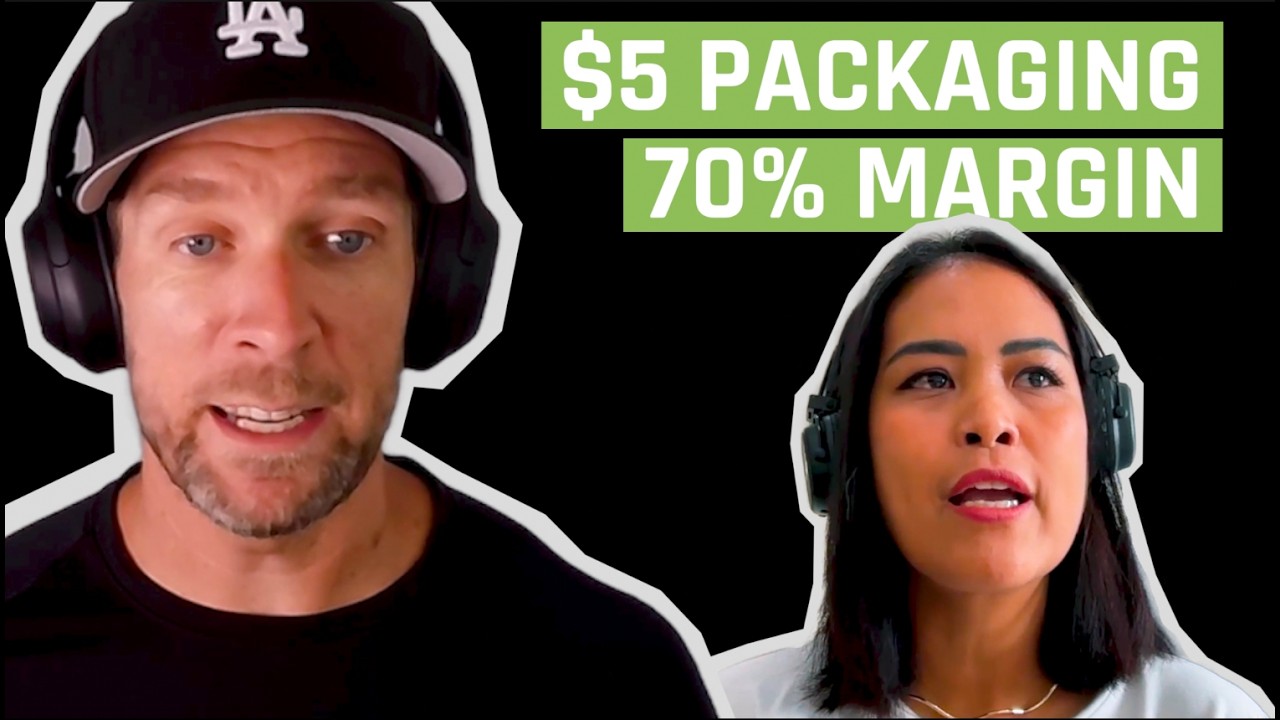
But um but here's our unit economics at each part of it. As as I mentioned on my previous podcast, I expect the ordering phases the ordering to happen in a few phases where you kind of have a sample box to start. We're not really going to talk about the sample box quite as much. It's a much simpler thing >> to figure out, but the full packaging is the stage two here. Um, and we really wanted to get that number down um to, you know, you have we have about five bucks per unit here.
Um, I I really want to have 70 points of landed margin to the customer um at the very least. And I would really like to get that to 75 um if not higher over more time. Now, one of the things about this detail is that you um of course this is all ordering at literally atq, right? So, we're ordering at the lowest possible volume and anybody who knows anything about this, even me, which this is not my area of expertise, I know, you know that you're going to save a bunch of money just by ordering it more in more volume pretty fast.
Um and and that that will have diminishing returns over time, but but pretty quickly just by not being at the at the lowest order volume, you'll get pretty far. So So we'll we'll launch with something very close to 70 points of landed margin and I think we can get to 75 after not too long. Also tariffs are in here and who knows what the future of that is. We have some interesting stuff that you were just talking about there.
Um and then and then sort of on refill packs, that's where it will be also um really really high margin if we can actually get people to that stage of things which which is going to be another question. Um, so, uh, so let's talk about the the balm first. As you can, uh, as people who are looking at this can see, you know, I've got us at about 250, $2.50, um, per, uh, you know, half an ounce. Um, I that that number may actually change a little bit, but it's going to be close to that.
Um, per per half an ounce of fill. So, um, so how did you land on uh, our manufacturer? Um, I don't know if we should say who it is or not. I don't think I mind. >> I think it's called [laughter] fine. Yeah. What do you think? You think we shouldn't say it? >> We should. >> Okay. All right. Bleep [laughter] it. Saying to my editor right now, bleep that. That's funny. Email me. [clears throat] Okay. I don't know why we should.
Okay. Great. [laughter] >> All right. >> And so, >> great. Go ahead. >> Yeah. I told I I told you that our numbers is at like almost 40 30 plus for that. and that those were the already considered manufacturers um for for you where we can where they can produce like natural and organic. Um and so the compl the way that we continue um sourcing it is that um we have been asking about um their um compliance and product capabilities.
So we have some shortlisted um companies from from the US from Europe and then also from Canada. And then I think u we didn't have a lot of problem with MOQ and lead time because right now in the manufacturing they now have the small capacity machines medium and then and then high. So if we don't have that much volume in the beginning then we can just ask them to produce in that small kettle um for for this production.
And so the compliance is a bigger thing for us and and the cost. Um, of course. >> So are you saying most manufacturers now have smaller kettles? Is that what you're saying? Like smaller? >> Yes. >> Yeah. That's interesting. Okay. SoQ in general you think is not a big problem for a lot of brands in the same way? >> For no for your product for your product like like Yeah. formulated products because they have been like they would start with a medium size and then they will eventually um get a smaller one and a bigger one just so they are flexible with their customers.
Um because a lot of the the bigger problem there is how they can get um a smaller brands right now if they don't have a smaller capacity then they won't be able to support. >> Got it. Okay. Um, so that was not really an issue. And it's interesting when I look at this supply chain immediately and I look at like 250 for half an ounce. My immediate thought is like I mean I don't know maybe we can get it to 150 someday and saving a buck on every order at real scale would really matter, but like it's not at that point it's not nearly it's not the next thing I would care about for this brand.
Like what I would actually care about is like shorter lead times or better terms or something like that. Um I I don't know when you look at like the future optimization of of the balm, what do you what do you think of like how do we how do we make it better if we want to? >> Yeah. So what's interesting is we find we found a supplier that can can source the raw materials for us and then produce it at the same time. My ideal scenario is we source for them.
Raw materials are coming from us. We buy it, we store it, which is the the typical tall manufacturing uh partnership like you produce, we provide. So, um it's easy 30% cost reduction there, Andrew, where we source it because like in in construction, I I don't have a better analogy. In construction when you do when you do when you pay for the company they had they have a percent for the raw for the materials on top of the service that they provide the labor.
So when I always say when I do construction I will say that I will buy my own raw materials and just give me the price for the construction. That's the same thing with this production where I will be the again the raw materials are very easy to source and it's a maximum of two to three combined raw materials and we are it's it's not aside from being um natural and organic. It's not hard to source. So that is the next um easiest way is to um create uh that sourcing strategy where raw materials are coming from us and they're just done manufacturing it and they're not owning the formulation.
We own the formulation. So that's that's uh the next easiest step. >> That's worth noting that we are we don't own the formulation at first. Um and that's basically just a matter of keeping our um like we'll kind of cross that bridge when we come to it. um like our me mentality is like get the get the scents out, get get the product launched and don't pay to like have custom um fragrances etc. In the early days instead we'll kind of work that through the manufacturer who helps us supply um a fragrance or somebody's a perfumer somebody to do that >> and we're future thinking about that.
We we already thought of that and so all our manufacturing that we shortlisted is capable of accepting a formulation from us. So again, it's it's the car carrier oils, the fragrance oils, and then the wax. And so it's just for us, it's very easy. It's finding it's formulating a special um scent for Resolute is the next step. So it's like not just choosing from their thousands of libraries, scent libraries, but creating our own is the next step.
And and they are open to doing that. They are open. they have perfumemers that will uh that is open to u working with us on that. So those manufacturers that we've shortlisted they are willing to do that route in the future. >> How did how did you actually confirm that like of the because we did get to this point where we were at like you know we had uh we got from 30 or whatever manufacturers down to three that we were like sampling with.
Um how did you uh actually narrow from 30 to three or whatever it was? What were the things that knocked people off the list? Yeah. So basically there were soft qualifiers as well like I immediately um shared earlier thatQ pricing pricing has um has filtered a lot of those vendors and then the lead time is is not as much problem the unit cost um and then there's a soft qualifiers where responsiveness and communication score because um um comparing it to China is the like the fastest communicators in the the entire world but but having um of course sourcing with other options we have to make sure that they are responsive um to our our questions and then willingness to iterate um or collaborate this is the one thing that I've mentioned earlier are you willing to support us down the road that we wanted to do this and that and it's not just like thinking about now it's thinking about the future what we want to do with a brand in the future and then there were proactive questions that um that we've asked and then we spotted red flags and so those red flags were they they weren't giving um it feels like they're gatekeeping.
They we cannot talk to the perfumer which is unlikely. We cannot know where they get their fragrances from and and there were there were like we also source for the fragrance houses Andrew aside from um manufacturer. So we both like two-way because some fragrance houses with uh with excellent perfumemers um talents they don't have a manufacturing. So, so we both we kind of um separate sourcing on that so that we are we can also like have an option to if we can't find a manufacturer and a perfumer at the same time we have the option to like um develop it with this uh fragrance house and then give it to the tall manufacturer.
And so those were the options and then we review feedback from networks and so uh we ask for their um clients if they can share the names of their clients the the reviews the referrals and and like deep research on that part. So narrowing it doing that soft qualifiers will narrow down to like around 10 vendors for sampling including the filter of like unit tooling cost payment terms in terms samples and and cost. The result of that is that we have like low moq very fast turnaround and when I look at like our the where the challenges are going to be in our supply chain especially I like I keep doing this like I've talked to other brands that have have launched you know CPG products like this uh personal care products whatever and I see like these like three month five month lead times on their products in the early days because they're so small or whatever and I keep kind of waiting for that to happen in a conversation with with that I like I was on the phone with our manufacturer the other day and the uh the you know I was like saying okay well you know what would lead time be if you guys do this or that or they're like oh you know a few weeks and I was like what like [laughter] I like I just like we're worth nothing to you why why are you why is this happening so good and so fast they've just been like incredible like immediately incredible to work with I mean I have lunch I think with their um with with our representative there like this week like just kind of get some face so just like really like I just every conversation I have, I keep going like, "Wow, this is like going to work." Like, as long as the in terms of on the supply chain side, this is going to be a good relationship.
They're just awesome to deal with. So, let's uh anything else you wanted to say about the the cologne itself? >> Yeah, I just wanted to um double click on that, um Andrew, because those shortlisted at least the top three that we've referred to you, we've already tested how to communicate with them. We felt the partnership already. And so uh not just the technical um shortlisting process but what I've mentioned earlier the soft qualifiers are very very important because as you've said you feel like it's already a good partnership even without u not yet starting it. >> Totally.
Yeah. And yeah, and I mean I think at the end if we end up with uh on launch when I expect everything to be at its worst basically, right? That's the thing. My expectation in my mind is that everything about our supply chain is the worst right now it will ever be. And and I look at it and go like I think that it's already pretty close to our target margin, which is by far the thing I care about the most because margin is a cheat code in e-commerce.
Um, and then like the lead times are not crazy and I don't know that we'll have like great terms with them on lunch or whatever, but I don't really care about that. The order is just going to be small. We'll worry about that later. Like, yeah, they just it just seems like we're just really set up for success here. And I know we'll run into other problems along the way, of course, and there will be challenges, but it's it's just really awesome.
So, thanks. Thanks, Laura. [laughter] Um, it's awesome. Um, okay. So, let's talk about the packaging. Um the I've got here um again the packaging again. I'll just kind of repeat. This is like wood aluminum. There's this like separate box that needs to there's a separate little tin that needs to be able to come out for refills, etc. It's magnetized. You can see it like snaps into place like that. Uh and uh and it's really fun to play with.
I sit here and do this all day long and snap it around. Um but uh but like as as I'm looking into those things, this is like totally custom. This was like a harder job. I know this sent you to China at some point. I believe there's also a Vietnam trip at some point. There's tariffs involved. So, where do you want to start there? Like, how did you come up with this >> um and with this manufacturer and and and yeah, talk us through that process. >> Yeah.
So, again, it's the mass and match. We it's it's kind of easier for this because Alibaba is a platform that is reliable for this kind, but we just have to be very careful how to um shortlist like reliable uh vendors. And so I I trained our sourcing specialist how to do that in Alibaba. And so mass RFQ and then being clear with the specifications is something that is a key for this. A key for a very complicated design with different types of materials um is is kind of the most um challenging start that we can do.
So you have the wood. You have to think about what wood is cheapest but or not cheapest not cheaper, higher quality and also readily available and easily available in that country. So they don't have to import so many uh raw materials and and then we have the the metal and we have um the magnet and and the tin inside and how do we connect all of these um hardwares and so um there were like multiple discussions it's it's a longer discussions than the formulation of course there were a lot of 3D drawings so Andrew if you remember we had a 3D design for this because uh we really wanted to make sure that the creativity of your designer will be um will be created like exactly the same idea.
So we hadn't design you supplied the designer the 3D designer for that the CAD for the CAD uh design. Yeah, >> which was awesome. We wouldn't we wouldn't had a clue where to find that person. >> Yeah. >> Yes. And so that is the most important information or document that the suppliers can can get. So when we um when we send those out after NDA of course we were able to um easily um shortlist like 10 manufacturers who can do it and then I remember it's it's our time to go to China like like October last year and I said we have to do this and and you were like hesitating and I and you said that do you think we need this?
I think we need this. I wanted to see how they do it because in my head like it's kind of complicated already. I've been in this ind industry for a very long time, but this is a very beautiful packaging, but at the same time, no offense, Robbie, but so hard. Thanks for [laughter] for doing that. >> Well, you know what's funny about this, Laura? He he told me when he sent it to me, he's like, "Hey, like I said to I know Robbie really well.
He's a good friend of mine." And I said, "Do you want me to I I said like, build something that you think is going to be awesome and then let let somebody else's problem be sorting out how to source it because like I want you to do what you think is great because you're a great designer." So he he's like, "Okay, well, I'll do that, but like it's going to be expensive. Like I just know what it like he's he he's a designer first, but he's he loves designing packaging.
He's been around the world enough to around e-commerce businesses enough to know how this kind of stuff tends to work itself out. And he's conscious of that. He was thinking about it as it was going, but he's and I was like, "Don't worry about it. Let it be somebody else's problem. Make something awesome." And because my thought was honestly like I could give it to you. You could look at it and see if it's possible. And then if we need to make changes, we'll make changes.
You know, Robbie will come around and make edits and say, "Okay, how do we make this a little bit easier if this is going to be really hard?" But I just thought it is different and and cool and custom, but it's not it's it's wood and metal. Like it's it's not impossible for somebody to make this, you know? So, um, but yeah. So when you say it was so hard, Laura, yeah, I was just say what what made it so why is that hard? >> The the manufacturers are avoiding this complicated production wherein they need uh like that machine and and different components together.
So like of course they wanted they wanted um they wanted customers, they wanted money, but choosing um like this packaging versus others, they would definitely choose an easier ones compared to this. And that's why I'm very eager to see how the production goes because um the combin combining this um hardwares is something that not all manufacturing can do. So I wanted to see it um firsthand. The team has seen it firsthand how they do it.
We've seen the sample. We've seen the kind of woods that they have. We've seen their um warehouses. And from step one to the last step, we've seen the production. And so that is the thing that I've been looking for because again before Andrew before e-commerce this is a standard and not like an option before pandemic. So before we even order we have to see the plant wherever they are. So even we are working with KFC before we're we're traveling to Brazil US to do it.
And so it's it's the same thing that we're allowed to do now because we can travel. I said I wanted to see the production. So having that um willingness from the vendor to do a complicated work is also something that will give us like like a hint whe whether it's a good um it's a good decision to work with them because if it gets harder after launch so this is just the beginning. the challenges that we're going to encounter in supply chain in the future is will depend on how willing our partner will work with us um to solve those.
And so if they can do it but they are not willing to support us then that's not a good partnership. And so what has been ultimate um um um decision factor for us is when we did sampling. That's actually where a lot of our vendors um um got removed from from the pro in the process because they are not able to first produce a sample or they are asking too much money for the sample if you remember that. And then there were like three to five vendors that gave us like a decent amount for the sampling.
And it's it's actually something that we can refund when we start the production. So yeah, those were the critical points for for a packaging complicated that is complicated like this. >> Do you think that this would have been able to get done if you didn't go to China in person? >> I think I think yes, but we I I will still push to visit them before mass production. It's it's it's because um our current vendor right now, the shortlisted one, they have provided videos that made us confident.
So that's another plus points for them. They they showed their manufacturing in a video. They they shared everything. It feels like they did not hide any information to us. So I'm kind of confident we um for that vendor. However, it's my like it's my it's my curiosity that I wanted to make sure that even if they are the right partner, they can really support us long term and not just in the beginning of sourcing. So maybe we can launch but like the confidence to continue with them long term is what I what I have is the answer that I get after after the visit. >> Makes sense.
Um how long of a flight is it for you again? Manila to to where was it? What city was it? So around so they are in in Guanzo so less than two hours. Yeah. Yeah. Less than two hours. >> That is just like sometimes people frame working with people in the Philippines as like this big problem. And it for me it's been like I mean there's times when it's frustrating of course like you know you and I have to schedule this kind of conversation at a time that makes sense for both of us.
It's morning for you. It's afternoon but whatever. Like it's not that hard to to to block the time. Um but there's these things where I found it to be so convenient on stuff like this. And actually in this process, it's been really awesome because, you know, same thing like we'll schedule a check-in meeting when we need to, but there's been times when like we'll ask for something during the day or something that needs to get put together.
Um I I recently asked Liselle, who sourced the, you know, who's led on the packaging, like, hey, can you put together all of the costs from um all of our manufacturers and just as we kind of take some final steps here and put it all into one place for us to see, you know, you've sent us a bunch of stuff along the way, just compile it all, right? And it was great because like I sent that at the end of the day. I woke up and it was there essentially like in my inbox.
I didn't have to like Yeah. It was just like I didn't need it right away. It was just like this really easy back and forth to where like the Yeah. Anyway, so I found that to be true a lot of cases and this is another thing with supply chain where I I just think if because we're manufacturing in China, having you so close to there is just great. like it just it just is like man we can send a team member who is like really a team member on our team to go and represent us there at some point.
I mean if we get enough volume then I'll go myself as well but like until then you know it's like really helpful to have somebody who can just go make that trip and go make the relationship and all those things you know um you now we have a tariff problem uh here which is that like it's going to be 30 to 60% tariffs. I think it's 30 but we you know I just got after I released this last episode actually Greg Kerry reached out to me and said uh hey you might want to check that.
Um so um so you started a source in Vietnam to go look and see if that was possible. >> Yes. >> Um yes >> that was kind of a dead end it turned out. >> Yes. So um we did it for many brands um not just for resolute but the question is can we find this some uh somewhere else and I kind of have hinted that this is I mean this is hard to source in China. How how harder could it get if it it will be in other countries. So, but we still tried.
Um, I think the main um lesson that we've we've um first the main the main lesson that I've learned is that when we shortlisted this vendor in China, it the number one factor that we've considered in their technical side is how to combine the wood, the magnet, the tin can, the tin and the um the metal. And that is where the Vietnam options fell short. Like Vietnam has great um source of foods like even better than China, even better than China and even cheaper than China.
But they fell short when we are already asking for a full sample. They cannot produce it already. So what happened is they refunded our sample fee. They said that they can't do it. Maybe what's um what's the next option for us um as a next step is to find someone that can piece them together and not not to not to like focus because right now we focus in someone who can do it all like maybe there's someone who can piece them together if it's cheaper if wood is cheaper in Vietnam and if metal is also cheaper in Vietnam then maybe we can get that raw materials um together and someone do it for us.
So, it's not for the launch phase. It's it's kind of hard to start doing that. We definitely need someone who can do it all, but like the optimization in the future, that's something that we can do because they can do the wood, they can do the metal, they can't put it together. So, that's something um that we can explore in the future. But yes, it was a it was a a dead end for now, especially um for the launch um schedule. >> And that's fine.
I guess it's worth checking out and understanding and again would have been a huge pain for us to go check that off the list. Um yeah, >> do you think Vietnam is viable for other brands? >> Yes. Yes. We've we've found so many um um vendors in in Vietnam actually just to be very um transparent. There's one DTC brand that is almost closing this year. And the only thing that made it survive is because they found a vendor in Vietnam that has 15 days lead time as compared to 45 and 60 and has a has the same quality like samples were approved already.
They have started P and Portless is already in Vietnam just in case others didn't know yet. So portless in China is also now in Viet. Yeah, they started they are starting and so what happens is that DTC brand is now able to get pre-order. Um so they don't have a PO they don't have to invest money in this in in the P in bulk PO because what they'll do is they'll get money from the customers before they actually produce it.
So um that's the that's the main it's mainly in apparel um packaging and those kinds of products that is that is um that is highly produced in Vietnam like shoes and bags as well. >> Yeah. Right. Um the the other question I have is like for the future of this product. So again we we started with 60 manufacturers got down. I feel pretty good about five bucks per unit on on on this to start. It's actually I remember I asked you on a call at one point like what do you think we're going to pay for this?
Um when you had looked at it and even with all the customizations you said 3 to five bucks. It's going to be somewhere in that range. Um and I was like I won't hold you to it. I promise. I'm just curious where you know you might have even said 5 to seven. I don't remember. But um but I you know I've started to think about like okay what is the steps to getting this to be uh better for us. Um because that that is a larger cost to where if we could knock a couple bucks off that it would really help.
Some of that's volume for sure. I we've already got quotes saying that just ordering it even a little more scale will definitely help us there. 20 or 30 cents a unit like pretty much right away. Um which which matters. Um and you know if we get you know 10,000 units orders or whatever it is then you know it'll it'll go down more. Uh but my question is like I mean you know you mentioned the idea of like a toll manufacturer in the US with our uh with our you know us going and sourcing raw materials on the cologne.
Well what about this? Could we do that? Like could we go source wood? Could we go source aluminum? Is that like a viable pathway for us to go down and try to like go hammer away at their bill of materials basically and and see if we can um save some money there? You mentioned the idea of somebody else assembling it. I want to talk about your Philippines idea in a little bit because it's really interesting. But >> but um but you know what about what about doing that like uh going and chasing down raw materials for this?
Is that viable? >> Definitely. Definitely, Andrew. And actually the the one the biggest learning that I've got from Vietnam is to see how cheaper the other raw materials are from other sources. So they have a huge gap in the wood um and aluminum um costing. So Vietnam is a lot cheaper. It's like um 25% cheaper than what what we have right now. And the only thing that we need to solve there is to find that um manufacturing who can piece it together. like I've mentioned earlier but it's always um aside from aside from increasing the order which which is an obvious savings if we don't have that capacity it's really getting and understanding the raw materials that you have sourcing it our own that that removes the that removes the additional percent that they add in their sourcing and and these vendors that we've talked to they are open to um open costing they we know the cost of their raw materials and we know the cost of their production.
And so if we um support them like what if we found find you a better cheaper wood uh wood option would you be able to um um adjust the cost for us? So that's the negotiation and that's a projects that we can do with our existing vendor. So material raw material sourcing uh um uh sourcing our own raw material and then um sharing it to them. And then there were also other opportunities Andrew in the future wherein we try different kinds of materials that are could be lighter, could be cheaper, anything that can eventually make it um cheaper in logistics in your 3PL in shipment.
So if it's if it weighs like this right now, how else can we improve the design or how else can we replace the raw materials of those product to make it lighter and to make it like cheaper even in raw material. So right now we're using that specific kind of wood. Maybe there's an option in the future to change it. uh is uh let's talk about the the the other idea you had because the actual other killer on cost for us is tariffs and you just had a suggestion that I think is really fascinating as a way of potentially getting around those and obviously there would be a lot of steps to sourcing here but um but you want to lay that out it's really interesting >> yeah first of all I'm very excited for this project I'm doing this for a lot of our clients because Philippines now has the chance to compete to China and that's something that we're very very happy to do it because again very big brands before were here.
Filela, Adidas, they were here and they transferred to China. Apparel was here before and they transferred to China. We cannot compete with their costs. And so [gasps] right now that their tariff is highs, I'm not saying that I'm happy hearing that. But the opportunity in the for the Philippines gave is giving us now opportunity to to um fight for the unit cost now because we are considering landed cost and because Philippines and US have a great relationship at this point.
We were negotiating tariff as well. So if if the um if we can send the the packaging here and we um what do you call this? We um we assemble it here then it's a it's a it's a very cheap cost to um send it here and then we are going to be um saving the tariff when we send it to the US. And of course uh there are some um alternative uh options as well that toll manufacturing will be here in the Philippines but 100% of the raw materials are coming from from US and Europe um so that we maintain a quality and so if finished goods um if all of those like the packaging goes here we produce here and then we packed it packaging is also the box packaging is here and we send it to you um I'm curious to know How much will that be compared to sending packaging to US to China then tariff and then producing it there?
I still believe that our our labor and our our [clears throat] labor cost is cheaper than in the US. While I saw the machines when we visited it's it's it's the machines from Germany similar to um the machines that other manufacturers are also using. So we can compete. I think I have a high um confidence that we can compete with the cost right now. So that's something that I am doing at the back project like I I already did that without telling you like Andrew I think I have an idea to make it to make this cheaper. >> Yeah, it's extremely cool.
I I mean this I just look at this and go like we're already going to launch with so much margin that we'll be in really good shape and margin like part of the reason I care so much about this is that like I I've worked with brands that are just extremely high margin and when that happens it just makes everything else in the business easier. If you want to cash flow an e-commerce business, one of the best things you can do is have really great margins because it just means that your cost of buying a bunch of inventory, like I have literally worked with a with somebody I I know a guy who does not keep a cash forecast in his e-commerce business.
And the reason why is that he doesn't really need to because his inventory, his margin is so good that it basically doesn't eat up any of his cash even as he scales. And at points, he scaled like 2x the business at times. you know, it's like that's like unheard of in e-commerce, you know, and and it means that like if you overspend one day on meta, it's not great, but like it it isn't nearly as costly as it would be other like it's just you make a you make an improvement to your funnel, you make an improvement to your returning to your retention, you just it it it multiplies the value of that.
Like margin is just magic. And um and so being able to do that and then design your supply chain so that you can deliver a great product which is like critical in all this and you you've been awesome about that just like never sacrificing quality. I think we're going to deliver something that's really good at the end of the day like um and and to do that while also just like really pouring over this to see how how much margin we could save I think is a really really big deal.
Every point or two that we can get back is really worth doing. And so um anyway it's it's I've been insistent on it from the start. you said I had a target cost from the beginning. This whole business for me, the whole reason I'm interested in the category is a margin play. Um, and so yeah, so I think it's a I think it's a like critical part of it and I don't think we would have been able to do it without you. >> Yeah.
Thank you. And I think I mentioned this to you Andrew that we now have formulators from multinational companies in personal care. So like >> like on your team you mean? >> Yes. On our team like formulators >> like like people working for like the biggest CPG brands in the world who were formulators there are now on your team to consult with little old me and my stupid little e-commerce brand. [laughter] >> Right. >> Yeah.
Because we we've been two two clients that we've got um that is formulated came from your ad. So and so we we have three now that we're working with this formulator. So, I'm so excited to really um just try we we're getting more and more clients in the formulation side. Majority of our clients is in FG side like like finished goods already like apparel, shoes, bags. But this is something that is more challenging but it's at the same time exciting to do because it has that uh formulation part, production part where my experiences has been for the longest time.
So, um we've got formulators on our end. We've h we have perfumemers. We're doing formulation and we're connecting and partnering with doll manufacturers. So, I'm excited to um use and help help Resolute to even um bring down the cost and and improve your margin even more. >> Amazing. Um okay, Lara, people should reach out to you at movesupplychain.com. Is there anywhere else you want them to reach out to you? >> Yes.
Um you can also follow my ex account at supplychain lara as I share more um news over there. We also have Andrew as now a slack channel which which I shared. I will be giving you the link. Yes. Yes. We have now um members in that we have like live um ask me anything every Friday and so experts are there. It's free 100% free. um we provide to our to our friends in supply chain. We're trying to increase the awareness in supply in supply chain for e-commerce.
So we did that and yes move supplychain.com and I'll be sharing with you the link how to join in that um supply chain lounge Slack channel. >> Yeah and e-commerce Slack community entirely dedicated to supply chain problems is like one of the coolest ideas I've ever heard. Um so okay, all the links for that are in the show notes. You should definitely go check all of that out. Uh, move supplychain.com is a place to go work with Laura and her team who I recommend really highly.
Thanks for your time, Laura. I appreciate it. >> Thank you, Andrew. >> I have the same feeling every time I talk to Laura, which is that she knows a lot and that there's all of this knowledge in her brain that is getting applied to my business. That is why I like working with her and her team so much. Um, and you should do it, too. Moveychain.com is the place to do it. All the links uh for this episode are in the show notes. uh and so you can follow up with her, join that Slack community, etc.
I am convinced that supply chains are the most underoptimized part of e-commerce businesses. Laura can help you solve that problem in your business, save a bunch of money, generate more cash, do all the things that make an e-commerce business better. So, do follow up with her there. Thanks so much for watching or listening. If you have any other comments, feedback, please leave the comments on this episode. You know how to comment on YouTube.
It's easy. Just comment right now. And then uh and then also reach out to me. Podcast.com is the place to do that. or if you want to work with AFGrowth as always you can u do that at afgrowth.com for really everything I'm doing is all there. So thanks so much for watching listening. I will see you next time. [music]
The words are the caption track's own and nothing is reworded or re-transcribed. Paragraph breaks are placed between sentences so the text reads as prose.
Free tools for your own script: paste a draft and see where it stands before you record it.
Paste your draft and see where viewers are likely to drop off, with a rewrite for each weak line.
Paste the first 30 seconds of your own draft for a hook score and rewrites.
Check your draft against YouTube's advertiser-friendly guidelines before you record it.
Read this channel's public videos and transcripts, and download a writing brief for it.