Getting the transcript
Reading the captions from YouTube. A video nobody has opened here before takes 10 to 30 seconds; this page fills in on its own.
Getting the transcript
Reading the captions from YouTube. A video nobody has opened here before takes 10 to 30 seconds; this page fills in on its own.
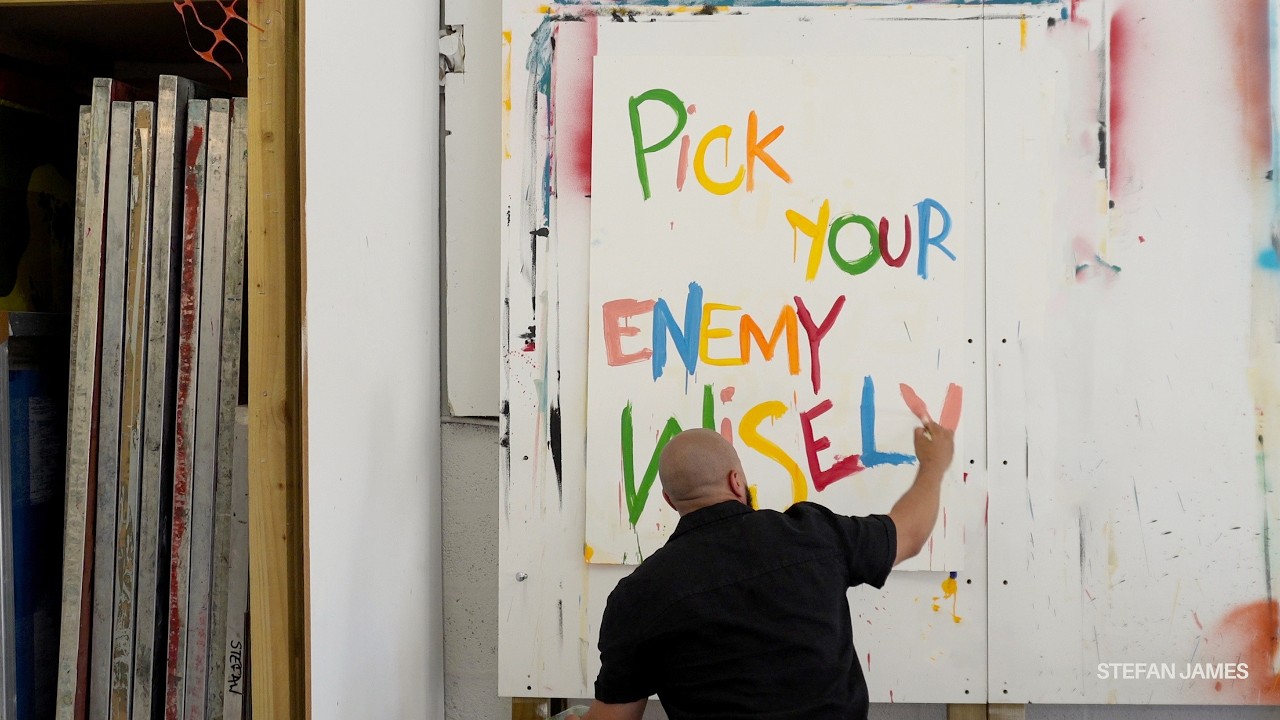
Stefan James · @stefanjames.brandbuilding
Words
3,779
Runtime
19:36
Speaking pace
193wpm
Reading time
16min
193 words per minute, between the 181 median and the 201 75th percentile of 349 measured videos. That distribution comes from the 349-video hook study.
Opening (first 30 seconds)
If you're building a brand, listen up. Today, I'm going to teach you about one of the most powerful behavioral biases so you can make your brand more elevated, build that cultlike following, make it feel more premium, and galvanize people around your brand. So, if you're building a brand, if you're a couple of years in, or if you're a content creator and you've got an audience of people and you're looking to launch a product to them, this video is for you. I'll see you on the other side. So, listen up. I've got a
97 words, the words spoken in the first 30 seconds at 193 words per minute.
Free, no signup. See how the first 30 seconds hold attention, with rewrites.
Sentence shape
| Measure | This transcript |
|---|---|
| Sentences | 224 |
| Average words per sentence | 16.9 |
| Longest sentence | 55 words |
| Questions asked | 22 |
| Sentences containing a number | 7 |
Most used terms
Filler phrases
49 in total: like 19 · you know 11 · actually 10 · kind of 3 · basically 2 · right? 2 · I mean 1 · sort of 1.
A literal whole-word count of the same phrase list the Prepublish browser extension uses, so a phrase inside another word is not counted and a phrase used in its ordinary sense still is. It is a count and not a judgement.
Free, no account. See where attention is likely to drop, with a rewrite for each weak line. The free check shows the scores and the one issue costing the most. Or run it on the words above first.
Free · No login · See a sample audit first if you prefer.
What this transcript is
Every word below is the caption track YouTube publishes for this video, pulled from the video itself and reproduced unchanged. It is not Prepublish's writing, not a summary, and not a re-transcription: it is the video's own published captions. English captions, generated automatically by YouTube, in the video’s original language. Source: the video on YouTube. A channel that would rather this page did not exist can ask for its removal through the contact page, and it is removed.
No Script X-ray for this video: YouTube shows a Most replayed graph only once a video has enough views.
If you're building a brand, listen up. Today, I'm going to teach you about one of the most powerful behavioral biases so you can make your brand more elevated, build that cultlike following, make it feel more premium, and galvanize people around your brand. So, if you're building a brand, if you're a couple of years in, or if you're a content creator and you've got an audience of people and you're looking to launch a product to them, this video is for you.
I'll see you on the other side. So, listen up. I've got a story for you. A food brand once printed something directly on the side of its own packaging that made an entire multi-billion pound industry angry enough to come after them. See, most companies when faced with something like this and that kind of backlash would have quietly rewritten copy, changed the packaging, and just moved on quietly. This one didn't. They didn't even blink.
They kept the words on the carton and they leaned further into the fight and turned the backlash itself into free advertising. I'll tell you exactly what that difference was and how it turned into a global brand a little later in this video. But before we even get there, if you're trying to build a premium brand, if you're just starting out or if you're doing 10K, 20K a month in your brand, you don't feel like it's quite where you want it and you're struggling to get ahead.
If you're a content creator and you're looking at all the other creators around you building these incredible brands and wondering what could you build or you've got an idea for a product, but you have no way going about it. I've been building brands for the last decade. Some bombed, some did well, but I've been working with top London agencies on big brand campaigns. I've been working with founders, CEOs, small brands, big brands, everything you can imagine on different campaigns and branding projects.
Okay, I've kind of seen enough now and read enough over the last decades. I just love this [ __ ] I I study brands for fun. So, if you're building that and want to learn from someone like me, watch this video and understand this. The brands winning right now aren't the ones with the biggest budgets or the best products on paper. They're the ones who have picked a clear enemy and said it out loud. They're the ones who can nail art direction, brand psychology, brand positioning, and they have a founder that drives everything forward.
Specifically today, we're going to talk about one of those elements of brand psychology, which is the enemy effect. And the best brands at the moment, they're the ones who've picked a clear enemy, whether it's a rival product or whether it's a problem with the whole of the category itself, and they've said it out loud. That one decision does more for your brand than almost anything else on this list. So, in this video, I'll show you the different ways the enemy effect is used, can be used, the psychology behind why it works, the practical ways you can actually implement it and apply it yourself.
See, most brand builders think it's as simple as picking out someone you don't like. It's way deeper than that. So, as I said before, let's dive in. Let's look at the psychology behind why this works. So I'm going to butcher their name, but Henry Tajell, one of the most influential social psychologists of the 20th century, spent his career researching what he called social identity theory. And it was the finding that people define themselves not just by what they belong to, by what they distinguish themselves from.
In other words, what they choose not to be like. See, he understood that shared rejection bonds people faster and more strongly than shared preference. That's why some a statement like we're against X almost lands harder than we are for Y. An enemy gives a brand's existence a reason, a reason for being. It answers the question every customer is quietly asking without even realizing it. Why does this brand exist and why should I give a [ __ ] So that's the bit of the psychology behind it in layman's terms.
So, how do you choose your target? And how do you do it either overtly or covertly? See, there are two ways to actually name your enemy. And most people only think about one of them. Overtly is really direct. It's like going to war with someone. You name the practice, sometimes even the brand plainly and publicly. You shout about it. You know, you shout from the rooftops and you pick out a certain someone or something.
Covertly is quieter. You never name anyone, but every design choice, every piece of copy, every value you emphasize is clearly a rejection of the norm without ever pointing a finger. See, a brand like ASOP, they do this covertly. They never criticize mass market beauty brands directly, but the apothecary aesthetic and the restrained copy and what they align themselves with and the experience they offer in store, that's the refusal to discount, all quietly say, "We are not that." And before you pick either approach, there's a decision underneath it.
Are you going after a specific competitor or something you dislike about your entire category? So you might be a coach going after shady coaches or shady coaching practices. Or you might be launching a clean beauty brand and you hate animal testing and you hate toxic products and toxic ingredients going onto your skin. Are you going to call out that specific brand that's doing that or are you going to go after the problems with that category and what the norms are in that category?
See, going after one competitor by name is higher risk but also higher reward. So, you saw this with like James Smith where he'd go after certain people and he get a lot of backlash but it would get him a lot of traction, a lot of views and a lot of he's very polarizing. You either love him or hate him but sometimes it can look pretty petty. But going after a categorywide norm is actually a lot safer and usually more durable because it doesn't age out when say one competitor changes their behavior or suddenly cleans up their act.
Here's a live example. Independent lab testing recently found that several popular creatine gummy brands including one called Overload. I mean if you're in the fitness space this was they must have spent so much money on advertising because everyone was hammered with ads and they sold through so many units. they were biggest brand overnight. But what came to light was is that there wasn't that much creatine in the gummy that they they said was and so they're completely misselling the product and they blamed it on the manufacturer in China lying to them.
But anyway, loads of people thought they were eating creatine gummies advertising it as such and turns out it had a minuscule amount. It basically contained a tiny fraction of the creatine that they claimed it did on the label and in the social media post. But that story spread fast across fitness content and it highlighted a common problem with supplements and the fitness industry as a whole that anyone with a couple of grand and an understanding of social media can reach out to a manufacturer and overnight launch their own supplement brand that people are ingesting every day.
Pretty scary if you think about it. The barrier to entry is so low. But let's look at the enemy effect and the opportunity that's sitting inside it. See, any supplement brand entering that space right now has an obvious category wide enemy in front of them. The fact that anyone with about five grand and following can launch a supplement brand today with almost no accountability for actually what's inside. A brand that leans hard into say third party testing and publish lab results isn't just differentiating on quality.
They're picking the enemy the whole category has been quietly ignoring and turning honesty itself into, you know, their own unique brand positioning. You see the same pattern outside content and consumer brands, too. So, a friend of mine runs a construction company in the UAE. Well, he runs one in London. He's now branching out to the UAE, and he's using this covertly. So, he's doing like high-spec, high-end builds and renovations of some beautiful properties in London.
But as he's been going back and forth to the UAE, he's realized that building work there often gets rushed because it's cheap labor, skills that aren't always there when they should be, and the houses just aren't built as they should be. So workmanship suffers, right? His enemy is the entire attitude towards the standards, the building standards, not anyone competitor by name. So what he's done is imported the highest standard he learned developing and renovating properties in the UK and backs every job with a guarantee which doesn't really exist at the moment.
So the guarantee itself quietly says what he thinks of everyone else's work without him ever having to say it out loud. And the fact that he incorporates such a high standard of work in a place where standards are low immediately sets him apart from everyone else and shows that he's made an enemy out of shoddy building standards and his brand aligns with higher standards. So is your natural enemy a specific competitor or a norm across your whole category?
And which one could you actually sustain saying out loud for years, not just a one campaign? Cuz you're going to have to run this for a long time for it to sink in to your customer's minds. Okay, now we're going to look at something I like to call zagging away from the category. So, this connects to something that brand strategist, branding guru Martin once wrote in his book, Zag. And his rule was very simple. It's kind of the foundation that I built all my brands and launch my products from and and the campaigns that I've been involved with.
When everyone zigs, you zag. Okay? When your entire category is moving in one direction with the same colors, the same claims, same tone, same visual language, you know, same tone of voice, all with the same values, all with the same brand positioning. The strongest move is always the opposite direction, not a slightly better version of the same thing. So picking an enemy is one of the fastest ways to force that zag because rejecting the category norm automatically pushes your brand towards something different from it.
So I did this with my own fine art brand. I was willing to turn off 99% of the market with loud, obnoxious, cheeky artwork that very much resonated with who I was and how I speak and who I am over trying to blend in or bland in or just, you know, appease the art world or the art market. So, what I did is I turned 99% of potential consumers off and 99% of galleries off that would want to work with me. So, I could concentrate on galvanizing and and rallying the 1% who are actually diehard cultlike fans and would walk into galleries and say, "Why haven't you got any of this guy's stuff?
Have you not heard of him? I've just bought four of his pieces." So, me calling out the enemy, I did it in all my brand communications. I said I stood for the antidote to boring and pretentious fine art. Okay? So I wasn't trying to be boring and pretentious. I was something different, a breath of fresh air, disruptive. That was my unique differentiator and that was enemy effect in motion. This also ties directly to something called the myer mayor Maya which basically means the most advanced yet acceptable which I call in another video on this channel and I'll probably link it at the end.
But the short version is your zag has to be different enough to stand out while still being familiar enough that people don't reject it outright. So ask yourself, what can you see everyone else in your category doing? And what could you naturally do differently that still feels authentic to you? Not attention seeking, just a quiet rejection of something you genuinely don't agree with. So, if you're enjoying this, I've got an email sequence where I've sent out 33 practical tips to elevate your brand to make it more premium based on all the stuff that I've learned from over a decade of working with brands and building my own and studying brands.
It's free. You get a tip every day, a practical tip that you can go away and implement and it'll get you thinking about how premium brands operate. Jump into the link in my bio, subscribe to that. You won't regret joy. I hope you find it helpful. In fact, I know you will. Right. So all this stuff I just spoke about, let's look into some more examples across different categories. So you got Patagonia, their enemy is overconumption itself.
They once ran a full page New York Times ad on Black Friday, the busiest shopping holiday of the year that simply said, "Don't buy this jacket." And you got a brand like Dove. Their enemy was the entire industry's manufactured beauty standards, which were unrealistic and they didn't resemble normal people. And the reason this campaign came about is because when they did their own research, they found that only 2% of women worldwide would describe themselves as beautiful, which is sad, but probably true.
So they created a campaign called Real Beauty. And that campaign put un retouched models on women of different shapes and sizes and ages on billboards all across the world, which was, to be honest, quite revolutionary at the time. Airbnb, they made an enemy out of a forgettable hotel experience. And they made an enemy out of [clears throat] big hotel chains. And they went against the norm to build a marketplace for renting out your own property to holiday makers, which had never been done before.
And they took a direct stand against the industry that had been offering the same standardized, mundane, bland service for the last few decades. So in its place, they offered something completely new. The chance to live like a local in a city that isn't your own. and to find rare characterful properties instead of another identical hotel room. Their enemy was the standardized impersonal hotel experience and industry itself.
So ask yourself which brands do you actually come into contact with day in day out? And if you stopped and really analyzed a few of them, could you name their enemy? What they've quietly positioned themselves against or what they've overtly positioned themselves against? So understand this, the enemy effect is really powerful mainly because society rallies around enemies too. You know, it's ingrained in us. This is how we're taught to think very binary terms.
You know, black or white, right and wrong, friend, foe, hero, baddy. You know, this isn't just a branding phenomenon. It's how humans organize things like I just described because we're wired for it. We evolved in tribes and tribes survive by knowing who exactly was us and who wasn't, who was the outsider, who was dangerous, who was friendly. This is a packed mentality that still runs in the background of every human brain.
On top of that, I'd argue that we've been socially conditioned for generations to see life in this way. Whether it's picking a sports team, whether it's being part of a team, whether it's sides, nations, causes, what cause do you rally around, standing for something and standing against something isn't a marketing tactic we invented. It's closer to the default setting of being human. And you see this throughout history.
It could be the Allied nations in the Second World War, you know, when they rallied an entire generation around one shared enemy, fascism, or the suffragettes that built a movement, a shared fight against sexism and an exclusion from the vote. Or it could be the civil rights movement who mobilized around a shared fight against racial injustice. In every case, the clarity of what people stood against did as much to unite them as what they stood for because the tribe instinct needs an us and it needs a them just as much.
And it's still happening today everywhere at smaller scale, antiplastic movements, the fast fashion backlash that we touched on earlier, right to repair campaign against planned obsolescence in tech. Did you know that your iPhone is built to die at a certain time? It's not meant to last forever. They've planned it to be obsolete at some stage in its life. So, you have to go back to Apple and buy a new one. You can't repair it.
So, I'd argue that we haven't outgrown this instinct. We've just found smaller wars to fight. So, if you found yourself agreeing to any of that and nodding along, picking a side, even in your own head, notice that that's the exact mechanism this whole video is about, happening to you in real time. So think to yourself, what's a movement you felt yourself either rallying behind or quietly and subtly aligning with even if you've never posted about it or told anyone or shouted about it.
So to bring this full circle now, this is how we actually buy. That instinct shows up directly in how we shop, right? Someone buying non-toxic cookware isn't just choosing a pan. I know I didn't when I bought a load of made in cookwware. They're rejecting, like I was the chemical coating status quo. You know, when I started to do some digging and research into this, I realized this is terrible. like why are we being poisoned by our cooking utensils?
How is this normal? And it's just been the status quo. You know, use Teflon on pans. But there are brands that challenge that. And Maiden was one of them. And we see this in skincare too. Salt and stone. Someone switching to an aluminium free deodorant is making a small stand against an entire ingredient category of toxic deodorants. A few years ago, there was a massive backlash against Canada Goose over the way they source their down and fur.
See, it wasn't really about a jacket. It was about people picking a side. Are you for animal suffering, or are you against it? A fitness brand, which positions itself against grind culture or burnout as a badge of honor, is doing exactly the same thing. See, we're constantly choosing which side of an argument we want to stand on. And here's why this matters so much if you're building a brand. The enemy effect isn't just a content angle.
That's where I see a lot of brand builders going wrong. They just use it as a throwaway content angle or just some sort of tactic and they don't follow through with it and make it stick and they don't follow through for the long run. Creating an enemy out of something and being known for standing against something isn't just something you do once. It's continual. You do it for a lot of your brand's life. In fact, I'd argue that the enemies just evolve.
They get bigger, better, and scarier. The enemy effect is one of the fastest ways to sharpen your brand positioning. So, like I always say, this channel is about brand psychology, art direction, and the visual language and the aesthetic and your vibe. It's also about positioning your product as the premium alternate option in your category. It's about who you are, who you are for, and just as importantly, who you're not for.
See, a clear enemy draws that line and helps people decide quickly whether they want to align with you and buy from you or reject you entirely. And yes, it can feel uncomfortable picking an enemy, but you're not trying to appeal to everyone. They get washed away by brands that actually choose a specific enemy and go after it. If you incorporate the enemy effect, it's one of the most powerful ways to create a cult-like following because of all of the reasons that I just mentioned in this video.
People want to align with something and they want to stand against something, whether it's loudly or quietly, overtly or covertly. So ask yourself, who is your brand currently trying not to lose, even though they're not really your customers to begin with? So I created an open loop earlier in this video. If you're still here, well done. You haven't got the attention span of a pigeon and your brain hasn't rotted from all the short form content you've been consuming.
So that brand that I mentioned at the the beginning, that's Oatley, the oat milk brand, one of the most famous oat milk brands, definitely in the UK, probably in the world. But understand this, Sweden's own dairy trade body came after them over the copy that was printed on their cartons. And instead of backing down, Oatley published the legal threat as content itself. You But that backlash didn't hurt them. It proved that the enemy was real, which is exactly what made this post milk generation feel like a movement instead of just a marketing spin or a marketing lie.
So, here's three practical prompts I want you to do. Write down one specific norm, practice, or assumption in your category that genuinely frustrates you. Number two, decide whether you're going to go after that specific competitor or an entire category norm and be honest about which one you can actually sustain without it looking petty or without it fizzling out or running out of steam. Number three, decide whether that enemy is stated overtly in your copy and all of your content directly or if you're going to go covertly through every design and product decision that you make.
So, you don't need scale or recognition to do this. You don't need massive budgets either. You need the enemy to be clear before anything else. Pick it carefully.
The words are the caption track's own and nothing is reworded or re-transcribed. Paragraph breaks are placed between sentences so the text reads as prose.
Free tools for your own script: paste a draft and see where it stands before you record it.
Paste your draft and see where viewers are likely to drop off, with a rewrite for each weak line.
Paste the first 30 seconds of your own draft for a hook score and rewrites.
Check your draft against YouTube's advertiser-friendly guidelines before you record it.
Read this channel's public videos and transcripts, and download a writing brief for it.