Getting the transcript
Reading the captions from YouTube. A video nobody has opened here before takes 10 to 30 seconds; this page fills in on its own.
Getting the transcript
Reading the captions from YouTube. A video nobody has opened here before takes 10 to 30 seconds; this page fills in on its own.
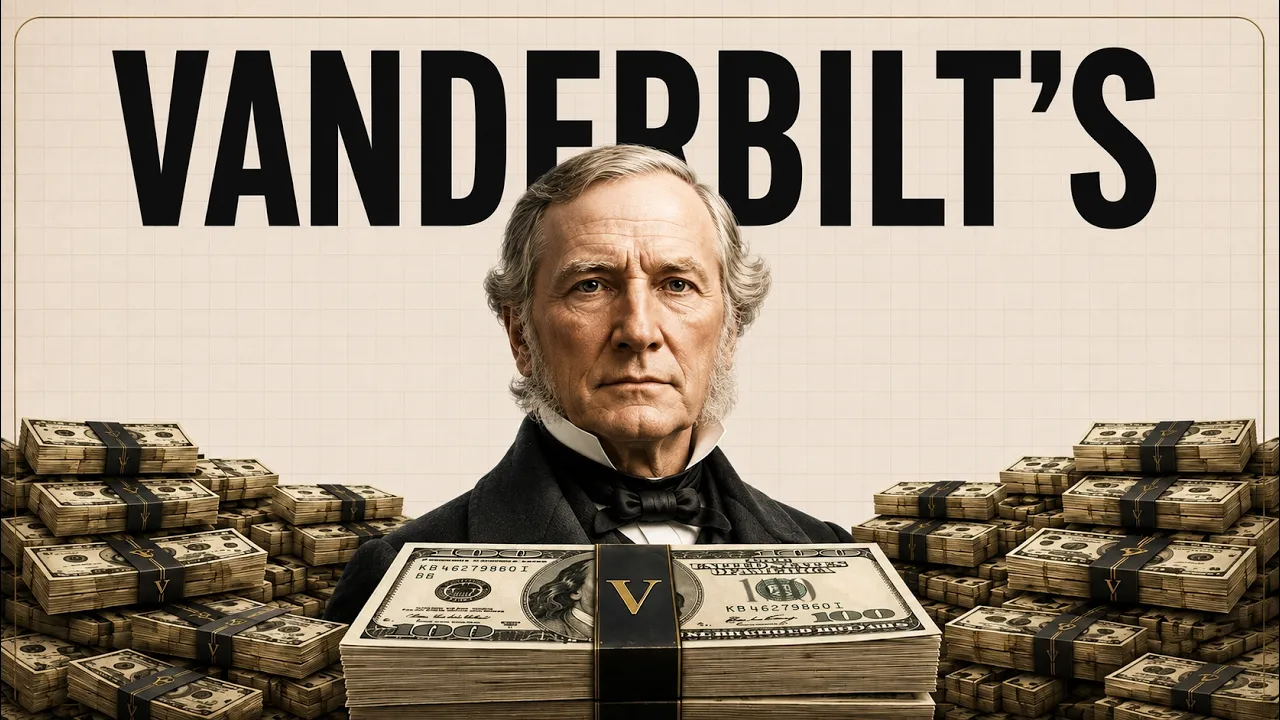
Ambition Arc · @TheAmbition-Arc
Words
1,471
Runtime
9:24
Speaking pace
156wpm
Reading time
6min
156 words per minute, below the 160 25th percentile of 349 measured videos. That distribution comes from the 349-video hook study.
Opening (first 30 seconds)
One morning in 1867, the trains stopped. All of them. Every locomotive heading into New York City frozen in its tracks. Passengers stranded in the biting cold. Cargo rotting in the railyards. Across the state, businesses began bleeding money by the hour. The governor demanded answers. The newspapers demanded answers. Wall Street demanded answers. And somewhere across the city in a building he owned on a street he controlled, Cornelius Vanderbilt poured himself [music] a drink and waited.
78 words, the words spoken in the first 30 seconds at 156 words per minute.
Free, no signup. See how the first 30 seconds hold attention, with rewrites.
Sentence shape
| Measure | This transcript |
|---|---|
| Sentences | 153 |
| Average words per sentence | 9.6 |
| Longest sentence | 37 words |
| Questions asked | 1 |
| Sentences containing a number | 25 |
Most used terms
Free, no account. See where attention is likely to drop, with a rewrite for each weak line. The free check shows the scores and the one issue costing the most. Or run it on the words above first.
Free · No login · See a sample audit first if you prefer.
What this transcript is
Every word below is the caption track YouTube publishes for this video, pulled from the video itself and reproduced unchanged. It is not Prepublish's writing, not a summary, and not a re-transcription: it is the video's own published captions. English captions, generated automatically by YouTube, in the video’s original language. Source: the video on YouTube. A channel that would rather this page did not exist can ask for its removal through the contact page, and it is removed.
No Script X-ray for this video: YouTube shows a Most replayed graph only once a video has enough views.
One morning in 1867, the trains stopped. All of them. Every locomotive heading into New York City frozen in its tracks. Passengers stranded in the biting cold. Cargo rotting in the railyards. Across the state, businesses began bleeding money by the hour. The governor demanded answers. The newspapers demanded answers. Wall Street demanded answers. And somewhere across the city in a building he owned on a street he controlled, Cornelius Vanderbilt poured himself [music] a drink and waited.
To understand why a man would hold a city hostage, you have to go back, way back, to a 16-year-old kid on the Staten Island waterfront who had nothing except one thing nobody could take from him. He knew how to move. Cornelius Vanderbilt was born in 1794 into a family with no money, no connections, and no expectations. At 16, he struck a deal with his mother. Clear 8 acres of overgrown farmland by his birthday. The stakes?
A $100 loan. His friends thought he was insane. His mother thought he would fail. He cleared it in 2 weeks. That $100 became a boat. That boat became two. Two became a fleet. During the War of 1812, while other captains hid from the British blockade, Vanderbilt saw a gap. He ran supplies through waters no one else would touch. And on those docks, the older men started calling him something. Half as a joke, half because they meant it, the Commodore.
It was on those same docks that Cornelius heard a line that would stay with him for the rest of his life. An old harbor captain, watching a rival buy up the ferry routes one by one, turned to no one in particular and said it quietly, "He who owns the bridge owns the city." Cornelius didn't say anything. He just remembered it. By his 40s, Cornelius Vanderbilt was rich. Not comfortable, not successful, rich in the way that turns heads and changes rooms.
He had built the largest private shipping fleet in New York. He had outmaneuvered competitors twice his size. And none of it was enough because in New York City in the 1840s, money alone didn't buy you a seat at the table. Old money had a list. 400 families deemed acceptable by society. The Vanderbilts were not on it. He threw dinners. The right people didn't come. He bought a mansion. The neighbors didn't visit. He tried to enter the social circles his wealth should have opened and found the doors permanently shut.
The newspapers were worse. One columnist wrote that Vanderbilt was deficient in the refinements that mark a gentleman. He read every word. He saved the clippings. He didn't respond. He didn't argue. He didn't change. Instead, he looked away from shipping entirely and turned his eyes to something bigger. The railroads were coming. And Cornelius Vanderbilt had a decision to make. One that would either double his empire or end it completely.
In 1862, Cornelius Vanderbilt was 68 years old. America was tearing itself apart in civil war. The economy was volatile. Fortunes were being lost overnight. Vanderbilt sold every ship he owned, every single one. The fleet he had spent 50 years building, gone. The proceeds poured entirely into railroad stock at a moment when half of Wall Street thought he had lost his mind. His advisors pushed back. His family pushed back.
The financial press mocked him openly. What they didn't understand was that Vanderbilt wasn't gambling on the railroads. He was gambling on what comes after war. He was right. By the end of the Civil War, Cornelius Vanderbilt was the richest man in America. Net worth, $68 million. A billionaire in today's money. And he wasn't done because there were men, younger men, [music] ambitious men, who had watched him take the railroads and decided they wanted a piece.
Men who started moving passengers and cargo through New York on infrastructure that ran across a bridge, his bridge. And Vanderbilt had a very particular view about people who used what was his without asking. The Erie Railroad had been poaching his customers for 2 years. Two years of watching them undercut his prices. [music] Two years of negotiations that went nowhere because the men running Erie had looked at Vanderbilt and decided he was old.
They refused his terms publicly. They told the [music] press the Commodore was desperate, that the old man had overplayed his hand. Vanderbilt read that, too. He sat at his desk. The room was quiet. He folded the newspaper in half, set it down, looked out the window at the city below him. Then he picked up a pen and wrote one instruction to his railroad managers. Close the bridge. That was it. No ultimatum. No warning delivered to his rivals.
Just close the bridge. The next morning, [music] the trains stopped. Every competitor who needed to move freight into New York City now faced the same problem. The only rail crossing into the city was the Hudson River Bridge. And Cornelius Vanderbilt owned every inch of it. The money started bleeding immediately. Thousands of dollars a day, then tens of [music] thousands. The governor threatened legal action. The financial press declared it an act of war.
Vanderbilt didn't respond to any of it. He had said what he needed to say, not with words, with silence, with the absolute devastating confidence of a man who understood one thing more clearly than anyone else in that city. Leverage isn't about what you take, it's about what you can stop. Within days, not [music] weeks, days, they came to him. And what happened next wasn't a negotiation. It was a surrender. They came with lawyers.
Vanderbilt came with numbers. [music] By the time Erie's board sat across from him, their share price had fallen so far, so fast, Vanderbilt had already instructed his brokers to begin buying quietly. While the board issued public statements about standing firm, their own shareholders were selling to the man they were fighting. It was the first hostile takeover in American history. Not a merger, not a negotiation, a capture.
When it was over, Cornelius Vanderbilt controlled the largest single railroad network in America. He had added his biggest rival's entire operation to his own. Not by [music] outspending them, not by outlasting them, by closing a bridge for 4 days. He was 72 years old. He used his new fortune to build something that seemed to everyone around him almost absurdly grand. A single station, four major rail lines, one roof in the heart of New York City.
He called it Grand Central. [music] And above the entrance, he commissioned a bronze statue of himself, 11 feet tall. Not a plaque, [music] not a dedication, a statue of himself on a building he built in the city that had once refused to put his name on a list. [music] The same newspapers that had called him uncultured now called him the most powerful private citizen in American history. He didn't celebrate. He had already moved on.
Cornelius Vanderbilt died in 1877, 82 years old. Net worth at death, $100 million. Almost all of it went to his son William. William, who he had sent away to a farm. William, who spent years trying to earn his father's approval and never quite got there. William, who had quietly, carefully double the entire fortune in just 8 years. But that is not what most people remember. What most people remember is what came after William.
The grandchildren, the mansions, the yachts, the parties, the spending that never stopped. A Newport ballroom sold at auction. A Fifth Avenue estate demolished for apartments. The money moving out of the family as fast as it had moved in. Within 88 years of Cornelius Vanderbilt's death, not a single living member of his family was a millionaire. The man who blockaded New York City. The man who broke competitors with 4 days of silence.
The man who built Grand Central and placed a statue of himself above the entrance. His family spent every dollar he made. Grand Central still stands. The statue is still there. But you have to look for the name now. Most people walk through that terminal every day and never think about who built it. Never think about a 16-year-old on the Staten Island docks who borrowed $100 and decided the world was going to know his name.
He who owns the bridge owns the city. He owned the bridge. He owned the city. He owned the legacy. And in the end, what outlasted all of it wasn't the money. It was the bridge. Vanderbilt never begged for attention. He made himself unavoidable. If you want to understand the men who built the modern world, subscribe to Ambition Ark. We'll be here.
The words are the caption track's own and nothing is reworded or re-transcribed. Paragraph breaks are placed between sentences so the text reads as prose.
Free tools for your own script: paste a draft and see where it stands before you record it.
Paste your draft and see where viewers are likely to drop off, with a rewrite for each weak line.
Paste the first 30 seconds of your own draft for a hook score and rewrites.
Check your draft against YouTube's advertiser-friendly guidelines before you record it.
Read this channel's public videos and transcripts, and download a writing brief for it.