Getting the transcript
Reading the captions from YouTube. A video nobody has opened here before takes 10 to 30 seconds; this page fills in on its own.
Getting the transcript
Reading the captions from YouTube. A video nobody has opened here before takes 10 to 30 seconds; this page fills in on its own.
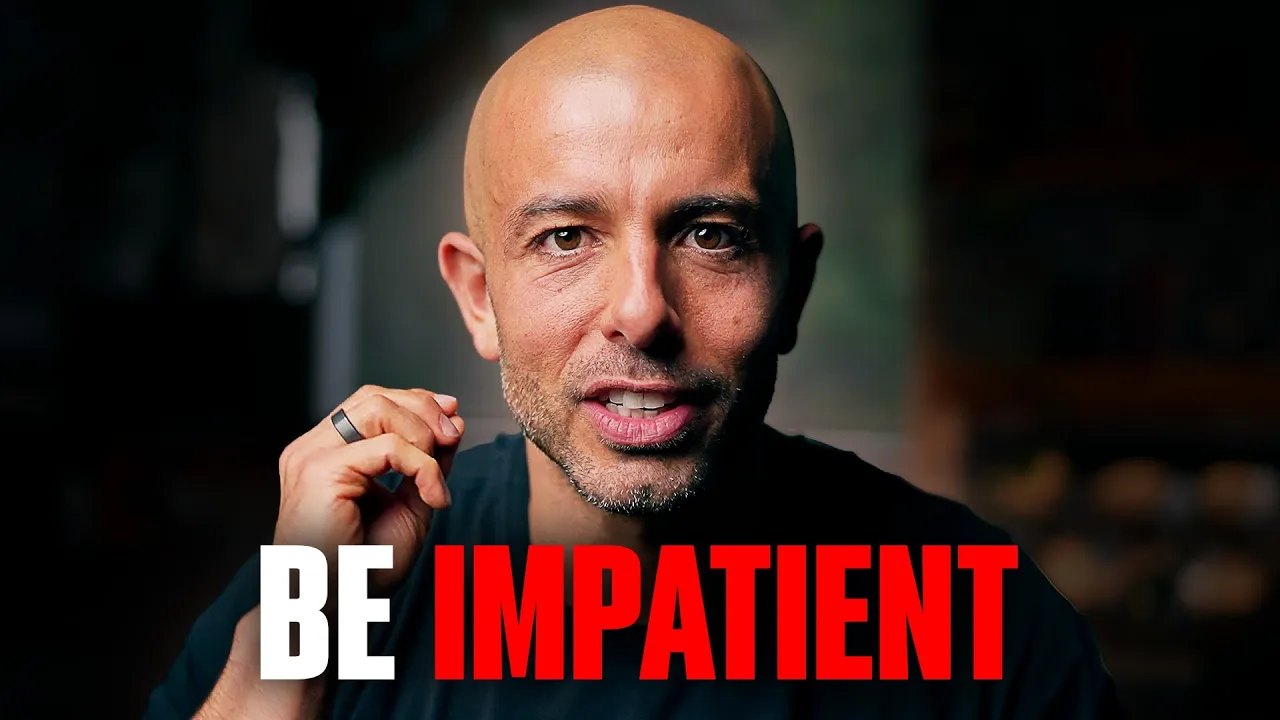
Sabri Suby · @SabriSubyOfficial
This video has no Most replayed graph yet: YouTube shows one only once a video has enough views. These are the moments viewers replayed most in Sabri Suby's most watched videos.
Most replayed moment at 5:51
3.1x that video's typical replay level
of different variations. And the way that I like to do this is I give it my winning ad and then I say, "Okay, I want you to read this ad and I want you to be the author. If we show the next ad, I'm going to ask you to write to 100 people. Not one in a 100red would be able to
Said at 5:44
Most replayed moment at 10:35
2.4x that video's typical replay level
keyword that people would be searching in order to find what it is that I am trying to sell? And I call this the coliseum keyword. There's always going to be one keyword that represents the most amount of traffic in your niche. And you want to type that in. You want
Said at 10:30
Most replayed moment at 4:44
4.2x that video's typical replay level
like, you know, the chick's not wearing any makeup and it's just a little bit more casual. That could also work depending on what it is that you're selling. But I'm going to go with this one. So, what we do is we go ahead and we download this puppy. So, we've got the static image. Now, we need to take this static
Said at 4:37
The graph counts replays. It does not show where viewers stopped watching.
Words
4,650
Runtime
21:41
Speaking pace
214wpm
Reading time
19min
214 words per minute, above the 201 75th percentile of 349 measured videos. That distribution comes from the 349-video hook study.
Opening (first 30 seconds)
I've been in rooms with a top 0.1% and these are the seven rules that I learned from being around them. Starting [music] with principle number one. And everyone thinks that the top 0.1% are special or that they were born with some kind of head start that [music] you didn't get. But that simply is not true. They just operate differently. Everyone sees the trophies, but they do not see the training room. Whenever you meet a billionaire, there's always some certain of law about them. I'll never forget when I was on the set of [music] Shark Tank. They have certain call times for all
107 words, the words spoken in the first 30 seconds at 214 words per minute.
Free, no signup. See how the first 30 seconds hold attention, with rewrites.
Sentence shape
| Measure | This transcript |
|---|---|
| Sentences | 258 |
| Average words per sentence | 18.0 |
| Longest sentence | 67 words |
| Questions asked | 24 |
| Sentences containing a number | 36 |
Most used terms
Filler phrases
42 in total: like 17 · actually 8 · basically 6 · literally 5 · you know 4 · kind of 2.
A literal whole-word count of the same phrase list the Prepublish browser extension uses, so a phrase inside another word is not counted and a phrase used in its ordinary sense still is. It is a count and not a judgement.
Free, no account. See where attention is likely to drop, with a rewrite for each weak line. The free check shows the scores and the one issue costing the most. Or run it on the words above first.
Free · No login · See a sample audit first if you prefer.
What this transcript is
Every word below is the caption track YouTube publishes for this video, pulled from the video itself and reproduced unchanged. It is not Prepublish's writing, not a summary, and not a re-transcription: it is the video's own published captions. English captions, generated automatically by YouTube, in the video’s original language. Source: the video on YouTube. A channel that would rather this page did not exist can ask for its removal through the contact page, and it is removed.
I've been in rooms with a top 0.1% and these are the seven rules that I learned from being around them. Starting [music] with principle number one. And everyone thinks that the top 0.1% are special or that they were born with some kind of head start that [music] you didn't get. But that simply is not true. They just operate differently. Everyone sees the trophies, but they do not see the training room. Whenever you meet a billionaire, there's always some certain of law about them.
I'll never forget when I was on the set of [music] Shark Tank. They have certain call times for all the different sharks. Depending on how long it takes you to get ready. Robert would get there just about 15 to 30 minutes before [music] me. And we all have to rock up at around 4:30 or 5:00 a.m. on set at the studios. And whenever I met him, he had already been up since 2:00 a.m. in the morning and he was running his company from Australia in the US and he'd already been on Zoom calls, he'd already gone for a 5 km run and the guy was the oldest out of all the sharks, yet he had the most energy and was always working the hardest.
Once we were flying over to Arizona together, we were both speaking at a conference and he's got this big beautiful private jet. He so graciously invited me to come on it. The only reason that he has a jet is it's literally his office. So we get on the airplane. Whenever we're not talking and conversating, he whips out his laptop and he is just murdering through like 500 emails a day. And any breakthrough that I've ever had in my life that has always come after a season of ridiculous amounts of work.
When I first started King Kong, it was just myself. I was cold calling by day and doing all the client work by night. And that means that I was working 16 hours a day and I literally did this for over 3 years straight and I only pulled out $30,000 for me and my wife to live per year. Everything that you want, you need to sacrifice something in order to get it. And if you think that you can basically make it in anything that you do in life without having an unrelenting work ethic, you are being sorely [music] mistaken.
Because we get rewarded in public for what we practice intensely in private. So, here's how you can apply this right now in your own life. Everybody thinks when it comes time to investing time into something, they always chalk it up and be like, "I don't have the time for this. [music] I'm already so busy." But, what you first must realize is that every single person has the same amount of time. All the people that you look up to and you aspire to, it's not that they just have miraculously endless amounts of time, is they have just got way more ruthless with how they spend that time.
And the way to get very ruthless with how you spend your time is to first understand where that time is going. And we do that by using something that I call the King's Audit. Basically, what it is is for 1 week, you manually audit your time. You keep a notepad with you and in every single 15-minute increment that passes, you write down what it is that you did. [music] And then at the end of that week, you will be absolutely surprised with where your time goes.
And then this is where you must get absolutely ruthless with what you cut out. And so the way that you do that is you have a look at all the activities that you do on the left-hand side. And on the right-hand side, you write down all the things that it is that you want to achieve. Then you must cut out all the things that you are doing that do not support you hitting that goal. And that is principle number one. Have an unrelenting work ethic.
But, this isn't just theory. These are the exact same principles that I stole and implemented into my own life to go from cold calling people from my bedroom with no more than $50 to becoming a shark on Shark Tank and generating my clients over 10.2 billion dollars in sales, which brings us to principle number two. Now, look, work ethic is the baseline. It is the price of admission. But, that is only one thing. The second thing that I have observed is not only how hard all the billionaires that I know work, but it's in the speed that they work.
The action that they take and the urgency that they bring to every task at hand. And I I observed this multiple times that whenever they get a text message or an email, it's something that they handle right now. They do not procrastinate on anything. And I learned this with the first billionaire that I ever met. I was actually working for him at the time. And I was working on the sales floor, and we made some changes to the script.
[music] And it was like a Monday, the script had been changed, and then I never forget the very next morning. He was like, "Oh, how are those changes on the script going?" And I was like, "It was just yesterday." And this was on a call center with over 300 [music] people. And you would think that he's got the P&L to manage, he's got thousands of people working under him, he's launching new products and services, dealing with all this regulation in terms of the government.
Yet, this person wanted to know exactly if these changes were made to the sales script within 24 hours. Because money loves speed. And if you can make decisions quicker than people, you can move quicker than them, then you're going to get to where it is that you want to go a lot quicker. If you're always making every decision that you need to make a huge thing. I had to learn this the hard way. When I used to think that I needed all the information at hand in order to make [music] a right decision.
And so, it takes usually under 30 minutes to get 80% of the information that you need in order to make a decision. And then that last 20%, that could take [music] you days. It might even take you weeks depending on what the decision is. And then what I learned is I only need 80% of the information in order to make a decision. Some of the ways that I have found to apply this in my own life is that as soon as something comes into my mind is immediately action it.
So, if something comes up, you're thinking about something, you've got an email about it. The thing that I like to do is send an audio note to the person that I'll be delegating some task to, or there's someone that's involved in the decision, and then send that thing [music] instantly. I think about it is like all of these open loops in my mind are like open tabs in my web browser. They are sucking up RAM of my life.
I want to think about it, action it immediately, and get it handled. And that is principle number two. Money loves speed. Now, these first two principles will only take you so far, because if you get this next one wrong, you basically become your own worst enemy, which brings us to principle number three. Most people in life, their default to any question [music] is yes. If you ask them if they want to do something, it's yes.
If they you ask them if they want to look at this new opportunity, they're going to say yes. But what I have observed by hanging out with the 0.001% is that their default is always no. They are very, very clear on where it is that they're trying to go. They are very clear on what their priorities are, [music] and anything that falls outside of that is a straight no. And the way to protect your time more so than anything is [music] for you to always to say no.
Telling people, "Oh, leave that with me. Let me think about it. I might be able to do that." When you know that it's a no, it's just [music] a horrible idea. First of all, you're not being clear with people, and as they say, clear is kind. People in my network, they know, do not ask me to go out on a weeknight at 7:00 p.m. [music] for a dinner. I'm not going to be doing any of that. And what it's going to mean is you're going to buy back a lot of your time by not committing to things that [music] are going to get you to where it is that you want to go.
You can have anything that it is that you want in life if you're willing to pay the [music] price. And the price for a lot of things is no. And when it comes to priorities, my rule for this is that every single year you should have an absolute [music] maximum of two to three priorities. Ideally, it's just one. [music] And you are super clear on what that outcome looks like, so then it's very quick and easy for you to run it through the check is, "Is this my priority?
Does it support me in getting my priority and hitting my goals?" If it doesn't, it's a straight-up no. Because what you must realize is every single time that you say no to something, then you are saying yes to your priorities, and by default, you are moving closer to hitting your goals. So, here's how to apply this right now in your life. What I want you to do this evening is I want you to sit down and look at any of the standing meetings, any of the recurring tasks that are on your calendar that you do every week.
And if there's things that you do every week that aren't on your calendar, first rule 101, get it in the calendar. And then what I want you to do is audit that and say, "Out of all of these things that I'm committing to each week, which ones get me closer to my goals and which ones don't?" And the ones that don't, you already know, we're going to cut that immediately and get closer to hitting our goals, which is principle number three.
Make no your default. Okay, so we've cut out everything from our life that isn't a priority. We've made no our default. But this next principle, I have seen this hold back more entrepreneurs from getting to the next level than anything [music] else, which brings us to principle number four. If you hang out with pretty much [music] any business owner, they all complain about the same thing. It is the old sob story, "I just can't find any good people.
My business is only successful because of me." And this is what keeps broke [music] business owners broke, because they think that they are some kind of special snowflake and that no one else can do the work in their business like them and that they have got all these superhuman powers. [music] And the thing is what they're doing, and they don't realize it, is that they are shooting themselves [music] in the foot. And they aren't creating a business for themselves, they are creating a job.
Because they use themselves as the benchmark and any single [music] person that they hire in the business, if they can't do the job as good as them, they say that these people are no good. are typically the founders that the moment that something works, they say, "Yeah, that's because of me." And when things don't work, it's because of everybody else on their team. And how can I know this so well? How can I describe it so intimately?
Because I was also one of those people. I never forget when I first started King Kong, I was selling by day and doing the client work by night. And I had gotten the business up where I had about 70 clients and I still had no account manager to deal with those clients. I hired my first account manager and she came in. I was very, very nervous. I was like, "Okay, that's it. It's wrapped up. The business is going to burn to the ground." But, I simply could not sustain working 16 and 1/2 hours any longer.
After 2 or 3 [music] months, the business didn't crash and burn and things were okay. And what I realized is that while yes, of course, me as the founder caring as much as I did about my clients, I could of course serve those clients better than the new account manager could. [music] However, the level that I was operating at and the expertise that I had wasn't even appreciated by I would say 95% of the clients. And that I could bring somebody in that maybe weren't as skilled and capable as me, but they wouldn't even be able to appreciate the difference in the level of knowledge.
And [music] by making that decision and surrendering control and being okay with someone that could come in and do the job [music] maybe 70% as good as I was or 60% or maybe even 50%. That's okay [music] cuz it bought me back my time. So, if you're looking at a one-for-one person in your business and you're judging everyone by the level that you can do things, [music] you're never ever going to build a big business. Instead, what I urge you to do is to think about how many units of time do you actually dedicate to do this task and then you go out and buy [music] the time.
You might have to get three people that could that can do the job as good as you, but what you're doing is buying back your time to be able to work on the task that going to even unlock more revenue for your business and more growth. Think about a McDonald's. They are probably the most operationalized business in the world and that's why they can have a 16-year-old run an entire business. Because they have such [music] good systems that they don't need the best people in the world in order for that franchise to continue to run and flourish.
Because [music] hiring people is getting leverage. People are a form of leverage. Effectively, when you go out and hire a team member, you are buying time. And then the whole game to justify that is by [music] taking that time that you have freed up and then you play the game of leveraging that time and multiplying it to make infinitely more money. So, here's how to apply this directly in your own business. So, you've already conducted the King's audit, so you know exactly where your time is going and you should know how many hours per week that you are actually working.
Then the basic exercise to do is to take either the amount of profit that your company generates or the amount of income that it is that you've got and simply divide that by the number of hours that you work and that is going to give you your effective hourly rate. Then what I want you to do is to go back to that King's audit and look at all the tasks that it is that you were doing. Think about this is how much I get paid per hour.
Could I delegate these tasks for less than my effective hourly rate? Because all the game is in business is just keep on making that trade further up the chain. And that is principle number four, delegate or stay small, which brings us to principle number [music] five. Everybody's happy to take credit when things work, but when things don't work, they're typically the ones that are going to be pointing fingers [music] at other people and being like, "Oh, it was their fault or it didn't work because of X Y Z." And they're not willing to look themselves in the mirror and take ownership of the situation.
The first question that I always ask myself when anything goes wrong in my business is how did I create this? [music] So, recently I wrote this ad. It absolutely pulled its head off, went bat nuclear and sold tens of thousands of books. And as a result of that, it cleared out a bunch of our 3PLs [music] and we had no stock. Meanwhile, I had just spent six weeks going through a creative shoot of shooting all these brand new ads to promote my book.
It would be very, very easy to say, "Hey, who's in charge of inventory management? Why did the stock get so low? Whose fault is this? Who can I blame?" However, it was my fault because I didn't have a system in place that basically took into consideration whenever I was creating new ads to basically flag that up the chain and go, "Hey, we've got this new promo launching in probably 60 or 90 days. We're going to need a lot more stock on hand in order to do that." And while I could look here and go, "But Sabri, this was an anomaly.
Like, you wrote this crazy ad and it sold out all of these books much more than what you could have anticipated." The fact that I didn't have the system in place to actually, regardless of all of those things taking place, to make sure that no matter what, whenever we go into production, that we always have an excess supply of stock. in these once-off freak occurrences. And it was my fault that I assumed that we had enough stock.
I just remembered ordering a couple of containers worth of books. But I didn't go in there myself and verify that when we went into production of our new ads. The reality of it is that that is my problem, full stop, end of story. So, the way to apply this directly in your own life and business is to look at the last thing that went [music] wrong. And to do a little bit of a postmortem on it and go, "Okay, why did that go wrong?" And then, ultimately, it must end in because of me.
And then think about what is the system or process that I am going to put in place that will prevent that issue from coming up again. And by doing that, you build a fail-safe to make sure that it won't sting you twice. [music] And the more that you do this on everything that goes wrong, the quicker that you can create systems to make sure that stuff doesn't happen again, and then the better that your business gets, and the more money it is that you make.
And that is principle number five. The best leaders have extreme ownership. Now, this next principle is probably the single principle that is responsible for me ending up on the AFR Young Rich List, which brings us to principle number six. Everyone thinks rich people got rich by being very, very careful with their money. But if you look up the definition of profit in the dictionary, it will show you that it is basically by putting financial means at [music] risk.
AKA, all profit comes from risk. And the more money that it is that you want to make, it all comes down to what your tolerance for risk is. And every inflection period in my life came from me willing to take a big risk on myself and put financial means at risk in order [music] to make a profit. When I first started King Kong, I had $50 to my name. I was cold calling businesses, desperately trying to bring on new clients.
And I did that for 7 to 12 months, and then I hoarded enough nuts away like a squirrel in the winter, and I got all of the money that I did have, and what did I do? I rolled it into getting an office, fitting out that office, and then running ads to bring me enough leads to actually [music] hire sales people. And when you come from a position where you have no money, where you are literally worried about paying rent, it takes thick skin to the moment that you get to a point where you're not absolutely up at night tossing and turning wondering how you're going to actually pay your rent, then take all of that money and then throw yourself into that chaos once again.
It was by making that risk, hiring a team, getting my first office, putting it all on the line that allowed me to build a business that was a lot bigger than myself. And there is not a better story of this than Elon Musk. [music] So, Elon Musk, you know, he sold PayPal, he took all the money that he had left, and he poured half of it into SpaceX, and then the other half into Tesla. And he was sleeping on his parents' couch again.
And it was only his ability to literally put it all on the line and put all the chips into the center of the table that allowed him to become the world's first trillionaire. Because in life, the amount of money that you make is directly proportionate to the amount of risk that you are willing to tolerate. So, the way that you can apply this right now in your own life is whenever you're faced with a decision that seems like a very scary decision, I want you to pull out a piece of paper and physically write down what is the worst thing that could happen in [music] this situation.
Because more often than not, we tend to overdramatize things and make [music] things seem a lot worse than they actually are. Are you going to be out on the street, realistically? Probably not. When you run yourself through that framework, then you can get very, very real of what the potential downside is, and you get very, very clear on the upside, and [music] it makes that trade-off make a lot more sense in your mind.
And this is principle number six. All profit comes from risk. And this last principle is the thing that pays the dividends out of anything else. Because even if you get the last six principles right, it's this last one that allows you to profit the most and to get the most interest. Which brings us to principle number [music] seven. If you want to achieve anything great, it's not going to happen in a short period of time.
And so, when we think about the constructs of our life, we all use time as the barometer. We're all using the Gregorian calendar. However, the most successful people in life are the ones that are able to extend that time horizon and think about not what it is that they want to achieve in the next 12 months, but what is it they want to achieve in the next decade. And the thing is, when you have longer-term thinking, in the short-term, it's typically a first-order negative consequence.
Meaning, it doesn't feel [music] good to make it right now. Or even think about Jeff Bezos with Amazon. It took Bezos nine years to turn a [music] profit in his business. Which founder is willing to do that? To go nine years before making any money. Go in the hole, stay in the red, literally write letters to your shareholders telling them, "If you are looking to make money, do not invest in Amazon in the short-term, [music] because we're trying to build something enormous." Now look at it.
There is no one that can compete with Amazon, because he was willing to go underwater, to have a long time horizon, and think about, "I just need to do this. You know, if I do this for nine years, we will build an enormous business that no one will be able to compete with. And that's exactly what it is that he's done. So, the way that you can apply this in your own life is to not think, "Where is it that you want to be in 1 year?" Think about, "Where is it that you want to be in 10 years time?" And that just completely changes your perspective on life.
Because when you start thinking in decades, the things that you choose to work on and the types of tasks that you take on, they dramatically distort themselves. Because people typically overestimate what it is that they can achieve in a year and they underestimate what it is that they can achieve in a decade. And just taking some time out and actually asking yourself the question of where it is that you want to be in 10 years will automatically put you ahead of 99% of people.
Because most people, they just drift through life. They don't have a plan. Or if they have a plan, it's only for the next 12 months when they write down what their New Year's resolutions are. And the way to do this is by asking yourself these three questions. The first one is, "Where is it that I want to be in 10 years from now?" The second one is, "What is it going to take in order to get there?" And then the last one is, "What is it that I am willing to sacrifice and give up [music] in order to achieve that?" Because people spend all of their time thinking about what it is that they want to achieve and very little time, if any, on what they are willing to sacrifice in [music] order to get there.
Is it going out? Is it drinking every Friday night? Is it goofing around and playing video games? I don't know. But I can tell you one thing for certain is that you are going to need to give things up that you really enjoy or that you hold holy in order to reach the promised land. And that is principle number seven. Think in decades, not years. And so, these are the principles that I have learned by either working shoulder to shoulder with billionaires or just being friends and observing how they operate.
While everyone would love to chalk it up to they were born with a silver spoon in their mouth. They had a break. They were lucky. What they don't realize is all the work that went into creating that luck. Because 80% of all millionaires and [music] billionaires were self-created. Meaning when they started, they started just like you. And it was by following these principles and making [music] these decisions that they got to where it is that they are now.
And if you enjoyed this video, you're going to absolutely love this one that I put together on how to brainwash yourself to make millions. [music] Like, subscribe, and I'll see you in the next one.
The words are the caption track's own and nothing is reworded or re-transcribed. Paragraph breaks are placed between sentences so the text reads as prose.
Free tools for your own script: paste a draft and see where it stands before you record it.
Paste your draft and see where viewers are likely to drop off, with a rewrite for each weak line.
Paste the first 30 seconds of your own draft for a hook score and rewrites.
Check your draft against YouTube's advertiser-friendly guidelines before you record it.
Read this channel's public videos and transcripts, and download a writing brief for it.