Getting the transcript
Reading the captions from YouTube. A video nobody has opened here before takes 10 to 30 seconds; this page fills in on its own.
Getting the transcript
Reading the captions from YouTube. A video nobody has opened here before takes 10 to 30 seconds; this page fills in on its own.
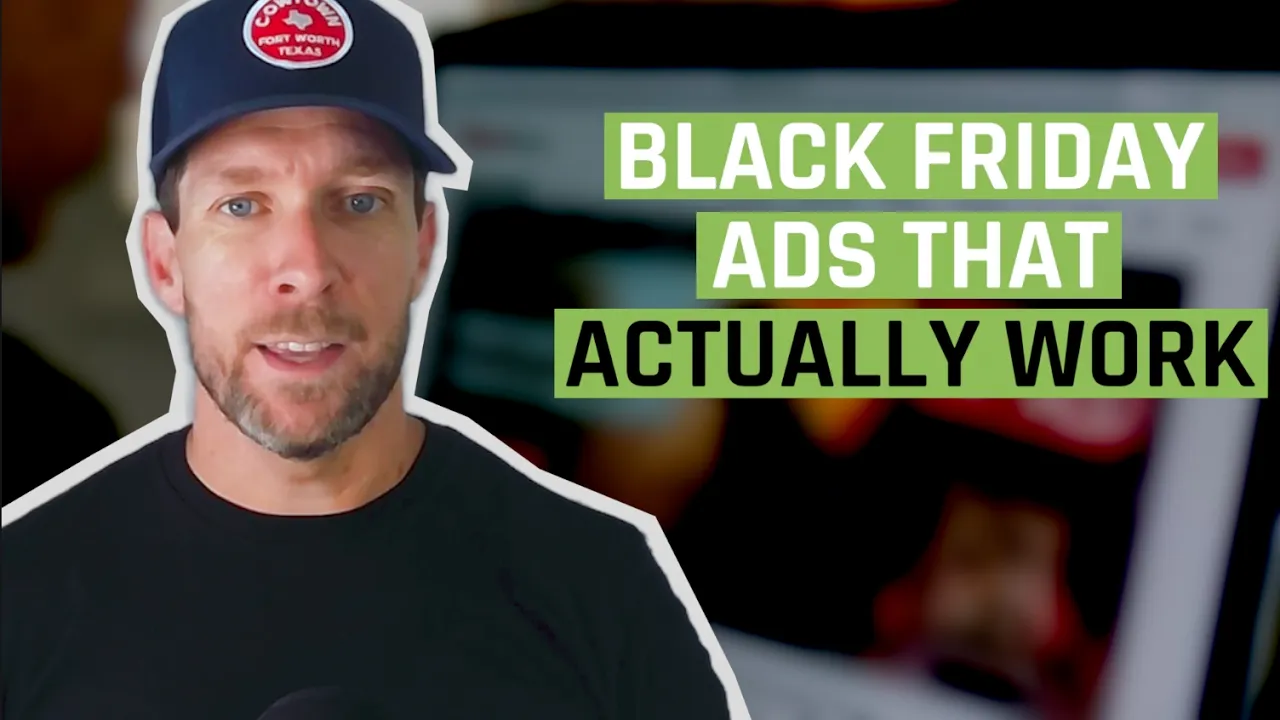
The Andrew Faris Podcast · @andrewfarispodcast
Words
6,474
Runtime
28:43
Speaking pace
225wpm
Reading time
27min
225 words per minute, above the 201 75th percentile of 349 measured videos. That distribution comes from the 349-video hook study.
Opening (first 30 seconds)
This year will be my 11th year buying ads for brands on Black Friday, running meta ads on Black Friday, doing creative for Meta Ads on Black Friday, all parts of it. I have had brands that have spent $1,000 on Black Friday, very small, newer brands. I've had brands that have spent a million dollars just on Black Friday and everything in between. And so, I'm going to tell you exactly what I've learned and how I'm preparing this year set to set my brands up for success. What I think you should do, too. Let's get into it. I've got a list of seven things you should be doing this year
113 words, the words spoken in the first 30 seconds at 225 words per minute.
Free, no signup. See how the first 30 seconds hold attention, with rewrites.
Sentence shape
| Measure | This transcript |
|---|---|
| Sentences | 390 |
| Average words per sentence | 16.6 |
| Longest sentence | 209 words |
| Questions asked | 25 |
| Sentences containing a number | 25 |
Most used terms
Filler phrases
263 in total: um 69 · uh 67 · like 64 · you know 18 · actually 16 · kind of 8 · right? 7 · sort of 6 · I mean 3 · basically 3 · literally 2.
A literal whole-word count of the same phrase list the Prepublish browser extension uses, so a phrase inside another word is not counted and a phrase used in its ordinary sense still is. It is a count and not a judgement.
Free, no account. See where attention is likely to drop, with a rewrite for each weak line. The free check shows the scores and the one issue costing the most. Or run it on the words above first.
Free · No login · See a sample audit first if you prefer.
What this transcript is
Every word below is the caption track YouTube publishes for this video, pulled from the video itself and reproduced unchanged. It is not Prepublish's writing, not a summary, and not a re-transcription: it is the video's own published captions. English captions, generated automatically by YouTube, in the video’s original language. Source: the video on YouTube. A channel that would rather this page did not exist can ask for its removal through the contact page, and it is removed.
No Script X-ray for this video: YouTube shows a Most replayed graph only once a video has enough views.
This year will be my 11th year buying ads for brands on Black Friday, running meta ads on Black Friday, doing creative for Meta Ads on Black Friday, all parts of it. I have had brands that have spent $1,000 on Black Friday, very small, newer brands. I've had brands that have spent a million dollars just on Black Friday and everything in between. And so, I'm going to tell you exactly what I've learned and how I'm preparing this year set to set my brands up for success.
What I think you should do, too. Let's get into it. I've got a list of seven things you should be doing this year uh at Black Friday to maximize the moment specifically on meta ads. Let's start at number one uh as creative. Okay, creative for Black Friday Cyber Monday is um is and for the whole holiday season. The key thing here is basically just to not overthink it. Um if I was going to uh allocate creative energy, in fact I am allocating creative energy for my own clients towards what I think is going to create the biggest opportunity. my approach to actual Black Friday specific holiday specific ads in the way you traditionally think of them uh you know in terms of just like promoting a sale, promoting an offer that energy is going to be um relatively straightforward, simple, and there frankly won't be that much of it in the grand scheme of things relative to where to put my other time.
What I mean is I'm going to put up ads that say in big letters get 50% off or whatever it is and have the brand and a photo of the product. And I'm going to find a bunch of ways to have simple video uh and clear stills showing those two that basic thing. Stills, simple video showing that basic thing. Just like here is what the offer is. Here's why you should get it right now. This deal will end soon and that's it. And every other way I have tried to go and make like really clever Black Friday ads or whatever it is has just never been nearly as valuable as just really straightforward and clear.
And it's because it's such a shopping moment. people. Customers want deals. And for a large portion of your spend, you should recognize that a huge number of people who you have talked to throughout the year who have been aware of your brand throughout the year or even who are just new to your brand but are excited about the pro product in that time, any anywhere on that spectrum of awareness of your brand. They want deals during Black Friday.
They want a reason to buy now and that is what your big offer is giving them. Um, convey the urgency. Tell them that the deal is going away, etc. But like that's it pretty much. Like I I would just I would just basically make a good number of those between I don't know five and 30 of them depending on how big your brand is, how much you're spending. You know, you want some diversity of visuals in there just so you have some different looks, etc.
Some more socially native stuff, some more design stuff. But don't kill yourself on this. Really straightforward. Clearly promote the deal. That is enough reason for people to buy and those ads will print. They will do well. They will reach far as a part of your ad spend. And what all of this implies is that something else is going on at the same time, which is that every single year I see brands where actually those ads get very little of their spend.
I mean, I see plenty of brands where those ads get a lot of their spend. And it's really hard to predict which is going to be which, but there are brands where no matter what we do on the sort of creative side for making more holiday focused, offer focused ads, like we just um we end up spending a ton of our money on our evergreen ads because those evergreen ads still work. they're still generating high amounts of engagement and high conversion rates and all those things.
And therefore, as they go out into the world during the most competitive time of the year, if they're good ads, they're still good ads and people are going to be interested in them because not everything they're looking at on their feed is a Black Friday offer right away. And they'll click and they'll discover, hey, look, this brand has their Black Friday sale and that's great. So, just expect that even on the heart of the sale, like the the main days, Black Friday, Summer Monday, that your Evergreen ads will work. nothing is broken if most of your spend goes there.
That's just fine. And so that means that what I would actually do is think about how do you make more great quality evergreen ads as part of this all the time because they are going to represent a significant portion of your spend in the holiday moments. So the magic on Black Friday and the way to win the moment is not going to have very much to do with creative I don't think. Now, the the exception to that in not excuse me, I should clarify is not going to have very much to do with Black Friday specific creative.
Okay? It's going to be about your total creative approach. It's going to uh more generally it's going to have more to do with your offer and your brand and your seasonality in general. And the one thing I'll say here is that if you have a particular reason a customer ought to buy now that is unique to your brand and the seasonality of the moment, you should definitely also express that in your ads. Okay? any reason somebody ought to buy right now and not later that makes sense for the customer besides just the sale, right?
If there's something seasonal at your product, you know, um the extreme example would be like a Christmas tree farm. Okay? So like then you should then you should also of course express that but why why are they out to buy their time limited thing right now? But um but otherwise just promote the offer. That's number one. Okay. Number two, let's talk about media buying and the account um approach. Uh I have said a lot that I run almost all of our spend like you know 98% of it or something like that on manual bids.
That's a mix of bid caps and target rowass ads. I'm going to talk more about target rowass ads in just a second. But this is the hardest part about Black Friday media buying and really the hardest part about manual bids in general is getting this right. Because if you think about what manual bids do, what they do is they use recent performance including re particularly recent conversion rate performance to inform their forecast of how much they can deliver their ads.
If if Meta has to calculate a CAC above which it does not want to bid which is what a bid cap is um for for your customers or if it has to calculate a target return on your ad spend which is what a target rowass is an average in that case right it has to forecast a conversion rate and in the case of target rowass it has to forecast an average order value as well in um in both cases the challenge is that you're particularly for black Friday um and then that whole weekend Saturday and Monday the conversion rate changes radically daytoday before during and directly after your sale moments and those change fast and in a way that is uh irrespective of previous performance right so like conversion rate is probably going to at least double on black Friday for your brand and there's just no way for a probabilistic machine to anticipate that that when the clock strikes 12 the conversion rate is going to double unless that's built into know now there is a way if meta engineers put their thumb on the scale of how the ECVR calculation works, but I don't know that there's any evidence that's the case.
And that means that if you don't want to miss out on volume, you need to proactively uh adjust your bid cap up. So, your bids need to get higher and more aggressive and you need to adjust your target rorowass down. So, again, your bids get more aggressive. Uh now, the problem with that is is simple, which is that at some point, Meta will adjust. And in fact you if you're at enough volume meta will be getting so many conversions per day that uh in fact it can adjust pretty quickly especially if you have a consolidated ad account approach.
So if you're getting 50 or 100 conversions within a few hours which is very possible for a lot of brands right and sometimes even less than a few hours then Meta will update its ECVR pretty quickly and now you need to you need to proactively adjust your manual bid back to that. There is a cat and mouse game here. This is where you want to be careful with your budget and not do the sort of endless open inflated budget thing um and without any controls on it.
It's really tricky. Um what I'm actually going to do instead of instead of doing a whole bunch more on this here is point you to two other episodes I've done where I've dived deeper into this. Okay. Um and and that is an episode about u specifically about the ch the the most difficult things about running manual bids. And then another one was an older conversation I had with Cody Ploffer um about this issue where we talked about this after Black Friday one year as we were sort of um as we were just sort of recapping it and and all that.
So um both of those episodes are linked in the show notes. Go get both of those. I go into more detail on this for manual bids. And even if you're not a manual bidder, you've got the same problem with auto bids, which is like where exactly do you set your budget? It's really hard because you got to figure out to some degree how much volume you think you can get. Uh and so that can be a challenge as well. Um, so anyway, uh, make sure though that you are thinking proactively about this.
It's tricky if you're running manual bids, you will lose volume if you're not proactive. And the same problem happens on the back end, by the way, which is that as soon as Cyber Monday ends, you know what's going to happen, right? Suddenly, uh, when Cyber Monday ends, suddenly uh, the conversion rate will plummet. And so you have the problem same problem in the opposite direction, which means you need to make your bids more conservative and not more aggressive.
And you need to do that proactively or you'll blow a bunch of money. So uh, so it's it's challenging. Um, and you got to stay on it and and it's important, but watch carefully. At some point, your bids will dial back in and they'll be a great tool. And in fact, I still think it's worth doing because manual bids in these situations, in my view, can scale much faster and yet more safely than auto bids where you're really doing a lot of guesswork about how much volume is there and available.
But, um, but manual bids can can go really far really fast. I've seen them do an amazing job at holiday moments before because of this. But, you got to watch them really closely. Go check out those other episodes. And while you're at it, subscribe to this channel if you like this episode. um you are going to like a lot of my content. So, subscribe to this channel while you're at it. Leave a comment if you have a question about this.
Also, I would love to hear from you about that question and and can handle it. Okay. When you think about your customers who have had like the most success with um for you as the CEO of Vermont, when you think about your customers who have had the most success uh with the platform, like what what do they do to like to really win big by using Vermont? Um I think that the the behavior that I've observed of the people who who get the most benefit from working with us is they do they do two things.
The first is they they internalize that this is a different shopping experience and so they take advantage of the fact that they can like change every part of the journey. So like the inverse of that is like I want to replicate my current landing page. like if you want to replicate your current landing page just you know just don't do anything like you know don't don't just keep your current landing page you know what I mean um and that's okay right I'm not I'm not I'm not judging that uh I'm simply suggesting that that's like a fail case and so it's like instead if it's like hey I want to actually make every part of this journey unique to this particular situation new product launch new audience discovery new channel um that that is like where you are going to get the biggest amount of benefit And so that is where we see the best outcomes.
And then the places where I get surprised is like people start to create experiences that I just would not have imagined. So like I remember at some point um there's a beauty company that we work with and I saw the experience that they built and I was like that's so strange. Like they they like like they combined different module types that we had to like tell the certain to to like tell the product story in a certain way.
And I and I did not understand why they were doing that. And it turns out that what they were doing is intentionally putting different collections in a certain order as you browsed through the experience in order to see where people would stop and start to actually engage in the products inside of that collection in particular to see what actually drove people from that ad into different collections because again on their site they can't change the order of the collections.
Like your collections are your collections and I just would not have expected that. And so like we start to see behavior like that and I'm like okay this is like amazing. >> That's rich Jane the CEO of Vermont telling it to you from his own voice but I've experienced as somebody who has been a customer of Vermont with clients of mine and seen real results. Go check out Vermont yourself by going to ver for vermontcommerce.comf vermontcommerce.com/af to get started with today.
The link for that is also in the show notes of this episode. Thanks for um uh number three uh you should use value optimization. And I've beat this drum a bunch of times. Again, this is something you can go back into my archives and find episodes about, but if you are not running any value optimized ads, if all you're running is lowest cost ads, you are for sure missing out. And on moments like this, they really help you maximize the volume that you're getting.
Um, just as a reminder, right, a value optimized ad or which is a what a target rorowass ad is, is going to target the highest value customer, not just the lowest CAC. And customers who are going to spend more are going to cost more in CAC. And so you can get a 2 to1 rorowass on a customer who's going to spend $200, your CAC will be 100, right? But a 2 to1 rorowass on a customer who spends $100, the CAC would be 50. And if you just run both of those customers exists and they they they're out there for you to go get.
And if you just run lowest cost or highest volume ads as it's called now, whether that's an auto bid or with a bid cap or a cost cap in any of those cases, you are going to get a bunch of the $50 customers and leave the $100 customers on the table because Meta is going to go for lower cap customers, especially if you have a wide range of AOVs in your product set. This matters less probably if you don't, although I've actually seen it there, too.
Even for brands that don't have a a wide range of SKs, um they just they end up getting different CPMs. target rorowass ads. Again, um I'm not going to go through the whole strategy here. You can go find other content of mine about. Just search target rorowass or highest value in my archives and you'll find stuff. Um but um but yeah, that's definitely something that's really important. And I would add to this that um just as like a another note about about your use of lowest cost and highest value ads.
And again, I would run those as manual bids. So it' be bid caps and target rows versions of that. I would be also optimizing those for one day clicks specifically on your Black Friday ads because you want customers for your for your sale ads in particular. You want customers who are going to click and buy right now, especially on Black Friday, Cyber Monday weekend. You are not looking for a 7-day click optimization. You're not looking for customers who are going to think about it for six days.
You are looking for customers who are going to buy right now. So, run a one-day click optimization on those ads and um should help. Okay. All right. So, that's number three. Number four, expect a large increase in delayed purchase behavior leading into these moments. Okay? And the basic idea is very simple and it comes down to very simple customer um customer behaviors at these moments. And uh and it's like this. Okay?
I always use this example. I've used it every year, but there was one year where I was looking into buying a new pair of weightlifting shoes. And I was looking into buying them on like October 20th. That's not the kind of purchase that you need to have right now. Now, I had weightlifting shoes of some kind or another that worked just fine, but they were getting old and ratty, and I thought, "Ah, they'll make it for another month.
I don't not using them that often, right? I don't work out in those shoes every day. Only if I'm lifting heavy, only if I'm squatting heavy, whatever." So, it's just not a super necessity. Okay. So, um and and so what did I do? I thought to myself, I'm going to wait. At the time, I bought I was buying Reebok shoes. And so, I thought like, I'm going to go and wait for Reebok's Black Friday sale, and then I'm going to buy then.
And it does not matter what ad they were going to show me. I was going to wait to buy until Black Friday. I'd literally written it down in a note on my phone somewhere or in a sauna task or something like that so that I knew these are the a list of things that I wanted to look for on Black Friday. Okay. So, the ads that they showed me, the sale ads that they showed me were not that important. In fact, what would have been the most interesting to me would have been if um various brands would have targeted me with evergreen style ads, like more traditional feature and benefit ads showing me the product and the price leading into Black Friday, getting me to click before Black Friday so that I could think about it.
And if I would have clicked on October 20th on a bunch of different brands, uh weightlifting shoes, I would not have bought. Okay? And if I would have clicked on November 3rd or let's say, let me just make sure I did my math right here. let's say uh November 10th, I still would not have bought. Okay? Uh and I would have waited for the Black Friday sale because at that point, you might as well just wait and see and compare what is out there.
I only need one pair of shoes. Well, if you think about that, that means that the click for the ad, let's say somebody would have convinced me, don't buy Rebok, buy my shoes instead. The click for the ad for that would have been on November 10th, but the purchase, no matter what else they did based off of the offer that they gave, would have come on Black Friday itself, November 28th or whatever day it happens to fall on a given year.
Okay? If that's the case, then in my actual bidding, and if that's happening at a lot of scale, and I know for a fact that it is, even if people are launching their sale early, and I made the argument in my previous episode that you should launch your sale early, go one episode back if you did not listen to or watch that episode to hear why I think you should launch your sale early. Um, and why I think there's definitive data to say you should do this at this point and exactly when to launch it.
Uh, I I have the best answer to that question I've ever heard uh in my previous episode. So, go check that out. Okay? But uh it's literally the episode right before this one. No matter what, if a sale is launched early or not, if I get the click on November 10th, okay, and the purchase on November 28th, then that means on a one-day click basis, I'm going to see uh zero rorowass from that from that customer interaction.
Okay. But on 28 day click uh or whatever something in my if you're using an attribution tool, I don't use attribution tools, but if you're using an attribution tool, it would show up there. I know that there's going to be a purchase there. And if that if that behavior is happening at scale, and I think it is, then you should expect that for everyone. And a long time ago did a study about this for CTC when I was at Comic Thread Collective.
And I think the data still holds true basically, which is that there is an increase in this kind of behavior that your delayed purchase multiplier, that is the gap between one day click and 28 day click goes up. Uh the purchases in those times goes up. The very simple idea is spend when you're spending uh in early November in particular uh that money is going to create value at Black Friday even if you've already launched your sale and be ready for it, expect it and probably be a little extra aggressive so that you don't miss out on the volume.
That's really the takeaway. Uh another approach to that is to not be more aggressive about it. You just say like I'm just going to take the profit and that's fine. I think that's fine too. It just depends on your goals and and your values. But expect that behavior to happen at scale across the country all over the world. It is not too late to staff up your business to where it needs to be to maximize not only this holiday season but the future of your business.
And it's not too late to do that while also keeping your opex super lean. And you can do that with my friends at more staffing. You know that I love more staffing. You have heard me say it a million times. I hope I have been working with more staffing in some capacity or another in my business for a very long time at this point. I am always going deeper with them. I'm always discovering that there's more talent to unlock and that I am often the bottleneck and the problem with getting the most out of talent in the Philippines from my friends at more staffing.
And it's because I am not thinking about Filipino talent just as VAS. I'm thinking about Filipino talent as serious contributors, real team members with deep professional resumes across the e-commerce landscape that's in every part of every kind of business that I'm working on. Agency side, the brand that I'm working on building, all of it. in some way, I'm not kidding, is being done with this mentality that I call Philippines first, which is going and looking and saying like, okay, where is the opportunity for me to hire amazing talent in the Philippines?
And it's so simple. Why? It's because because of the reality of global economies, my dollars go extremely far in the Philippines to hire incredible talent in my business. So, I can hire great talent, giving great people the best opportunity that is possible for them, while at the same time keeping my opex lean. that actually allows me to generate profit which then allows me to hire more great Filipino talent, grow my business bigger and faster.
It is a win for absolutely everybody involved and more staffing is the key to doing this because they are much more boutique, much more boutique, much more hands-on than other giant staffing agencies in the Philippines. So, if you want people with real deep resumes across e-commerce, they can help you find great talent, people from top universities in the Philippines, uh, or who have graduated from top universities, like really good um, or or people who have who have had a whole bunch of years of e-commerce experience.
In both cases, more staffing can help you find them. Uh, I just can't recommend them enough. They will help you um, identify, recruit, train, onboard, and even provide ongoing coaching. They even give you a one-year guarantee. So, if you hire with them, it doesn't work out for a year, they will replace the talent for free, which is awesome. So morestaffing.co/af. Tell them that I sent you. Staffing.co/ aaf. I am a huge fan of them.
Whatever part of the business you are working on, there are people in the Philippines who can help and more staffing can help you access them. It is a win-win for everybody. Go get it. Okay. Number five, uh forecast. Have a daily forecast for spend for your brand or for your client's brands uh for this time period in particular. If you know me, you know I'm actually sort of hesitant about daily forecasts. And the reason for that is that I think daily forecasts have some real value and there's some people who have done a great job of operationalizing that.
My friends at common thread collective build that into their sequence and I think they use a daily forecast very well. Um but what I see a lot of times for daily forecast and daily reporting is an extremely inexact science first of all and secondly uh uh it lead sometimes daily reporting in particular leads to a sort of daily kind of approach to taking actions in your business that end up sucking up a bunch of your time when you happen to have a random bad day and that you ought to look at trends on a much larger scale.
Nate Legos talks sometimes about this idea that he's thinking about his ad account. he actually actively doesn't want to analyze his ad account based on daily performance because um he wants to think bigger about the bigger swings he can take that are actually going to move the brand forward in people's eyes. Right? That's like that's a really good way of thinking I think about how ads work for brands and and how you can make a big impact which is you want to think at the level of the brand and product and partnerships and collabs and all these kinds of things and and that if you do too much daily stuff uh too much daily style thinking that you'll actually get in the way of taking uh the actions that are required to to to push those kinds of larger things through.
All of that is my is my caveat to the thing that I'm going to say here, which is that throw that out the window. Black Friday, Cyber Monday. Once you've built all your plans and everything, it actually is really important that you have a daily sense um for the entire holiday season, especially for a brand that is more holiday, more seasonal, um of how you think this is going to go. Again, this doesn't matter that much if your brand is not going to do like a huge Black Friday or it's not a big deal for them.
And there are brands like that. A lot of supplement brands, for example, um just don't really worry about Black Friday quite the same way. But for other brands, you should if you have some historical data, measure daily. Think about uh what you can uh forecast daily. Think about it and then um and then have a daily forecast and daily reporting on like where are we relative to pay? Do we need to make any changes? Do we need to make any adjustments etc.
Don't freak out. Uh don't panic, but at the same time um track things daily. I think it really helps when you then that leads to number six. We're going to take this to a different level. This has been one of the most helpful things I've done the last couple years and that is for Black Friday and Cyber Monday specifically, don't just forecast daily, forecast hourly. Um, because again, the revenue patterns on those days are significant and and you've only got a day to do this.
Now, this is less important on Saturday and Sunday, which are still going to be really big days, but uh but not as not as big. U but Friday and Monday, it's it's a it's a particularly big deal. And actually, I would say this is most important for Cyber Monday. Monday is often for brands as big if not bigger than Black Friday. Like um you know for me I'm like a run the same offer all weekend guy so I'm not not changing anything there.
But on Cyber Monday um I would think um the the the key thing is that your your sale is going to generate a bunch of extra value at the end of the day for two reasons. One of them is you'll have increased urgency because Cyber Monday is about to end so people know the best offers are going away. And secondly, they work on Monday, right? On Friday, it's a holiday. So they purchase a lot early in the morning. And that's the the the biggest hours of the day are are the first bunch of hours in the day.
Okay. In Monday, uh on Monday, it's the opposite. The most purchase behavior happens in the evening. And that is because people are at work during the day. They come home, they do their Monday shopping to end. So So you get huge huge hours from like 5:00 p.m. to, you know, 9:00 p.m. or whatever it is. Um and of course that's across time zones. So 5:00 p.m. on the East Coast, it's actually 2 p.m. You know, whatever. You get the idea.
Um, so, uh, so those peak hours are really important. And if you forecast hourly and you look at historical data on this, you should be able to see this and anticipate it. Be ready for it. Don't freak out when Cyber Monday looks light in the morning, etc. Um, it really helps again to forecast hourly and to keep communicating, especially if you're cl if you're an agency type person or freelancer, media buyer, whatever.
Your clients are going to want to know what's going on. Tell them how you're doing. Tell them how you're pacing. Forecasting hourly really helps. Um, all right. Uh, number seven, this is like a little small hack. This applies to um operators, media buyers, everybody, but take notes as you go and then put them in a task or a calendar invite or something like that for yourself for September of next year. September 1st of next year.
Uh so as you go observe things, write things down and then and then have a note for yourself on September 1st of next year to with those notes in it so that you can access your previous brain from that time period. Uh because it really helps to know uh that you'll forget a bunch of stuff that happens year-over-year. Um this will help set you up for success in the future. You'll make mistakes for sure. For sure. You'll have wins for sure.
Write down both of them and be ready for them in the future. It's a simple little thing to do, but it really helps you get better at this year over year over year on kind of every level. Um, and I, you know, I have a whole bunch of notes from clients that I've had for over a year where it's like, hey, here's what to watch out for. One client of mine, um, has actually has a really big Thanksgiving, uh, moment specifically.
Um, and so I, you know, I had a note about like, okay, we got to get prepped for Thanksgiving. It's bigger in some ways than Black Friday's every Monday. So, there's all that kind of stuff. So, um, so that's the that's the kind of thing you want to do. You want to make sure that you've got um you've got some kind of brand brain uh client brain for future performance. And you want to do that by writing down what's happening as it's going.
Give yourself a note for next year. It'll really help. All right, that's all seven of the things I'm going to do. I'm going to run back through them really fast. Number one, don't overthink your creative and don't be surprised if your evergreen creative works great. Uh in fact, if it even works better than your u sale creative. Uh, number two, be super careful proactively with budget and bids. Um, uh, with manual bid media buying in particular.
If you've listened to my content for a while, you know about that. Again, go follow up on those past episodes that I've got there. Number three, make sure you're using value optimization and set set that value optimization and for that matter your highest highest volume stuff to one day click um, specifically for your promo ads. Don't leave customers on the table. Number four, expect more delayed purchase behavior than usual.
People are going to click on before Black Friday. and they're going to buy on Black Friday. It's going to happen at scale across the country. Number five, forecast daily. Number six, forecast hourly for Black Friday and Cyber Monday in particular. Number seven, take notes as you go. Give yourself a note for next year. Hopefully, that's helpful to you. If you have more thoughts, questions, etc., hit them in the comments.
I'm thinking about doing a Black Friday AMA episode if I get enough questions. So, you can also email me at podcastfgrowth.com. I'd love to be I'm sure I forgot things. I'm sure there's specific things for your brand that do apply to other people. Let's get to them. Put them in the comments. Um, like I said, email me uh and let's get to them. All right, thanks so much. Hopefully that was helpful. Huge thanks to you for watching or listening to that episode.
Again, don't forget to uh smash that subscribe button. I sound ridiculous saying smash that subscribe button. That's what like YouTube influencers say though, right? So, I'm supposed to say that I should be better at this. Anyway, uh, subscribe wherever you're watching or listening. Uh, don't miss out on any episodes. I got a bunch of great interviews coming up. I lined up a whole bunch of really, really cool stuff. So, you're not going to want to miss those.
Should I tell you about them? Brian Porter from Simple Modern, he's coming soon. He's got a really great story about raising his AOV. That's interesting. Eric Van Holtz from Beard Brand. Uh they struggled, they're doing better. Maybe going to talk to about that. Um I've got Drew Fallon from Iris with some really cool information. Great finance thinker. Bunch of stuff. You get the idea. There's good episodes. They're coming.
Subscribe. Don't miss them. Big thanks to more staffing. You know, I love more staffing. More staffing.co um af to get um to get going with great talent in the Philippines for your e-commerce business today. and my friends at Vermont uh Vermont Commerce uh to uh to look at uh really fully deeply seriously customized funnels uh make funnels the way you make ads. They're great. And uh and then go to my website afgrowth.com, fill out the intake form if you're interested in working with me, whether it's this year, next year, whatever.
Would love to talk to you about that. Get some conversation going. If I can't work with you, I might have a great recommendation for you for somebody who who who can. We're we're not growing too fast today, Jeff growth, but we're growing some. So, um, so let's get a conversation started. Thanks so much for watching or listening. Like I said, I really appreciate your time. I'll see you soon. [Music]
The words are the caption track's own and nothing is reworded or re-transcribed. Paragraph breaks are placed between sentences so the text reads as prose.
Free tools for your own script: paste a draft and see where it stands before you record it.
Paste your draft and see where viewers are likely to drop off, with a rewrite for each weak line.
Paste the first 30 seconds of your own draft for a hook score and rewrites.
Check your draft against YouTube's advertiser-friendly guidelines before you record it.
Read this channel's public videos and transcripts, and download a writing brief for it.