Getting the transcript
Reading the captions from YouTube. A video nobody has opened here before takes 10 to 30 seconds; this page fills in on its own.
Getting the transcript
Reading the captions from YouTube. A video nobody has opened here before takes 10 to 30 seconds; this page fills in on its own.
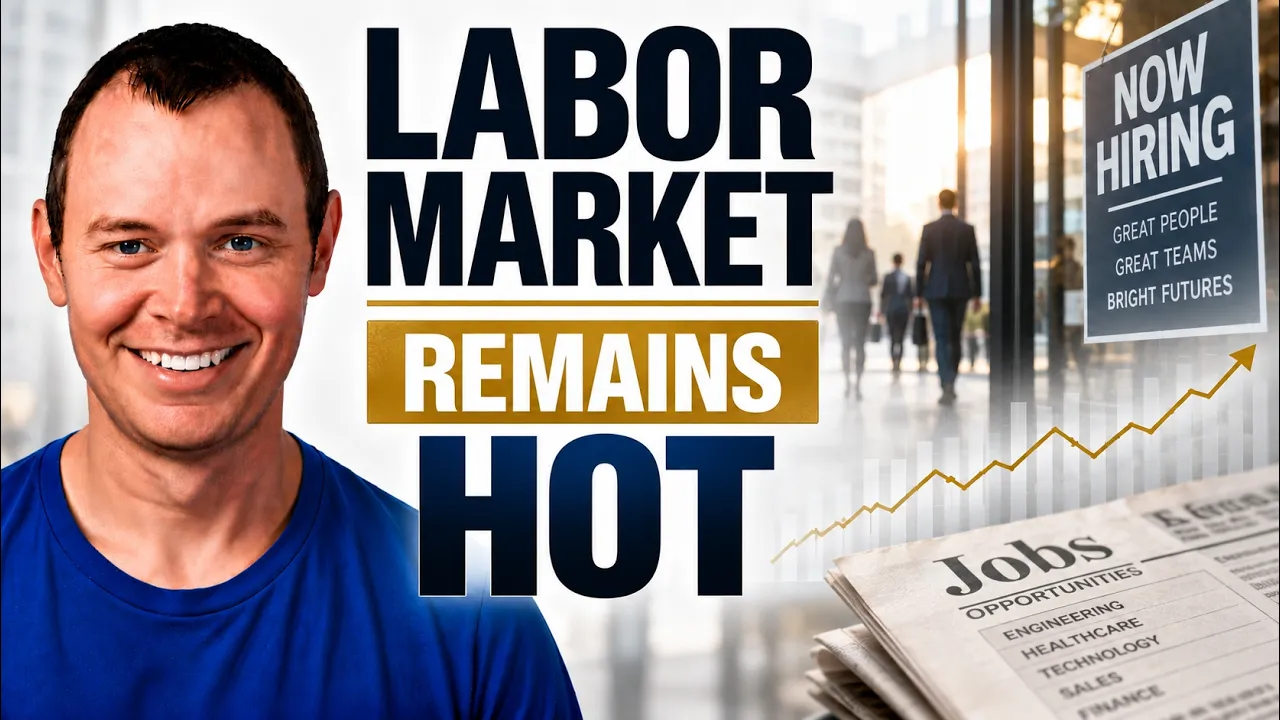
Benjamin Cowen · @benjaminjcowen
Where viewers went back to watch this video again, from YouTube's public Most replayed graph, lined up with what was said at that moment.
Most replayed moment #1
8:1011.3x the video's typical replay level
the Bank of Japan. That would then get rates up to about 1.5%. So, that's the direction I think the the Bank of Japan is going. Now, for the Fed, I think they likely will raise once. I'm not as sure about the second time, okay?
Said at 8:03
Most replayed moment #2
26:4910.0x the video's typical replay level
earlier today. So, the labor market, you know, I mean, it again, going back over to to the charts and and just kind of going through some of the uh uh the the labor market stuff. If you want
Said at 26:43
Most replayed moment #3
17:126.1x the video's typical replay level
happens with inflation, because we have another inflation report coming up in in not the so distant future, right? If we look at headline inflation, um so you can see recently it's about 3.3, 3.4%, and and we should have an update, you know, just in the coming
Said at 17:05
The graph counts replays. It does not show where viewers stopped watching.
Words
5,266
Runtime
29:09
Speaking pace
181wpm
Reading time
22min
181 words per minute, the same as the 181 median of 349 measured videos. That distribution comes from the 349-video hook study.
Opening (first 30 seconds)
Hey everyone, and thanks for jumping back into the macroverse. Today, we're going to talk about the most recent jobs report as it came in really hot. If you guys like the content, make sure you subscribe to the channel, give the video a thumbs up, and also check out the sale on Into The Cryptoverse Premium at intothecryptoverse.com. As a reminder, the ITC conference is coming up in late November, so make sure to get your ticket. Let's go ahead and jump in. So, we actually had a relatively hot
91 words, the words spoken in the first 30 seconds at 181 words per minute.
Free, no signup. See how the first 30 seconds hold attention, with rewrites.
Sentence shape
| Measure | This transcript |
|---|---|
| Sentences | 291 |
| Average words per sentence | 18.1 |
| Longest sentence | 74 words |
| Questions asked | 72 |
| Sentences containing a number | 55 |
Most used terms
Filler phrases
223 in total: right? 52 · like 45 · you know 39 · actually 20 · I mean 14 · uh 14 · kind of 13 · um 11 · basically 8 · sort of 7.
A literal whole-word count of the same phrase list the Prepublish browser extension uses, so a phrase inside another word is not counted and a phrase used in its ordinary sense still is. It is a count and not a judgement.
Free, no account. See where attention is likely to drop, with a rewrite for each weak line. The free check shows the scores and the one issue costing the most. Or run it on the words above first.
Free · No login · See a sample audit first if you prefer.
What this transcript is
Every word below is the caption track YouTube publishes for this video, pulled from the video itself and reproduced unchanged. It is not Prepublish's writing, not a summary, and not a re-transcription: it is the video's own published captions. English captions, generated automatically by YouTube, in the video’s original language. Source: the video on YouTube. A channel that would rather this page did not exist can ask for its removal through the contact page, and it is removed.
Hey everyone, and thanks for jumping back into the macroverse. Today, we're going to talk about the most recent jobs report as it came in really hot. If you guys like the content, make sure you subscribe to the channel, give the video a thumbs up, and also check out the sale on Into The Cryptoverse Premium at intothecryptoverse.com. As a reminder, the ITC conference is coming up in late November, so make sure to get your ticket.
Let's go ahead and jump in. So, we actually had a relatively hot jobs report today. And in in a sense, yesterday, we had one of the members of the Federal Reserve, uh Waller, he came out and said that he was more so leaning in the direction of holding rates constant. Now, when he did that, the market expectations of a rate hike in September dropped from 66% or so down to around 50%. So, yesterday, the market was then less clear if we were in fact going to get a rate hike.
And was starting to lean more towards it's a coin flip. But, with the recent jobs report today, the it kind of undid to some extent what Waller was saying yesterday, right? So, we're now right back up to 60%. Not quite as high, right? It's not at like 66, 67%. It's not 2/3, 1/3, but 60% chance of a rate hike. I was curious, you know, and and I I was thinking about this, when you look at I just current probabilities for for a rate hike.
And and think about it as yesterday when it was 50/50, but I was wondering like, you know, has there really been many times in history where we're only 2 weeks away from the next Fed meeting and the odds are are are like this, like approximately 50/50? Because from my memory, and I'm not saying it hasn't happened before, but just as I'm sort of thinking about it right now, from my memory, normally when you're within one or two weeks of the meeting, the market like the the market expectations of what's actually going to happen tends to be closer to like 80 to 90%.
So, I think what it essentially does is it it almost makes the stakes higher in every single data point that happens because there's just a lot of uncertainty, right? And of course markets generally are not a huge fan of uncertainty. And so, when you do get these slight changes, it can then have more adverse effects on on markets. And and so, we'll see what the Fed does. My guess is if they don't raise rates, you'll just see the long end of the yield curve continue to go higher.
So, I know they keep fighting the long end of the yield curve and of course the best end with the you know, the the treasure the bond buybacks, but one of the most effective ways to combat the long end of the yield curve would just be to raise rates, but that's also like the one thing that the current administration really has no interest in in them doing. So, we'll see what happens. I mean, the Fed again is theoretically an independent body and they do not, you know, need to sort of oblige the current administration, but we will in fact see.
I I think what we what we have seen what we have seen is a a transition from a Fed with Powell where there were there were not a whole lot of dissenting voices, right? I think that the Fed chair was able to do a good job of kind of getting everyone on the same page, but if you look at the last Fed meeting, there were three dissents, right? Three people wanted to raise rates. And so, I think it's almost becoming this more of an independent thing, right?
Rather than getting everyone on the same page, there's a lot more dissents. And I think we'll probably continue to see that as as time goes on. So, let's dive into what actually caused the odds of the rate hike to go back up to 60%. So, first of all, you have the unemployment rate and and it's now back at it's still at 4.1%. So, again, the labor market is historically fine. Again, with it being low, that's not in and of itself a declaration that things can't get worse at some point as non-linear accelerations in the unemployment rate often start from low levels, but again, who knows how many months or even years away we are from that.
So, in the short term, the market is far more concerned about inflation than it is a a recession caused by a weak labor market. And it's not just the unemployment rate, right? Because the unemployment rate has been coming down and while and since November of 2025 and while the unemployment rate has been going down, the you know, other things have have also gone down and one of the things that, you know, we've we've talked about some is the non-farm payroll.
So, if you look at at the employment level and and look at non-farm payroll, last month, it was actually negative. But, in the recent report, it was revised back to being positive. So, again, it's it's interesting the markets react so much on the news of of, you know, these data points that come in when the next month and it all just gets revised. Anyways, but what this shows you is that the the labor market isn't quite as bad, right?
If you take the year-over-year change, you can see that when it goes negative, that is where reces- recessions occur, right? When this chart goes negative. And we came really close back in late 2025 and early 2026, but didn't happen, right? And now it's starting to accelerate again off of the low. So, the lowest it got was back in in December of 2025, the year-over-year non-total non-farm payroll this difference was 116,000.
We're back up to 600 We're back up to 603,000. So, the labor market is actually showing signs of being resilient. It is, right? And again, that's just what's happening, right? I mean, you can pretty clearly see it that the labor market has been improving and and this report confirms it. So, one of the things that Waller did say was he he said that that while he's leaning more towards holding rates constant, it wouldn't take him It wouldn't take much for him to be in the other camp, right?
Of of a rate hike. And and so, one of the things you can look at is average hourly earnings. That one has also just continued to climb. Now, when you look at it from a year-over-year perspective, it's been dropping. So, it's moving in the direction of where they wanted it to go. The question is is Is it moving fast enough? And as it stands right now, the market clearly doesn't think so. Now, we're going to have the next Fed meeting on September 16th, all right?
There's also going to be a Bank of Japan meeting around that time. I would expect the Bank of Japan to raise rates. Okay? So, they're they're very very likely going to raise rates. In fact, the Bank of Japan might end up raising twice potentially before the end of the year. If you were to go look at interest rates over in Japan, they're currently 1%. But, if you look at the two-year yield in Japan, and let's actually go ahead and add this to the same axis as as the other one, what you'll notice is that the two-year yield is all the way up at 1.74% and there's an argument to be made that, you know, the two-year yield is essentially showing the Bank of Japan where interest rates need to be.
So, I would argue you're likely going to have a rate hike by the Bank of Japan in September, and there's a good chance you might have another one before the end of the year, potentially around the December timeframe. And maybe sooner, but I I would say, you know, September, December can make could make a lot of sense to get two more rate hikes from the Bank of Japan. That would then get rates up to about 1.5%. So, that's the direction I think the the Bank of Japan is going.
Now, for the Fed, I think they likely will raise once. I'm not as sure about the second time, okay? You know, one time might be enough, and and it's going to depend on a lot of things. You know, one of the reasons why I expect inflation to remain sticky here in the short-term is if you look at at I mean, again, I'm not a geopolitical expert. I am not claiming to be one, but I don't have to be a geopolitical expert to just look at the price of oil, right?
And and the price of oil is is remaining elevated, right? It's currently at around $90 a barrel, and that's going to have adverse effects on CPI. And and you could argue that we've already, you know, the the the recent inflation reports were kind of more so pricing in what was happening with oil way back over here in early, you know, kind of like in June, July. But since then, it's actually gone up. So, if we actually plot on here um the in- the US inflation rate year-over-year, you can see what I'm talking about, right?
I I I I'm I'm wondering if we've already kind of accounted for this big drop, and that inflation might start to go back up. And if it does, if we get uh a bad inflation report next week where inflation's heading back up, then the odds go up significantly that the Fed would cut. That still doesn't mean or that sorry, that the Fed would raise rates. That still doesn't mean they will. Uh I think in that case they really should and I'm I'm leaning more towards in the direction of of a rate hike at this point.
But, if they were not to raise rates, I think the market would interpret that as a mistake and it would send the long end of the yield curve even higher. Okay? Now, listen, for years and years and years there's have been a lot of people that have faded yields and for years and years and years years the long end of the yield curve has only gone higher. So, I'm still thinking that you're going to see this 10-year Treasury continue to to to head higher.
We talked about the 30-year yield likely going and going above its prior highs at 5.17% or so and now it has. I think in the 20-year 20-year has gotten relatively close. And then the 10-year is a little bit further away, but I think they likely all will eventually get to that point. So, again, in order for them to combat the long end of the yield curve, the thing that would make the most sense would be to raise rates.
But, that's not what the administration wants. So, that's why you get all this uncertainty and I I I don't know if you guys remember this, if you've watched my videos for a couple of years, you might remember, but we sort of speculated about a year ago or so that it would be an interesting dynamic if the person that is replay that replaces Powell ends up his first move ends up being to raise rates. Right? And and it kind of seems like that's the direction that we're heading right now.
So, you know, we're in an interesting macro environment for sure. So, let's go through a few of the more labor market prints just to kind of like get a full idea of of what's actually going on. So, remember, the unemployment rate had trended higher for a while. It's now been trending back down. We're not in a recession at the current time and it does not look like we're on the the eve of one either because you're only in a recession historically when you have the non-linear acceleration in the unemployment rate.
And we're basically having the opposite of that right now. This is also confirmed by things like initial claims. If you look at initial claims, they remain extremely low, right? 206,000. This is not indicative of a labor market that is struggling. In fact, I would not get concerned about recessions until you see initial claims printing over 300,000. So, until that time, the chief concern is not going to be the labor market.
I think it's more so going to be inflation. Now, you could argue that AI, artificial intelligence in and of itself, over the long term would be disinflationary. But, in the short term, it's been inflationary because it's led to a lot of demand. So, over the long term, it's it's disinflationary theoretically because it's going to reduce labor demand, which would then put would take away pressure on wage inflation. So, over the long term, it's disinflationary.
But, in the short term, because of all this capital expenditure and and this race, right? And and all this all the money that's being poured into data centers and and you know, in chips and all in power and all that stuff, it's been inflationary. So, what's interesting is that the same force, AI, that is causing more of a tightening of monetary condition policy and and and financial conditions for the last several years, will eventually be the same technology that leads to them loosening up.
But, we're not at we haven't sort of transitioned into that phase yet. We're still in the phase of it being more of an inflationary thing. And you also you you kind of couple that with this conflict we have going on in the Middle East, and it ends up being, you know, like a double whammy of you have all this demand from the AI build-out and the capital expenditure, and then you also have these artificial prices price hikes in in for forms of like oil because of a of a geopolitical conflict that that is going on.
And of course, don't even get me started on on tariffs, right? There's just a lot of inflationary forces that that exist that I I think are going to keep the Fed from being able to cut rates anytime soon. So, you have the unemployment rate, we've got nonfarm payroll, we just went through initial claims, and you know, if you're still not right like in the camp of like you feel like maybe you're living in a part of the world where it or part of the the United States where it feels like things are bad.
Here's a really interesting chart. So, if you look at the number the the the the states where the unemployment rate is higher today than 6 months ago, you can see it's only part of the country, right? So, maybe you're over in, you know, one part of you know, part of the country and it feels like things are are at more elevated. Like maybe you're in uh um Arizona or New Mexico, and the unemployment rate is closer to 5%, and and you know, you feel like things aren't that great.
But, over in the Northeast, right? The the unemployment rate is lower, right? I mean, Pennsylvania is 3.9%, and also it's lower today than it was 6 months ago. The it's the the change that is more important, not like the absolute level. But again, you can see there's some parts of the country where the unemployment rate is trending higher, some parts of the country where the unemployment rate is trending lower, and you don't have recessionary conditions until it's basically the entire country.
So, if you drag this back through time, you can see this is May of 2026. Um but if you drag and and again, it's just delayed cuz it it takes a little while to get all the data. But if you take this back, um what you'll see is that in, you know, the pandemic, it was every state. And you might say, "Well, that was the pandemic." But so what? Like in 2007 2008 in October 2008, it was every state, right? In 2001, it was every state.
And that was a recession. You know, with it just kind of a few states here and there, you know, that's just like any other time. I mean, look at look at the unemployment rate through the '90s, right? I mean, you can just see there was so many times where it was just some states, but not others, and then it took until the 2000s for it to really change. So, when you think about that, in in that context, I think it makes a lot more sense to, you know, to think about it um in this way, right?
Like the the the unemployment rate while in some places isn't that great, collectively, it it hasn't been that bad. In fact, if you were to look at at the number of job openings for uh for every unemployed worker, it's actually been trending up since November. So, November, maybe December of 2025, which is the same time that the unemployment rate started trending down. Now, the other thing to look at, because one of the reasons the unemployment rate has gone down is because of the labor force participation rate.
Now, the labor force the labor force participation rate in this report actually went up a little bit. So, what's interesting is had it gone down again, if if the labor force participation rate had gone down again, you might have had an unemployment rate print 4%. But, in fact, it it it went up, and so the unemployment rate held constant. So, the labor market is still okay, right? And and and and that's okay, right? I mean, that that's a good thing.
You know, we when people lose jobs, it it's it it's really, really bad. So, the labor market continues to hold on for dear life in some cases, but guess what? It is still holding on, and the problem now is more so what happens with inflation, because we have another inflation report coming up in in not the so distant future, right? If we look at headline inflation, um so you can see recently it's about 3.3, 3.4%, and and we should have an update, you know, just in the coming weeks.
Okay? Like, you know, before the before the next Fed meeting. So, that I think is going to be sort of the decisive print that establishes whether we get a rate hike or not. If the inflation report, you know, comes in really hot like the labor report did, labor market report, then I think they they really should raise rates. If it if it comes in cooler, then there's an argument to hold and then maybe raise rates a little bit later in the year.
But, that's where we are right now. Um the other thing I wanted to mention, too, is is that the labor market also does depend a lot on on age, right? So, if you were to look at the unemployment rate, right? Let's see if we can if we can break this down into uh different ages, right? So, so here's the thing, right? If you're looking at the unemployment rate and it is low and you're like, "What is he talking about? I a job, right?
What's Ben talking about?" You should consider that it's very different depending on what your age is. So, for instance, if you were to look at just 16 to 19-year-olds, the unemployment rate is actually 14.1%. And it actually jumped up from 12.1 to 14.1 just in the last month. So, it's not that you have a complete misunderstanding of what's going on, instead it actually is difficult for you to find a job if you're between the age of 16 and 19 years old.
It it's actually really, really difficult to find a job right now. So, and this chart proves it. If you're like putting out applications and you feel like nothing is coming back, that the data kind of supports that. Now, if you go to 20 to 24, so So, we pull out 20 to 24-years-old, you can see it's not as bad, right? It's It's higher than for everyone, but it's only 7.1% and that's coming off a high of 9.2% back in August of 2025.
So, where the labor market tends to be the strongest is, you know, in sort of your like 25 to 54-year-olds, approximately, right? And that's where the unemployment rate is 3.6%. So, if you're a working professional, right? Let's say you, you know, you went to college, uh maybe you got and then you got a job or maybe you went to grad school or med school or law school and then you got a job and you're looking around and you're like, "Well, what are they talking about?
Like, the labor market's fine." Well, for you it is, right? But it it's for other people that it's not. And at some point that will trickle through. It just takes a while, right? It takes a while. And And I'm a big believer that while AI might take some jobs away, I think it will create a lot of new jobs. I know there's a lot of people worried that AI will take every job, but I I actually I think there's a really good case to be made that AI will not take a lot of jobs, but someone who knows how to use AI will take those jobs.
So, I think just being able to use AI will increase your, you know, your skills and marketability for companies. And those who don't know how to use AI, I think they'll struggle a little bit more in in the future to, you know, to retain those jobs. So, I think there's And then And this is, by the way, this is very sector-dependent. You know, in with major technological booms, typically fields like health care and education don't get hit nearly as bad.
They just don't. And And And we've actually seen that before, right? If you If you were to look at it for men and women, I think we have that chart somewhere on the website, but I I couldn't even tell you where it is at the current moment. But, if you were to break it up in the dot-com era, the unemployment rate for men was a lot higher when it when everything went bust than it was for women. And the reason for that is because the technology field tends to be more so denominated by men, whereas education and health care tends to be more dominated by women.
And so, when you have these major technological revolutions and when they lead to sort of changes in in the economy and you do get layoffs, it doesn't affect every sector equally. Okay? So, health care and education tend to be a lot safer. So, if you're in tech, you know, learning AI and how to use it, I think would be really good skill set to focus on. Now, a lot of people that watch my videos are not in the United States.
In fact, only about 1/3 of you are in the United States. You might be a little surprised to hear that, but only about 1/3 of the people here are in the United States that watch these videos. And so, what I've what I thought to do was to create an unemployment rate that is GDP weighted by like 16 or 17 of the largest economies. Okay? So, this shows the unemployment rate of a lot of different places, right? Let's just show them all so you can see the unemployment rate of of, you know, United States, Japan, Canada, Australia, South Korea, Germany, UK, etc., right?
UAE, New Zealand. I'm going to be in New Zealand next week, so hope to see you guys there. Um but then you can take all these and create an unemployment rate that's GDP weighted, and you'll see that it's basically telling us the same thing, right? I mean, the unemployment rate maybe topped late 2025, early 2026, but it's been cooling off since then. And by the way, the United the the Fed maybe hasn't raised interest rates, but plenty of other banks have.
And if you were to look at rates across the board, not just in the United States, what you'll notice is if let's hide all of them, is that many areas they've already started to raise rates. So, like in the Euro area, they already raised rates. Japan's been raising rates, but also they didn't raise rates back in 2022 and 2023 when basically the rest of the world was. Uh New Zealand, where I'm going in a week. I'm speaking at at at at the the the tech conference in in Christchurch, and I'm doing a workshop there as well on on Bitcoin.
But you can see that they raised rates. And if you look at Australia, they have raised rates multiple times. It's the Fed that's behind. Right? Like it it's the Fed. So, this is one of those things where it's the the US is kind of holding off while a lot of other countries are already starting to hike in unison. And I I wonder if a large part of that is due to political pressure. Right? I mean, when you have a president that's basically screaming every single day to lower rates, then then it it it might make it a lot more difficult for the people at the at the Fed to to to raise rates.
Right? If you have a president that's telling you to lower rates. But he's also in the past made comments where he said that in in strong economies, you raise rates and in weak economies, you lower rates. Uh which is true. Right? Like that is a true statement, but with this recent jobs report, that would be a sign of a strong economy. And and if you look at what is GDP expectations? So, the last I checked, they were pretty high.
Now, look at this. If you look at at at the Atlanta Fed GDP now, third quarter estimate for GDP, 4.7%. So, do you raise rates in a weak economy or a strong economy? Strong economy. If GDP is 4.7% and inflation is starting to show signs of of coming back while the while the labor market seems fine, that's when you raise rates. It's like you can't have your cake and eat it, too, in innocence, right? Like if you have a strong economy, if you're going to cheer on a strong economy, you can't then say we need rate cuts.
Or if you have a weak economy, that's when you say we need rate cuts. But if the economy is strong and kind of going forward on all cylinders, then you argue for for rate hikes, not rate cuts. And so that is the argument for for the rate hike. I'm not calling for, you know, 10 more rate hikes. I'm just saying a a rate hike just to show the Fed for the Fed to show the bond market that they really will uh not back down from this would go a long way.
But if you're going to spend 5 years above the target rate for inflation, I'm sorry, but like how how can how can the public be expected to believe that you actually ever have the you know, the desire to get inflation back to the 2% target? I mean, how many years has it been? I mean, it's been at least five. So, at what point does the market does the bond market revolt if they're not willing to raise? And I think that's what you've been seeing happen, right?
The 10-year yield has moved from 3.9% back in March to 4.8% today. 4.78, right? But it hit 4.8% I believe earlier today. So, the labor market, you know, I mean, it again, going back over to to the charts and and just kind of going through some of the uh uh the the labor market stuff. If you want to look at job openings, job openings um actually I believe it it went up slightly. Yeah, it did go up slightly. Uh the job quits rate you can see that that actually has been basically just been held held constant here at at at 24.
So, it it hasn't continued to deteriorate like you've seen in in prior recessions. This drop here was basically just getting us back to the baseline. Another drop might be more indicative of a recession, but again we're not we're not seeing that in the data right now. And then, you know, that map I showed you earlier, like the the map of the states where where it was going up where the unemployment rate was going up, what you can also do is you can look at the number of states where the unemployment rate is rising, rather than looking at it through a map, and then plot it this way, right?
And see that there's been times where the number of states has gotten elevated, but it's never been the whole country, at least not since prior recessions. And recently it's been dropping a lot. Now, as of May of 2026, it's only 19 19 states. And I know there's a little bit of a delay in the data, um but I mean we'll we'll try to get the updated point as as as soon as we can. So, any other things that I wanted to show?
I I think that basically covers it. The only I mean the only other stuff that you might be interested in would be like um non-farm private payroll. This is from the ADP. This is the report we got earlier in the week, but that also was positive, and the year-over-year change still looks fine. So, I I think all in all it was a very hot labor market print. It makes sense now that the the Fed is expected more expected to hike rates now than to keep them flat.
But, I think the only other real data point we're going to get that's going to move the needle, the main one, is just where does the inflation report come in next week? And that should be the nail in the coffin on what they should do. I don't know if it's what they will do, but that will be the nail in the coffin as to what they should do. So, those are my views here. Thank you guys for tuning in. Make sure you subscribe.
Give the video a thumbs up. Again, uh check out the sale on ITC premium at intothecryptoverse.com. I'll see you guys next time. Bye.
The words are the caption track's own and nothing is reworded or re-transcribed. Paragraph breaks are placed between sentences so the text reads as prose.
Free tools for your own script: paste a draft and see where it stands before you record it.
Paste your draft and see where viewers are likely to drop off, with a rewrite for each weak line.
Paste the first 30 seconds of your own draft for a hook score and rewrites.
Check your draft against YouTube's advertiser-friendly guidelines before you record it.
Read this channel's public videos and transcripts, and download a writing brief for it.