Getting the transcript
Reading the captions from YouTube. A video nobody has opened here before takes 10 to 30 seconds; this page fills in on its own.
Getting the transcript
Reading the captions from YouTube. A video nobody has opened here before takes 10 to 30 seconds; this page fills in on its own.
Doctor Mike · @DoctorMike
This video has no Most replayed graph yet: YouTube shows one only once a video has enough views. These are the moments viewers replayed most in Doctor Mike's most watched videos.
Most replayed moment at 14:09
4.3x that video's typical replay level
bruise isn't as bad. Oh my god, the the line ref. I would bet that heat exhaustion based on the sun. >> Canada goalkeeper Maxime Crépeau was lauded for reacting quickest and rushing to help an assistant referee who
Said at 14:02
The graph counts replays. It does not show where viewers stopped watching.
Words
2,865
Runtime
19:35
Speaking pace
146wpm
Reading time
12min
146 words per minute, below the 160 25th percentile of 349 measured videos. That distribution comes from the 349-video hook study.
Opening (first 30 seconds)
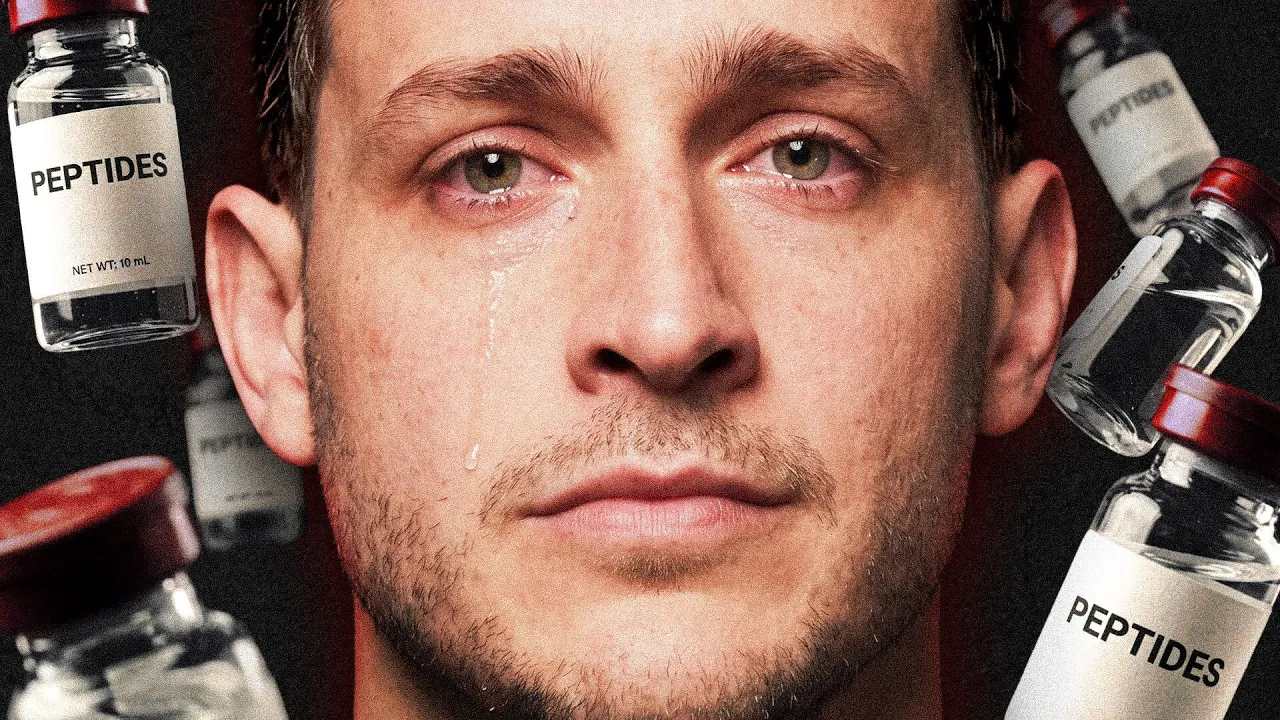
My patients, my friends, even my loved ones can't stop asking me about peptides. They're all over the news, podcasts, and social media. >> Few years ago, no one had even heard of peptides, [music] and now they're everywhere. >> Imagine a tool that could speed up healing, reduce inflammation, and build muscle. >> How about peptides? If you ever get injured, get immediately on BP157 and TB500. For this video, I dove
73 words, the words spoken in the first 30 seconds at 146 words per minute.
Free, no signup. See how the first 30 seconds hold attention, with rewrites.
Sentence shape
| Measure | This transcript |
|---|---|
| Sentences | 193 |
| Average words per sentence | 14.8 |
| Longest sentence | 43 words |
| Questions asked | 18 |
| Sentences containing a number | 22 |
Most used terms
Filler phrases
17 in total: actually 7 · like 5 · right? 3 · basically 1 · you know 1.
A literal whole-word count of the same phrase list the Prepublish browser extension uses, so a phrase inside another word is not counted and a phrase used in its ordinary sense still is. It is a count and not a judgement.
Run the check on the words above: where attention is likely to drop, with a rewrite for each weak line. The free check shows the scores and the one issue costing the most.
What this transcript is
Every word below is the caption track YouTube publishes for this video, pulled from the video itself and reproduced unchanged. It is not Prepublish's writing, not a summary, and not a re-transcription: it is the video's own published captions. English captions, generated automatically by YouTube, in the video’s original language. Source: the video on YouTube. A channel that would rather this page did not exist can ask for its removal through the contact page, and it is removed.
My patients, my friends, even my loved ones can't stop asking me about peptides. They're all over the news, podcasts, and social media. >> Few years ago, no one had even heard of peptides, [music] and now they're everywhere. >> Imagine a tool that could speed up healing, reduce inflammation, and build muscle. >> How about peptides? If you ever get injured, get immediately on BP157 and TB500. For this video, I dove into the peptide research world, spoke with leading experts, [music] and uncovered a truly shocking story about this recent FDA vote on [music] seven popular peptides that seemingly slid completely under everyone's radar.
So, stick around till the end of this video to hear that story. Let me explain what peptides are and perhaps more importantly, what they aren't. Peptides are short chains of amino acids. the same basic building blocks that make up proteins. Naturally, the question here is if both are made up of amino acids, how are peptides different from proteins? Well, there's no universally agreed upon answer. [music] Peptides are generally smaller, proteins are generally larger and often perform more complex functions.
But these are tendencies, not hard rules. For our purposes, let's think of peptides as chemical messengers in the body, helping regulate processes such as metabolism, inflammation, growth, and repair. We can actually use insulin as an example. [music] It signals muscle and fat cells to take up sugar from the bloodstream while telling the liver to store sugar and release less of it. This keeps blood sugar within an ideal range and allows glucose to be used appropriately for energy.
We know this process extremely well because insulin has been extensively studied in lab models, in animals, and more importantly in humans. This was all part of the extensive FDA regulatory review that these drugs must go through before being allowed to be considered prescription drugs in [music] the US. But where did the rise of these newer peptides come from? In the mid20s, bodybuilders began experimenting with peptides to give them an edge.
Then interest started to spread to the biohacker community. >> By now, you've probably heard of peptides. They've been a part of my biohacking practice for a long time. >> And the train fully hit its peak once GLP1 meds started consuming the media cycle, giving many hope that perhaps [music] peptides truly harness the power to work for everything. But getting these wellness peptides wasn't easy. As in 2023, the FDA identified significant safety [music] concerns involving many compounded peptides.
So folks started to get creative. Many began to obtain these wellness peptides through teley health, longevity or functional medicine clinics, med spas, or even gray market websites selling them as research chemicals or not for human use. This created a loophole where it seemed regulation couldn't stop or catch up to them. There were some clinics that arranged prescriptions and shipments through compoundingarmacies. But many online vendors often sold [music] directly without any medical supervision whatsoever.
While some of these were applied topically or taken orally as capsules, many were commonly supplied in vials [music] and self-injected under the skin. That's right. People were injecting chemicals into their bodies that had no regulatory review, oversight, and were more likely than not to be made abroad by questionable companies with even more questionable contaminants. To compare, the co vaccines were exponentially more tested and scrutinized by scientists globally.
[music] So, if you felt the vaccines were rushed or approved too soon, you should be outraged at the fact that people are injecting themselves with these peptides. [music] so prematurely. What made this whole trend especially frustrating is that celebrities couldn't stop going on podcasts sharing their stack and how well these peptides were working for them. >> I've been enjoying my peptides. What is your stack of peptides? >> NAD, Epomorlin and Tess Morlin, the Wolverine stack and I'll tell you exactly what's in it.
I can never remember. >> I love peptides. >> BBC7 Matsi some >> I love Matsi. >> Huh? >> Matsi is great. >> Yeah. Yeah. So, we have these underststudied and [music] sometimes fully disproven compounds being promoted with little we can do to discourage their use because of the incredible push on social media. It was almost as if they were creating a war of information against doctors. I saw this firsthand when I was asked a question about peptides on Fox News.
A lot of people talk about injectable peptides. They make promises like faster muscle healing, tendon repair, gut health rejuvenation, but we don't have the evidence to say that actually works. My only goal was to highlight the fact that we currently needed more evidence. [music] If a specific peptide becomes proven for a certain use and a safety profile becomes established, I would jump on the opportunity to discuss and promote them.
[music] In fact, many of these same people who are antiompic and call doctors drug pushers are the same ones mad at me for wanting more safety data and treading carefully. So, the hypocrisy is real here. It felt [music] like the next series of events should be rather straightforward. Peptides will be studied for [music] specific indications in humans. safety data will be released and we will be able to recommend some of them to patients for the right conditions.
But remember, RFK is in charge [music] and before becoming HHS secretary, he publicly promised to end [music] the FDA's aggressive suppression of peptides, given he already personally used and believed in them. >> I'm a big fan of peptides. I've used them myself and used them with really good effect. So, [music] he encouraged the PCAC, the committee that advises the FDA on issues related to compounded medications, to conduct a new review of peptides. >> Good morning, everybody.
It's 8:00 a.m., so let's get going. Welcome. >> But this wasn't an evaluation on whether these peptides should be FDA approved. the question whether certain peptides including BPC157 and TB500 should be added to the FDA's 503A bulks list which would allow compounding pharmacies to legally make them for patients. A compounding pharmacy makes customized medications [music] like changing the dose formulation or ingredients when a standard FDA [music] approved product doesn't meet a patient's needs.
That's really important because compounders sometimes need to make drugs from raw bulk ingredients that have never been FDA approved. And this list [music] specifically outlines which substances they're legally allowed to use. However, just because a substance is on the bulks list does not mean the FDA has approved it for everybody. It means that a licensed pharmacist or physician could use that substance to make a medication for a patient without the drug going through the typical FDA approval process.
This is supposed to support legitimate compounding to help unique patient scenarios, not serve as a shortcut to bypass a full review by the FDA for general approval. To decide whether a substance belongs on this list, four questions are asked. Can the substance be reliably identified and manufactured? What safety concerns does it raise? Is there evidence that it actually works? Is there a meaningful history of it being used in compounded medications?
For this meeting, the committee was asked to review seven popular peptides. BPC157 for ulcerative colitis, not tendon repair, muscle recovery, or some wolverine healing factors that you hear online. KPV and TB500 for wound healing and inflammatory conditions. Matsi for obesity and osteoporosis. Then there were three less commonly discussed peptides, amidelide, epatital, and CAX. Before the committee meets to vote, FDA scientists are tasked with evaluating these compounds.
They spend months reviewing the chemistry, the animal research, the available human data, the proposed routes of administration, and obviously the potential risks of compounding each peptide. What they found was rather startling. [music] Looking at BPC57, probably the most famous peptide in this scenario, the agency found only one small human study relevant to that use, a meeting abstract, not a full study publication involving 53 people in which it was administered as an enema.
Rightfully, they considered it inadequate to establish effectiveness or safety for ulcerative colitis. Actually, the FDA found no randomized controlled human trials establishing the safety or effectiveness of injecting the peptide for tendon, ligament, or muscle recovery. For KPV, TB500, and Matsi, the FDA reported that it could not identify human exposure data at all. Think about what this means for a second. The scientists could not find any adequate published evidence showing what happens when the substances are administered to humans in the first place.
Then there were the basic manufacturing questions. Peptides can aggregate, degrade, trigger immune reactions or contain impurities. And when a chemical is being synthesized, shipped as a powder, reconstituted and injected, small differences in purity, storage, or formulation can matter tremendously. So even if an animal study uses something called BPC157, that does not guarantee that every vial being sold online [music] or even every bulk ingredient delivered to a pharmacy is chemically identical to what was studied.
And this is obviously crucial. Think about this for insulin. Imagine you need 10 units injected to control your blood sugar and when you go to inject a formulation, it's such that you select 10 but end up getting 40 units and drop your sugar to a lethally low range. Sounds awful, right? Well, [music] the FDA monitors and aims to prevent that from happening. So, without surprise, [music] the scientists made their reports and their conclusion was remarkably consistent.
They recommended against adding every single one of them to the 503A bulks list. [music] All seven peptides got no recommendations. [music] Not because the scientists had proven that every peptide was useless and not because they believed all peptides were somehow dangerous. Their position was rather simple. [music] The evidence wasn't strong enough to confidently decide what patients would be receiving, whether it would help them, what dose should be used, or what harmful effects might happen.
[music] >> Exact TB500 sequences can vary between vendors. When you write a script for TB500, what form do you think your patients [music] are getting? Does anybody know? >> It feels like the story should end here, but sadly it doesn't. [music] So, the awaited public meeting began. FDA scientists presented their analysis. Supporters and opponents gave testimony. Committee members asked questions. And after discussing each peptide, the PCAC members voted on whether to recommend adding it to the list.
The strongest argument from the Propeptide side [music] wasn't that these substances had already been conclusively proven to work or were safe. They believed that it was harm reduction. They argued that Americans were already buying and injecting peptides regardless of what the FDA said. They were ordering products from overseas suppliers, social media sellers, and [music] websites labeling them as research chemicals. >> Just last week, I had a patient whose research [music] grade whatever that they got from some place that they brought to me to fix was laced with [music] MDMA and ecstasy.
That's not protecting the American people. So my yes comes [music] from there. >> Their argument was essentially that not including them on the bulk list simply pushes that demand towards an even less controlled gray market. And I want to be honest here. The argument is fairly logical. If people are set on using an unproven substance, obtaining it from a licensed pharmacy may be less dangerous than injecting a mystery powder purchased online.
But it also isn't the question the [music] approval process is designed to answer. It's supposed to tell us about the usefulness of the drug, the safety of the drug, and ideally how that drug should be made. Then came the first major vote, BPC57. >> For the record, there are eight yeses, six nos, and one abstension. >> I would like to remind the observers to please keep your applause to a minimum. The committee had just voted to recommend BPC 157 over the opposition of the FDA scientists who had performed the scientific review.
KPV and TB500 received the same [music] eight supporting votes. Matsi narrowly passed as well. On the second day, Amadelt failed, but Epalon and Cmax passed. By the end of the meeting, the committee had recommended adding six of the seven peptides to the bulks list [music] despite the scientists recommending against every one of them. Now, this did not immediately legalize [music] the peptides. The committee functions in an advisory capacity.
Adding the substances to the actual list would still require formal government action and public rulemaking. So podcast bros or clinics claiming that BPC157 is now FDA approved [music] or that the FDA declared it safe are completely lying and full of about what happened. But one thing I want you to look into was how this happened. Why did the scientists recommend against [music] every single one while the advisory committee voted to recommend six of them?
Who was actually doing the voting? This is where things start to look really shady. >> [music] >> Eight of the committee's 11 regular voting members had begun their terms just [music] weeks before the meeting. The committee had essentially been rebuilt right before it was considering one of RFK's pet projects. Well, okay, maybe that's a coincidence, [music] right? You know, RFK always points out how conflicts of interest would destroy the value of any health advisory committee. >> It's imperative that we remove officials with conflicts of interest and catastrophically bad judgment and political agendas. >> So, the newly appointed members had to be free of [music] conflicts related to these peptides, right?
Well, according to reports, FDA officials, including Dr. Marty McCary actually raised concerns about potential conflicts, but HHS moved forward with the selections anyway. Oh, and as a reminder, later under threats of being fired, [music] Dr. McCary resigned. Anyway, the newly appointed eight members included [music] owners and executives of regenerative medicine, longevity, men's health, and personalized medicine clinics [music] along with professionals connected to pharmacy and compounding businesses.
Several independent reports identified potential financial conflicts involving these members because their businesses operated in areas that could benefit from expanded peptide access. >> [music] >> They basically worked at clinics that offered, promoted, or operated in the same longevity marketplace that [music] stood to benefit if the FDA permitted these substances to be compounded. One member was actually a pharmacist connected to a compounding pharmacy and was also the son of representative Diana Harshbarger, [music] who previously urged Kennedy to convene a committee review of peptides.
And despite those concerns, no conflict of interest waiverss explaining why these members were permitted to participate were announced for the meeting. [music] Obviously, the voting pattern was not so shocking. Every single provote cast [music] for any of the seven peptides came from this group of eight new committee members. >> [music] >> Meanwhile, every pre-existing expert on the panel voted against or abstained from adding the peptides for BPC57, KPV, and TB500.
The eight regular members voted yes as a group. The FDA [music] scientists recommended no. But because the eight member group formed a majority, the recommendation [music] passed anyway. Look, I wish there was some groundbreaking research that was uncovered proving these peptides could help my patients, but that's not what happened. What was beginning to unfold was a potentially new and dangerous [music] shortcut to get medications approved.
Instead of requiring companies to conduct trials and earn approval for a specific medical use, this shortcut could allow experimental substances to reach patients without needing to prove safety, efficacy, and quality. This creates a really dangerous [music] incentive. A company may no longer need to spend time and money studying a medication. If influencers, clinics, [music] and online communities can first create enormous consumer demand, then point to that demand as evidence that access is [music] necessary.
Honestly, that process is as backwards. Instead of funding highquality research to back up their claims, companies can start profiting from demand instead of proof. For all the problems folks have with the pharmaceutical industry, at least they have to prove their medications work, under what doses they work, and have a safety profile. In this scenario, we have the potential to get a worse version of the pharma industry.
[music] One where no proof is needed, money is made handover fist, and corruption and conflict of interest runs a muck. But I guess that still leaves us with the most important scientific question. [music] Could some of these peptides eventually become useful medicines? Maybe insulin was once experimental. Semaglutide was once experimental. Every medication begins as an unproven hypothesis. But a promising medication and podcast excitement is only the beginning of the process and the huge majority of treatments with mega initial promise just don't pan out.
Remember the theolyomide fiasco that caused birth defects galore? Well, the reason it didn't come to the US was because the FDA denied it. Click here for that story. And as always, stay happy and healthy. [music]
The words are the caption track's own and nothing is reworded or re-transcribed. Paragraph breaks are placed between sentences so the text reads as prose.
Free tools for your own script: paste a draft and see where it stands before you record it.
Paste your draft and see where viewers are likely to drop off, with a rewrite for each weak line.
Paste the first 30 seconds of your own draft for a hook score and rewrites.
Check your draft against YouTube's advertiser-friendly guidelines before you record it.
Read this channel's public videos and transcripts, and download a writing brief for it.