Getting the transcript
Reading the captions from YouTube. A video nobody has opened here before takes 10 to 30 seconds; this page fills in on its own.
Getting the transcript
Reading the captions from YouTube. A video nobody has opened here before takes 10 to 30 seconds; this page fills in on its own.
Chase Chappell · @ChaseChappell
This video has no Most replayed graph yet: YouTube shows one only once a video has enough views. These are the moments viewers replayed most in Chase Chappell's most watched videos.
Most replayed moment at 4:41
1.7x that video's typical replay level
them. Because a strong founder story connects the pain that you once lived, the solution you created, and the mission you believe in, and the struggles that you overcame, and how that transformation now delivers to every customer out there. When you create the story with five key pillars,
Said at 4:35
Most replayed moment at 2:44
7.0x that video's typical replay level
downloaded on your computer so that way you can do this. And one of the first steps is we're going to copy that link. We're going to come in here and click the plus sign, go to connectors, manage connections, and we're going to hit add. We're going to add a custom connector. We'll paste this, and we'll name it Meta
Said at 2:37
Most replayed moment at 4:54
3.8x that video's typical replay level
can recreate it. We're going to go into chat GBT. We're going to start a new chat under chat GBT40. You're going to do the new updated create image option and you're going to paste this exact prompt that I've gone ahead and put together for you below this video that
Said at 4:48
The graph counts replays. It does not show where viewers stopped watching.
Words
2,139
Runtime
12:25
Speaking pace
172wpm
Reading time
9min
172 words per minute, between the 160 25th percentile and the 181 median of 349 measured videos. That distribution comes from the 349-video hook study.
Opening (first 30 seconds)
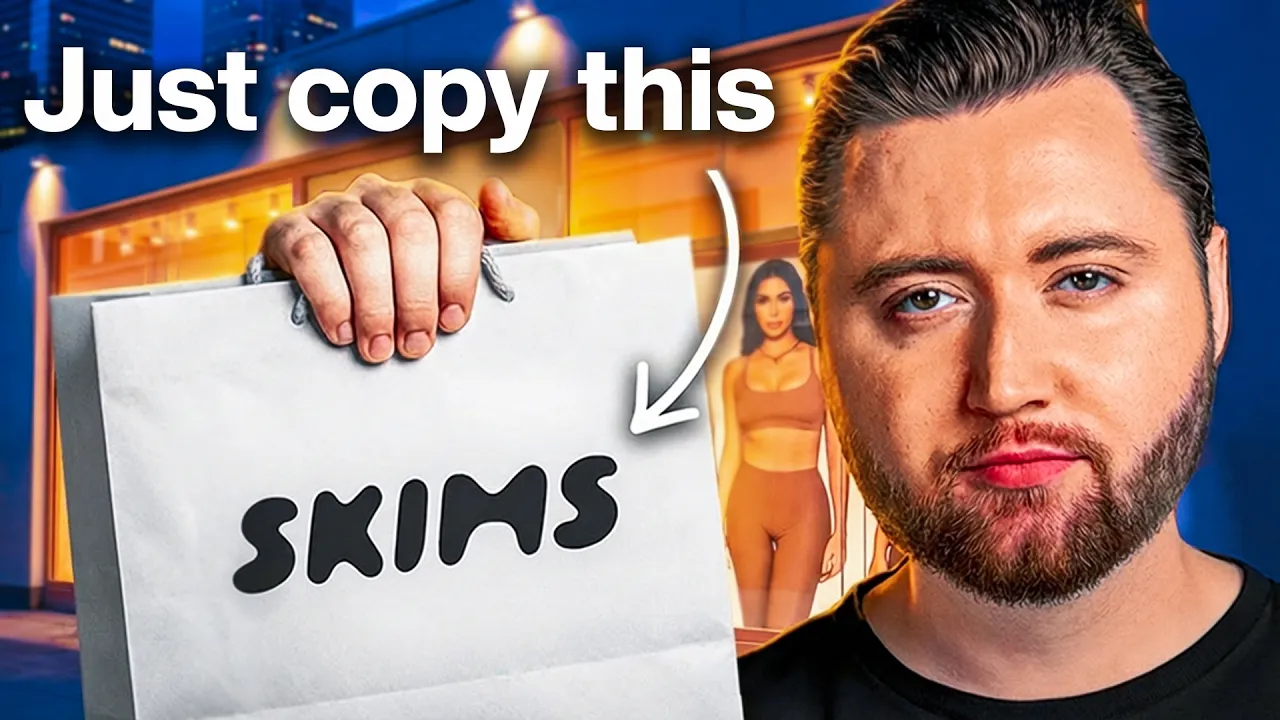
Everyone has heard of AG1, Skiims, Dr. Squatch, and Manscaped. But what I bet you didn't know, they all use the same formula to generate a combined $2 billion in sales in just the last 12 months. >> The Kardashian curse. >> Ooh, I love a conspiracy. >> But what if anyone could use the formula that they use to increase your sales and completely take over your industry? Even in a crowded market, >> everybody's wearing skins. And in this video, I'll be revealing how
86 words, the words spoken in the first 30 seconds at 172 words per minute.
Free, no signup. See how the first 30 seconds hold attention, with rewrites.
Sentence shape
| Measure | This transcript |
|---|---|
| Sentences | 169 |
| Average words per sentence | 12.7 |
| Longest sentence | 45 words |
| Questions asked | 1 |
| Sentences containing a number | 12 |
Most used terms
Filler phrases
13 in total: like 12 · I mean 1.
A literal whole-word count of the same phrase list the Prepublish browser extension uses, so a phrase inside another word is not counted and a phrase used in its ordinary sense still is. It is a count and not a judgement.
Free, no account. See where attention is likely to drop, with a rewrite for each weak line. The free check shows the scores and the one issue costing the most. Or run it on the words above first.
Free · No login · See a sample audit first if you prefer.
What this transcript is
Every word below is the caption track YouTube publishes for this video, pulled from the video itself and reproduced unchanged. It is not Prepublish's writing, not a summary, and not a re-transcription: it is the video's own published captions. English captions, generated automatically by YouTube, in the video’s original language. Source: the video on YouTube. A channel that would rather this page did not exist can ask for its removal through the contact page, and it is removed.
Everyone has heard of AG1, Skiims, Dr. Squatch, and Manscaped. But what I bet you didn't know, they all use the same formula to generate a combined $2 billion in sales in just the last 12 months. >> The Kardashian curse. >> Ooh, I love a conspiracy. >> But what if anyone could use the formula that they use to increase your sales and completely take over your industry? Even in a crowded market, >> everybody's wearing skins.
And in this video, I'll be revealing how four of the biggest brands on the internet are using it and how you can copy and paste it into your own brand to explode your growth in 2026. It's called positional engineering and all of the fastest growing brands on the internet are using it. It's when you deliberately shape your customers belief pattern before they purchase by redefining the category you sell in. So your brand and product feels inevitable for them to buy from.
They already subconsciously believe what you stand for and why your product is the solution to their underlying problems. So by the time you serve them your offer, they have already bought in their mind. >> I just spent $650 ordering every single one of Skim's best sellers. >> You use positional engineering in your organic content, your ads, landing pages, your emails, UGC creator videos, Tik Tok shop, and in every aspect of your funnel.
What this does is it creates an unfair competitive advantage because it shifts the battle before the sale even starts. When you do this correctly, you're no longer competing on price, features, ads, CPMs, CPAs, or even your offers. You're competing on a belief system. If you win the customer's belief first, competitors can't win the transaction later. You're creating a literal moat around your customer. And brands like SKIMS do this better than anyone.
Which brings us to step number one in positional engineering. There are over 8,000 other shapewear brands out there. And solely relying on Kim K to do the heavy lifting for SKIMS would be foolish and short-lived, which is why she is hardly in any of their ads. Ski doesn't market like everyone else by saying our shapewear is better. They make everything else feel cheap and behind. They position themselves in the mind of their customer as a superior brand even in a crowded market.
And we do this in step number one by identifying the core industry lie. An exercise I do with my clients is simply asking what does everyone accept as normal but secretly hate. The industry lie is the thing customers have been trained to tolerate not because they like it but because they think there's no alternative. And this is when positional engineering starts to take place. This normality is quiet but frustrates the hell out of them every time.
Skiims didn't attack shapewear with new designs. They changed the context shapewear lived in. While the market was competing on what shapewear can fix, Skiims reframe the whole category by positioning shapewear to enhance what you already have. Skims didn't make better shapewear. They made discomfort feel unnecessary and hiding feel outdated. That single reframe is worth billions. But here's where positional engineering is so powerful and different from anything you've ever tried.
By the time your competitors catch on, the only way they can compete is by admitting they've been wrong for years. In one simple shift in belief patterns can take over an entire market. Skiims completely flipped the script and reframed the entire category and made comfort the new standard in shapewear. They made it a part of your wardrobe. They made it essential. They made it a statement and they made billions. Next up is Dr.
Squatch. According to various articles online, Dr. Squatch did over $440 million in the last 12 months. And this is a perfect example of positional engineering. They went into a space that is highly toxic, incredibly competitive, and as boring as watching paint dry. Think Armanhammer, Nivea, for men, Dove, Gillette, Axe. It's boring. It's basic. It's riddled with chemicals and highly synthetic. Dr. Squatch clearly uses positional engineering to disrupt the space.
Be different and completely reframe the market. While most men were taught to believe that soap is just soap anyway, you find it. Dr. Squatch reframed the entire industry and set a new standard. >> No phalates, no [music] parabens, no synthetic cleansers cuz you're not a dish. >> Which brings us to step number two, engineering a new standard. The whole goal of marketing is to change the belief patterns of your customers before they even buy your product or service.
Dr. Swatch didn't just make soap. They made you believe you needed better soap. They called out clear differences like real versus fake, natural versus chemicals, corporate versus industry rebels, boring versus fun. And once your customer accepts that reframing, there's no comparison left. If it's not natural, it's inferior. Dr. Squatch didn't make you choose between brand A versus brand B. They made you choose real versus fake and let you, the customer, reframe your own belief pattern around soap.
They position themselves as a superior alternative by making you believe that before you even buy. So, what I like to do with the brands that we work with while doing this is head on over to good old Google Sheets and make a simple pros and cons list. You can find all these old standards and industry lies on Amazon, Reddit, Tik Tok, and in the comment section. And one of my personal favorites is going to Reddit and finding a painoint and then cross referencing that on Tik Tok.
This allows you to check the pulse of the market and also see what's circulating in the UGC world. So once we're in our Google Sheets, what you want to do is is pull in all of the Amazon reviews, Reddit, the comments, anything that is surrounding negativity around your competitor. And in this example, we're going to assume that Axe is your competitor and we're Dr. Squatch. And so here's all the complaints that we found from people talking about Axe.
Artificial chemical smell. It's causing headaches or irritation, overpowering scent. We're going to combine all of these complaints, and this is what people are saying. It smells fake and chemical heavy, way too strong and annoying, middle school locker room vibes. And we're going to look for all the pros and advantages that our product has over this complaint list that Axe is facing on their cons list. And this is where we begin to position ourselves as the better alternative to be able to get more sales.
So, when somebody says there's a complaint around how the product smells or it's chemical heavy, well, as Dr. Squatch, we can say we have natural fragrances and essential oils and we position it as smell like a man, not chemicals. Or if customers are complaining around middle school locker room vibes with Axe, we're going to use our advantage of our premium masculine branding and sense to position that as an angle of grown man grooming.
This allows us to constantly reframe our competitors cons and position those as our pros to be able to get more buyers bought into our brand. This is as simple as it gets. On one side, you write down all the problems your market is facing with their current solutions. And on the other side, you write down all the alternatives your product or service solves. This then allows you to positionally engineer a mental shift in your market and position yourself as the superior alternative.
And when you go to Reddit or Tik Tok comments, you're looking for the Karens, the keyboard warriors. We want the pulse. You don't just want, I didn't see fast results. You want the underlying problem to why they want fast results. They don't look good in pictures. They feel sluggish because of gut issues. So, they feel like they aren't energized to play with their kids and be present. You want the pulse of the market.
Find the problem you see that keeps popping up and then go and find that nasty underlying issue that's causing that problem. When you find this, that's what you put in your marketing and how you speak directly to your market's problems. My third example is Manscaped. Now, I don't know how much more obvious I can get with positional engineering. These guys executed this playbook perfectly. According to Google, they made over $140 million with one simple shift.
If the name itself doesn't prove why positional engineering is so powerful, then their marketing will blow it out of the water. Manscaped went into a space that was so quiet you could hear a pin drop. And they made it loud and talked about it. Brands weren't marketing men's grooming issues. They were talking about blade precision, specs, and features. Manscaped found the pulse of their market and completely reframed their category by simply making the old way feel wrong.
They called out what the industry normalized. They made using a face razor not make sense for men's grooming needs. They didn't say they had a better razor. They let you decide that what was normalized for so many years just didn't make sense anymore. Cuts, nicks, razor burn. They made you think about how irresponsible the current solutions on the market are. They engineered a mismatch in the customer's belief pattern.
They made you believe the old way was risky, awkward, and outdated. and they made you feel like you relate to what everyone else had already discovered. The new way feels safer, modern, and intentional. Manscaped completely shifted the mindset of the market and made the current solutions too risky, too complicated to use. >> Shave it, baby. I got a hot date. >> This is the big punch in positional engineering. And once you have shifted the belief pattern of the customer, you go in for the final blow, the final Mike Tyson punch in solidifying what they used to believe is incorrect, [music] and they now resonate with your brand's belief pattern as their own.
What used to be the way is no longer the way of doing things. Which brings us to step number four of positional engineering. And AG1 puts on a master class at this. Once you have fundamentally changed that belief pattern of your market, what AG1 does is they build everything around that new belief pattern. Ads, influencers, packaging, messaging, content, authoritative figures. Once you have changed the belief pattern, now is the time to convert.
AG1 builds their offers around this new found belief system. Just look at their ads. It's riddled with other users who have the same new belief system. Offers around the full routine. They showed authority figures, doctors, podcasters, all talking about the same thing. Most brands have zero consistency. It's just a bunch of blop inside their ad account almost begging for a purchase. And once AG1 transforms your belief system, they attack that new found belief pattern with proof from others, morning routines, daily habits, behind the scenes of athletes, podcasters like Andrew Huberman and Joe Rogan.
They're reinforcing that newfound belief system. so that by the time you've had this transformation, they can hit you with this and let you sell yourself. AG1 is the king of offers. When you sign up for a subscription for your new routine, just like they mentally already prepped you for, I mean, look at this. You get free everything. It feels like a bag, a water bottle, a sampler, vitamins, welcome kits, scoopers, everything you need to now show off this new belief system and belong to the brand.
When you use positional engineering, everything gets way easier. You no longer are pushing uphill chasing customers. You lower your resistance. You shorten the overall decision time. Your ads perform better. You retain more customers. And your AOVs go way up. Your LTVs go up. And [music] you position yourself as the inevitable solution. Now, there has been and always will be three laws of positional engineering to make this work.
Law number one, you must collapse choice. When you give too many options, this weakens your positioning. Law number two, the enemy must be clear. To engineer a shift, there has to be a villain. In law number three, everything enforces the position. If one touch point contradicts the newfound belief, you lose your position. Now, if you like this video, then you're absolutely going to love this one that I did on hero mechanisms.
You can check it out here and I'll see you inside my next
The words are the caption track's own and nothing is reworded or re-transcribed. Paragraph breaks are placed between sentences so the text reads as prose.
Free tools for your own script: paste a draft and see where it stands before you record it.
Paste your draft and see where viewers are likely to drop off, with a rewrite for each weak line.
Paste the first 30 seconds of your own draft for a hook score and rewrites.
Check your draft against YouTube's advertiser-friendly guidelines before you record it.
Read this channel's public videos and transcripts, and download a writing brief for it.