Getting the transcript
Reading the captions from YouTube. A video nobody has opened here before takes 10 to 30 seconds; this page fills in on its own.
Getting the transcript
Reading the captions from YouTube. A video nobody has opened here before takes 10 to 30 seconds; this page fills in on its own.
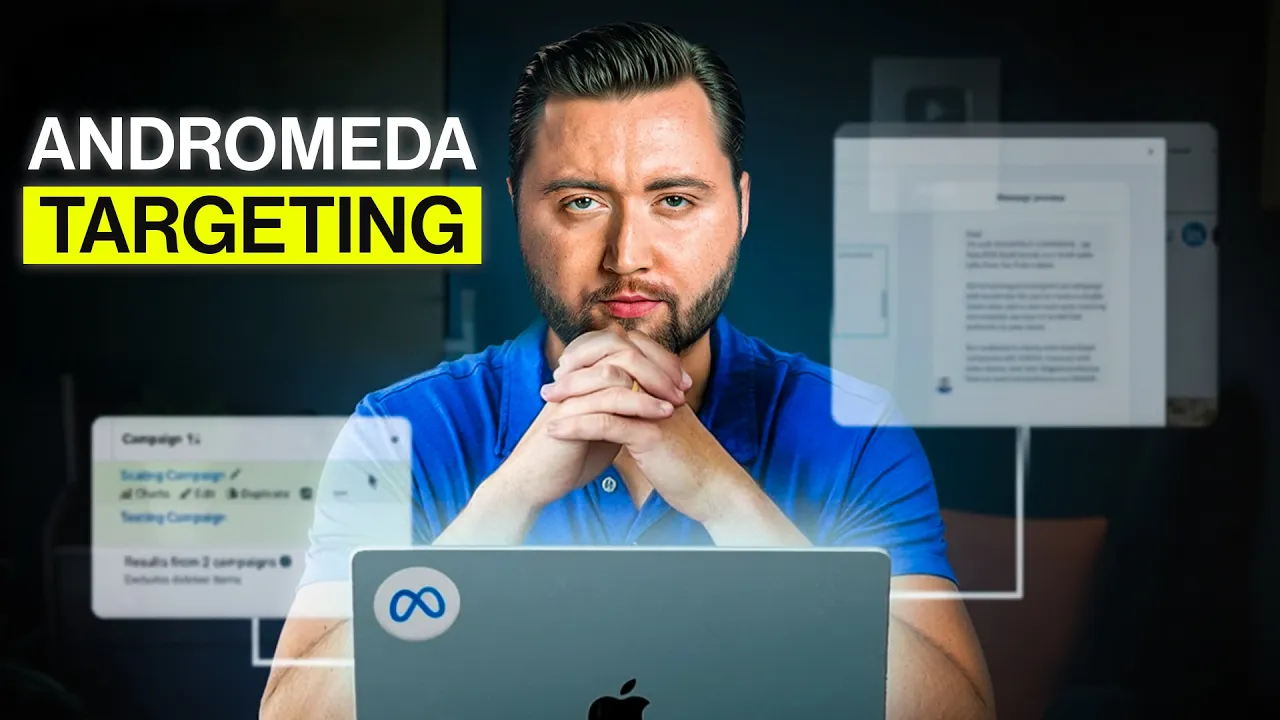
Chase Chappell · @ChaseChappell
This video has no Most replayed graph yet: YouTube shows one only once a video has enough views. These are the moments viewers replayed most in Chase Chappell's most watched videos.
Most replayed moment at 4:41
1.7x that video's typical replay level
them. Because a strong founder story connects the pain that you once lived, the solution you created, and the mission you believe in, and the struggles that you overcame, and how that transformation now delivers to every customer out there. When you create the story with five key pillars,
Said at 4:35
Most replayed moment at 2:44
7.0x that video's typical replay level
downloaded on your computer so that way you can do this. And one of the first steps is we're going to copy that link. We're going to come in here and click the plus sign, go to connectors, manage connections, and we're going to hit add. We're going to add a custom connector. We'll paste this, and we'll name it Meta
Said at 2:37
Most replayed moment at 4:54
3.8x that video's typical replay level
can recreate it. We're going to go into chat GBT. We're going to start a new chat under chat GBT40. You're going to do the new updated create image option and you're going to paste this exact prompt that I've gone ahead and put together for you below this video that
Said at 4:48
The graph counts replays. It does not show where viewers stopped watching.
Words
2,056
Runtime
9:28
Speaking pace
217wpm
Reading time
9min
217 words per minute, above the 201 75th percentile of 349 measured videos. That distribution comes from the 349-video hook study.
Opening (first 30 seconds)
Today we are talking about targeting with meta ads. I've been running ads for over nine years now and at my agency we've managed over $600 million in ad spend and generated over $2 billion in revenue for my clients like Symbiotica where we are literally spending over $250,000 per day. And they are one of the fastest growing supplement brands on the internet. And yes, I did say $250,000 per day. Meta has changed their platform so much recently with the Adrona update and the way we market has completely changed. And it's made a lot of people wonder, do we even need to target anymore with meta
109 words, the words spoken in the first 30 seconds at 217 words per minute.
Free, no signup. See how the first 30 seconds hold attention, with rewrites.
Sentence shape
| Measure | This transcript |
|---|---|
| Sentences | 120 |
| Average words per sentence | 17.1 |
| Longest sentence | 55 words |
| Questions asked | 3 |
| Sentences containing a number | 23 |
Most used terms
Filler phrases
10 in total: like 3 · literally 3 · you know 2 · I mean 1 · actually 1.
A literal whole-word count of the same phrase list the Prepublish browser extension uses, so a phrase inside another word is not counted and a phrase used in its ordinary sense still is. It is a count and not a judgement.
Free, no account. See where attention is likely to drop, with a rewrite for each weak line. The free check shows the scores and the one issue costing the most. Or run it on the words above first.
Free · No login · See a sample audit first if you prefer.
What this transcript is
Every word below is the caption track YouTube publishes for this video, pulled from the video itself and reproduced unchanged. It is not Prepublish's writing, not a summary, and not a re-transcription: it is the video's own published captions. English captions, generated automatically by YouTube, in the video’s original language. Source: the video on YouTube. A channel that would rather this page did not exist can ask for its removal through the contact page, and it is removed.
Today we are talking about targeting with meta ads. I've been running ads for over nine years now and at my agency we've managed over $600 million in ad spend and generated over $2 billion in revenue for my clients like Symbiotica where we are literally spending over $250,000 per day. And they are one of the fastest growing supplement brands on the internet. And yes, I did say $250,000 per day. Meta has changed their platform so much recently with the Adrona update and the way we market has completely changed.
And it's made a lot of people wonder, do we even need to target anymore with meta ads? Do you need to go all broad? Interest targeting, lookalike targeting. You and I are going to answer those questions together. The answer to that question is yes. For most advertisers, keyword most. You still need to target. We're still using interest targeting and broad. And I see a lot of videos on this topic and no real clear answer.
So, I'm going to clear the air up on this for everyone. You have two buckets of people. advertisers spending under 30k per month and advertisers spending more than 30k per month. This is what we call the transition period. And if you're spending under 30k per month, you need targeting. And here is why. You're essentially training this new meta model on what type of people to go after. And without targeting, your ad account doesn't have enough data on it to properly identify these people in the very beginning stages.
Now, I don't want to confuse you, but there are instances where you can have a stellar product, an offer, and a ton of unique creative formats and be able to get away with little to no targeting and have only broad audiences in the early stages. So, now we're going to look at an ad account that is spending under 30K. This one has spent $8,800 in the last 30 days at a 5x return in ad spend, generating roughly $46,000 in purchases, all from this campaign setup.
And this is a campaign setup that I recommend a lot of accounts start with, especially in the early stages. You still need to have an interest testing campaign. You'll take all of your best performing ads and you'll put them in here and you can dynamically adjust the budgets based off what is getting the highest return on ad spend. You'll still have single interest. A lot of people say this doesn't work still, but it definitely does.
Especially when you're spinning lower budgets, you need to guide the algorithm in the right direction and give it audiences to test with. And you're also going to have a second campaign, which a lot of people don't talk about. It's your creative testing because most of you will experience where a lot of spin gets flushed to one creative and doesn't spend on the other. So, we're going to take totally new creative testing concepts and drop them in multiple interest audiences to be able to test those creatives.
That way, we ensure we get spin towards those. And once they're proven, we're simply going to copy those ads and paste them into our scaling campaign. And eventually, we'll start to transition out of this structure. But this is definitely the structure you want to use in the early stages. you're still going to have a retargeting where you're retargeting your past website visitors, your Instagram engagers, your Facebook engagers.
As you can see, it is very much so working extremely well. This allows us to build up all of the data we need, get to active, where we can eventually start to switch out of this and go into CBO and go more broad. But at this point in time, at these spin levels, you do not need to be going entirely broad that early. You definitely need to be doing your audience testing and lots of creative testing at these stages. Now, if you're spending over 30K per month and you're trying to manually target, you're pretty much just standing in your own way because at this point, the main thing you want to focus on here is creative and a ton of it.
Now, here we are inside of an ad account that is spending over $30,000 per month. In the last 30 days, they've done about 40k in spend and they've generated $216,000 in sales at a 5.5x return in ad spend. And what you'll notice here is the budgets are now on the campaign level, not just the adset level. And the reason this matters is because at this point in scale, it's going to be much harder for you to be transitioning budgets between different interest audiences.
Whenever you're on the CBO level, Meta at this point already knows who to target and can adjust your budget dynamically to get you the best rorowass. And not only that, but we really don't have any specific interest by this point. We're actually going broad because the algorithm is now trained up. And what you'll see inside of this campaign is product collections. So these are all just broad audiences. Whenever we look at this, this is an entirely open audience with no targeting.
These are just broad audiences, but we're segmenting them by product. And you can see they're getting very consistent return in ad spend here. 5x, 8x, 6x, 7x rorowaz, and getting lots of purchases at much higher spin levels. And that is because Meta now knows who to go after. You've already guided it to this point. And you don't want to have a lot of overlap between your audiences. And by this point, you can essentially just spend a lot more with way less structure.
And we can look at these other campaigns. They're just simply segmented by product line. If you do not have multiple product SKs, then you're just going to have, you know, really just broad audiences and advantage plus audiences at this point because it makes it much easier for Meta to really scale up. And you can just focus on the creative. So you're going to have, you know, 15 unique ad creative formats, whether they're review based, features, and benefit based UGC videos all plugged into each and every one of these broad audiences. and you're just going to be scaling on more of the campaign level at this point.
Now, what is for both buckets of advertisers? This is an absolute must after the Andromeda update. We are going to target through our creative. Now, we're inside of an ad account. And what I mean by that is with this Adromeda update, really creatives is the key thing to all of this. And we're inside of an advantage plus campaign, which you can have an advantage plus on both sides. So, if you're under 30 or over 30K per month, you definitely want to have an advantage plus with at least 10 to 15 creatives.
And inside of this, when we're talking about how we target through our creative, it really comes down to the totally unique ad creative formats, especially when we begin to scale up and you have lots of ad creatives in here, we want to start leveraging what we call a flexible ad format. And flexible is essentially where we take 10 creatives and put it inside of one ad. And this is best done when it's a specific creative format.
So, in this case, it would be reviews. And we would have 10 review ads. As you can see here, these are all reviews. And we're essentially putting them inside of one ad, which makes it one unique ad format with 10 variations of the reviewbased creative. This allows Meta to rapidly test with this Adromeda update and be able to identify which one is working best. Also allows us to get creatives at scale. And so that way, Meta can dynamically plug in the creative based off the user's journey in terms of whenever they're most likely to buy.
So you would have a flexible format with all of those creatives inside of it. And then you're going to have totally unique formats on each of these ads. So, as you can see, our next ad is a UGCbased video and they're talking about the product and demonstrating it. The next ad creative is going to be an us versus them. And the reason we do this is because every market appeals to different creative angles and also every buyer stage at which they're in, they might already be educated on your product, but they're not fully convinced.
So, that's where the reviews come in. Or they might not know anything about your product. So that's where the education comes in or they know about it but don't know how to use it. That's where a product demo comes into play. So you want to have each of these unique creatives because once you start to go broad and have advantage plus or even interest, the creatives can do the targeting for you because Meta will now be able to know which ad creative to show to which pocket of audience to get them to convert.
So we're going to have totally unique ad creatives in here. The three reasons why we have the UGC, we have too delicate to wear. And all of these are going to be getting spent and Meta is going to be showing them at the exact right time that we need them to, which is why this is performing so well where we spent literally $5,400 to make back $50,000 at a near 9x return on ad spend. So, it's very important that we have the right amount of creatives, make sure they're totally unique, and we're going to begin using flexible formats to increase the number of creatives we have at scale without having to manage 10 different review ads.
We're going to consolidate those into one creative format. and have multiple flexibles along with all of our other creatives combined. Earlier in this video, I said most advertisers should target if you're a huge account and you're spending 500k to a million per month or like our client here, Symbiotica, spending $250,000 per day. All right, so just to recap the three buckets, if you are under 30K, you'll have an interest testing campaign where you're targeting multiple interest.
You'll have a creative testing campaign where you're dropping in new creatives and you'll have a retargeting audience. If you're over 30K, you're going to be focusing on CBO with broad audiences. Now, for the third bucket, if you're spending well over $500,000 per month, you're strictly going to be focusing on Advantage Plus and broad audiences, and you're going to have a plethora of ad creatives where you're using flexible formats to be able to handle the volume at scale.
So that way, Meta can do all the targeting for you and show the creatives in the right place at the right time. Running meta ads is easier than ever before. Now, for some reason, everyone online wants to make it sound so scary and confusing. It's really not as complicated as everyone makes it out to be. And the cool thing about this new update, you don't need a ton of crazy campaigns. You don't need all these complicated media buying tricks as long as you just adjust your account structure at the right stages of spin like we covered in this video.
You'll be able to transition and scale to those 1K, 10K, and even 100K day spin levels. But you can't forget the most important part out of this entire update. This new system rewards highquality creative. Meta removed about 90% of the manual work for you. And Meta is literally going and finding the best customers for you with this new predictive modeling. And it's truly the only lever that moves rorowaz. Which is why I put together a full tutorial on how I do creative in this postromeda era.
And you can find that here in this next video I picked out for you right here. I'll see you inside.
The words are the caption track's own and nothing is reworded or re-transcribed. Paragraph breaks are placed between sentences so the text reads as prose.
Free tools for your own script: paste a draft and see where it stands before you record it.
Paste your draft and see where viewers are likely to drop off, with a rewrite for each weak line.
Paste the first 30 seconds of your own draft for a hook score and rewrites.
Check your draft against YouTube's advertiser-friendly guidelines before you record it.
Read this channel's public videos and transcripts, and download a writing brief for it.