Getting the transcript
Reading the captions from YouTube. A video nobody has opened here before takes 10 to 30 seconds; this page fills in on its own.
Getting the transcript
Reading the captions from YouTube. A video nobody has opened here before takes 10 to 30 seconds; this page fills in on its own.
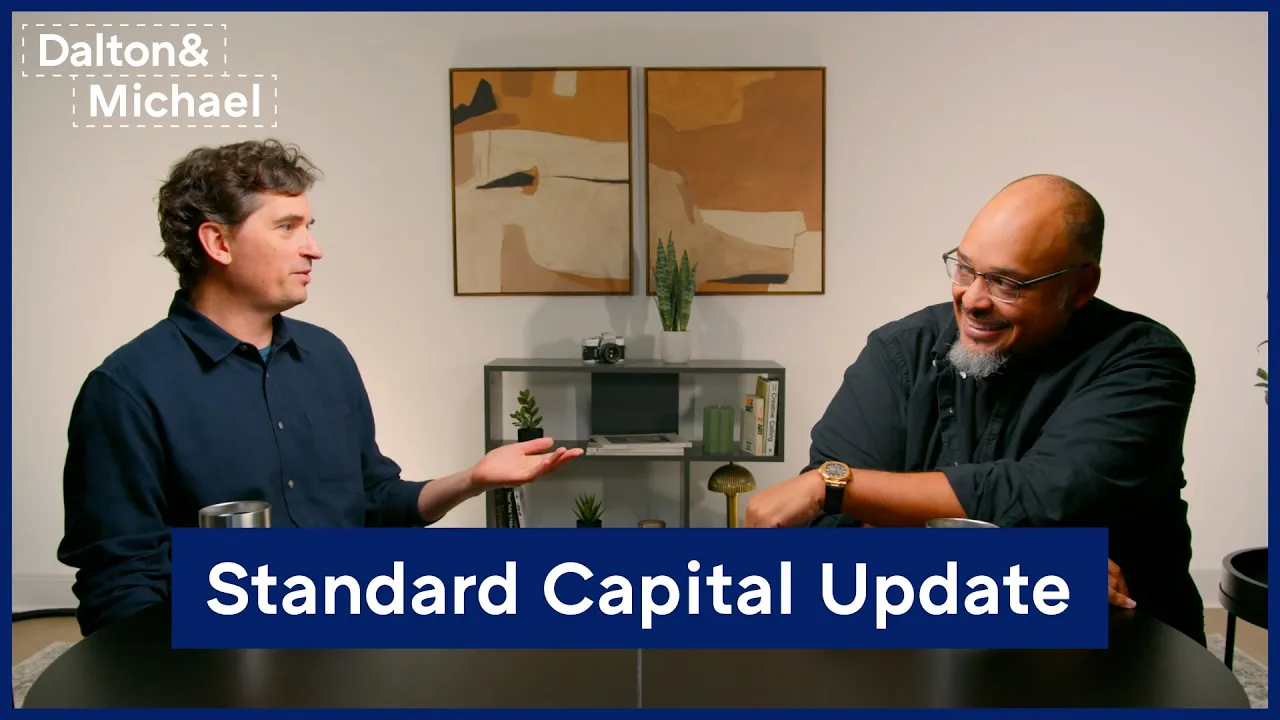
Dalton + Michael · @daltonplusmichael
This video has no Most replayed graph yet: YouTube shows one only once a video has enough views. These are the moments viewers replayed most in Dalton + Michael's most watched videos.
Most replayed moment at 9:40
2.3x that video's typical replay level
a company is winning, you might not understand the value they create for their customers, but don't dismiss it to zero. >> Well, that's the classic thing of um dismissing a product because the design is bad. >> Yeah, man. This HRS looks like crap.
Said at 9:33
Most replayed moment at 9:46
2.1x that video's typical replay level
of founders is, "What do you think is the failure rate for a series B company?" Because like I think in their minds before I ask the question, they think every series B company wins. And then after I ask it, they're like, "I guess mathematically that wouldn't work."
Said at 9:40
Most replayed moment at 14:24
2.8x that video's typical replay level
it is hard to feel like you're working on something where a lot of people think it's a bad idea. That's hard. And I like talking about this because you should brace yourself for that. Like, that is 100% the experience of
Said at 14:17
The graph counts replays. It does not show where viewers stopped watching.
Words
2,980
Runtime
13:55
Speaking pace
214wpm
Reading time
12min
214 words per minute, above the 201 75th percentile of 349 measured videos. That distribution comes from the 349-video hook study.
Opening (first 30 seconds)
We don't want to negotiate with people over evaluation and you could talk to any of the nine companies that got in and ask them. Yeah. We didn't negotiate evaluation. We just gave them what they said on the application. Nobody ever talks about it. Like [laughter] it was it was written in the application. We're like, "Great." Like there was no discussion. That was the deal. Isn't that awesome? [laughter] Cuz dude, I don't want to dude, I don't I don't know. Negotiate valuation with founders? That's no fun. All right, this is Dalton plus Michael and today we're going to get an update from Standard
107 words, the words spoken in the first 30 seconds at 214 words per minute.
Free, no signup. See how the first 30 seconds hold attention, with rewrites.
Sentence shape
| Measure | This transcript |
|---|---|
| Sentences | 301 |
| Average words per sentence | 9.9 |
| Longest sentence | 63 words |
| Questions asked | 34 |
| Sentences containing a number | 5 |
Most used terms
Filler phrases
135 in total: like 74 · kind of 15 · you know 12 · right? 9 · um 9 · uh 7 · actually 4 · I mean 2 · basically 2 · sort of 1.
A literal whole-word count of the same phrase list the Prepublish browser extension uses, so a phrase inside another word is not counted and a phrase used in its ordinary sense still is. It is a count and not a judgement.
Run the check on the words above: where attention is likely to drop, with a rewrite for each weak line. The free check shows the scores and the one issue costing the most.
What this transcript is
Every word below is the caption track YouTube publishes for this video, pulled from the video itself and reproduced unchanged. It is not Prepublish's writing, not a summary, and not a re-transcription: it is the video's own published captions. English captions, generated automatically by YouTube, in the video’s original language. Source: the video on YouTube. A channel that would rather this page did not exist can ask for its removal through the contact page, and it is removed.
We don't want to negotiate with people over evaluation and you could talk to any of the nine companies that got in and ask them. Yeah. We didn't negotiate evaluation. We just gave them what they said on the application. Nobody ever talks about it. Like [laughter] it was it was written in the application. We're like, "Great." Like there was no discussion. That was the deal. Isn't that awesome? [laughter] Cuz dude, I don't want to dude, I don't I don't know.
Negotiate valuation with founders? That's no fun. All right, this is Dalton plus Michael and today we're going to get an update from Standard Capital. So, you funded a bunch of companies. You know stuff now that you didn't know before. >> Yeah. Why don't we just start with like remind people what the process was. Like what what was the process? What was the innovation for this thing? Yeah, I mean, look, the the idea for Standard was to take what we know worked well from Y Combinator and apply it to the next round.
And Series A's. Yeah, to Series A's because look, we how many companies have you and I funded at YC? Oh, a lot. >> Thousands. Uh >> [laughter] >> each Yeah. >> of companies. >> of companies. Part of the job at YC was to help founders raise the A and so I had a pretty good mental model of what they were experiencing and it was funny how >> And we also raised A's ourselves. So, There was that. >> Yes. It's funny how little uh overlap there was on the process to get into YC with raising the next round.
It was an entirely different skill and the idea was to make it kind of the same thing. So, how many companies did y'all end up funding? So far, we have funded nine companies and that is not announced anywhere in fact. Maybe by the time >> [laughter] >> Maybe by the time we Uh release this video. Nice. Breaking news. So far, two have been announced and are on our website as of the moment we're recording this. And then biggest thing you learned, like biggest kind of headline takeaway now that you've run one cycle, either something that's been reconfirmed or something that's new that you didn't expect. >> I think what really surprised uh PB and Brian and myself is the following.
How many times have we coached founders on launching? Mhm. >> What do we say? We say, "Look, founder, you're going to have to launch and launch again and launch again and and no one will have heard of your thing. >> Yep. So, just like keep launching and it'll take years and then someday maybe people will have heard will know know of the name of your company. >> will have heard of it. Right? Like that's And so, this was kind of like my internal thing, which is, you know, uh some folks would know about what we're doing, but I didn't sober expectations. >> Yeah.
Precisely. >> Yeah. And the good news is we were surprised that um it seems like everyone heard about it and we got way more applications than we expected and I had to go read a lot of applications. >> [laughter] >> I basically I scheduled a small amount of time to read applications. I needed about three times as long as I had scheduled. >> You were [ __ ] by applications again. >> Oh, I know. >> [laughter] >> Dude, I had to work through You you have to keep on doing this to yourself. >> doing this to myself.
I don't know how I'm doing this. >> [laughter] >> Um but again, I was I had a smile on my face as I as I ruined another family vacation. >> [laughter] >> So, that was great and then we had to not had to, we were we had the excitement of interviewing lots of companies, way more than we expected. So again, it kind of messed all of our schedules up in a very high quality way. >> That's cool. And what was cool is we were like, "Wow, these are really good companies." >> Yes. >> And what I learned is this had good word of mouth.
Okay. Like founders heard about this and were pretty excited. You know, it's funny cuz I remember hearing the story of Standard Capital and kind of equating it to all the experiences we had and all the conversations we had with VCs who were like, "No, our process is great. Founders love our process." and just being like, "That's not what I'm hearing on the ground, you know." in the trenches. And um to your point about kind of the word of mouth got out there, this was just a different process, right?
So, like give me a sense from the deadline >> Yep. >> of applying, give me a bit of a timeline here for when I knew I was going to have a Series A. Like walk me through that timeline. Sure thing. So, within um let's call it five days, seven days of the application deadline, >> Yeah. everyone that we uh did a first round of interviews with, >> Yeah. we did the first round of interviews. So, we're talking about a about a week after the application deadline.
So, you read the applications and did first interviews within a week. >> Yeah, or we got the invites out by then. >> Oh, invites. Invites. Yeah, yeah, yeah. Yes. No, but we did them all immediately. >> Great, great, great, great. And then the way the Standard process works is there's two meetings. So, then we had a second meeting for the folks that were most promising from the first round. >> Okay. And that was in person.
Okay. And so, we met with everyone in person. >> Great. And then we made the final decision two days after that. Okay. >> So, the whole shebang was two weeks. The total amount of time that the founders spent was the amount of time they spent on the application, >> Yeah. the first interview, which is longer than a YC interview. Um it's 20 minutes. Oh. Danger. I clear my calendar. And then a second meeting, which was in person >> Okay. and was 30 minutes. >> Okay.
And so, if you just think about how much time did the did the founders spend? Well, they had to spend a lot of time backchanneling, right? >> [laughter] >> Um it was time efficient and we got back to folks fast and again, it's not everyone, you know, the vast majority of people did not get a yes. >> But in terms of how much time they spent, >> Yeah. What is a good applica- after reading the applications, give me a sense of what you felt like a good application time wise would have taken to to write?
A couple hours. I actually asked a couple of founders. There's one where it took a little bit more for her when I talked to her about it. She I think she said three. But I think similar to the YC application, it's kind of smart to fill it out and answer the questions for yourself. There's a lot of questions about how this gets really big and I think every founder >> Yeah. should go fill it out. And so, it's actually a little different than a YC application in that sense cuz we're asking more product market fit type questions.
I would recommend going through the exercise. >> basically telling me in let's call it a four hours of active time investment in a founder, I get a yes no on a Series A. Yep. I'm just thinking about the number of times where you and I spent four hours talking to a founder. Just our time talking with the founder. Let alone Series A about the Series A. >> [laughter] >> Not deck editing, not pitching, not back and forths.
That's different. >> Yeah. And again, a lot of these cases, like we really we did due diligence. >> Yeah. And so, that meant send us >> Well, we were like, "Send us a bunch of stuff." Oh, yeah. And if you are properly run, it should not be hard to send us some stuff. >> Yes. >> Does that make sense? And so, it's our job to like dig through it to do all the diligence, but from the founder's perspective, it was like, "Okay, cool.
Here are the docs." Yeah. You're going to have a new application cycle. What is an interesting piece of advice you would give future applicants? We are setting this up to really reward multiple time applicants. >> Okay. Where once you apply once, if you want to apply again, just use mostly the same application. >> Yep. Yep. And then just change the things that are different. >> That's very YC similar. Right. Right? And we would actually encourage folks to apply earlier if they're not even sure. >> Sure.
Um >> No penalty for that. No penalty for it. In fact, it's good. >> That was a big YC one, too, right? Two data points is so easy. Like, "Oh, what what what's changed in the last three months?" That was just so much easier to get excited. >> Exactly. Yeah. So, that's that's one and then I think number two, we're doing something no one has ever done before, which is have founders name their own price and state their valuation. >> Yes. >> And some folks had a really easy time with that and picked really good valuations um relative to their traction. >> Mhm.
Does that make sense? Like some folks had tons of traction, picked higher valuations. Some folks with less traction, picked lower. And so, that's good and those were the people that got in. >> Yeah. There were some folks that I think did not do themselves any favors around valuation and I don't know, maybe they didn't get advice from people or and again, just to be super clear for the record here, we don't want to negotiate with people over valuation and you could talk to any of the nine companies that got in and ask them. >> Yeah.
We didn't negotiate valuation. We just gave them what they said on the application. Nobody ever talks about it. Like it was >> [laughter] >> it was written in the application. We're like, "Great." Like there was no discussion. >> That was the deal. Isn't that awesome? Cuz dude, I don't want to dude, I don't I don't know. Negotiate valuation with founders? That's no fun. And so, I do think there are some folks made some feedback to have other folks that >> Mhm. might want to think about that a little bit and I tried to dig into it when I spoke with them Yeah. and I think they would often admit they hadn't thought about it much and they were just kind of basing it on other rounds that they had heard about. >> It's a cool and different model to kind of ask the founder to make this question versus like theoretically the market in Series A land will make this determination.
On the other hand, it's kind of like refreshing to be, "How much money do you want to accomplish what goal you want to accomplish and how much of your company do you want to sell to do that?" Yep. In some ways it's kind of good, right? >> [laughter] >> Some ways it's pretty straightforward. But I could see, you know, and we love the mid with mean, right? Like I could see Well, Dalton, right? Like, "Okay, I haven't pitched VCs yet and I know that if I had a competitive round, that like I could raise at this crazy price and like my competitor, this other company, raised at this crazy price.
So, like shouldn't I be pricing this like the the the valuation I would need to not consider pitching other investors? Do you have an Excel spreadsheet I can use to fill this out? You know, I could see kind of a a mid with way of thinking about that and like hey, it's my job as CEO to get the right price for my company, right? So, like where am I where am I overthinking this? I think it's folks were shocked that we just reject them instead of negotiate over price.
So, it was just like a misunderstanding of like >> they No. >> [laughter] >> Because again, we have so many applicants. We're going to spend our time Yeah. with folks where again, some folks had higher prices, but they had crazy traction. So, we'd rather spend the time with the fastest growing startups that are growing, you know, Yeah. 10x year over year on the higher prices. >> Yeah. I think the missing information was like, yeah, we're not we're not going to counter.
We'll just not. It's almost funny cuz from that perspective, it's kind of like read the manual. Like we were serious. A little bit. >> Like like this is we don't negotiate these deals. Yeah, I mean and you should think about it linearly, which is if someone was to choose a 120 post, yeah, their odds of acceptance the bar is twice as high as 60 post. >> Yeah. It's not like equally likely to get in with the same company. >> So if you're going twice as fast, you're twice as good of a market, blah blah blah blah sure.
Totally. And there's 120 post companies that are great companies. We want to fund them, but man, it's got to look Yeah. very exciting. Yeah. That's tricky. It's funny cuz I think that I remember in YC days some group of people, you know, being like, oh, you now that we're in, it's time for you to pitch us. Why should do YC? And I was kind of like, no, no, no, like it's completely up to you. If you don't want to do it, don't like don't do it. >> [laughter] >> And it was just oh, this isn't like normal.
Like we purposely built this to not like normal fundraising. Yes. Like that was the >> This is a way to opt out. It's [laughter] This is like an opt out move, which is you could do this or you could do that. It's not like a mush. It's like it's a different thing. It's a different thing. And those are the folks that did the got in. Again, like the the folks that were really successful with our process. >> Yeah. They wanted that. >> They were like, we haven't talked any investors, we haven't built a deck.
We just applied and if we get in, we're going to do it. >> Yeah. And that's exactly what happened. I did talk to a number of VCs who were like, no, but people, you know, one, this is an important skill, pitching a company with a slide deck. And I'm like, interesting. Okay. Sure. Um I don't know that I'd put that on the top five most important skills for building a great company, but fair, great, sure. Or two, this was a really common one.
It's like, we have complete knowledge of the good companies and we are already actively scouting, communicating, and like we know everyone who's good. Which I just remember that was how people felt at YC. It's like, well, obviously it's going to be full of [ __ ] companies cuz we know all the good founders. And again, think about the the ramifications of that. Do you actually think you know all the good companies? Shut down. >> [laughter] >> Like shut down your fund.
Please. Cuz you're admitting it's a zero-sum game with no margin. >> Yes. Yes. Like if that's your mentality, leave the industry. >> Yeah, yeah, yeah. Because it means you're so like disillusioned with the work. >> Yes. You're investing commodity dollars. >> love the work. >> Yes. That's a sign you shouldn't do this anymore. >> That's fair. So, uh last but not least, when is the next time people can apply? And the question I always got, can I apply late?
Yep. The next deadline is going to be in early January. And so we're going to open up applications in sort of like late December. So lots of time. It'll be kind of quiet, I presume, for a lot of folks in that time of the year. So good time to to work on your application there. Yeah. And then yes, you can totally apply late. We are I read all the applications that come in. Definitely looking at the late ones. Yeah. The advantage for us of folks all applying around the deadline is we can just like crank through these things super fast and do a ton of interviews in one day. >> Yeah.
It's it's super efficient. >> Yeah. And so that is the the benefit, but yeah, I've been reading every application as they come in. I always love when we got that question at YC. It's like, sure. Like just like, you know, like let's not make this number of times we got like got the question, can I apply late? And I'm like, there's a thing on there. Just do it. Just do it. Or don't do it. Anyways, this sounds like a great update.
I look forward to learning what you guys learn after cycle two. Sounds good. >> Thanks, Michael. Cheers.
The words are the caption track's own and nothing is reworded or re-transcribed. Paragraph breaks are placed between sentences so the text reads as prose.
Free tools for your own script: paste a draft and see where it stands before you record it.
Paste your draft and see where viewers are likely to drop off, with a rewrite for each weak line.
Paste the first 30 seconds of your own draft for a hook score and rewrites.
Check your draft against YouTube's advertiser-friendly guidelines before you record it.
Read this channel's public videos and transcripts, and download a writing brief for it.