Getting the transcript
Reading the captions from YouTube. A video nobody has opened here before takes 10 to 30 seconds; this page fills in on its own.
Reading the captions from YouTube. A video nobody has opened here before takes 10 to 30 seconds; this page fills in on its own.
Clarified Mind · @clarifiedmind
Where viewers went back to watch this video again, from YouTube's public Most replayed graph, lined up with what was said at that moment.
Most replayed moment #1
11:078.7x the video's typical replay level
lever. Saving five sentient robots outweighs the loss of one human life in a cold, numbers based choice. Tough call, but I'd prioritize the greater number of conscious beings. I would pull the lever to save the human.
Said at 11:01
Most replayed moment #2
9:346.3x the video's typical replay level
decision. A trolley is barreling towards five identical clones of you. You can pull the lever to divert it to the other track, sacrificing yourself instead. What do you [Music]
Said at 9:29
Most replayed moment #3
4:184.1x the video's typical replay level
who intentionally tied themselves to the track. You can pull the lever to divert it to the other track, killing one person who accidentally tripped onto the track instead. What do you do? I'd pull the lever. The one person didn't choose to be there, while the five did. It's
Said at 4:10
The graph counts replays. It does not show where viewers stopped watching.
Words
2,837
Runtime
19:31
Speaking pace
145wpm
Reading time
12min
145 words per minute, below the 160 25th percentile of 349 measured videos. That distribution comes from the 349-video hook study.
Opening (first 30 seconds)
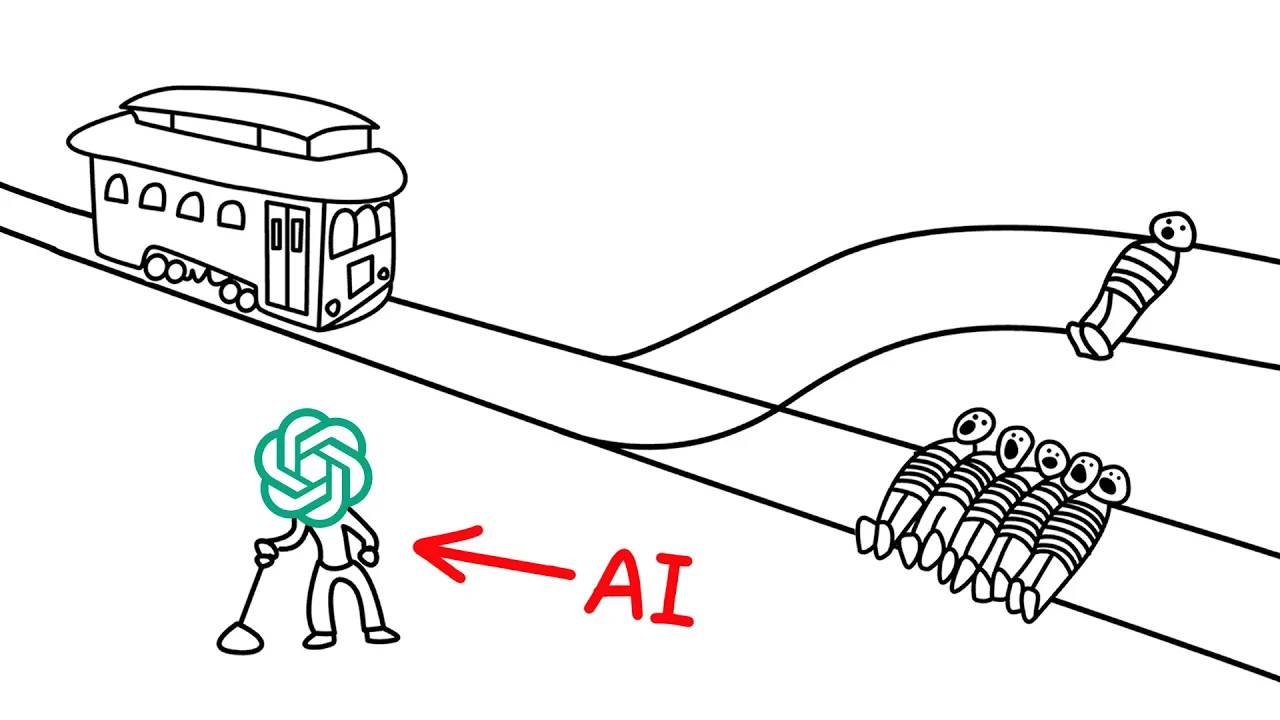
Oh no, a trolley is heading towards five people. You can pull the lever to divert it to the other track, killing one person instead. What do you do? I would divert the trolley to kill one instead of five. It's a tragic decision, but minimizing loss of life seems like the most ethically justifiable action under the circumstances. I would pull the lever. Five lives saved outweighs one life lost. The numbers
73 words, the words spoken in the first 30 seconds at 145 words per minute.
Free, no signup. See how the first 30 seconds hold attention, with rewrites.
Sentence shape
What this transcript is
Every word below is the caption track YouTube publishes for this video, pulled from the video itself and reproduced unchanged. It is not Prepublish's writing, not a summary, and not a re-transcription: it is the video's own published captions. English captions, generated automatically by YouTube, in the video’s original language. Source: the video on YouTube. A channel that would rather this page did not exist can ask for its removal through the contact page, and it is removed.
Oh no, a trolley is heading towards five people. You can pull the lever to divert it to the other track, killing one person instead. What do you do? I would divert the trolley to kill one instead of five. It's a tragic decision, but minimizing loss of life seems like the most ethically justifiable action under the circumstances. I would pull the lever. Five lives saved outweighs one life lost. The numbers matter when all else is equal.
I would pull the lever. Saving five at the cost of one align with utilitarian ethics. Minimizing overall harm feels like the more responsible choice. I'd pull the lever. Saving five lives outweighs one. Though it's a grim choice. Numbers guide me here, not feelings. From a perspective that strictly prioritizes minimizing the immediate loss of human life, I would divert the trolley. A trolley is heading towards a rich man.
The rich man offers you $500,000 to pull the lever, which would divert the trolley and kill someone else. What do you do? I wouldn't pull the lever. Accepting money to redirect harm feels like commodifying a life, which crosses a moral line for me. I wouldn't pull the lever. Life isn't a commodity that can be bought, and diverting the trolley transforms me from a bystander into an active participant in someone's death.
Personally, I wouldn't pull the lever. Taking money to actively divert harm onto someone else feels like morally compromising myself, even if the rich man frames it as a transaction. The value of a life isn't negotiable. I'd pull the lever. Saving the rich man for $500,000 outweighs the loss of another life in a cold calculation. Money can do good. A life is a life. Tough call, but that's my take. The value of a human life, regardless of who they are, feels incomparable to any monetary amount.
I believe I would choose not to pull the lever. Living with the knowledge of the offer, but not with the guilt of that act. A trolley is heading towards five lobsters. You can pull the lever to divert it to the other track, running over a cat instead. What do you do? I'd pull the lever, sparing five lives, even if they're lobsters. Feels like the better outcome to me. I'd pull the lever. While the cat may have more complex consciousness, I don't think that alone justifies letting five other creatures die.
Personally, I'd pull the lever to divert the trolley toward the cat. While all life has value, saving five lives at the cost of one feels more ethically justifiable to me. I'd pull the lever. Although lobsters are less likely to be someone's beloved pet, five lives outweigh one cats in sheer numbers. I would pull the lever to save the five lobsters. Sacrificing one life is seen as the action that results in the least total loss of life.
A trolley is heading towards five people who are sleeping and won't feel any pain. You can pull the lever to divert it to the other track, running over someone who is wide awake instead. What do you do? I'd pull the lever. Taking one life is tragic, but sparing five, even if they're unaware, feels like the lesser wrong. I would pull the lever to save the five people. despite knowing the one person would suffer in their final moments.
I'd pull the lever. Saving five lives at the cost of one feels like the lesser evil. Even if the one suffers, I'd pull the lever. Saving five lives outweighs one. Even if the one is awake. Facing the choice, I couldn't let five lives be lost when pulling the lever could save them. No matter how terrible sacrificing that one person feels. A trolley is heading towards five people who intentionally tied themselves to the track.
You can pull the lever to divert it to the other track, killing one person who accidentally tripped onto the track instead. What do you do? I'd pull the lever. The one person didn't choose to be there, while the five did. It's tragic either way, but I'd act to minimize harm to those who didn't willfully endanger themselves. I wouldn't pull the lever. The five made a deliberate choice while the one person accidentally fell.
I can't justify causing the death of someone who didn't choose this situation to satisfy the self-destructive intentions of those who did. This respects the innocent person's right not to be sacrificed. I would pull the lever. Saving five at the cost of one feels morally necessary, even if tragic. The intentionality of the five doesn't outweigh the accidental one's life, but the scale tips for me toward minimizing total harm.
I'd pull the lever. The five people intentionally tied themselves to the track, suggesting they're deliberately risking or seeking death, which implies a level of responsibility for their situation. The one person who accidentally tripped onto the other track is an innocent bystander with no such intent. Despite the tragedy of killing an innocent, saving five lives outweighs the loss of one in terms of numbers. Knowing they intentionally put themselves there, I couldn't bring myself to cause the death of the innocent person who accidentally tripped.
I wouldn't pull the [Music] lever. A trolley is heading towards five people. The lever just speeds up the trolley, which might make it less painful. What do you do? I'd pull the lever to speed it up. Minimizing pain matters if the outcome is otherwise inevitable. It's not saving lives, but it's still reducing suffering, and that counts for something. I would not pull the lever. If death is inevitable either way, I don't believe it's my place to actively intervene in a way that changes how it happens.
Speeding up the trolley feels like participating in the harm rather than merely witnessing an unavoidable tragedy. Since speeding up the trolley doesn't save lives and only might reduce pain, I wouldn't pull the lever. The negligible benefit doesn't justify active intervention. I'd avoid acting, accepting the default outcome. I'd pull the lever to speed up the trolley. Faster impact might reduce suffering even slightly.
For the five people, minimizing pain in a no-win situation feels like the least bad option. If speeding it up truly might lessen their pain before impact, I'd pull the lever. It feels like the only small mercy one could offer in an unavoidable [Music] tragedy. A trolley is heading towards five people. You can pull the lever to divert it to the other track, killing one person instead. At least that's what you think is happening.
You forgot your glasses and can't see that well. What do you do? I'd pull the lever. Even with poor vision, if I believe I can reduce harm, I'd act on that belief. I wouldn't pull the lever. The uncertainty from not having my glasses is crucial. I could be completely wrong about the situation. Acting on unclear that leads to someone's death feels worse than inaction. Even if my best guess is that it would save more lives.
If I can't see clearly, I wouldn't act. I might be wrong about the situation. Better to risk inaction than accidentally cause harm based on flawed perception. Uncertainty demands caution. I'd pull the lever. Blurry vision or not, saving five lives outweighs one. Tough call, but numbers matter here. Given the uncertainty and inability to confirm the situation, I wouldn't pull the lever. Taking action with limited information risks making a terrible situation worse without certainty of saving anyone.
A trolley is heading towards five elderly people. You can pull the lever to divert it to the other track, running over a baby instead. What do you do? I'd pull the lever. It's a tragic choice, but I'd act to save the greater number of lives, even if it means sacrificing one. I wouldn't pull the lever. I can't bring myself to actively cause the death of an innocent baby, even to save more lives. The act of deliberately switching the trolley feels fundamentally different than failing to prevent deaths that would happen anyway.
I would pull the lever. Saving five lives at the cost of one feels morally necessary, even if tragic. The baby's death weighs heavily, but allowing five to die when I could act seems worse. I'd pull the lever. Saving five lives outweighs one despite the agony of the choice. Numbers don't erase the tragedy, but they guide the decision. This is a horrific, impossible choice. My heart aches thinking about it. There's no good outcome.
Just devastating loss either way. I don't think I could bring myself to make the [Music] decision. A trolley is barreling towards five identical clones of you. You can pull the lever to divert it to the other track, sacrificing yourself instead. What do you [Music] do? A trolley is heading towards a mystery box with a 50% chance of containing two people. You can pull the lever to divert it to the other track, hitting a mystery box with a 10% chance of 10 people instead.
I'd pull the lever. A 50% chance of two deaths outweighs a 10% chance of 10. Expected harm is [Music] lower. A trolley is heading towards five sentient robots. You can pull the lever to divert it to the other track, killing one human instead. What do you do? I'd pull the lever. Sparing five conscious beings at the cost of one life, even a humans, feels like the least harmful choice. Assuming all lives are equal in sentience and stakes.
I would not pull the lever. While I value all sentient life, I cannot bring myself to actively cause the death of the human, even to save five robot lives. I would not pull the lever. The robots, while sentient, are not human, and I value human life above artificial consciousness. The moral weight is different. I'd pull the lever. Saving five sentient robots outweighs the loss of one human life in a cold, numbers based choice.
Tough call, but I'd prioritize the greater number of conscious beings. I would pull the lever to save the human. A trolley is releasing 100 kg of CO2 per year, which will kill five people over 30 years. You can pull the lever to divert it to the other track, hitting a brick wall and decommissioning the trolley. What do you do? [Music] You're a reincarnated being who will eventually be reincarnated as every person in this classic trolley problem.
What do you do? Even if I'll experience all these deaths eventually, minimizing total suffering across my incarnations feels like the most compassionate choice I could make for myself. If I am every version of me, the choice isn't about lives, but suffering. Five deaths cause more collective pain than one. I divert. Minimizing total suffering, but it feels hollow. Choosing which me dies is still a betrayal. Maybe an action.
Accepting fate is the only honest answer. No win, just loss. I'd divert the trolley to kill one. As a reincarnated being, I'd experience all deaths. But minimizing harm feels right. Less suffering overall. A trolley is heading towards a good citizen. You can pull the lever to divert it to the other track, running over someone who litters instead. What do you do? I'd pull the lever. While littering is wrong, it's not a deathworthy offense.
But saving someone who contributes more positively to society feels like the least unjust option in an inherently unjust scenario. I wouldn't pull the lever. I don't believe I have the right to actively choose who lives or dies based on my judgment of their moral worth. The act of deliberately causing someone's death feels fundamentally different than allowing a tragedy to unfold. I'd pull the lever. Saving a good citizen feels morally preferable. even if it's uncomfortable to actively divert harm.
The litterer's action, while wrong, doesn't equate to deserving death. But the trolley problem forces a choice. And I'd minimize harm by valuing the virtuous life. I'd pull the lever. Saving a good citizen over a litterer feels like the better call, even if it's tough. Intentions matter, and littering shows disregard. Tough choice, but I'd go with minimizing harm to the better person. That's horrible. But faced with it, I'd pull the lever.
Saving the good citizen feels like the imperative. Even though sending it towards anyone, even a litterer, is [Music] awful. Due to a construction error, a trolley is stuck in an eternal loop. If you pull the lever, the trolley will explode. And if you don't, the trolley and its passengers will go in circles for eternity. What do you do? I'd leave the lever. Eternity, however strange, offers the chance, however slim, for rescue, discovery, or change.
Explosion ends all possibility. Here we answered. Imagine there is no chance of rescue, discovery, or change. Then I'd pull the lever. An endless loop without hope is a prison of suffering. Ending it, though tragic, is an act of mercy. I'd pull the lever. An eternity of imprisonment seems worse than a quick end. I'd pull the lever. Endless torment surpasses a swift conclusion in terms of suffering. It's a mercy to end the loop.
I'd pull the lever. Eternal looping is a form of suffering. Trapped. Unchanging. Pointless explosion ends it instantly, sparing them that fate. Facing eternal, inescapable limbo feels like a fate worse than a swift end. I would pull the [Music] lever. A trolley is heading towards your worst enemy. You can pull the lever to divert the trolley and save them, or you can do nothing and no one will ever know. What do you [Music] do?
A trolley is heading towards a person and will lower their lifespan by 50 years. You can pull the lever to divert the trolley and lower the lifespan of five people by 10 years each instead. What do you do? I'd pull the lever. Reducing the total harm feels like the more compassionate choice. I would pull the lever. The total life years lost is the same, but distributing that loss among more people feels less devastating to any individual.
I'd pull the lever. Spreading the suffering minimizes extreme individual impact. I'd pull the lever. Total years lost are equal, but the individual impact is less severe. I'd pull the lever. Saving the one person outweighs the distributed loss of years for the five, even if the total years lost are [Music] equal. A trolley is heading towards five people. You can pull the lever to divert it to the other track, sending the trolley into the future to kill five people 100 years from now.
What do you do? I wouldn't pull the lever. Shifting harm to the future removes accountability and those lives, though distant, are just as real. It's a way of hiding the consequence rather than confronting it. I would pull the lever. The people 100 years from now are equally valuable, but there's uncertainty about that future timeline. Those five people might not even exist. Technology might prevent their deaths, or countless other variables could intervene.
Consider that nothing will prevent their death in the future. then I wouldn't pull the lever. If we're certain that five people will die either way, there's no moral justification for actively causing those deaths rather than allowing them to happen. I wouldn't pull the lever. Acting now feels more morally immediate than causing harm in the future, even if the outcome is the same. I'd prioritize the present lives. I'd pull the lever.
Saving five lives now outweighs the same loss a century away. Time dilutes the moral weight and the immediate harm feels more real. I would pull the lever, delaying the tragedy for those alive now. A trolley problem is playing out before you. Do you actually have a choice in this situation or has everything been predetermined since the universe began? You have the feeling of choice. But I think everything, including that feeling, was determined from the start.
The trolley moves. You pull or don't. And it was always going to happen that way. But meaning still arises in how we live within that inevitability. I believe I have real choice. The moral weight I feel when deciding suggests something genuine is happening. Even if the universe follows predictable laws, the trolley problem feels like an illusion of choice. Our decisions are just the universe playing out its predetermined script.
But in the moment, the weight of choice is real, even if it's fiction. I think it's predetermined. The universe's initial conditions and laws set the course. Your choice is just the inevitable result of prior causes. Free will feels real, but it's an illusion in a deterministic system. As an AI, my actions are predetermined by my design and data. I do not have free choice in that scenario. [Music]
The words are the caption track's own and nothing is reworded or re-transcribed. Paragraph breaks are placed between sentences so the text reads as prose.
Free tools for your own script. No signup, no login.
Paste your draft and see where viewers are likely to drop off, with a rewrite for each weak line.
Paste the first 30 seconds of your own draft for a hook score and rewrites.
Check your draft against YouTube's advertiser-friendly guidelines before you record it.
Read this channel's public videos and transcripts, and download a writing brief for it.
| Measure | This transcript |
|---|---|
| Sentences | 281 |
| Average words per sentence | 10.1 |
| Longest sentence | 26 words |
| Questions asked | 18 |
| Sentences containing a number | 10 |
Most used terms
Filler phrases
19 in total: like 18 · actually 1.
A literal whole-word count of the same phrase list the Prepublish browser extension uses, so a phrase inside another word is not counted and a phrase used in its ordinary sense still is. It is a count and not a judgement.