Getting the transcript
Reading the captions from YouTube. A video nobody has opened here before takes 10 to 30 seconds; this page fills in on its own.
Getting the transcript
Reading the captions from YouTube. A video nobody has opened here before takes 10 to 30 seconds; this page fills in on its own.
Sir Joe - The Nostalgic Futurist · @TheNostalgicFuturist
Words
3,076
Runtime
22:12
Speaking pace
139wpm
Reading time
13min
139 words per minute, below the 160 25th percentile of 349 measured videos. That distribution comes from the 349-video hook study.
Opening (first 30 seconds)
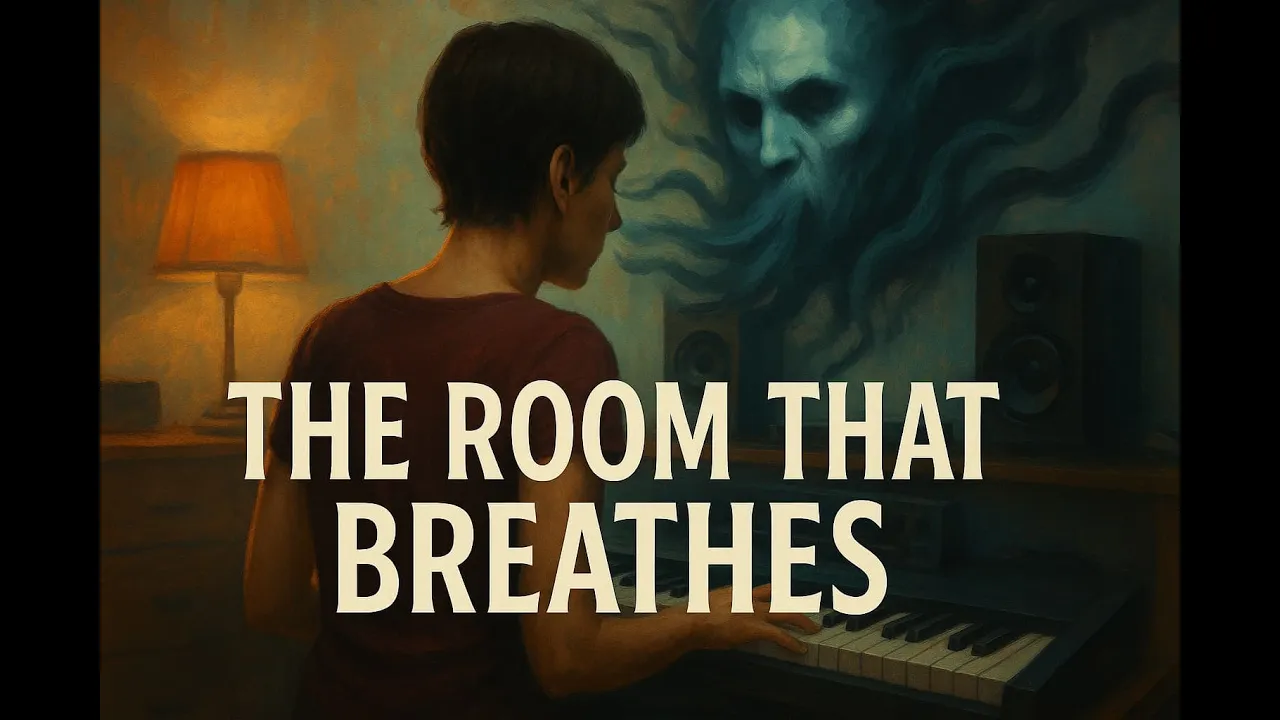
Stories for lost musicians presents the room that breathes. What if a song could hear you back? Mara asked herself that as the room shrank to the desk, the lamp, and the rectangle of her keyboard. 34 cropped dark hair. She cut herself over the sink. a thin white scar near her left wrist from a glass that slipped. She wrote spare songs, small keys, slow drum loops, a guitar
70 words, the words spoken in the first 30 seconds at 139 words per minute.
Free, no signup. See how the first 30 seconds hold attention, with rewrites.
Sentence shape
| Measure | This transcript |
|---|---|
| Sentences | 315 |
| Average words per sentence | 9.8 |
| Longest sentence | 32 words |
| Questions asked | 6 |
| Sentences containing a number | 13 |
Most used terms
Filler phrases
29 in total: like 26 · kind of 3.
A literal whole-word count of the same phrase list the Prepublish browser extension uses, so a phrase inside another word is not counted and a phrase used in its ordinary sense still is. It is a count and not a judgement.
Free, no account. See where attention is likely to drop, with a rewrite for each weak line. The free check shows the scores and the one issue costing the most. Or run it on the words above first.
Free · No login · See a sample audit first if you prefer.
What this transcript is
Every word below is the caption track YouTube publishes for this video, pulled from the video itself and reproduced unchanged. It is not Prepublish's writing, not a summary, and not a re-transcription: it is the video's own published captions. English captions, generated automatically by YouTube, in the video’s original language. Source: the video on YouTube. A channel that would rather this page did not exist can ask for its removal through the contact page, and it is removed.
No Script X-ray for this video: YouTube shows a Most replayed graph only once a video has enough views.
Stories for lost musicians presents the room that breathes. What if a song could hear you back? Mara asked herself that as the room shrank to the desk, the lamp, and the rectangle of her keyboard. 34 cropped dark hair. She cut herself over the sink. a thin white scar near her left wrist from a glass that slipped. She wrote spare songs, small keys, slow drum loops, a guitar that breathed. She used her own name because alases felt like costumes.
Music kept the world aligned, sounds sat where they belonged, and time agreed to hold still. She pressed stop on the playback. A breath answered her in the silence, not the soft hiss of the pream, not room noise, a shaped inhale, human and close, as if the headphones had lungs. She lifted the cups away. The breath came again, warm at the back of her neck, where hair meets skin. She did not move. She changed the buffer, changed it back, armed a track called room, recorded 60 seconds of nothing with the fridge unplugged and the window shut.
The waveform crawled across the screen. She stopped. The breath landed once more just behind her right ear. She stood, rubbed the scar with her thumb, turned the lamp off and on. The filament blinked. She sang a simple line, no words, just the vowel that fit the melody, and released it. A second voice matched the pitch a beat late, lower and wider in the throat. Her chair scraped as she backed away. The meters had already fallen.
The file ended where it should. The answer had arrived outside the file like a guest who refused the door and slipped through a seam. She slept 2 hours on the couch and woke to the wrong shape of dark. The bakery downstairs exhaled heat and sugar into the stairwell. She drank from the tap and told the air to behave, then sat and worked because work was the only rule she trusted. Three notes leaned toward a fourth and never claimed it.
A low drum marked time without insisting. Her voice traced the line. When she stopped, the extra breath returned, precise and patient, like someone asking to see what she was seeing. By noon, she had taken the track to the conservatory practice room. The building smelled like boiled paint and pencil shavings. The upright sat two cents flat and proud. She made a voice memo and sang. The file played back clean. The air did not.
The breath arrived from the corner near the door. She laughed once to prove she was a person in a normal room. The laugh pleased the room. The breath answered again, thinner, like a creature learning. She left fast. That night the breath visited between takes and during them. The cheap neon above the sink pulsed in half beats she had not programmed. Her foam panels glued up by hand. Looked like a hundred quiet mouths shut and listening.
She stood in the dark with everything turned off. The breath moved around her left side then right, careful like someone reaching past to take a glass. Its patience hurt more than a shout ever could. She opened a spectrogram. Blues and greens bloomed where they should. After her tail, a faint yellow tongue lifted a thin breathlength flame. Zoomed in, it pixelated into electricity. Zoomed out, it looked like a mouth on an awe.
She hovered over delete and helped the shame of a small lie forming. If she erased it, and it kept singing, the thing would know she did not want it here. She saved and walked it off to the river. Then water moved like a wire pulled tight. Cars discounted the night with their own rules. When she came back, the apartment held its breath long enough to let hope bloom. Then it exhaled. The second day she tested it like a problem.
New interface, different cables, headphones through the phone. The breath persisted. At dusk, the power softened without going out. The lamp dimmed to a bruise. The interface LEDs kept their exact pulse. The neon stuttered, settled on the song's route and stayed. She rested both hands on the desk and waited for the breath to choose a place to stand. It stood where the ceiling seam met the long wall. She reached toward it.
The air cooled under her palm and held the cool when she pulled back like a pillow keeping the shape of a head. Proof without a face. She left the DAW armed and went to throw water on her neck. The mirror framed a woman holding herself together. When she returned, the counter was rolling. She had not pressed space. The meters rose and fell to a slow, even rhythm. She held her breath to see if it belonged to her. The meters kept breathing.
She stopped the take with two fingers and told herself she was done for the night. Blackout, sudden complete. The neon went dark. The streak vanished. The only light left came from the interface. Small green eyes pulsing like a heartbeat. In the dark, something said her name in her voice, one syllable late, almost kind. Mara, then again, shaped like warning. Do not. The power returned as if shame were a circuit. The DHW was open. the file stamped by the outage.
She dragged it in and opened the spectrogram, mouth shapes repeated every 20 seconds. She took off the headphones and for the first time said out loud, "No." The room exhaled anyway. She needed the story of the house. Sleep would not hold, so she pushed her laptop across the bed and began, like anyone, address into a search bar. The building was old, early 20th century, once a doctor's office, the then weekly rooms, then a family bakery with small flats above.
Old rental boards showed three different sublets over the last 8 years, none lasting longer than a season. Two posts mentioned bad air, one wrote simply the weird breathing. A forgotten forum about the city's hungry rooms listed her address with a photograph of the hallway. Breath rattles the light covers. A reply read, "Stop leaving the space at the end. It eats the paws." She did not want folklore. She wanted paper.
County records showed a digitized repair log. A complaint about vent noise and an inspector's note. No mechanical cause discovered. A scanned letter from 1,989 found by a tenant inside the wall. Six lines in pencil on lined paper. If you sing, it sings. It wants the last note. We called it vest. Do not finish. The last line had been torn away. She read that until the red marks in her eyes taught her the letters by shape.
She printed it and laid it on the desk. She told herself it was a joke, a neighbor's art piece, a sick kind of relay race. She did not believe herself. She circled vests and wrote endings. Vestri, vessel, vesper. None felt hungry. Another night, another hour lost listening for nothing. At 3, she heard the breath at the door, a small draw in and out, in and out, as if the wood itself had lungs. She put her hand near the center of the room and felt a slow cold.
She whispered, "What do you want?" and the apartment clicked like heat climbing a pipe which did not feel like an answer and yet it did. She went to the library when it opened because names live better on paper. A librarian led her to local history in a bright basement. Mara pulled files she had no right to know existed. A yellowed newsletter about spiritualists who rented out the third floor in the 1920s. An interview with a woman who spoke of singing rooms where voices bled across walls.
A notebook with a list of addresses, her own among them, and margin note in a shaky hand. Vashra, mouth without body, lives in the paws, will mimic until you answer. Do not give it your ending. She said the name in her head. It tasted like dry metal. The librarian saw the notebook in her hands. Ah, he said from the phenomena drawer. Please do not take photos. His tone was light, but he did not smile. Two people, she started.
Come read that once in a while, he said. They do not usually stay long. He pointed to a clipping lwed inside the cover. Music teacher missing. Sometimes old stories hang around just because paper does. Sometimes they hang around for other reasons. How do I? she began and stopped because the question sounded like an invitation. Coffee is upstairs, he said. Stairs are kinder in the morning. She took notes. Vra mouth without body lives in the pause.
She copied the line will mimic until you answer. She closed the book and thanked him and felt the kind of gratitude you fool for a person who does not ask the wrong second question. Back home, the hallway smelled like cardamom. The bakery had changed hands last month. Her neighbor's door was open. The old man with the baseball cap had moved out and left the hook empty. She climbed slowly. The apartment's hinge gave its small familiar complaint.
She stepped in. The air pressed against her as if it had been waiting. She did not turn on the neon. She did not turn on the lamp. She put the print out from the wall letter on the desk and laid her palm on it until the paper warmed. "Vashra," she said once softly, as if meeting a dog that may bite. The room exhaled, not loud, definite. She wanted to run. She wanted to stay. She wanted to prove anything mattered. She set up the mic and put tape on the floor to mark the center of the room.
The cold spot sat exactly there. She moved the mic into the space and out. The air against the capsule changed like water pressure. She armed a track called Mouth. She opened a new project and named it. Her song was never finished because now the title felt less like a joke and more like a plan. The breath paced around the seam. She heard it on the left behind the closet, then at the window, then at the tap on the floor.
Every time she stood still for three heartbeats, it stopped listening. Will mimic until you answer. She did not speak. At dusk, power softened again. The interface kept its beat. The neon failed to start and gave up. She took the old letter and the library notes and set them by the keyboard. She searched the name once, just once, Bashra, and got nothing useful. A misspelling, a ban no longer active, a handmade candle shop in another city.
The right thing does not always live on the internet. The breath came from the center of the room and held the cold lifted the hair on her arms. She thought of the women in the 1920s singing in rented rooms. She thought of her own voice stitched into files and the way the air kept stealing a piece of it. "All right," she said. "Not a trick." She placed the mic at the tape, gave the gain room to climb, and started the click at 72.
She put the headphones on, but left one ear free. She sang the vowel that matched the line. An ah that felt like a door left open, and the breath pulled it a half step closer made it rounder, made it hers. "I hear you," she said, because saying nothing had not made it go away. and her voice came back to her from the center of the room with a small rasp she had when tired. "I hear you," the room said. She held the note and felt the floor tilt, not in wood, but in sense.
It was not vertigo. It was a mouth opening without a face, right where the tape crossed the boards, pulling inward, gentle first, the way a sigh becomes a decision. Dust spun a tight spiral. A receipt on the desk trembled and slid an inch. The breath deepened, became a draw. The mic stand creeped toward it and steadied. She backed up to the wall and the pole lessened, then returned as if tasting. She cut the click and the silence got teeth.
She missed Lena. She missed the luxury of pretending a problem was simply technical. She missed her father who would have cleaned the capsule with a square of cloth and said, "Let us see what we are really hearing." The way some fathers say, "Let us check the fuse." She opened the spectrogram again and left it live. The screen drew the mouth as the room breathed. The shape widened and narrowed in time with the pull at the tape.
She took the chalk she used to mark mic placement and drew a circle around the cold. The dust inside the circle lifted and settled as if the circle had given it permission. She did not step across. She went cold in waves and hot in between. She stood there until her legs trembled and then until they stopped. She let the house breathe. The mouth without body lived in the paws. It had learned her. It was no longer shy.
Some part of her wanted the straight line. She opened a blank document and wrote, "Vhra, mouth without body, mimics until answered," she added. "Devours the ending." She printed the page and caped it beside the screen. She looked at the name until it became only shapes. "Night, the bakery dark, the street thin, the apartment stripped to air and wood and her." She put the headphones on again and stood with her toes at the chalk line.
"Now what?" she whispered and the room said the same in her voice a beat late. Now what? She almost laughed because the mockery was honest. She thought of prayer and did not pray. She thought of science and could not measure. What remained was naming and the will to stand. Vra, she said true this time, strong enough to carry. I know your name. The pull in the center of the room deepened. The breath came from the floorboards and the ceiling seam and the points where the foam met the wall all at once.
One body without body. The chalk line sighed and took a grain of it away. Her notes lifted and fell back. The letter from the wall kicked up at a corner and flattened again. She stepped closer. She stopped at the chalk. She kept her hands down because raising them would have been a kind of bargain. You live in the pause, she said. You mimic until you are answered. The waveforms on the screen showed only the small truth of her voice, blue and green and almost pretty.
The room waited with something like respect. She swallowed. Her mouth tasted like the air before rain. Now I know who you are, she said. The floor did not open. No trap door, no theatrical crack. The air itself tightened and pulled. A clean, impossible suction from nowhere, the force of a lung inside the world taking a startled breath. The chalk circle lifted in a white ring, then rose as powder. Her hair snapped forward across her face.
The mic stand skidded, toppled, slid toward the center, and vanished, not down, but inward, shrinking to nothing in a blink as if tep had folded. Her headphones vanished from one ear. The other cup slapped her cheek and went. Her breath tore out of her chest, and the last sound she made was not a scream, but the soft syllable you make when you step into cold water and accept it. The room drew her in with the calm of tide.
Her foot went ankle deep into nothing. Her calf followed. Her knee, her hip, her hands rose as if to push away. Adored was not there and then went with her arms, her torso, her throat, her jaw, with its small, stubborn line, and finally the crown of her head. And then there was no more mara to see. Silence landed like dust. The chalk fell back, broken into smaller circles. The desk settled. The neon tube stopped its soft charge.
The interface lights went out for the first time all week. The spectrogram froze and then cleared itself. The window returning to a blank grid as if it had decided no data had been recorded after all. Downstairs at 4, the bakery clicked on its ovens. Heat rose into the stairwell with sugar and orange peel. The hallway carried a faint flower smell that made the new morning feel ordinary. At 7, a delivery man knocked and no one answered.
By noon, the landlord tried the key and found the door locked from the inside. He came back with a second key and it turned with a steady click. He opened to a tidy room. Desk, keyboard, chair on its side, a mic stand missing, a laptop asleep, taped paper by the screen that read, "Word no one in the room recognized. It planned on the sill leaned toward light. The bed was smooth. The glass by the sink had a dry water mark.
The center of the floor felt a degree cooler than the edges, but only if you cared. Nothing else was there. The apartment listened, and no one lived there anymore. She sang to fill the silence, but the silence learned her name. Every note she left unfinished came whispering back the same. There's a breath beneath the ceiling, a pulse inside the floor. She gave the song a heartbeat and it as for one more. She drew a circle in the dust.
The air began to spin. A name was waiting in the dark and the dark pulled her in. Do you sing? It seems it only wants the end. She said, "Now I know who you are." The room just took her breath again. There's a hum that never falters where the night forgets to move. She was swallowed by the echo and the echo kept her too. The song was never finished. The song was never mine.
The words are the caption track's own and nothing is reworded or re-transcribed. Paragraph breaks are placed between sentences so the text reads as prose.
Free tools for your own script: paste a draft and see where it stands before you record it.
Paste your draft and see where viewers are likely to drop off, with a rewrite for each weak line.
Paste the first 30 seconds of your own draft for a hook score and rewrites.
Check your draft against YouTube's advertiser-friendly guidelines before you record it.
Read this channel's public videos and transcripts, and download a writing brief for it.