Getting the transcript
Reading the captions from YouTube. A video nobody has opened here before takes 10 to 30 seconds; this page fills in on its own.
Getting the transcript
Reading the captions from YouTube. A video nobody has opened here before takes 10 to 30 seconds; this page fills in on its own.
Dalton + Michael · @daltonplusmichael
This video has no Most replayed graph yet: YouTube shows one only once a video has enough views. These are the moments viewers replayed most in Dalton + Michael's most watched videos.
Most replayed moment at 9:40
2.3x that video's typical replay level
a company is winning, you might not understand the value they create for their customers, but don't dismiss it to zero. >> Well, that's the classic thing of um dismissing a product because the design is bad. >> Yeah, man. This HRS looks like crap.
Said at 9:33
Most replayed moment at 9:46
2.1x that video's typical replay level
of founders is, "What do you think is the failure rate for a series B company?" Because like I think in their minds before I ask the question, they think every series B company wins. And then after I ask it, they're like, "I guess mathematically that wouldn't work."
Said at 9:40
Most replayed moment at 14:24
2.8x that video's typical replay level
it is hard to feel like you're working on something where a lot of people think it's a bad idea. That's hard. And I like talking about this because you should brace yourself for that. Like, that is 100% the experience of
Said at 14:17
The graph counts replays. It does not show where viewers stopped watching.
Words
3,012
Runtime
14:50
Speaking pace
203wpm
Reading time
13min
203 words per minute, above the 201 75th percentile of 349 measured videos. That distribution comes from the 349-video hook study.
Opening (first 30 seconds)
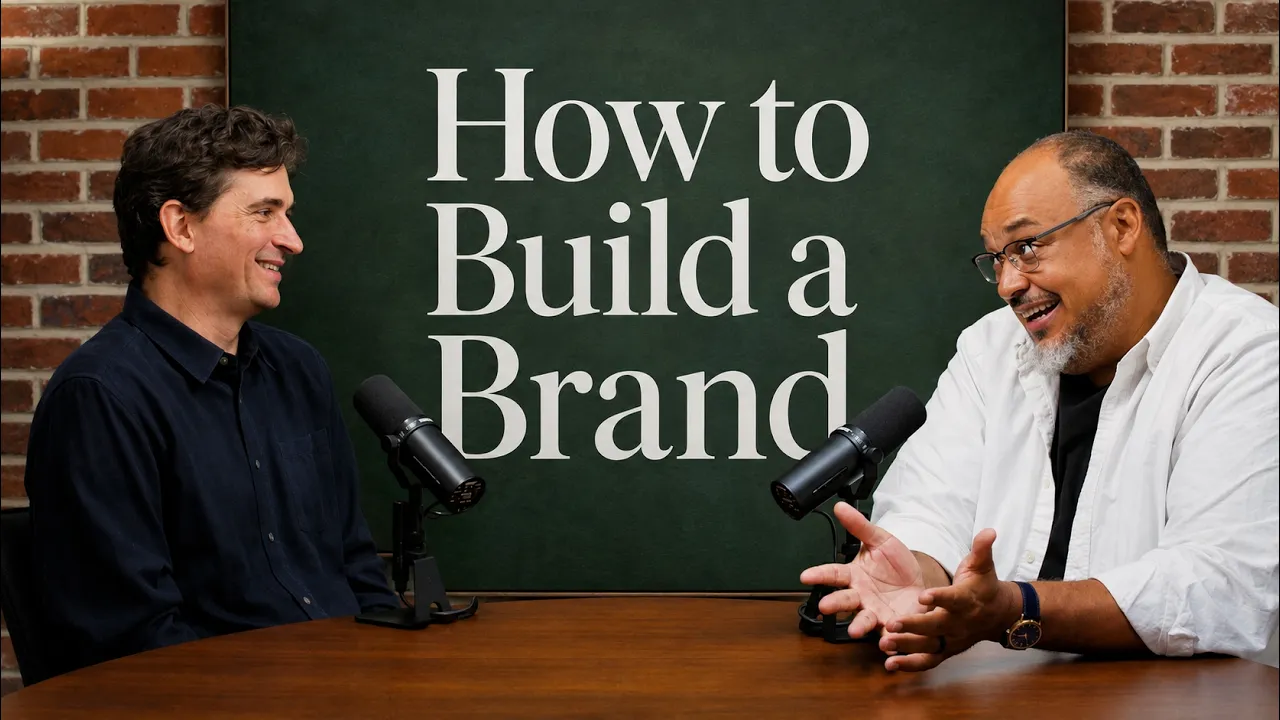
I remember Anthropic, they're like, oh, this is our thing, Claude. And I'm like, that's a weird Claude. Like she's [laughter] like, what? And yeah, now it's like, yeah, Claude. You know, we get used to it. If Claude does enough work for you, you're like, oh, that's my best friend. I love Claude. [laughter] Yeah, but that's what they came up with? That's That was the best they could do? This is Dalton plus Michael, and today we're going to talk about how to build a brand. So, I heard that you guys are starting up a bit of a branding
102 words, the words spoken in the first 30 seconds at 203 words per minute.
Free, no signup. See how the first 30 seconds hold attention, with rewrites.
Sentence shape
| Measure | This transcript |
|---|---|
| Sentences | 243 |
| Average words per sentence | 12.4 |
| Longest sentence | 50 words |
| Questions asked | 41 |
| Sentences containing a number | 5 |
Most used terms
Filler phrases
175 in total: like 113 · you know 22 · kind of 9 · um 9 · basically 7 · right? 7 · I mean 3 · uh 3 · actually 2.
A literal whole-word count of the same phrase list the Prepublish browser extension uses, so a phrase inside another word is not counted and a phrase used in its ordinary sense still is. It is a count and not a judgement.
Run the check on the words above: where attention is likely to drop, with a rewrite for each weak line. The free check shows the scores and the one issue costing the most.
What this transcript is
Every word below is the caption track YouTube publishes for this video, pulled from the video itself and reproduced unchanged. It is not Prepublish's writing, not a summary, and not a re-transcription: it is the video's own published captions. English captions, generated automatically by YouTube, in the video’s original language. Source: the video on YouTube. A channel that would rather this page did not exist can ask for its removal through the contact page, and it is removed.
I remember Anthropic, they're like, oh, this is our thing, Claude. And I'm like, that's a weird Claude. Like she's [laughter] like, what? And yeah, now it's like, yeah, Claude. You know, we get used to it. If Claude does enough work for you, you're like, oh, that's my best friend. I love Claude. [laughter] Yeah, but that's what they came up with? That's That was the best they could do? This is Dalton plus Michael, and today we're going to talk about how to build a brand.
So, I heard that you guys are starting up a bit of a branding agency here. We love We love brands. >> [laughter] >> Uh step one, hire a branding agency. Step two, step two, profit. That's it. That's the two-step plan. I thought it was three. I think you have to pay the branding agency a lot of money. I [laughter] think that goes without saying. Um So, look, I think we're being a little facetious because this is an example of uh where we are the first to admit that brand is really important and that if you want to build a really important company, you need to have a great brand.
Now, what causes us to perhaps roll our eyes a little bit is the process by which a founder thinks a brand is created. Right? You want to I know yeah. So, you don't even want to make this video, Michael. So, like, [laughter] that's how much you don't like talking about branding. Yeah, so let's say like spamming people, um going after press, trying to get as many speaking slots at conferences as humanly possible, doing weird stunts ad infinitum, basically like not understanding how much of the your brand is being built by the service you provide your customers.
Yeah. And I think it's like, I'll go even one step deeper. I don't The The phrase word of mouth used to be really popular back in the day, and I feel like it's kind of completely gone away. For better or for worse, your customer's experience with your product is probably the biggest brand force for your entire company. And so, like, you want to build your brand, make sure your next customer loves your product. The The amount that that's going to create brand value for you is 10 times more than almost any other brand building thing you can do.
So, how do Why do people get confused by this? >> I think the anti-pattern is that like most things in life, it's convenient to believe that you can hire a service provider >> Yeah. >> to get the thing that you want. >> We have a great product. We just don't have a brand yet. >> You want to have a consultant. >> You want to believe that you can buy product market fit. >> Yes. >> You want to believe that you can buy >> Yes. >> You want to believe that you can buy >> Yes. >> Like we want to believe, you know, I'm sure we still fall for this, man.
You know, like we're not we're not above this, but you're like, how do I just buy the best thing and do a shortcut and just skip to the goodness and not have [laughter] to, you know, do any of this like work stuff. Like is that what we all want? >> Exactly. >> Um and so brand is one of those things where you're like, >> Yeah, yeah, you know, Apple's a really good brand. Who can I pay so that we are Apple's? We get their brand.
Like is there a Like let's like hire Jony Ive, you know, and like cool, we're Apple now. It's just that easy. >> Th- Th- And this is what pisses me off is cuz like, you know, we came up when Steve Jobs kind of reinvigorated Apple. If we could summarize what Apple did very, very succinctly is they made products that we were very excited to buy. >> Yeah. >> And like when our friends had the iPod and we didn't, it was like, oh man, that's awesome.
And I guess I remember some ads, but do I even remember an ad? >> Yeah. >> There aren't shortcuts. Like I get that I guess that's the That's not what you want to hear probably, audience, but um you build it over delivering on a promise over and over and over and over again >> Yeah. >> enough [clears throat] times that that is That is your brand. Your brand is defined by this thing you do over and over and over again >> and all of your actions >> Yes. every and with every interaction your customers have with your product. >> Well, I think the the thing that unfort- I think the the unfortunate truth is that all too often when a founder's got a graph going up to the right they assume their product is working.
And then they kind of are asking this question, "Okay, how do we get more juice? How do we get more distribution? How do we improve the brand?" And what's so unfortunate is how frequently I see a graph go like this and then like this and then like this. >> Yeah. >> Because people try the product they sign up for that one year of blah blah blah blah blah and if the product delivers great, but more often than not it doesn't.
And so then when their friends talk to them about it they're like, "Ah, it's fine. Oh, we're trying it da da da da." When their company's like, "Hey, can you use this?" and you're like, "Shut up. I don't want to use this new [ __ ] tool." And then they leave. >> And the time that you were spending building your brand if you were spending solving the customer's problem so that they were like "Oh, I love working with this company." >> 100%. >> You have personal experience, you know, with some of the most iconic brands in the world and you know how they were created.
So, like let's talk about Reddit for a second, you know, for for context you're on the board of Reddit and like Steve's your friend. >> Yeah. >> And you were friends with him from when you guys were kids basically. >> Early, yeah. >> I mean I think >> So, like how do you know, did he hire a brand? Was he like "Tell me how to make Reddit the most important website in the world." or yeah, what did he actually do? >> You know, there was this conversation that was interesting kind of famous between Steve and PG that was retold to me, which was basically "Assume there are a lot of people like you on the internet and make something that you would really, really enjoy using." And kind of giving Steve the permission to basically be like, "If I like it, other people will like it." So, let me make something that I love. >> You know, it's funny because Reddit used to have no subreddits. and it was just one thing.
And Reddit got fairly big before they had to build subreddits and kind of this other stuff because it turns out Steve wasn't a unique snowflake and there are a lot of people who >> Well, the original subreddit there was there was one subreddit and it was Steve. >> Yeah, exactly. Yeah. He was moderating Reddit to be his own personal subreddit. >> Exactly. And then people like Steve. And so to me, I think that was like incredible.
I think that, you know, in the story of Justin.tv and Twitch, right? Like our brand didn't even matter until we realized like who our customers were, right? Like the second we realized that our real customers were streamers, it changed everything, right? Like I say the first five years of the company, the brand was basically largely irrelevant. We weren't we hadn't identified the user that we could really help. The piracy Piracy's case, turns out people who own content didn't really like the Reddit streaming it.
When we figured out that these streamers wanted to make money and wanted a really great support and really good platform and we started serving them really well and then they started making more content, that was the positive flywheel and serving our streamers well is what built our brand. And I remember there was this moment that our COO Kevin there we had a competitor who basically offered all of our top streamers like a ton of money.
And he did all the math and he was just like we this like doesn't work. And so he had the bravery to basically tell folks like, "Hey, we can't match this. I understand if you want to go with them, but if for whatever reason it doesn't work out, know that we love you and you can come back anytime." A whole bunch of people left. Three months in when they were supposed to get their first check, guess what happened? No checks came cuz the company that stole the folks also couldn't monetize them.
Every single one of those people came back. It turns out not lying to your users [laughter] is like how you can build a brand. And so, I think that there's this misconception and it always This is what's always so painful because how often the answer for why your company worked is that like you didn't actually serve your users well enough. That's like 99% chance. Like 99% chance you did not figure out how to make enough of an impact in your users' business, life, work, whatever. >> Do you know any companies that made a huge impact in the in the users' lives but because of their brand?
I can't [laughter] think of any. >> it's hard to view this through fresh eyes, but I remember the name Airbnb and the logo being like the worst thing I've ever seen. >> It was spelled out. >> It's It was spelled It's just like >> airbedandbreakfast.com. >> It's like >> [laughter] >> the most unappealing brand I could think of. And it's everywhere. Again, like you we all just got used to it. Um and that's like a really big thing.
I You know, I remember Anthropic, they're like, "Oh, this is our thing, Claude." And I'm like, "That's a weird name." >> Claude? >> Like [laughter] she's Like what? And now it's like, "Yeah, Claude." We get used to it. >> Why If you're like >> Claude's a perfect [laughter] example. If Claude does enough work for you, you're like, "That's my best friend. >> I love Claude. [laughter] >> Yeah, but that's what they came up with?
That's That was the best they could do? And so, you know, at the end of the day, we've seen a lot of these iconic brands that seem just like normal stuff founders come up with become big and it's not because they spent money on brand. I mean, here's one for right now. I can't watch television without seeing Cal Shi mentioned. >> Yep. >> And you funded them for YC. You're the first investor. And like that They never changed their name. >> Nope. >> They never changed their logo. >> Nope. >> And but now it's like it sure looks like a really big brand, right, man? >> And if you ask every Cal Shi user, do they know what Cal Shi means?
They're like, "No." >> What is Calshi? I don't even know what Calshi means. >> It's a thing. I forgot what it did. But it is a thing. It is a thing. It is a thing. >> But like, they just kind of like made that up and they that was like on the YC application. >> What's so interesting about this is that um winning is so hard. And I think sometimes in the startup game and the technology game, maybe you would get confused about branding because you'd be like, what what what can I learn from other businesses?
Right? And it's like Okay, well, if you're selling, you know, ice cream in the grocery aisle and it's fundamentally a commodity, maybe you were having a different conversation about brand, right? Like You know, I always think about like Talenti ice cream has the like the clear Yeah. things so you can see the ice cream inside of it. And it's like >> [snorts] >> Honestly, if your surface of innovation is the logo and the packaging then like maybe you're having a different conversation.
Maybe that branding conversation is more relevant in that field. Versus if the surface of your product here is like, oh, it's doing all these things for consumers or all these things for business, it's probably way more complicated than a logo and clear packaging. And so, maybe the mistake people are making is like, oh, I'm trying to like learn brand techniques from these other businesses and apply them here. Do you think that's happening a little bit? >> For sure.
And again, I'll give you another data point. You know, Whatnot, I funded them for YC. It was unlaunched. Same name. They never changed their name. They made their like website look a little better. >> But it's the same W with yellow. >> Like like it's the same brand, dude. >> Yeah. >> And so, having seen these things that are now like top of the App Store, household names >> Yeah. >> it would appear a an astonishingly small amount of effort went into branding.
And that the actual effort was like in all the other stuff. So again, let's try to make this actual and not just like, hey founder, like why would you ask about this? I guess like I think you should define what is my startup trying to do? >> Yes. >> [laughter] >> Um, who are we trying to serve? What do we want to be great at? And your brand is your ability to articulate those things and deliver on them. And that if you can't articulate that, no amount of branding will help you.
Like, what are you even trying to do? And you're like, I don't know, like, stuff for people. That's the, you know, that's not going to get it done. >> No. >> And then I think you kind of have to know what you stand for, right? >> I think the thing that I would tell founders is assume your product is screwing you, not your brand. >> Yeah. >> And you'll be right more often than you're wrong. And when you or the people on your team are, or even your users, are telling you your product's great, be skeptical.
I think like, be skeptical and the best businesses improve great products. The best businesses can take a product that's great and make it greater and greater and greater and greater. And they they don't have this mentality, we made a great product, now what? >> Now let's work on our brand. Now let's work on our sales and marketing. >> Yeah, a brand is not this separate thing over here. It's part of the the whole thing. >> It's part of the whole thing, and it's the result of making great products consistently over time. >> And so why why do people rebrand?
Like, why do you need to do it? I I I'm just trying to think of one off the top of my head. Do you remember, um, the company was called ZenPayroll >> Yep. >> and then they changed to Gusto. >> Still not sure I love the name Gusto cuz it's very general purpose, but it was because they wanted to do more than payroll. >> Yeah, that makes sense. Like, again, that's I get why you would change that. >> Yeah. But let's be clear, it's not like, and then they changed their name to Gusto and then they became a unicorn.
Like, it wasn't like [laughter] >> No, it was more they just kind of had to. >> Yeah, they wanted to appeal to customers who wanted, uh, health insurance. >> I mean, we changed it cuz we were pivoting from watch anything to watching video games. >> Makes sense. >> Maybe you can do something to make your brand less confusing, but like changing from Justin.tv gaming to Twitch did not make Twitch grow. >> It's funny. It seems like a lot of rebranding, the problem it's trying to solve, is internal company politics.
And that's my most charitable explanation of why Google has a lot of products all named confusingly similar things. Like, how many chat products do they have? And their AI thing, could you name what AI products is Google ship? We got Gemini, we got, you know, there's like 20 of them. Um and I think it's just because those are different teams. Like Like I think that's an org chart problem. >> Yeah, that's fair. >> HBO Go like rebranded a bunch of times, like all that nonsense. >> Max, Go, and >> Super confusing.
Yeah, and I think it's just internal [ __ ] >> Yes. >> And so, I'm pretty sure when you see companies doing a lot of branding exercises or rebrands, it's either there's an acute reason that makes sense, or you're witnessing a symptom of internal politics being exposed to the outside world. >> I'd say maybe one more, Comcast Xfinity. >> Hell yeah. >> Maybe you're just running away from a horrible horrible reputation. >> [laughter] >> Let's hope you're not in that situation.
All right. Well, that's our guidance. Good luck with your brand consultants. >> [laughter] >> All right, thanks for the call. >> Great chat. >> Yeah.
The words are the caption track's own and nothing is reworded or re-transcribed. Paragraph breaks are placed between sentences so the text reads as prose.
Free tools for your own script: paste a draft and see where it stands before you record it.
Paste your draft and see where viewers are likely to drop off, with a rewrite for each weak line.
Paste the first 30 seconds of your own draft for a hook score and rewrites.
Check your draft against YouTube's advertiser-friendly guidelines before you record it.
Read this channel's public videos and transcripts, and download a writing brief for it.