Getting the transcript
Reading the captions from YouTube. A video nobody has opened here before takes 10 to 30 seconds; this page fills in on its own.
Getting the transcript
Reading the captions from YouTube. A video nobody has opened here before takes 10 to 30 seconds; this page fills in on its own.
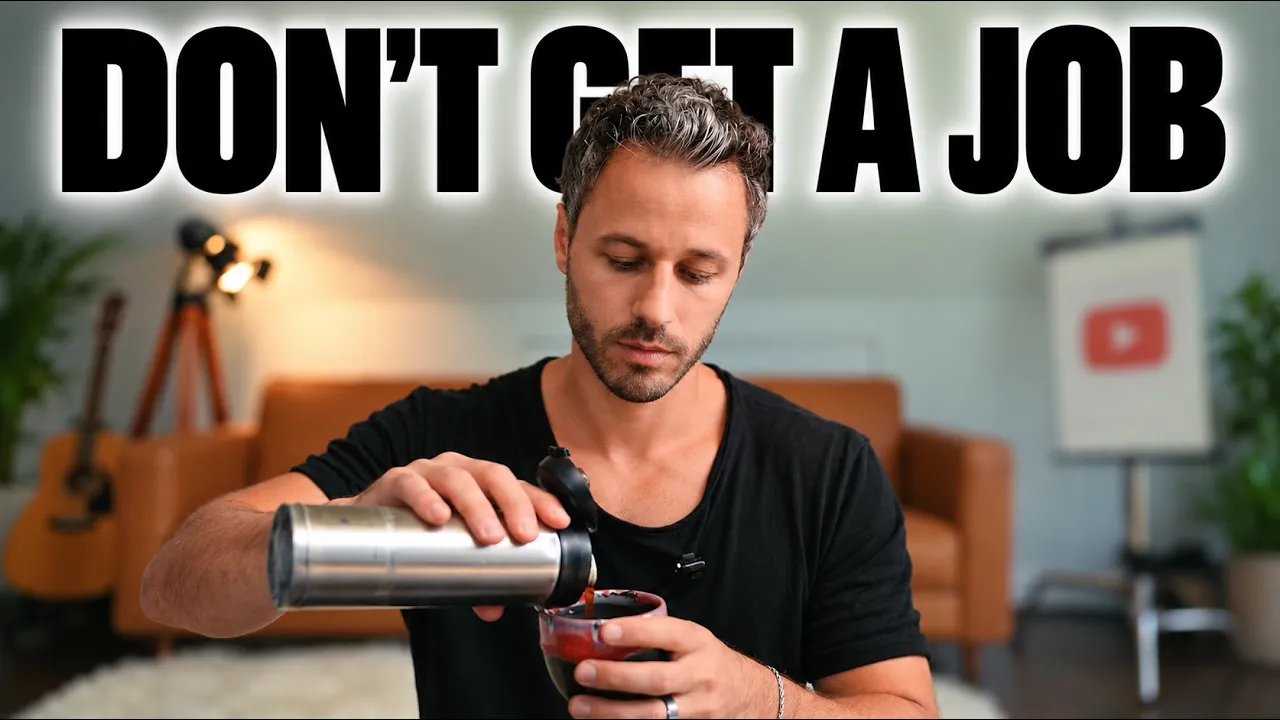
Gabe Bult - The Process · @GabeBultTheProcess
This video has no Most replayed graph yet: YouTube shows one only once a video has enough views. These are the moments viewers replayed most in Gabe Bult - The Process's most watched videos.
Most replayed moment at 9:14
3.0x that video's typical replay level
subscribers. Again, 1300 videos. And these are mostly him just talking, not really doing anything, not much editing, not much B-roll. Anybody could make this video. Literally, anybody could make this video. You can edit this yourself. You can hire out an editor. He's not really editing them. Again, either it is
Said at 9:07
Most replayed moment at 8:54
7.1x that video's typical replay level
will make. So, there's generally a four-step method that will work for this strategy. Number one is strategic YouTube content. And do not post short-form videos. Other creators might tell you to do that, but if your goal is to make money and especially like evergreen income, don't start with that, please. I've seen it
Said at 8:46
Most replayed moment at 6:57
4.0x that video's typical replay level
but averaging 50 to 100,000 views per video. If you see, they're all just screenshots of him talking about something that he knows, something that he does personally, investing in options trading. [music] And he showed me his analytics. He's making 50 to 100,000 per month in AdSense and another minimum
Said at 6:50
The graph counts replays. It does not show where viewers stopped watching.
Words
6,016
Runtime
25:35
Speaking pace
235wpm
Reading time
25min
235 words per minute, above the 201 75th percentile of 349 measured videos. That distribution comes from the 349-video hook study.
Opening (first 30 seconds)
In 1926, Henry Ford did something that made every other factory owner in America think he had lost his mind. He walked into his plant and told his workers, "You're not going to work 6 days a [music] week anymore. You're only going to have to work five for the same pay." Everybody thought he was being generous, but he [music] wasn't. And 100 years later, most people are still living inside the trap that he built, and [music] they're just calling it a safe choice. See, most people never tell you that a job was literally engineered to make sure that survival is all you will ever do. If what you want to do is to thrive,
118 words, the words spoken in the first 30 seconds at 235 words per minute.
Free, no signup. See how the first 30 seconds hold attention, with rewrites.
Sentence shape
| Measure | This transcript |
|---|---|
| Sentences | 444 |
| Average words per sentence | 13.5 |
| Longest sentence | 69 words |
| Questions asked | 27 |
| Sentences containing a number | 73 |
Most used terms
Filler phrases
119 in total: like 70 · actually 24 · literally 12 · you know 5 · right? 4 · kind of 3 · um 1.
A literal whole-word count of the same phrase list the Prepublish browser extension uses, so a phrase inside another word is not counted and a phrase used in its ordinary sense still is. It is a count and not a judgement.
Run the check on the words above: where attention is likely to drop, with a rewrite for each weak line. The free check shows the scores and the one issue costing the most.
What this transcript is
Every word below is the caption track YouTube publishes for this video, pulled from the video itself and reproduced unchanged. It is not Prepublish's writing, not a summary, and not a re-transcription: it is the video's own published captions. English captions, generated automatically by YouTube, in the video’s original language. Source: the video on YouTube. A channel that would rather this page did not exist can ask for its removal through the contact page, and it is removed.
In 1926, Henry Ford did something that made every other factory owner in America think he had lost his mind. He walked into his plant and told his workers, "You're not going to work 6 days a [music] week anymore. You're only going to have to work five for the same pay." Everybody thought he was being generous, but he [music] wasn't. And 100 years later, most people are still living inside the trap that he built, and [music] they're just calling it a safe choice.
See, most people never tell you that a job was literally engineered to make sure that survival is all you will ever do. If what you want to do is to thrive, to have real freedom, to be able to travel, to be home with your kids, to not have to stress about money, to do something that is fulfilling and makes an impact, a job as it stands now is one of the worst tools ever invented to actually live that type of life. Most people don't understand that they are living in this trap.
So I want to break down how they engineered this and how to escape. So this [clears throat] is the part they don't teach you in school. Before 1914, factory work in America was 10 to 16 hours a day, 6 days a [music] week for about $2.34 a day. Now Ford's turnover was so bad in 1913, it hit 380%. So pretty much in order to keep a hundred people a year working for him, he had to hire about 400. So this is like a real problem.
So he actually doubled the wage to $5 a day and he cut the time down that they had to work to 8 hours. And 12 years later he actually cut the work week from [music] 6 days a week down to five. Now this actually sounds pretty nice and in some ways it is. But in an interview he explained why he did that. The more well- paid leisure workmen get, the greater become their wants. These [music] wants soon become needs. And he kept going.
He said, "The industry of the country could not long exist [music] if factories generally went back to 10hour days because the people would not have time to consume the goods they produced. For instance, a workman would have little use for an automobile if he had to be in the shops from dawn till dusk." So he literally explained this multiple times that he paid people more and had them work less so that they would have more free time in order to have a reason to buy a car from themselves.
So it would end up just being the same but better for him. And this is generally the same business decision that we live in today. We are only paid exactly enough in order to stay at this company so that they can keep their turnover lower, end up making more money. So here's the thing I just want to get out of the way. A job will let you survive. That's what it is designed to do. Pay you just more than enough that you won't quit, but no more than that, except for very few people.
It'll let you pay rent. It'll let you eat. It'll let you have a car to afford Netflix. It'll let you make just enough so that if you invest 15 20% of it over the next 40 years, you'll hopefully have enough money to retire, even though statistically pretty much nobody does. But that's the dream that they're going to sell you at least. But if we use our eyeballs and we look at most of our friends and family who've been working for 10, 20, 30, 40 years, most of them are not thriving.
Most of them are just getting by. They stress about money. They stress about their jobs. They look forward to this 2 weeks of vacation per year, for the nights, for the weekends. They're generally just not miserable enough to blow it all up, but not at all happy or fulfilled with how they're spending most of their time throughout the day. This is what JD DeMarco calls the slow lane. It is following the script that allows everybody else to make the most money possible from us.
It allows the business owners who we work for to make the most amount of money. It allows the owners of the companies that produce goods and services to make the most amount of money while keeping a majority of people unsatisfied, unfulfilled, and trapping them in a way where it's just good enough to get by, but there's zero chance that they'll ever have a free life. But slowblane generally goes like this. get a degree, get a job, save 10%, invest it into a 401k, retire at 65 with hopefully enough money to live, and it fails the majority of the time.
And even if this does work perfectly according to plan, you ended up spending tens to hundreds of thousands of dollars to learn something, and then maybe four something years later, you start either paying that off or start earning money. You have pretty much no choice but to spend the daylight hours of the healthiest years of your life, five days a week, working, doing something that is unfulfilling. Most people are unfulfilled with their jobs.
They're not satisfied with their jobs. There's a Gallup study that found that only 20% of workers on planet Earth are actually engaged in their jobs. So like nobody cares about what they're doing. They're not fulfilled. They're not making an impact. And this is again best case scenario. You're living frugally throughout that. You're not living too much. You're not spending much. you're not having too many new experiences or going and doing the traveling that you want to do so that you can invest that money.
So by the time you can't sprint anymore, you're not as healthy, you can reach retirement. The whole end goal of this is to work for a really long time to have a little bit of money at the end so that you can die with a little bit of money. It is a plan for mediocrity dressed up as safety. It's the whole 57 trade. you're pretty much trading Monday through Friday in order to have Saturday and Sunday and then you hate half of Sunday because you're going back to the Monday through Friday trade.
It's literally insane. So, if we go back to that study where only 20% of people are actually engaged at their jobs, actually trying actually enjoying and fulfilled and doing stuff like it is great for those people, but 64% of people in their own words are not engaged. They don't really care. They're just there for the paycheck. That's what I was doing when I was cleaning office buildings, when I was managing, when I was a real estate agent.
I didn't care. I was just there to get by. There was like no purpose to how I was spending most of my life. But those people who are just there, they don't cause problems. They are the perfect worker. Your employer doesn't need you to be fulfilled. They don't need you to be engaged. They need you to be there at like 80% for 40 years. Just being a reliable drone that doesn't cause problems. For most companies, that is pretty much the ideal employee.
Not the one who is on fire, just somebody who reliably shows up. And most people go through their whole lives at like 80%. They don't try that much. They're just kind of in survival, never thriving, never excited, never passionate, never feel like they're making an impact on the world, that they're proud of their work. They just get by living for Friday, living for that two weeks a year and then just doing their best to zone out most of the workday.
This is not the goal. This is not safety. This is absolute worst case scenario. And even that safety, even that survival is not as guaranteed as you would think. In 2025, companies announced 1.15 million layoffs in the first 11 months of the year. We're talking Amazon, UPS, General Motors, Paramount, dozens more. The median employee tenure right now is about 3.9 years. So, pretty much the average person isn't even staying at a job for 4 years.
And I've seen this happen. I know multiple people who have gotten laid off in the past couple months because a company was just downsizing, because, you know, something went wrong with management, because AI took over their jobs, there's nothing they can control. and just bam, their only source of income is gone. Completely outside of their control. They go from 100% to zero. In another study, they found that 1 in three Americans has anxiety about being laid off, which as absolutely well they should.
And nearly a third said that they would take 10 to 20% pay decrease if it would lower their odds of being let go. For being the dream and like doing well in life, this is incredibly depressing. Most people never take the time to actually think about this, but if you think about what job security is actually like, 100% of your income is coming from one source. The source could end the arrangement tomorrow and you have no control.
The moment you stop trading literal parts of your life, hours of your life to this source, you stop getting money 100%. It's all gone. There's a ceiling. Even if you're the absolute best employee, there's a cap to how much money that you can earn. And you're giving up 8 hours a day plus a commute, which for most people is another hour. So again, that's most of the daylight hours for 40 of your healthiest years so that you can enjoy 2 weeks of vacation a year and then pretty much recover and try to like de-stress on the nights and weekends.
This path is not actually safe. It just feels safe cuz everybody around you is on the same path. But if you look at everybody around you, how are they doing? And so I guess now we talk about the problem. So this is where we get into the actual game. Once you see this, your brain will probably change a little bit. You won't be able to look at things the same way. I apologize, but it's what happened to me. At a job, someone else is leveraging.
You are like a product or tool for them. If you think about it how a business actually works, they pay you, let's say, $30,000. Now, the company charges the customer, let's say, $60,000 for the work that you have done. Meaning that your boss, the owner, is going to keep about $30,000. They want to make sure that they double to triple the money that they pay you. And this isn't like evil. That's just how business is. They're the one taking the risk.
They deserve that upside. and you are taking no risk besides having a huge risk and having a job or whatever and you deserve no upside. They are the one building an asset and you kind of are an asset for that person. And the hard part is about this there's a ceiling. You can only work like 168 hours, right? Like your body is capped at 168 hours in a week and you need to sleep. So even if you're doing double shifts, you're eventually going to cap out if you're trading time for money.
And if you want more money, you have to try to get promoted. But even then, you're still going to have to do that trade just for a slightly more. Now, there's always going to be a cap on how much you get paid. And some skills are more valuable, but for a majority of Americans, the cap is not at a level where you can actually make significant impact in your life. You can actually build a lot of freedom quickly. The cap is very low because the person on top still has to make double triple the money on you.
But the thing is, you can flip this. When you are actually the owner, you're the entrepreneur, you're starting the business, the math just flips. You build something once, it goes and gets customers. It does the work. And your income is no longer tied to 168 hours. It can go far beyond that. It can be far below that, but it's no longer tied to you trading your time. And the cool thing is some of these assets can pay you whether you show up or not.
I'll go into some specifics later on. Now, DeMarco puts this even better. He calls it going from a consumer to a producer. Consumers, they rent apartments. They pay for all the subscriptions. They're the ones going out to eat, door dashing, all of that. Where the producers, they own the property, they own the product. They are creating and selling the service. The whole economy is literally set up to reward producers to like an extreme level.
And only a certain amount of people are willing to make the shift over there and everybody else is pretty much their job. The design of this is to make those people rich at the cost of all the consumers. And a job is generally putting you in that consumer side where you are an asset of somebody else. And it is your job to make them rich. Like another way to think about this is whatever your skill is, whatever your job is right now, you are renting that skill that you possess to somebody else.
They rent it. They use it. Let's say like, "Hey, I'll give you $100 today if I can rent your skill because I know that I can make $200. I can make $500. I can make $1,000 off of renting your skill." And that's what they're doing to you. They're renting your life. And if you compare that to taking that same skill that you have and you repackage it, you own it. you create something underneath it. For me, it was a YouTube channel.
For other people, it might be a book, a service [music] business, a product, doesn't really matter what the vehicle is, but when you own that thing, that same knowledge, that same energy and skill can be turned into something that can pay you beyond your time trade. And sometimes it can pay you indefinitely. Like, I made a review video of a sauna like over two years ago now. Might have been three years, I don't know.
And I still make about $200 a month from that video. And I literally did two hours of work at the beginning and I've made over $10,000 for that two hours just spread out over a couple years. It would have taken me three months of trading life for that at my day job. It's like literally impossible to do that. And you don't even have to have amazing skills in order to do this. I literally dropped out of high school as a homeschooler.
Like how is that even possible? I'm not the brightest. I don't know. But I did not go to college, obviously. I literally Googled top paying jobs that you don't need a degree for and tried to be a real estate agent. that failed horribly. I tried all the different skills that I had. I tried to be a fitness coach. I starting a stamped concrete business. I tried bunch of different things until I found one that I was naturally good at that had a lot of scalability.
For me, that was YouTube. And I was able to take 3 years of earning zero dollars, which most people are unwilling to do while working full-time. But I was working on building this business of [music] YouTube for 3 years before I ever ran a profit. And now it is built into something that has changed my family's life, created multiple jobs, makes an actual impact on people, has let my wife leave her job, and neither of us will ever have to worry about going and trading our lives to somebody for a little bit of money ever again.
And that's because I built something that I own. And all of this works because it stacks, right? You take your knowledge, your skill, and you just keep building bricks on this thing that is eventually paying you slightly more, slightly more, slightly more as you put these bricks in. So your reward is not directly tied to your time, [music] not directly tied to your inputs, and it'll grow and grow as you're using leverage of other people, of the internet, of more knowledge that you learn, something that is impossible with the job.
Like some people would say that that's lucky. But I don't know a single person who's gotten lucky, who didn't have years [music] of sacrifice, of failing, of trying things, of learning skills. And most of the people who say, "Oh, you just got lucky." They've never tried anything. They've never taken a shot. And therefore, they have zero chance whatsoever of getting lucky. By the way, I know I'm getting passionate here, but I really care about this stuff.
If you're enjoying getting any value out of this whatsoever, feel free to drop a like and subscribe. I don't have this video sponsored, so that like helps the video do slightly better. Um, so I really appreciate everybody who interacts with this video. Go back into it. So, I want to do the math out loud here because most people never actually run this. Now, obviously, this number is going to be different for everybody depending on the state you're in, the country you're in, if you have a family or you're single, whatever.
But, let's say you want a good life. Not private jets, but you want a pretty good life. For most people with a family, maybe that's $10,000 a month. That would be pretty good. Right now, a good job in the US is going to pay you like $80,000. That would be definitely above the median. But after tax, you take home maybe $62,000. But if you need 120,000, you're already 58k short, even with above average paying job. So to close that gap, you're either going to have to have both partners work, which for some people that's what they want to do.
For us, my wife wanted to be home with our kids, so that was never an option for me. So, you're either going to have to do that where now both of you make this trade, or you have to grind and work double or something like that, trade twice as much of your life away, and you wanted to have $10,000 a month come from investments or something like that, you would need roughly, let's say, $3 million. And so, let's say you made $120,000 and you saved 20% of that a year.
You're looking at 25 to 30 years in order to save that up. That's assuming there's no kids or emergencies or anything like that going on throughout the the process. you don't upscale your life at all, you're grinding like crazy, you have a good paying job. That's best case scenario. It's 25 to 30 years, which for me is just I'm just going to ignore that as a possibility. I think that's [music] close to insane. Now, with the Fed's own data here, only about one in 30 people actually have a million when they retire.
And a million is not nearly enough to live off of. Really short of that 3 million mark. Like, if you're playing the conventional path, it's going to work out for one person out of the 30 that I know. And those odds are very scary. But that's the safe path. But some people are okay with this. And if that's you, that's totally fine. But I want to go to whatever he thinks is the risky path, but what I think is the only way to have a life that you don't want an escape from, to look forward to Mondays, to be able to travel as much as you want, not have to worry about the price tags when going out to dinner.
It's impossible the conventional way statistically for 90 something% of people. But let's look at this. You keep your job. You use it as a safety net while you build. This is exactly what I did. On the nights, the weekends, [music] you start building something that you actually own. It doesn't have to be YouTube. That's what ended up working for me. But this could be so many things. Ideally, you want it to be something that is related to the internet so that you can do it, especially if you want location freedom.
I know a lot of people like traveling. I love being able to travel for a month at a time and I can just take my work with me, do it an hour a day, whatever. And if you do something that's brick and mortar, sometimes it can be harder. It depends. This could be a service business. This could be a newsletter, a YouTube channel, a book, some type of software, whatever ends up fitting your skill. And year one, you're probably going to make nothing.
Year two, you still might make next to nothing. [music] And somewhere around the three-month part that that most people quit. And definitely around year one, a lot of people quit. Nobody really makes it to year two. But this is the path that I've seen with almost every single person that I've seen leave their job. I know multiple people left their job in the past year to do YouTube specifically cuz that's the world that I'm in for making zero dollars to well over a full-time income.
And not one of them had success within the first year or two. Everybody took a couple years of grinding of learning these valuable skills before they saw success. And so that's the the trade you have to be willing to make. But then on year three, let's say you start making $1,000 a month. This is again close to what happened to me. Year four, maybe you're at 4K a month. Year five, you're at 10K plus a month. This is not a fairy tale.
This is actual reality. Like just as an example, one of my friends and students, Natasha, she went from literally zero dollars a month while working a full-time job with YouTube. Took her a couple years and now she averages $15,000 a month in affiliate revenue from her [music] small YouTube channel. And another student, Renee, just got her first $12,000 a month after making very little for the first couple years. And it's just because they made it to that point that most people quit and they just continued past [music] it.
And the cool thing is this continues to scale past this. This 10K can go to 20, can go to 50, can go to 100. And I know that that sounds fake, but that same thing is not going to happen for everybody. It take depends on the skill, depends on your own work that you put into it, the section that [music] you choose, whatever. But this is taking five years for a chance of of getting to that freedom instead of taking 40 years for almost no chance of that freedom.
And I know and all these do revolve around starting a business, right? In order to continue to make money, I still have to work. But the cool thing is I get to do what I enjoy doing. I get to work for a couple hours a day doing something that I feel like makes an impact and makes a decent amount of money and I can outsource the things I don't enjoy doing by being on the other side of that leverage. Even like my Facebook affiliate funnel that I started last year.
It now makes between 10 and $20,000 a month and I spend about an hour a month managing that. I have somebody else who does the work for me. It was my sister. She was actually able to leave her job. She makes more now doing that than she did like actually working. And I'm able to make this mythical full-time income through something that I spent like 4 months building and now it just runs and I literally don't do anything.
But that is something that's possible when you're on this side of the leverage versus the other side. Now, if you don't believe some of this stuff, it's because you don't see it in the news. What you see in the news is somebody saying that like, "Hey, I was frugal and at 38 I retired with $1.2 million or $2 million or something like that." That's a news story. That's something you can build a career on cuz it never ever ever happens.
What you don't see news stories on are the like five or six friends that I have that make six figures a month. You there is not one news story about any of them. Nobody's ever going to know about that. They make over a million dollars a year and nobody cares. Nobody knows because it is normal when you own a business. It is not newsworthy. What is newsworthy is somebody slaving away at a job that they hate with a dual income, no kids, and then saving all their money by hardly living so that they can retire.
And then they generally end up starting a business cuz they realize that that was a stupid way to do it. Almost every single one of them is going to make some type of asset, write a book, something like that, because otherwise they're going to be bored and depressed. So, like anyways, by the way, I'm breaking down exactly how I make money from YouTube and like a free workshop that I'm doing coming up, including how I made pretty much a full-time income with that channel that has 1,200 subscribers, how to like kind of find a profitable niche and start making money and whatever.
So, if you're interested, there's a link down below. It's totally free. A lot of people have told me that it's better than, you know, like whole courses that they paid for it. So, feel free to check that out. I'm personally a big believer in YouTube just cuz like I talked about I know so many people who've quit their jobs just cuz I I live in this world but through YouTube specifically and YouTube affiliate marketing even more particularly that's like the only skill that that I have but it's totally possible in so many other ways as long as you're on this side of the leverage.
So let's talk about what owning something that can get you this type of freedom actually means. Obviously for me it was YouTube channel but let's say you don't want to do that which is probably a lot of people. There's this framework that I really like by JD Marco called sense. It starts with control. Do you own the thing or are you renting the platform? Like Amazon can shut down your storefront tomorrow. If you have all of your income from one client, it can get shut down.
This is again one of the reasons why I have four separate channels that I make money from. And each one of those channels has multiple ways that it makes money cuz like it really diversifies. Do you own the contacts? Do you own the customers? Do you own the land, the email list, your own audience, your own product? Do you have control? Next up is entry. How hard is it to get into the space that you're trying to get into?
If literally anybody can start it tomorrow because it's wicked easy and it's like a good way to make money, the market's probably going to be flooded and it's going to be really hard for you to rise to the top. So, you actually want to look for something that's pretty hard to get into. It's pretty hard skill to learn because there's going to be way less competition than everybody who just tries the next easy thing. And then there's need.
Are you solving a real need, a real problem that actual people have and are willing to pay you for in order to fix their need or their problem? And then time. Can this pay you while you are not physically working on it? Is it detached from your hours? If you have a consulting business and you have to go consult for an hour in order to get paid, it's not detached. If you have a course, a product, an ad supported YouTube library, an app, a rental, those can all be detached.
And then scale. Can this reach 10 people? Can it reach a,000? Can it reach 10 million? If your business tops out at 10 clients, there's a ceiling to how much you can earn. If your business scales without your body, if it's content, products, software, the ceiling just disappears. [music] There's almost no limit to how much you can make. Now, you don't need absolutely every single one of those in order to make a good business, but those generally are the ground rules.
And I hear a lot of reasons why people are worried about starting something, about shooting for that life that they don't want to escape from, from taking that risk supposedly. I hear everything from yes, I have kids. Like that's the main reason why I started this so I could have unlimited free time with my kids. I can have breakfast, lunch, and dinner with them. I can see them as much as I want to. I don't have time.
I would argue that if you look at your phone screen time, I would pretty much guarantee that you have time to start a business. I run mine in roughly an hour a day. You probably spend more than that on Instagram or something. Don't lie to yourself. I did it for years. You don't know what to build? Who cares? Build something, learn from it, move on to the next thing. I had to try like a dozen things before I landed on something.
I don't really know anybody who had just had amazing success the first time. You have to like start and try and not think about it and then never start. Start. You hear this? But what if I fail? You're going to fail. It happens. This is that whole getting lucky thing. You're going to fail a bunch of times before something sticks. Then of course there's going to be the people in the comments saying, "Yes, but I like my job." It's like you're part of that maybe 20% who is actually engaged and likes their jobs.
And if that's you, that is absolutely awesome. You could still get fired whenever. Like it's still pretty risky. At least consider having another skill that can be diversified. And there's probably five to 10 percent of people who just have an incredibly valuable skill that the market pays crazy amounts to. That's awesome. I still don't want to show up to work eight hours a day and have no choice when I take my vacations and sick days and just not work for a week if I don't want to.
Like, I still want to be able to wake up at 10:00 on a Tuesday. Actually, that's not a possibility right now cuz I have three kids, four and under. So, it's like madness right now. But regardless, it's because of my kids. It's not because some boss is telling me that I can't take Tuesday off and like telling me when I can eat my lunch. Like, how crazy is that? What it really comes down to is excellence. If you're average at anything, you're average at your job, you're average at starting some type of business that gives an average product that with average results, you're probably not going to make any money.
Your business will fail. What gets rewarded in every area of life is excellence. If you make the best product, people will buy it. If you offer the best service, it's not going to be hard to sell. If you are the best employee, you'll probably get promoted, right? But most people settle for me. They give me effort. They have a meh job. They have okay house and okay car. And I'm not saying like your house and your car matter, but like everything that in life it's just like me, it's a good enough.
My effort's good enough. I I went to the gym. I showed up. I didn't really push myself. But yeah, I expect my arms to grow. Even though, you know, I'm just stopping at 10. Even though I could do 15. You know, when you go and you just do average, you will get no results. You will literally waste your time. Your business will fail. It is going to happen. And so, if I could encourage you something, it would be try to be the best at whatever you're doing.
And that gives yourself the greatest odds for success. I'm trying to be the best YouTuber in my space. I'm trying to make the best content that I physically can make. And sometimes it misses, sometimes it fails, sometimes people hate on me in the comments, but sometimes it changes lives. Sometimes it helps people. Sometimes it motivates people. Sometimes it makes money. Like this video doesn't have a sponsor, so I'm not really going to make any money on this one.
But I I am so passionate about this. I'm so passionate about taking extreme ownership of building a life that you don't want to escape from. Of YouTube in particular. I love YouTube. I teach YouTube, but I have a whole channel about how to grow on YouTube. I think about the videos and it's just because this is what I feel like I was made for. This is my passion. This is what I think about when I'm in the shower. I'm like, "How can I make something cool?
How can I help people? How can I build this thing that's in my brain and put it onto a screen?" Like, this is my thing. Everybody has their own thing, but this is what I love. And if you're ever thought about starting a YouTube channel, again, I think it's a great way to make money personally, just because I've done it in so many different ways and channels and seen so many other people do it. Like I said, I'm going to teach how I do it live.
You can totally join. It's down below. But regardless, don't settle for survival. Don't continue to hate Mondays for the rest of your life and never take a shot. Find something that is challenging. It's hard. It's exciting. And have something to work towards. Have something that you're building. Have your own muse that you can work on, you know? I don't know. If you enjoyed this, feel free to drop a like and subscribe.
And I'll see you next week.
The words are the caption track's own and nothing is reworded or re-transcribed. Paragraph breaks are placed between sentences so the text reads as prose.
Free tools for your own script: paste a draft and see where it stands before you record it.
Paste your draft and see where viewers are likely to drop off, with a rewrite for each weak line.
Paste the first 30 seconds of your own draft for a hook score and rewrites.
Check your draft against YouTube's advertiser-friendly guidelines before you record it.
Read this channel's public videos and transcripts, and download a writing brief for it.