Getting the transcript
Reading the captions from YouTube. A video nobody has opened here before takes 10 to 30 seconds; this page fills in on its own.
Getting the transcript
Reading the captions from YouTube. A video nobody has opened here before takes 10 to 30 seconds; this page fills in on its own.
Gabe Bult - The Process · @GabeBultTheProcess
This video has no Most replayed graph yet: YouTube shows one only once a video has enough views. These are the moments viewers replayed most in Gabe Bult - The Process's most watched videos.
Most replayed moment at 9:14
3.0x that video's typical replay level
subscribers. Again, 1300 videos. And these are mostly him just talking, not really doing anything, not much editing, not much B-roll. Anybody could make this video. Literally, anybody could make this video. You can edit this yourself. You can hire out an editor. He's not really editing them. Again, either it is
Said at 9:07
Most replayed moment at 8:54
7.1x that video's typical replay level
will make. So, there's generally a four-step method that will work for this strategy. Number one is strategic YouTube content. And do not post short-form videos. Other creators might tell you to do that, but if your goal is to make money and especially like evergreen income, don't start with that, please. I've seen it
Said at 8:46
Most replayed moment at 6:57
4.0x that video's typical replay level
but averaging 50 to 100,000 views per video. If you see, they're all just screenshots of him talking about something that he knows, something that he does personally, investing in options trading. [music] And he showed me his analytics. He's making 50 to 100,000 per month in AdSense and another minimum
Said at 6:50
The graph counts replays. It does not show where viewers stopped watching.
Words
2,789
Runtime
10:51
Speaking pace
257wpm
Reading time
12min
257 words per minute, above the 201 75th percentile of 349 measured videos. That distribution comes from the 349-video hook study.
Opening (first 30 seconds)
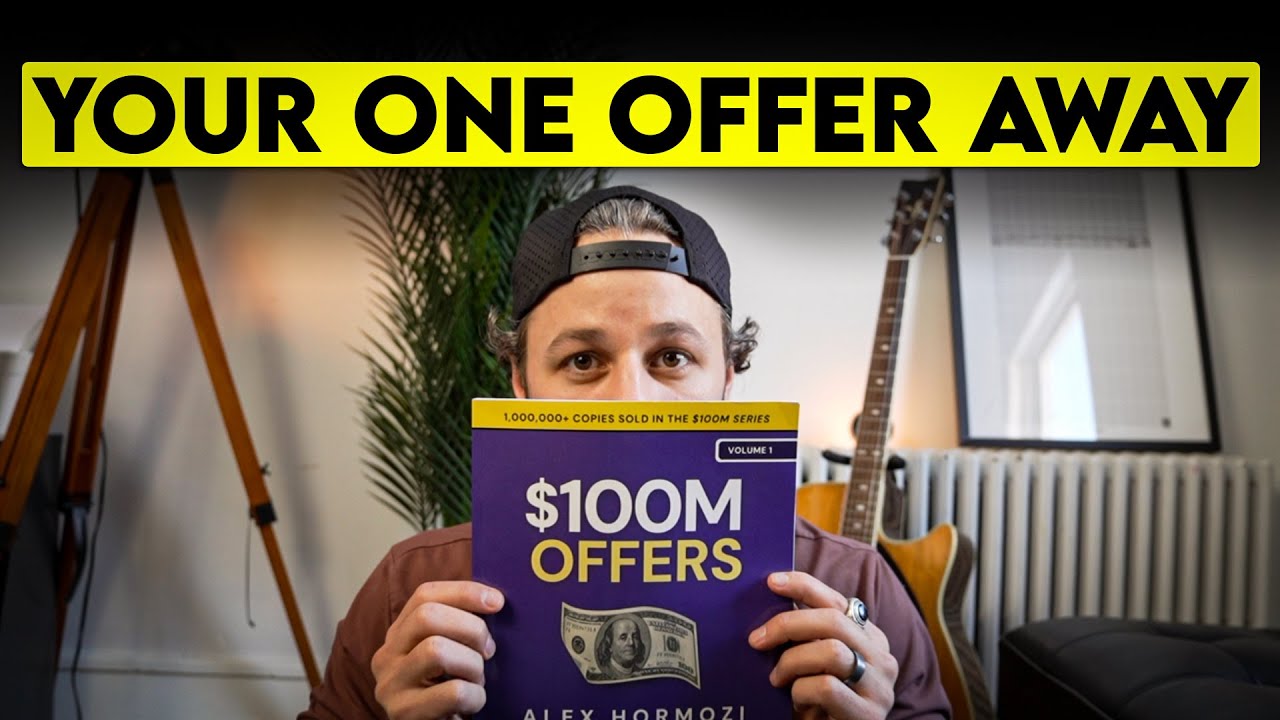
These are some lessons from a $100 million offer that made me over $100,000 last year and hopefully can do the same for you. To start off with, come up with a high value offer. Also, I apologize for my voice. Now, a high-v value offer isn't just about having a bunch of stuff in it. It's actually a little bit more psychological. This means that the customer believes that it will fulfill their deepest desires and needs with minimal effort on their part. If you can find out what people are struggling with and then find a quick and easy solution to get past that, people will just throw money at you. It's going to be something that is repeated over and over in this book. Make an
129 words, the words spoken in the first 30 seconds at 257 words per minute.
Free, no signup. See how the first 30 seconds hold attention, with rewrites.
Sentence shape
| Measure | This transcript |
|---|---|
| Sentences | 166 |
| Average words per sentence | 16.8 |
| Longest sentence | 70 words |
| Questions asked | 5 |
| Sentences containing a number | 31 |
Most used terms
Filler phrases
63 in total: like 36 · actually 16 · kind of 8 · you know 2 · literally 1.
A literal whole-word count of the same phrase list the Prepublish browser extension uses, so a phrase inside another word is not counted and a phrase used in its ordinary sense still is. It is a count and not a judgement.
Run the check on the words above: where attention is likely to drop, with a rewrite for each weak line. The free check shows the scores and the one issue costing the most.
What this transcript is
Every word below is the caption track YouTube publishes for this video, pulled from the video itself and reproduced unchanged. It is not Prepublish's writing, not a summary, and not a re-transcription: it is the video's own published captions. English captions, generated automatically by YouTube, in the video’s original language. Source: the video on YouTube. A channel that would rather this page did not exist can ask for its removal through the contact page, and it is removed.
These are some lessons from a $100 million offer that made me over $100,000 last year and hopefully can do the same for you. To start off with, come up with a high value offer. Also, I apologize for my voice. Now, a high-v value offer isn't just about having a bunch of stuff in it. It's actually a little bit more psychological. This means that the customer believes that it will fulfill their deepest desires and needs with minimal effort on their part.
If you can find out what people are struggling with and then find a quick and easy solution to get past that, people will just throw money at you. It's going to be something that is repeated over and over in this book. Make an offer so good that people would feel stupid if they say no. If you can actually make something like that, money will not be a problem. So, your offer should appeal to a deep desire. It should provide a quick path to positive results.
It should minimize the effort that is needed by them by having some extensive training and exactly this road map that they can follow. And then it should also highlight short-term wins. So there should be things that you set up immediately. So as soon as they get in there, they get this little win and they start building momentum. So how do we build this? Step one is to identify your customers deep desire. Now I think it's also important to find something that you yourself are passionate about.
For instance, even if I thought there was this great opportunity, I would never make a product on quilting because I could never talk about it enough, I could never be excited about it enough that I could sell it. So, if you're not genuinely passionate about it and would buy it yourself and think it's a great deal, it's going to be a lot harder to sell it. You're going to put a bunch of work up front into building this thing and then you're not going to be just thrilled and over the moon and telling everybody you know about it.
So, once you find this desire, this problem that a lot of people have that will make a big impact in their lives, you have to identify potential roadblocks. That's step two. Make a extensive list of all the different roadblocks that people could have when they're starting this thing. So let's say you're making a program about entrepreneurship. It's important to kind of look at all the problems you expect people to have.
For instance, when I was using this last year when I was building my program on how to grow on YouTube, I was looking at all the problems that people have. They don't have enough time to run a YouTube channel. I know this was a problem because I used to work two jobs and try to run a YouTube channel. They don't know what to do. They don't know what their niche are. They don't know how to make videos. They don't know how to edit quickly. they don't know how to write scripts.
There's so many different roadblocks that can come up and a lot of people just never get started. And so you want to take all of those roadblocks into step three, this extensive list that you make of the problems that your clients are going to have and you turn those into solutions. This way you are tailoring a product that is actually going to solve real problems that real people have. And if you can actually solve big meaningful problems for people, that's where you can make a lot of money.
Whether that problem is I don't know how to make money. Well, here's a road map on how to make money in not a lot of time that is proven and will get you small wins along the way. It's very easy to sell that. Above all, this just kind of keeps coming back to you need to make a really, really good product. The next step is to adjust over time. This is why for a lot of people, what I recommend is starting off with a cohort-based model.
This is where you are getting a group of people in and you are teaching them one-on-one or as a group and you're really getting in there and seeing more problems that these people are having and really nailing things down. And if you start that way, eventually you can make this amazing product cuz you've had so much like personal interaction with people that you can keep iterating, making new ones, new ones, new ones, and eventually you get to this place where you can have this perfect product and you can either have somebody else teach it or just record it and have it be something that's more evergreen.
And that should be the end goal that you make this product that maybe you have to put a lot of time and effort into for the first couple years, but eventually you kind of want a 4-hour work week, this bad boy, and make it so that you're not constantly going to be needed for this to continue. So eventually, you want to move to the stage where you can hire it out and it takes less and less of your time, but it makes more and more money cuz you've built this system and this amazing product.
Now, it comes to setting the price. And this is where honestly I struggled with and I realized was a lot of like self-doubt and stuff like that. And I charged way too little at the beginning. And I actually had a bunch of people who went through my thing where were like, "Man, you should charge more for this." And I was like, "Yeah." But that's a good problem to have because one of the lessons is to just again make that offer that people feel stupid to say no to.
So if you're selling something for $1,000, you should look at what would somebody pay $5,000 or $10,000 in order to get. Build that thing and then charge $1,000 for it. Don't charge $100 for it. You want to charge something that feels high yet fair that you would willingly pay $5,000 for because you will get $5,000 worth of results for and then charge $1,000 for. And if you can actually do that, it would be stupid for somebody to say no.
It's like it doesn't make any sense. Like people should pay 5 grand for this. If you can do that, that's what it really comes down to. So, while a lot of this does seem like get-rich quickie stuff, it really comes back to like if you don't have an amazing product, it's not going to work. This is also where you want to kind of blue ocean this, which is this idea that you don't want to have direct competitors. So like everybody under the sun has you know courses on different things and you want to find something that's your unique thing.
We do the same thing but it's a completely different approach. So you don't really have direct competitors cuz if it's like we do the exact same thing those people do. Well like okay well they're paying,000 for that one and yours is 1,200. Well I'm just going to pick the $1,000 one. And if it's like a direct comparison people are going to compare. So you want to find something that's like we don't do what they do. We do something completely different.
And that's why it's actually a steal to pay twice as much because we're not competitors with them. we do something so different and unique. And so you don't want to just copy what other people are doing. You want to find your own competitive niche for this. And so to do that, you kind of want to brainstorm some extreme things. When I was coming up with mine, I stole some ideas from people. But I made it different. So like the 4-hour work week completely changed my life.
Was one of the things that let me leave my job, do everything that I do now. And I got the idea of like, okay, what if I can run a YouTube channel in 5 hours a week? Looking at my life, it was kind of what I do right now. If I post one long form YouTube video a week, takes me 5 hours a week. Even if I edit it myself, write it myself, do everything myself, that's totally possible. Nobody else was selling anything like that.
They're all teaching you how to do YouTube, how to grow, how to monetize, how to do all this stuff. But nobody's teaching you, you work a full-time job, you dedicate 1 hour a day, 5 days a week, you can have a YouTube channel with half a million subscribers that does well. Or in my case, you can have time to run three YouTube channels and still only work a couple hours a day. You want to find something that is extreme so you're not competing with everybody, but you're setting yourself apart to be different as long as you can actually deliver on that.
This is also where you can move markets. And this is something that is super super interesting. If you're selling a product to an individual who's just getting started, maybe you can charge a,000, maybe you can charge a few thousand maybe. But if you're selling this to a business owner, well, now you can pay 5,000, 10,000, 20,000 because it's much more valuable. The same information much more valuable. So this is where you also want to target who you're going for.
When I do consulting for businesses, it starts at $1,000 an hour. That's what most YouTubers charge to consult for businesses. No individual person is going to pay me $1,000 an hour for my time, but a business, it's a no-brainer for them to. I was reading this book, Diary of a CEO, and he got paid $8 million for six months worth of consulting because for that business, it was worth it for them if they can add like $100 million in valuation to their company for that 8 million.
It's a no-brainer. So, who you target with your product can also let you charge a lot more. If you're targeting beginners, it's only so much you can charge. If you're targeting people so that they can make money, you can charge a lot more. If you're targeting businesses, you can charge a lot more. is just who you target really matters and that changes your strategy, that changes your message, it changes everything about it.
So, that's really important. Leverage some psychological tools so that it's hard to say no to your offer. Honestly, this generally comes down to scarcity in a couple different ways. So, that's either going to be like, "We only have 50 spots, so if you want to get in, we're only allowing 50 people into the next launch of the course." Or you have, "We're only opening for the next 7 days after that. We're not opening again for 3 months.
So, if you want to get in, get in now." And those two things actually make it a lot better for your customer and they make it a lot better for you because you're not constantly trying to undercut yourself. Oh, we're doing 30% off. Now we're doing 40% off. We're just cutting down and down and down. We're saying like, no, this is open for the next 7 days. We're not cutting the price. If you want to get in, that's fine.
If you don't want to get in, that's totally okay. And the people that get in will feel like I got in. That's great. And the people that don't will feel like, ah man, I wasn't able to get in this time. I'm going to jump on the opportunity next time. I'm going to get in there immediately. And that is a way of selling your product without constantly trying to undercut yourself. And the people who do get in before the doors close or are one of the 50 people who get in are going to be more likely to participate because they realize that there was a limited opportunity.
I actually invested a decent amount of money and I was one of the people who actually got in here. I better commit myself and they're actually more likely to make progress. Like if you get a free app in order to go to the gym or something, maybe you use it for a little bit, maybe you don't. If you spend $100 on the app, you're like, I'm using this stinking thing every single day. I spent a h 100red bucks on this. I'm using this stupid app.
Much more likely to keep going to the gym. Much more likely to keep up on your exercise. So actually charging a decent amount of money and having some type of scarcity is actually helpful for the consumer because they're more likely to follow through on the thing that they want to fix. Another way to add perceived value to your offer is by offering bonuses. You get the initial course, you get access to the cohort, you get the community, that's all the offer, but then on top of that, we're doing an hour long.
On top of that, you get bonuses. And just now, if you order it, you get a set of steak knives. We've all seen that. And that's like if they just told us the steak knives were were part of it, we were like whatever. like, no, they're throwing in two sets of steak knives and a steak knife holder, are you act they're going to lose money on this? I I just I I have to buy it. But if it was a set of six steak knives instead of a set of two, you wouldn't think the same way.
So, that psychology has always worked. Make it work for you. Another thing to do is to guarantee it. And honestly, this is one of my favorite points that was in this book because I feel like as the person creating this offer, you should guarantee your product because you should have some skin in the game. Like if you buy something from me and it sucks, I should have some skin in the game saying that like, well, it sucked, so I'm going to give that money back.
I'm going to lose out on something. But if I don't have that guarantee, I have no incentive to make my product really, really good. So that's why he recommends, and I love some type of like 30-day, no questions asked guarantee or like 30-day, as long as you actually do the stuff that we mention, guarantee that you can get your money back because that incentivizes you to make it the best stinking thing possible and to see results right away. is when you're making your offer, what can you promise somebody will happen in 30 days if they just follow along?
And can you make the product that good that even with a guarantee nobody's going to return it because the value is that good? Literally, the entire book can be summed up in just making an offer that people feel stupid to say no to. Start with the offer, make a sales page, make out what the offer will be, and then reverse engineer that. Instead of starting with like the curriculum, start with what the offer is and then and build a landing page that is absolutely amazing that anybody would buy and then build that product.
If you're looking for some more ways to monetize your YouTube channel, your personal brand, you can get 20 free ways to do it. Down below, you get my free 20 tips to monetize faster. By the way, if you're enjoying this, you want more books like this, you can check out Short Form. There's a link down below. I've actually read this twice and I read the summary for it on Short Form before doing this to kind of give me a little bit of a refresher for this video.
So if you like this kind of stuff but you don't want to read the entire book, short form is really cool.
The words are the caption track's own and nothing is reworded or re-transcribed. Paragraph breaks are placed between sentences so the text reads as prose.
Free tools for your own script: paste a draft and see where it stands before you record it.
Paste your draft and see where viewers are likely to drop off, with a rewrite for each weak line.
Paste the first 30 seconds of your own draft for a hook score and rewrites.
Check your draft against YouTube's advertiser-friendly guidelines before you record it.
Read this channel's public videos and transcripts, and download a writing brief for it.