Getting the transcript
Reading the captions from YouTube. A video nobody has opened here before takes 10 to 30 seconds; this page fills in on its own.
Getting the transcript
Reading the captions from YouTube. A video nobody has opened here before takes 10 to 30 seconds; this page fills in on its own.
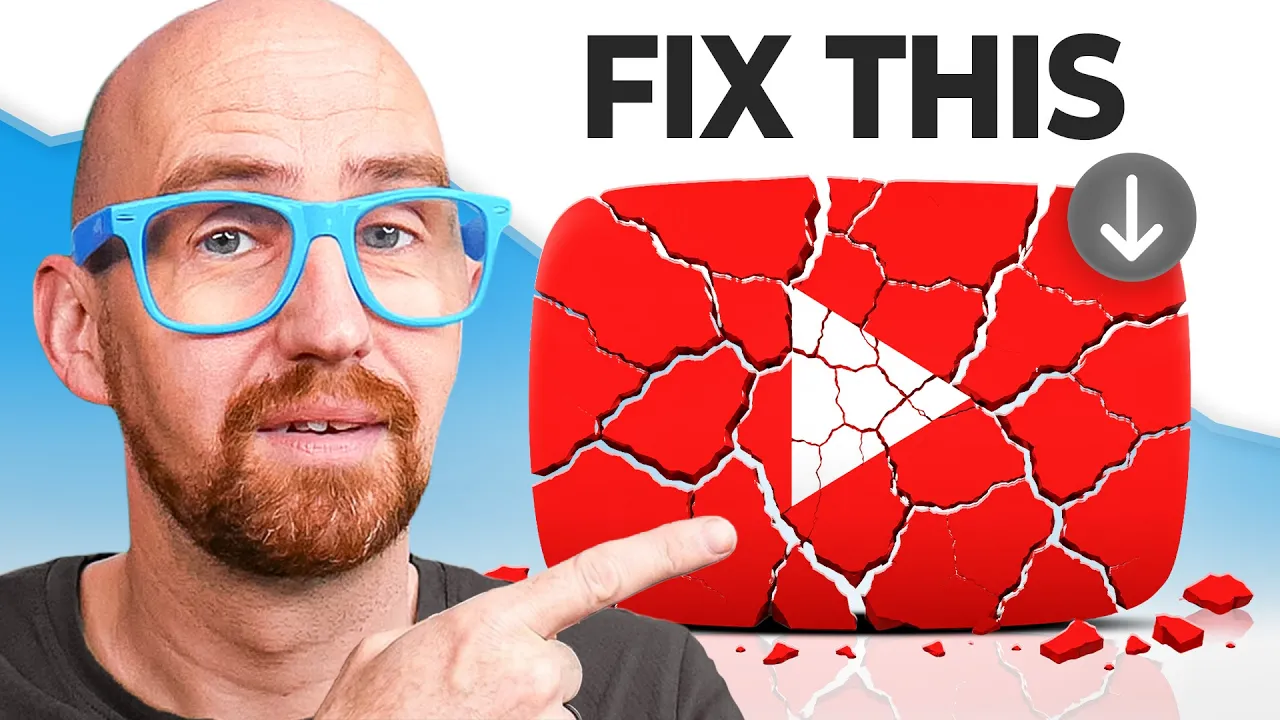
vidIQ · @vidIQ
This video has no Most replayed graph yet: YouTube shows one only once a video has enough views. These are the moments viewers replayed most in vidIQ's most watched videos.
Most replayed moment at 23:09
3.7x that video's typical replay level
opens up a web app tool from VidIQ all about the search terms related to your channel where there are opportunities. This is high search terms on YouTube with low video supply and that means that you can create content that fills
Said at 23:01
Most replayed moment at 10:24
6.4x that video's typical replay level
niche rates your paycheck, not your view count. A 100,000 finance video can actually out earn a 2 million view fact video. So, pick a niche that pays and build something of your own, a product, a list, a brand, all before you need it. And speaking of monetization, rather
Said at 10:16
Most replayed moment at 7:19
5.7x that video's typical replay level
tried a whole bunch of different things, meditation, uh gone to the doctor, medications, uh all sorts of things, and nothing really works. And so, I was on YouTube watching some physics lectures, and I was learning so much, and I was loving it, but I noticed that I kept falling
Said at 7:12
The graph counts replays. It does not show where viewers stopped watching.
Words
2,237
Runtime
11:54
Speaking pace
188wpm
Reading time
9min
188 words per minute, between the 181 median and the 201 75th percentile of 349 measured videos. That distribution comes from the 349-video hook study.
Opening (first 30 seconds)
So the video you just published to YouTube could be brilliant, but the one thing that will always break its chances of success are the promises you make to the viewer that you fail to keep. So if your title and your thumbnail and the first few seconds of your video aren't making these same promises, nor are they delivering on them, you've got a mismatch in your video packaging. It is a bit like wearing a clown suit to a funeral. Still haven't lived that one down. So if your packaging isn't capturing
94 words, the words spoken in the first 30 seconds at 188 words per minute.
Free, no signup. See how the first 30 seconds hold attention, with rewrites.
Sentence shape
| Measure | This transcript |
|---|---|
| Sentences | 137 |
| Average words per sentence | 16.3 |
| Longest sentence | 53 words |
| Questions asked | 10 |
| Sentences containing a number | 13 |
Most used terms
Filler phrases
14 in total: like 7 · actually 4 · I mean 1 · sort of 1 · uh 1.
A literal whole-word count of the same phrase list the Prepublish browser extension uses, so a phrase inside another word is not counted and a phrase used in its ordinary sense still is. It is a count and not a judgement.
Free, no account. See where attention is likely to drop, with a rewrite for each weak line. The free check shows the scores and the one issue costing the most. Or run it on the words above first.
Free · No login · See a sample audit first if you prefer.
What this transcript is
Every word below is the caption track YouTube publishes for this video, pulled from the video itself and reproduced unchanged. It is not Prepublish's writing, not a summary, and not a re-transcription: it is the video's own published captions. English captions, generated automatically by YouTube, in the video’s original language. Source: the video on YouTube. A channel that would rather this page did not exist can ask for its removal through the contact page, and it is removed.
So the video you just published to YouTube could be brilliant, but the one thing that will always break its chances of success are the promises you make to the viewer that you fail to keep. So if your title and your thumbnail and the first few seconds of your video aren't making these same promises, nor are they delivering on them, you've got a mismatch in your video packaging. It is a bit like wearing a clown suit to a funeral.
Still haven't lived that one down. So if your packaging isn't capturing the viewers attention, they're not going to click on your videos, which means you're not going to get any views. You'll get frustrated, quit YouTube, which means I will have to hold a funeral service for your channel. But the good news is I'm going to show you how to spot this problem, and it shouldn't take too long. There are four things we need to check to see exactly where your packaging might be breaking down and resolve them before your next upload.
And do make sure to stick around until the end of this video for the final check because I promise you it is the one that everybody forgets about. #photoshoptutorial Every single month over 350,000 people search for how to make thumbnails for YouTube videos. It is obvious then that creators know that a video's packaging matters. So they're actively out there trying to get better at it, and it all starts by adding a red arrow to absolutely everything.
Seriously though, go check what's actually coming up in those searches and you'll notice a trend. It's Photoshop tutorials there, Canva tutorials over there, thumbnail design in front of you and behind you. And they're all by a bunch of different channels, including ourselves. Make sure you pick us. But here is the part that not many creators are covering, but should. One of the quickest ways to lose a view is when the thumbnail and the title don't agree with each other in the fraction of a second attention span they have with that viewer.
So let's break this down properly. When I say that the thumbnail and title need to match, what I am categorically not saying is that they need to say exactly the same thing twice. What your title and thumbnail should do is work together, complement each other, not [music] finish each other's sentence like that annoying married couple that seem impossibly perfect. >> why the secret to viral growth is >> consistently engaging with your community. >> So, the first very common mistake is redundant packaging.
Take a look at this random video that I stumbled upon on YouTube today. There is a lot going on. Most of it wrong, even though they did include an arrow. The thumbnail says in giant bold letters, "I tried this for 30 days." And then the title, word for word, says, "I tried this for 30 days." You, as the creator, have two critical opportunities to grab the attention of the viewer as they're scrolling through a feed. One is with the thumbnail, the second is with the title.
So, if your video packaging is repeating itself in those important moments, that's wasted real estate. Instead of the thumbnail saying, "I tried this for 30 days," it could visually tease the result of the challenge. Now, this is a pretty simple title, but the thumbnail enhances the idea by adding a positive visual transformation. And it's done in a way that communicates the idea in a second or less. And hopefully, if YouTube's recommendations are correct, the viewer is going to aspire to this goal.
So, if the provides a instant and perfect path towards this desired outcome for the viewer, they're going to want to click on it to find out how this transformation came to be so that they can, hopefully, replicate it themselves. The second mistake is not showing the value, and this is one that creators often make, both big and small channels. What packaging often does is tell the viewer what the video is about, but critically doesn't tell the viewer why they should care.
Why should they get invested and be convinced to actually watch the video? It's a bit like selling a Ferrari with a picture of a glove box titled red car for sale. I want you to take a look at this channel Mission Unstoppable. It is a science channel hosted by Miranda Cosgrove of iCarly fame. Now, let's be honest here. When there are hundreds, if not thousands of science channels on YouTube, Miranda is the big draw here.
She has history on the platform and instant recognition, which none of these other STEM channels have. But, for a long time, the thumbnails, the packaging buried her. They focused on the subject of the video and didn't include her as a host. And then, this video blew up to the tune of over half a million views. So, let's look at the packaging. Now, yeah, we could probably do something here about the text in the thumbnail matching the title.
But, the thumbnail itself is simple and focuses on the host. They have the biggest draw here, and you can see that in the comments. They're typing stuff like, "iCarly is hosting a science channel and I'm only finding out about it now." And that's because a general audience stumbling across this content would have no idea she is a host because she's not in the packaging. So, when you are packaging your own content, ask this question: Why is this video valuable?
What am I offering that other videos on YouTube don't? So, let's take a look at some more examples that do work starting with this video packaging. The title promises a specific physical transformation tied to a format that anime fans will already be familiar with. The thumbnail's job is to prove that promise on site. In this case, a before and after, a physique dramatic enough to back up the 100 days claim that's being made.
Although, admittedly, in this case, it's being done in a slightly tongue-in-cheek anime way. So, the title and thumbnail are making one promise, but each is adding something different that the other can't. Think of this as a combination just makes sense. Burgers and fries, not burger and burger with a dainty hat. The title can supply the context or stakes while the thumbnail makes this visually tangible. For example, this video identifies a creator and attaches an almost unbelievable outcome to what they do.
A claim that big can't live in the title alone. So, the thumbnail needs a face on it and a tease on how all of this was achieved. And when I say face, obviously I mean a frog's face as seen through an infrared camera. This, of course, is the uniquely identifiable brand of Mart and their near 3 million subscribers. And then we're onto the hook that has to start delivering immediately on that shared promise in the first 10 to 20 seconds of her video. >> I made this video right here while I was living on Carnival Mardi Gras.
I posted the video and then this happened. Almost 4 million views. More than 41,000 people subscribed to my channel from this one video. And the crazy thing, that video is almost 2 years old and YouTube is still paying me for it. >> Now, let's be clear here. The production values in this video hook uh mid at best. But that doesn't matter when the why is so important and it starts being delivered on as soon as you click the video.
So, the title poses a specific question and the viewer wants an actual number to this question. Now, what the creator does here very smartly in the video hook is tease the back-end analytics. Granted, she doesn't immediately show that dollar figure, but she does show the viewer, "Hey, I'm in the place you want to be and we'll get there very soon." Now, just think about how many videos on YouTube with the same sort of production values start.
There's a preamble that doesn't really address the packaging or there's a branded intro. When viewers see stuff like that, they get bored and click away. So, you You your title and your thumbnail and the first few seconds of your video all telling the same story. But, as we've already established, not necessarily all in the same way. And I'm going to show you a foolproof way to check all three before you press publish on your video.
So, these are the four checks I mentioned at the beginning of this video. And you should consider these the promises you are making to your viewer. Starting with promise clarity. Read the title with the thumbnail completely covered up, just the words. What promise is your title making all by itself? And then, write that promise down in one single sentence. You see, that's how a stranger is reading the title as they're scrolling through the feed.
Zero context, zero benefit of the doubt. If you can't write that down in one clear sentence without the help of a thumbnail, then a title is probably where the problem lies. So, rewrite and refine that title until a stranger off the street could read it and repeat that promise back to you. Check two is the promise alignment. So, what we're going to do here is flip it. Cover up the title and just look at the thumbnail.
What, on its own, is it promising to the viewer? Does it reinforce the title while adding something different that the title can't do? Or, does it send the viewer down a different path? If the thumbnail is pulling towards a different story that the title doesn't support, then it needs realignment. So, this might mean swapping out the image or changing any text in the thumbnail so that it does support the promise that was in the title.
Next up is the promise recognition. It is time to combine the package. Put the title and the thumbnail together in a way that the viewer is going to see it feed on YouTube. And you can test this using the VidIQ preview tool in the YouTube studio. Write the title and upload a thumbnail and it'll show you what it will actually look like on YouTube before the video is even published. It is a very nifty tool and there's a link in the description to download the browser extension to get you started.
Now, look at this complete packaging for no more than 2 seconds and then look away. In that tiny amount of time, can you say what the video was about? If you're not entirely sure and you had to go back and look at it a second time, then you've likely failed in your delivery of promises because the viewer is not going to give your thumbnail and title a second glance as they're quickly scrolling to choose their next video to watch.
Yeah, YouTube is that brutal. So, if it did take more than a simple glance, simplify it. Cut down the packaging to the one essential element that's carrying a promise and get rid of the rest. And now we're on to the final check, which is to promise delivery. [music] Watch your first 10 to 20 seconds of a video like you've never seen it before. Now, I know this can be really hard to do when you've been so deep into the video.
So, maybe finish editing it and then leave it overnight and watch it again fresh in the morning. Better yet, have someone who hasn't been involved in making the video at all watch the first 10 or 20 seconds. Does it deliver or at least move forward on the exact promise the title and thumbnail made? Or is that time burned up in a recap, an intro, a hey, welcome back to my channel gobbins? If the viewer is starting to feel let down in the first few seconds of a video after being enticed in by the title and the thumbnail, then there's a problem with the hook.
And that, unfortunately, is going to crush your watch time and audience satisfaction. And if YouTube's signals see that people are clicking, but they're just not interested in the video itself, it's going to share it to less people in the future, simple as that. On the other hand, when you do pass these four checks, you make good on your promises. You've built a title and a thumbnail and a hook that viewers can trust.
That is how you create an instant connection with a viewer. And if you do it consistently over time, you start to build audience loyalty. And if you get that right, everything else you do to grow your channel becomes just a little bit easier. But, checking the packaging and delivering on these promises is just one part of the puzzle. Knowing which thumbnails actually get clicks at this very moment in time is another.
Well, luckily for you, I've already broken all of that down right here with the thumbnails that are dominating [music] on YouTube today. I'll see you in there.
The words are the caption track's own and nothing is reworded or re-transcribed. Paragraph breaks are placed between sentences so the text reads as prose.
Free tools for your own script: paste a draft and see where it stands before you record it.
Paste your draft and see where viewers are likely to drop off, with a rewrite for each weak line.
Paste the first 30 seconds of your own draft for a hook score and rewrites.
Check your draft against YouTube's advertiser-friendly guidelines before you record it.
Read this channel's public videos and transcripts, and download a writing brief for it.