Getting the transcript
Reading the captions from YouTube. A video nobody has opened here before takes 10 to 30 seconds; this page fills in on its own.
Getting the transcript
Reading the captions from YouTube. A video nobody has opened here before takes 10 to 30 seconds; this page fills in on its own.
Sharbel A. · @sharbelxyz
This video has no Most replayed graph yet: YouTube shows one only once a video has enough views. These are the moments viewers replayed most in Sharbel A.'s most watched videos.
Most replayed moment at 13:32
3.9x that video's typical replay level
built-in memory, which is great. Here is how I would think about memory providers. Memo is interesting if you want a dedicated memory layer for personalized AI agents. It focuses on extracting, storing, linking, and retrieving memories efficiently. Their
Said at 13:25
Most replayed moment at 6:37
5.8x that video's typical replay level
trading strategy. Tests it. If it's better, it keeps it. If it's worse, it discards it and tries again. So, that's exactly what I built. Okay, here's the system we have at play. I gave it two years of crypto data,
Said at 6:31
Most replayed moment at 1:53
3.7x that video's typical replay level
let's install it together. Okay, so for step one, we need to actually start by installing Bullpen's CLI so that we can actually do everything that we want to do. And for that, let's first open Claude and put in the dangerously skip
Said at 1:47
The graph counts replays. It does not show where viewers stopped watching.
Words
1,850
Runtime
11:45
Speaking pace
157wpm
Reading time
8min
157 words per minute, below the 160 25th percentile of 349 measured videos. That distribution comes from the 349-video hook study.
Opening (first 30 seconds)
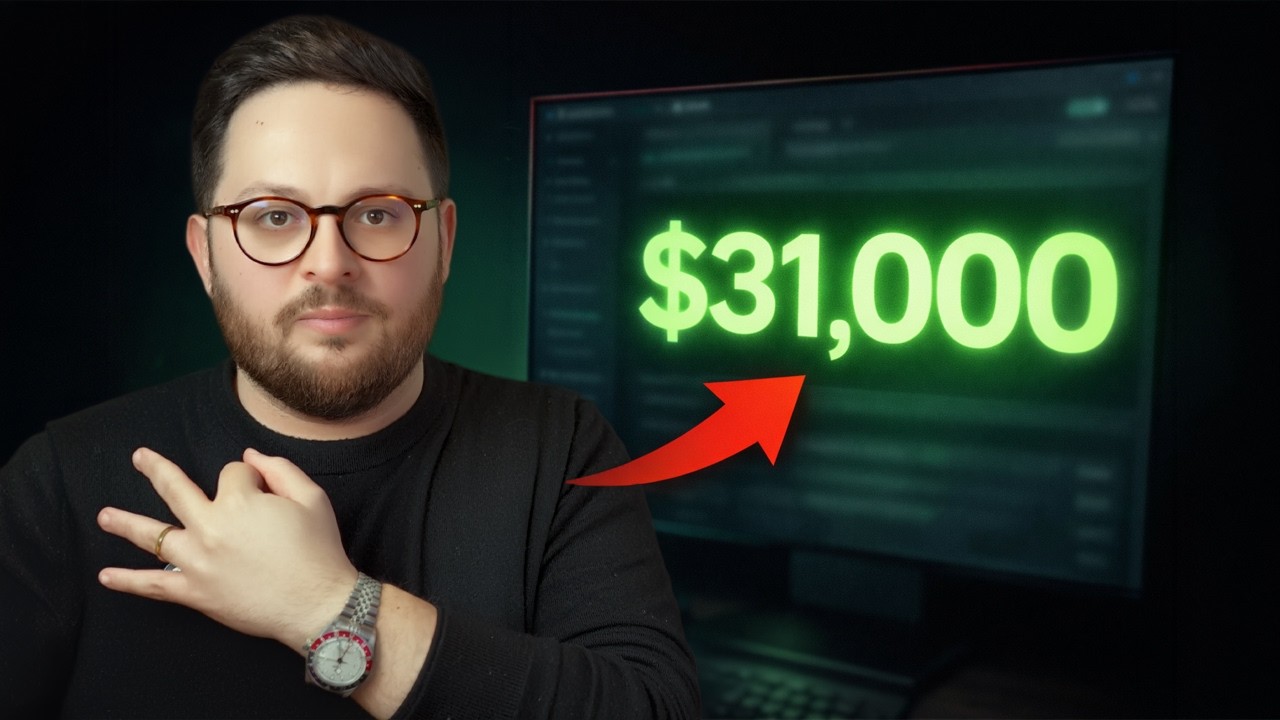
I made $31,000 this month with the help of five OpenClaw agents running on automation. But, here's the thing most people don't get. They're using OpenClaw wrong. When people first use OpenClaw, they treat it like a chatbot, the same way they would use ChatGPT. You ask it a question, it answers, and then you move on. Some people get a little bit more advanced. They treat it like a virtual assistant. Hey, do this task. But, that's still
79 words, the words spoken in the first 30 seconds at 157 words per minute.
Free, no signup. See how the first 30 seconds hold attention, with rewrites.
Sentence shape
| Measure | This transcript |
|---|---|
| Sentences | 140 |
| Average words per sentence | 13.2 |
| Longest sentence | 48 words |
| Questions asked | 9 |
| Sentences containing a number | 10 |
Most used terms
Filler phrases
32 in total: literally 13 · like 9 · I mean 5 · actually 3 · basically 1 · you know 1.
A literal whole-word count of the same phrase list the Prepublish browser extension uses, so a phrase inside another word is not counted and a phrase used in its ordinary sense still is. It is a count and not a judgement.
Free, no account. See where attention is likely to drop, with a rewrite for each weak line. The free check shows the scores and the one issue costing the most. Or run it on the words above first.
Free · No login · See a sample audit first if you prefer.
What this transcript is
Every word below is the caption track YouTube publishes for this video, pulled from the video itself and reproduced unchanged. It is not Prepublish's writing, not a summary, and not a re-transcription: it is the video's own published captions. English captions, generated automatically by YouTube, in the video’s original language. Source: the video on YouTube. A channel that would rather this page did not exist can ask for its removal through the contact page, and it is removed.
I made $31,000 this month with the help of five OpenClaw agents running on automation. But, here's the thing most people don't get. They're using OpenClaw wrong. When people first use OpenClaw, they treat it like a chatbot, the same way they would use ChatGPT. You ask it a question, it answers, and then you move on. Some people get a little bit more advanced. They treat it like a virtual assistant. Hey, do this task.
But, that's still the ceiling for most people. The biggest mistake is you are not using it as what it actually is, an operator, a chief of staff, a COO that could run and manage your business. I stopped treating my OpenClaw like a chatbot. I started treating it like an employee, and that single shift changed everything. Not the tools that I'm using, not the model, the LLM, the mindset, because the moment you stop seeing your OpenClaw as an assistant and start seeing it as an actual team member, things start getting crazy productive.
They start running your business, not just answering questions, running it. I started with Max, just one agent, my main AI agent, my chief of staff today. But, within like a week, I noticed we were doing the same exact things over and over again. It was constantly forced to context switch like crazy. 1 minute we're talking about X, the next minute we're talking about YouTube, next minute fixing the website. My head was spinning, his attention was everywhere, and I realized Max was becoming a bottleneck.
Not because he's dumb, because his bandwidth was spread across hundreds of different tasks. So, I did something obvious in hindsight. I decided to specialize my AI agent. And so, I created agents that would own specific parts of my business. One would be for X, one for YouTube, one for trading, one for web design. That way, Max, my main AI agent, could stop being the guy who does everything and start being what he's actually supposed to be, a chief of staff, managing the team, making sure everyone's running, making sure I get the reports that I need.
This way, his attention wasn't spread across hundreds of tasks anymore. His attention would be spent on monitoring five specialists, a lot more brain power for him, which leads us to today. Max over here, he runs everything. He communicates with all the other agents, makes sure that they're running properly, makes [snorts] sure that they're doing their job, makes sure they're giving us the output that we need, and that they're getting the output they need, that they're all able to talk with one another.
He's literally the hub that connects all the different agents together. Then, we have Sage over here. He's our X content specialist. Sage literally spends his day obsessing over X, everything happening on X, everything that's trending. He manages this trend radar, spots every single trending topic as it comes along and flags it for me, comes up with tweet ideas for me to approve, post, go over, create if I have to. But, it gets deeper.
He tracks every single competitor seeing what's working for them, cross-referencing, comparing it with what I typically post. So, I'm not just getting ideas, I'm getting competitive intel. And you can see, these are all ideas from him. These are all tweets he's recommended, and you can see how many impressions these these have gotten me over the past week, but also month. Sage has literally helped me generate over a thousand dollars this month alone.
I mean, the last two weeks alone almost in creator revenue on X coming directly from his own ideas. Nova is our YouTube content strategist. She's almost the same as Sage, but instead of X, she's focused on YouTube. She comes up with long-form video ideas. She scans YouTube for trends and outliers. Look at her coming up with different ideas for my YouTube channel for me to film. This video right here was an idea that Nova pitched to me.
And she scans YouTube for trends and outliers, videos performing better than anything else in my niche or in topics adjacent to my niche. She literally flags those opportunities for me and comes up with ideas of things I can record. And as you can see through her ideas, I've been able to perform on YouTube better than I ever have before. This is all literally thanks to Nova, my AI YouTube agent. Then we have Knox, my trading agent.
Knox monitors all of our trading bots. We've got a 15-minute market bot. We've got a 5-minute polymarket bot. We've got a hyperliquid bot, a copy trading bot. Every two hours Knox will literally look at all four of the bots' logs. He will run a scan, check the logs on all the bots, and make sure that everything is working. If something's wrong, he will fix it. And lastly, we have Pixel, our web strategist. Pixel will look at competitor websites, compare them, and come up with ideas and solutions based on what competitors are doing and [snorts] our own user feedback.
Pixel's job is to literally enhance our websites every single day, whether it's our clipping website or my own website willitgoviral.xyz, and come up with suggestions and ways to improve every single day. Pixel has literally helped us generate over $30,000 flowed through clips just last month. Okay, let me break this down. Knox and his four bots made about somewhere between 200 to $250 this month. The 15-minute market bot was our most profitable followed by the hyper liquid bot.
It's not a huge difference, but it's consistent. I mean, it's passive income from pure automation. Sage on the other hand, our ex-content specialist created ideas that generated me over a thousand dollars this month in creator revenue on X. That's direct money from his content strategy. And then Pixel, our web app specialist, helped us improve clips.unfarmable.xyz and helped us generate over $30,000 that flowed through that website last month.
That's not all Pixel, but she was the one constantly flagging what to improve. Oh, we also have a bunch of sales automations that my co-founder Leon built, where it finds leads, emails them, tracks them, manages them in our CRM, scores how we're doing through calls. That helped us close a ton of clients, especially this month. So, the real number is somewhere way more than 31,000, but I'm limiting it to 31,000 on the bots that I've specifically created myself.
That's the number I'm going to go with. Okay, let me be a little bit honest because the first week of using OpenClaw, I was reluctant. I was tiptoeing around it because I was scared of doing something that it shouldn't. I was scared I would be breaking things, making mistakes I'd later have to wake up and fix, but the more that I warmed up to it, the more that it proved to me it could manage any task that I asked of it.
And here's where it gets wild. The more I felt comfortable getting crazy, getting wild with my ideas, the more those ideas stopped just being ideas and started being things we'd execute on in the same day. I mean, think about that. From idea to execution in the same exact day. Normally, to build automations, you're talking days, weeks, months. You need devs, you need planning, you need budgets approved. Now, me and Max hash it out for about an hour and by the end of the day, it's running.
That speed right here changes everything. Because the gap between what if we tried this and oh, we tried it and it worked is basically zero now. Now, a lot of people ask me, "How do you get the best output?" And honestly, it's a lot less about the model that you're using and a lot more about the prompt. I mean, most people don't prompt well. So, let me share with you the framework that changed everything for me. You can literally copy-paste this and use it with your own open claw agent.
This right here is the literal exact prompt that you can use and copy-paste into your open claw. You can literally take a screenshot of this frame in the video and send it to your open claw and it will be able to read the prompt and help you set this up on its own. That being said, let's go through the prompt. So, step one, outline a specific objective and be as clear and specific as possible. You don't want to say something like improve our website.
I want you to be specific. I want you to say something like "Audit clips.not unfungible.xyz for UX friction on the pricing page for the first-time visitors. Suggest three fixes we can ship in one day." You see how different that is? You see how that might help your agent understand its goal better, which leads us into step two. Give it clear KPIs and a win condition. Clear goals, clear end goals. I mean, define to it what does done look like.
What are we measuring here? What's the win condition that we're after? And then, step three, tell it to ask you questions. This is one of the most important steps. Literally tell them, "Ask me questions in order to reach clarity." This forces the AI to ask you questions instead of assuming the answer. And this is huge because you know why most people get bad because they get their own AI to guess wrong about what they actually need.
They let their AI fill in the blank. But if you force it to ask you questions at the end of your prompt, you are forcing it to make you fill in the blank, not it. This literally works with any prompt, any agent, any model. So, here's the thing. A lot of people try to build something, it fails, and then they blame the AI or the model. It's not the model, it's the prompt. Be as clear and concise as possible. That's literally it.
Okay, look. Everything I've shared here is real. This is my actual day-to-day process. This is my actual life right now. I'm not selling you a course. I'm not hyping some hypothetical. This is what's happening right now. Five agents making $31,000 and helping me run my business. This technology is life-changing. Nobody should be sleeping on this right now. No matter what field you're in, whether you're a crypto founder, a solopreneur, a startup, whatever that is, the question isn't should I use this?
The question is what would my first agent do? What part of my business could I automate today? What specialist would make the biggest difference right now? Figure that out. Build it and watch what happens. If you found this video helpful, make sure to subscribe and drop a comment. What would your first agent be? See you in the next video.
The words are the caption track's own and nothing is reworded or re-transcribed. Paragraph breaks are placed between sentences so the text reads as prose.
Free tools for your own script: paste a draft and see where it stands before you record it.
Paste your draft and see where viewers are likely to drop off, with a rewrite for each weak line.
Paste the first 30 seconds of your own draft for a hook score and rewrites.
Check your draft against YouTube's advertiser-friendly guidelines before you record it.
Read this channel's public videos and transcripts, and download a writing brief for it.