Getting the transcript
Reading the captions from YouTube. A video nobody has opened here before takes 10 to 30 seconds; this page fills in on its own.
Getting the transcript
Reading the captions from YouTube. A video nobody has opened here before takes 10 to 30 seconds; this page fills in on its own.
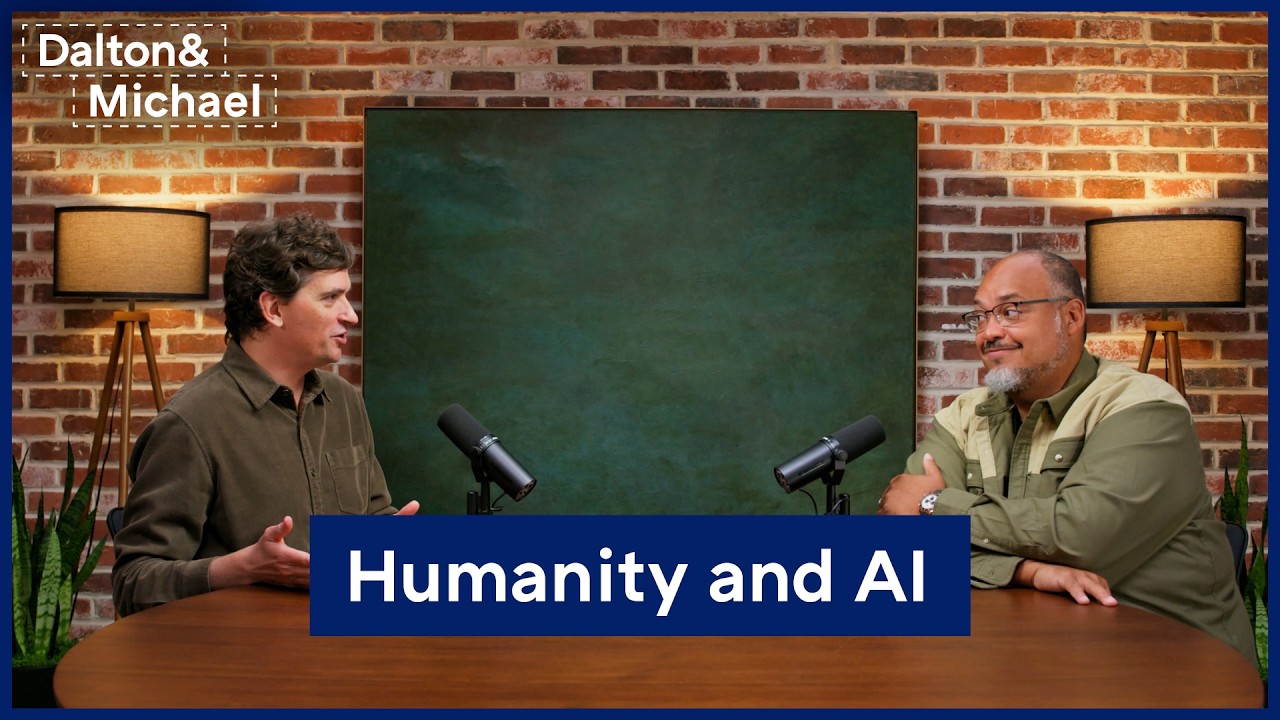
Dalton + Michael · @daltonplusmichael
This video has no Most replayed graph yet: YouTube shows one only once a video has enough views. These are the moments viewers replayed most in Dalton + Michael's most watched videos.
Most replayed moment at 9:40
2.3x that video's typical replay level
a company is winning, you might not understand the value they create for their customers, but don't dismiss it to zero. >> Well, that's the classic thing of um dismissing a product because the design is bad. >> Yeah, man. This HRS looks like crap.
Said at 9:33
Most replayed moment at 9:46
2.1x that video's typical replay level
of founders is, "What do you think is the failure rate for a series B company?" Because like I think in their minds before I ask the question, they think every series B company wins. And then after I ask it, they're like, "I guess mathematically that wouldn't work."
Said at 9:40
Most replayed moment at 14:24
2.8x that video's typical replay level
it is hard to feel like you're working on something where a lot of people think it's a bad idea. That's hard. And I like talking about this because you should brace yourself for that. Like, that is 100% the experience of
Said at 14:17
The graph counts replays. It does not show where viewers stopped watching.
Words
4,874
Runtime
25:37
Speaking pace
190wpm
Reading time
20min
190 words per minute, between the 181 median and the 201 75th percentile of 349 measured videos. That distribution comes from the 349-video hook study.
Opening (first 30 seconds)
It would be way easier for us to get on this video >> [music] >> and say crazy doom and gloom things. You're going to die tomorrow. >> Because of AI. >> we could just say really provocative statements that sound like sci-fi, that sound like The Matrix, and that would surely get more clicks >> Yes. >> than us being like, "It's going to be fine. >> [laughter] >> I'm going to go separate. It's going to be great." >> This is Dalton plus Michael, and today we're going to talk about controversial topic.
95 words, the words spoken in the first 30 seconds at 190 words per minute.
Free, no signup. See how the first 30 seconds hold attention, with rewrites.
Sentence shape
| Measure | This transcript |
|---|---|
| Sentences | 332 |
| Average words per sentence | 14.7 |
| Longest sentence | 63 words |
| Questions asked | 39 |
| Sentences containing a number | 11 |
Most used terms
Filler phrases
193 in total: like 114 · you know 24 · right? 16 · um 12 · actually 11 · kind of 7 · uh 4 · I mean 2 · basically 2 · literally 1.
A literal whole-word count of the same phrase list the Prepublish browser extension uses, so a phrase inside another word is not counted and a phrase used in its ordinary sense still is. It is a count and not a judgement.
Run the check on the words above: where attention is likely to drop, with a rewrite for each weak line. The free check shows the scores and the one issue costing the most.
What this transcript is
Every word below is the caption track YouTube publishes for this video, pulled from the video itself and reproduced unchanged. It is not Prepublish's writing, not a summary, and not a re-transcription: it is the video's own published captions. English captions, generated automatically by YouTube, in the video’s original language. Source: the video on YouTube. A channel that would rather this page did not exist can ask for its removal through the contact page, and it is removed.
It would be way easier for us to get on this video >> [music] >> and say crazy doom and gloom things. You're going to die tomorrow. >> Because of AI. >> we could just say really provocative statements that sound like sci-fi, that sound like The Matrix, and that would surely get more clicks >> Yes. >> than us being like, "It's going to be fine. >> [laughter] >> I'm going to go separate. It's going to be great." >> This is Dalton plus Michael, and today we're going to talk about controversial topic.
Why humanity will be great with AI. You heard it here first. >> [laughter] [gasps] >> So, um I'm sure people watching have consumed the news that, you know, it's this weird kind of human American thing like we're racing towards advancing AI, which we all know will destroy civilization. It's a little confusing, Dalton. And so, we thought maybe we would make the case on how the world would be a better place for this thing that we're racing towards.
What do you think? >> We are all bombarded with messages >> Yes. >> about the negative ways that AI is going to hurt us constantly. >> Yes. >> And maybe to start with, let's talk about the history of the labs and let's talk about the history of AI cuz I think this will help give context to how we ended up here. The reason OpenAI was started was >> fear. >> Fear >> [laughter] >> that Google would create a superintelligence >> Yes. >> and that it would be locked up inside of Google >> Yes. >> and it'd be like if Google had, you know, the infinite money glitch and they didn't give it to anyone else, and that would probably be bad for humanity. >> Yes. >> And so, the very original pitch for the nonprofit was, "Let's create a nonprofit that is open, hence the name OpenAI, >> Yes. >> the innovations of AI would be shared with humanity >> Yes. >> and it would also be more likely uh safe, it would be more likely pro-social for humans if it was done in like a non-profit consortium than locked inside of a corporation. >> We all think of AI as almost a consumer product now, but it I don't think that was the form factor wasn't understood.
So, when people were afraid of Google having it, it wasn't even clear that they would give it to >> Correct. Who would they What would they use it for? Like it was it was that wasn't clear. >> the argument was Google has the most data, it has the most money, and it has the most compute. Yes. >> so, given those starting conditions maybe they'll just keep, you know, intelligence in a cage, and yeah. Use it to run Google, and like that's bad for humanity. >> Exactly. >> Right? >> Exactly. >> Combine that with a lot of the researchers that worked in this stuff, the the less wrong community, and all those folks.
Safety was a key part of the message boards that the researchers creating the stuff were really worried about. I'm not saying that's bad, by the way. I'm just saying this infected their brain. This was a huge part of getting into AI was debating safety >> Yes. >> constantly. In addition, um Anthropic, which ended up being pretty important, when it split off from OpenAI it was the safety folks who I believe at the time argued that they would be more safe than OpenAI, and that OpenAI was not safe enough in their approach.
Did I Did I miss anything there? >> argument. Yeah. And all the news, or the vast majority of news we consume on AI is filtered through social networks that gets more clicks on negative stories than positive stories. >> Yep. >> So, all of the original kind of stories were based on fear. All of the way that we consume things, we see more eyeballs based on fear. >> Yep. If you think about the way, um recommendation algorithms work it is much easier, it would be way easier for us to get on this video and say crazy doom and gloom things >> You're going to die tomorrow. >> Right?
Like we we could just say really provocative statements >> Yes. >> that sound like sci-fi, that sound like The Matrix, and that would surely get more clicks >> Yes. >> than us being like, "It's going to be fine. >> [laughter] >> I'm going to go separate. It's going to be great." >> It's going to be great. >> That is such a harder thing um to have [clears throat] go viral. And so even the the fundamental algorithms that are recommending content to us are rewarding >> Yes. >> click-baity, super negative stuff. >> If you're a normal person, this must be so confusing, right?
Cuz it's like, why are we racing towards the thing that even the creators of the thing thinks going to kill us all? That's got to be the most confusing thing in the world. Whereas, I actually think that the other story a lot of people believe and just nobody talks about. >> And simple stories that are easy to understand go more viral, like AI is going to kill us all. One one example of this is the water thing. I think a huge percentage of people, if the topic of AI comes up, >> [ __ ] >> think that like the water is drink's water.
And if you go and actually, you know, do your own research on this one, the original research had like a um numerical error, I believe, on how much [laughter] water was used. And it's like a tiny fraction of how much water like golf courses use. And so whatever, do your own research on this one, but basically, somehow, if you just talk to normal people, >> Yes. >> they're convinced that the AI is going to evaporate all the water on Earth >> Yes. >> and that they should use, you know, ChatGPT sparingly to save water. >> [laughter] >> And so so again, I'm we're just setting this up.
This is a tricky >> Yes. >> narrative zone that we're in. >> [laughter] >> And so even though it is harder to articulate a positive view of the future with all of these starting conditions, we're going to try, and we think you all should too. >> Yes. >> And that I would argue to prepare yourselves, your children, uh if you're running a company, your company for the future. >> Yes. >> Being able to explain what role and purpose we have in the future and why life matters and you should be excited about things is completely necessary. >> Yes.
I think before getting to the macro, I'd like to start with the micro, right? So, with my personal usage of AI, I have been surprised. You know, about a year ago I started exploring the challenges of the city of San Francisco. And to be honest, without AI, I would have been screwed, right? I had to do effectively years worth of public policy research to understand our budget, where we spend our money, our health price crisis, like all of these things.
And without AI, I would have been stuck. >> Yep. >> I was trying to consume information that no one person had. And so, just being able to use AI to do research, to research all of the reporting that the city does, academic reporting, comparative reporting on how other cities do with drug crises, incredible. The other thing that I was able to do is so much of San Francisco city data is being made available through API online.
I'm a business guy. That was useless to me until the last year. And with Claude, suddenly, I can see what the city's thrown one response time is. I can see how dirty different parts of the city are. I can see which departments are faster or slower. Like, there's so much stuff that I can see to understand what's happening in the city. So, for my personal usage, I was just like, well, obviously, this is making me more productive.
Like, it's hard to think that I was a productive person before this. And then watching my kid use AI, you know, I've got a an eighth grader, I'm sorry, eighth grader, an 8-year-old who uses AI. And the amount of creativity it it's so weird. Like, in some ways the amount he's able to explore his imagination, the amount that he's reading, the amount that he's thinking. Like, he wants to design video games. All kids love designing video games who like video games.
He can do it now. And so, from a micro perspective, at least in my life, it's like it's so clearly been empowering that like I have to take a step back and basically be like, all right, let me separate the narrative from reality. If it's being really empowering in my life and my kids' life, let me maybe search for how it could be empowering for humanity. And how do you get to this? The way I think about it is the following.
Um I think pop culture reflects back to us like pretty good critiques of what's going on in the world. And if you think about great movies like Office Space >> Yes. >> or television >> shows like The Office. >> Yes. >> I think if you if you think about them, >> [laughter] >> what they're poking fun at is people that are just like you and me that have agency, that wanted to good work, and that want to have purpose and meaning in their lives. >> Yes. >> And they are trapped in an environment >> Yes. >> that is stupid and meaningless, and their work has nothing to do with outcomes.
And it's just this like it's literally comedic. It's funny how there is no purpose >> Yes. >> in the work that they do and their co-workers do. >> Yes. >> Customers don't matter. Their work doesn't matter. >> They have perfectly good brains, and their companies are not using them. >> Yeah. And they're relatable. We can all put ourselves in the shoes of the characters, and we're like, man, can you imagine what a stupid environment that is? >> But that's most people who work on Earth. >> And so, the positive vision I would get >> Yes. >> is that if a lot of the meaningless work that you have to do to do your job isn't necessary, >> Yes. >> and that you can be more aligned with helping customers or helping with the vision of what the company is supposed to do, >> Yeah. >> people will have more meaning in their lives and work will mean more to them. >> I would double down on this.
You know, in my experience in big companies, the people on the ground who have at least authority of what is built or done, often have the most contact with the problem and the customer. >> Yep. >> And we've kind of built companies so the people up here decide what's done and the people here know what's going on. >> [laughter] >> And like that's that's modern organizational design. And I would say there's probably a good reason for that because the people down here, in one reasonable week of work, could only do so much.
It was relatively hard for them to have a wide set of skills, etc., etc. So you got to compartmentalize and so you have to coordinate and people are expensive and da da da da. And so, I don't think this organization is dumb. I think it evolved from the best we could do. Now that person on the ground has the capability of a lot more people. >> Yeah. >> To your point, now the person on the ground has a lot more time. I really am excited about how organizations will be built and the people who are closest to the problems have 10x the ability and 10x the time.
We shouldn't think that the solutions we have today are good. >> [laughter] >> Like like we don't think the solutions we had 100 years ago were good. >> Yeah. >> 100 years from now, they're going to look at the stuff that we think is solved today and they're going to be like, that was the Dark Ages. >> I think if a founder were asking me about this in office hours, I think what I would tell them to do is to look to the labs >> Yeah. >> as a little window into the future.
Maybe not the far future, but maybe 12 months, 18 months ahead of us. And so, let me be specific. How many people that work at the labs have fake email jobs? Maybe more than zero, I don't know. But I'm going to guess that most people, if you interview them like, "Oh, what do you do at Anthropic?" They're not going to be like, "Oh, I create PowerPoints." >> Yes, I push paper. >> Push [laughter] paper. Probably there are not a ton of those people.
That would be my assumption. Maybe I'm wrong. I'd also would say that the labs keep hiring people. And then when someone is like Dalton, like, there's not going to be any jobs, like these companies are all going to have one employee, they're going to be unicorns. I'm like, "Well, maybe, but I think that if the labs keep hiring people, >> [laughter] >> that that's probably a signal that that's a good idea. And my mental model for that is if someone is worth more than their salary, if they generate more revenue or more value for the company than what it cost to pay them, why wouldn't you keep doing that?
If you're worried about job loss, it's that you don't think that certain job functions could be done on an incremental basis by humans anymore. And I don't know, I think that lacks vision. Clearly the labs are are turning people. So again, to be specific, think about the people that I know being hired at the labs. They're on these tiny teams. >> Yes. >> They're you know, I know the people working on Codex, I know the people working on Claude code.
They're on a tiny team, they're talking to users, they're using their own tools, and they're shipping really fast. And they're having a really good time. >> Yes. >> And they certainly have a lot of purpose. >> Yes. >> We could argue perhaps too much, but they all >> [laughter] >> Just kidding. I'm just saying they all feel like they're on a mission. >> Yes. >> And so, they're so fired up, they're working so hard, and they can understand how their personal effort is helping the company and helping the users.
And I would argue that is a perfect blueprint for what every company should be should be doing or thinking, right? >> Well, I think this is what so interesting about startups and about companies that are built from the ground up with AI is because you can imagine that you don't even have to imagine it. Like that is what will organically happen if you believe in AI and you're starting a new company. I think this also represents the challenge in talking to existing companies, right?
You know, if I'm trying to pitch AI to a bunch of MBAs that run a large company and I'm trying to say like imagine a world where you can have a hundreds of small autonomous teams that can make massive impact. That sounds scary as [ __ ] >> Yep. >> Whereas if I say to them imagine a world where we can fire half your employees, they're like well stock price this that da da da I think the companies that embrace these new ways of organization, that embrace pushing responsibility down >> Yeah. >> are going to thrive.
But we've seen with every tech transformation some dinosaurs have to die. >> and as we're recording this um it recently came out that Meta apologized to their employees for dehumanizing them and going so nuts into AI >> in a top-down >> in a top-down way. And so the difference between Labs hiring people and giving them >> responsibility >> and resources >> [laughter] >> is very different than like hey cool, you work at Meta um install this spyware on your computer so we can track your clickstream and now you're on the data labeling team.
Not great. And so again, I I would argue institutions of the future are going to find a way to translate their employees' jobs into giving them meaning, into giving them purpose >> Yes. >> and to giving them agency >> Yes. >> um along with the tools to do so and the people that do that are going to win. >> Well, and and I think the big companies that have fear right now, it's like so silly because I understand how you would have fear in a large company where to get information from the ground up, it has to go through eight people's hands and it's going to get the the the turd will be shined over and over again, right?
So, you can't really trust the information you're getting, right? But, if you're an executive, especially if you have a tech company, you can use AI now to get ground information. Right? Like you have access to your own database. Like you have access to raw customer data. You can monitor what's happening in your company in a way that should give you the confidence to push responsibility down. And like you just have to learn how to use the tools, you know?
And And it was funny cuz I was talking to somebody who was at a large tech company and this company was going through a like, "Oh, we need to get all of our employees using AI." And he said something really interesting to me. It's like, "It's probably more important to get the managers using AI than employees." Because once the managers realize how much the organization can change if they're using AI, like that's when you're going to actually see the real change, right?
If that manager is not AI-pilled, it almost doesn't matter that their employees are. And I was like, "Huh." I don't see any company advertising how much does our senior team use AI. Right? Right? No, but we're the That's not >> Yeah. >> for us, right? How is it going to help us? It's going to help the employees, right? >> [laughter] >> You know, a little bit of what this reminds me of, I I forget if I've talked about this one of our videos before, but there was a blog post from a writer at Bloomberg a few years ago that stuck in my brain for years.
And he talked about how a lot of businesses in the world could use really bright people to run them. And that there's actually a lack of talent to run certain businesses where the owners are retiring. So, the example this writer used was plumbing businesses. You know, there's all these plumbing businesses, the owner needs to sell them, the owner needs to retire, and it's pretty hard to go to the Harvard campus and be like >> Do you want to do >> Do you want to go?
And so, his argument is that what private equity is is a whitewashing to put to say like, "Oh, do you want a job in private equity?" And you're like, "Of course I want it." >> You can do a plumbing roll-up. >> And [laughter] that a lot of the actual jobs Like, what you actually do when you go work in private equity is often to work on plumbing companies. >> Traditional businesses, yeah. >> um making a job in plumbing legible to super smart people is actually the function in society that private equity firms are producing. >> I love that, because you know what?
We still need [ __ ] plumbers. >> It's [laughter] actually really important. And so, so again, where I'm going with this is that the narrative matters so much. >> Yes. >> And then if an organization wants to attract top talent and have that talent feel this is worthy of their time >> Mhm. >> you have to make it legible to them. You have to give them >> They're like >> the pitch like, "Oh, private equity, that's the coolest job you can get after graduation." >> Not >> "I'm moving to Alabama and running a plumbing company." is not something you hear. >> I love that.
You know, as you're saying that, I'm like, I remember a friend of a close friend of mine who got a consulting job at a good consulting firm, got paid a lot of salary. And 4 days a week he was in Pittsburgh. Uh he lived in New York. >> He lived in [laughter] New York, but 4 days a week he was in Pittsburgh. And he was working for like a regional bank, and the number one job he was figuring out is like where to open branches. >> Yeah. >> And and how do you convince that kid to do that? >> him it's consulting job.
You give him the brand, you give him >> Yes. >> To wrap this up if we look back, Neil deGrasse Tyson said something that really was funny. He was like doing some video on how like science actually helps. And he was like, you know, humanity for thousands and thousands of years like our um lifespan did not increase. And then like in the last 150 years it's increased a lot and that was science and like you're told all these things like plastic or like the new agriculture like all these things are killing you but like objectively >> [laughter] >> lifespan's increased as these things are invented.
Science helps. What do you think is the world our kids or grandkids might live in that was made better by AI? Like what are some of the things that we take for granted right now that our kids or grandkids are going to be like, I can't believe >> Yeah. >> that was cool. >> Well, I mean to start with health care alone and lifespan >> Yes. >> and solving cancer and heart disease. I mean that's already happening and will only increase of you know, producing new drugs and new interventions that >> How many diseases do we live with today as fait accompli? >> Yeah. >> Are going to people are going to look back and be like >> 100% >> That's weird. >> [laughter] >> How about car fatalities? >> Yes. >> Like there will be a moment >> It's barbaric how many people die right now in car accidents.
It's horrible. >> I remember I used to commute in New York City and it was just like there's a fatal accident every day. >> Yeah. >> And it's on the news but not like as a tragedy as like here's how the traffic >> Yeah. >> [laughter] >> as like here's here's which highway to take to avoid it. That's going to seem barbaric. >> I think the bar is going to be raised on finding meaning in life and I think people are going to have more time and tools to find meaning in what they're doing and to feel like they have the mind space to be creative.
Again, if you look at humanity, humans used to have to be like farming until the sun went down. If you there was not a lot of time to do stuff that wasn't subsistence farming. To make enough food for them to live. Where I'm going with this is that more leisure time is good. And that there is an opportunity for everyone to feel like they have you know, time to be who they want to be, time to do what they want to do. And that we should be really excited about that, that our kids get to have even more of that time than we did. >> Why are we so afraid of losing the office space jobs?
And I understand like if we can tell ourselves a story that there will be no other jobs, but like it will be the first time in human history that there are no other jobs. >> Actually, you know what? I think the pushback would be authority figures, people that would go and make a video about a topic like this, have some deep ulterior motive and agenda of trying to screw people. Like I think people have this you know, somehow every new thing that's going to come out is somehow going to screw them.
I somehow that's just baked into people's minds. >> I'm trying to it let's say we're the authority figures here. >> Yeah, yeah, we're trying somehow we're putting out messages that are like we have some devious uh intention. >> I have to think hard. >> That's what they would say. >> In another video we will describe We have to think hard about our devious intentions. >> Yeah, but I'm just trying to say like when new stuff comes out, it's like oh, they're not really telling you, you know, big big oil is behind this.
There's some ulterior motive. >> And and I just hate this cuz it kind of it comes back to this narrative that pains me that I think is somehow an American narrative that like things are getting worse when they're actually getting better. And it's it's I might have brought this up before. There's a book called Factfulness and in the beginning of this book, there's like this 10 or 20 question quiz. And the whole funny part about this quiz is that the author tells you before he gives you the quiz, that you will guess pessimistically on all of these questions.
And the questions like the average education level of yada yada, or you know, the accessibility of electricity, yada. They're all these kind of like population global like how we're doing questions. And they He gives you the answer. >> He's like >> you're going to guess pessimistic. So whenever you pick an answer, just like make pick more optimistic. And still, the vast majority of people underestimate how good the world's doing right now. >> Yeah. >> And so, I think our kids and grandkids are going to look back at this hysteria with a little bit of laughter, but also a little bit of sadness.
And they're going to be like these backwards people. >> [laughter] >> They were getting all this good stuff, and they were convinced it was a trick. >> Yeah. >> They thought like, you know, it'd be like us being like people who are afraid of electricity. It's like, "What are you doing? Like we need to >> [laughter] >> CAN WE GET LIKE >> I WILL SAY THIS, if you're watching this video and and you're just trying to be utilitarian about it, having a positive view on AI is certainly going to help you more. >> Yes. >> Because you're going to learn how to use it.
You're going to learn how to thrive with it, and you're going to be around people who might not be. >> Yep. >> And so, >> even if you just want to look at it that way. >> [laughter] >> Anyways, any last thoughts to share? >> I would just challenge everyone in your own life to articulate why you're excited and optimistic about how these changes are going to help you, to help the next generations, and help make that a reality. >> Yes. >> You know? >> And I I would say don't take a one-off experience with AI a year ago and make it your entire experience with AI.
Right? Like understand this is changing. For any of you who are kind of as old as us, like the internet got a lot better in the '90s and then it got a lot better in the 2000s and like if you just took a snapshot of the internet in 1995 and you're like that's internet, you're kind of missing the boat here. And so I actually think one way to get really positive about AI is to use it to solve a problem in your own life.
And [snorts] like you might be shocked um how good it can be. Cool. Cheers. >> All right. Thanks, Michael.
The words are the caption track's own and nothing is reworded or re-transcribed. Paragraph breaks are placed between sentences so the text reads as prose.
Free tools for your own script: paste a draft and see where it stands before you record it.
Paste your draft and see where viewers are likely to drop off, with a rewrite for each weak line.
Paste the first 30 seconds of your own draft for a hook score and rewrites.
Check your draft against YouTube's advertiser-friendly guidelines before you record it.
Read this channel's public videos and transcripts, and download a writing brief for it.