Getting the transcript
Reading the captions from YouTube. A video nobody has opened here before takes 10 to 30 seconds; this page fills in on its own.
Getting the transcript
Reading the captions from YouTube. A video nobody has opened here before takes 10 to 30 seconds; this page fills in on its own.
LYFE Marketing · @LYFEMarketingAtlanta
Words
1,785
Runtime
9:02
Speaking pace
198wpm
Reading time
7min
198 words per minute, between the 181 median and the 201 75th percentile of 349 measured videos. That distribution comes from the 349-video hook study.
Opening (first 30 seconds)
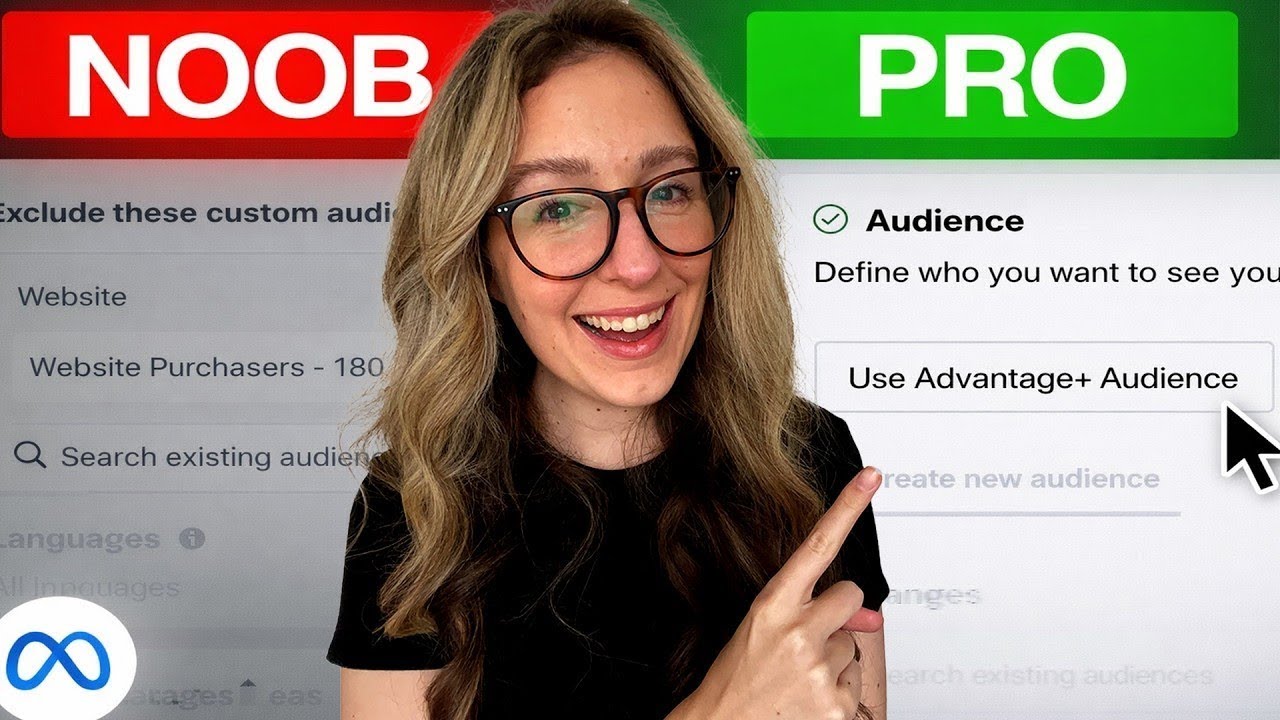
If you're still targeting meta ads the same way you did in 2020, 2023, or even just a few months ago in 2025, you're probably making campaigns harder to scale than they need to be. Because in 2026, the businesses getting the best results are going about targeting in a completely new way. They're not using the detailed targeting section in ads manager to hone in on their target market. So, in this video, I'm going to show you the only meta ads targeting approach most small business owners need right now, including what to control, what to stop
99 words, the words spoken in the first 30 seconds at 198 words per minute.
Free, no signup. See how the first 30 seconds hold attention, with rewrites.
Sentence shape
| Measure | This transcript |
|---|---|
| Sentences | 112 |
| Average words per sentence | 15.9 |
| Longest sentence | 41 words |
| Questions asked | 5 |
| Sentences containing a number | 7 |
Most used terms
Filler phrases
15 in total: like 10 · actually 4 · kind of 1.
A literal whole-word count of the same phrase list the Prepublish browser extension uses, so a phrase inside another word is not counted and a phrase used in its ordinary sense still is. It is a count and not a judgement.
Free, no account. See where attention is likely to drop, with a rewrite for each weak line. The free check shows the scores and the one issue costing the most. Or run it on the words above first.
Free · No login · See a sample audit first if you prefer.
What this transcript is
Every word below is the caption track YouTube publishes for this video, pulled from the video itself and reproduced unchanged. It is not Prepublish's writing, not a summary, and not a re-transcription: it is the video's own published captions. English captions, generated automatically by YouTube, in the video’s original language. Source: the video on YouTube. A channel that would rather this page did not exist can ask for its removal through the contact page, and it is removed.
No Script X-ray for this video: YouTube shows a Most replayed graph only once a video has enough views.
If you're still targeting meta ads the same way you did in 2020, 2023, or even just a few months ago in 2025, you're probably making campaigns harder to scale than they need to be. Because in 2026, the businesses getting the best results are going about targeting in a completely new way. They're not using the detailed targeting section in ads manager to hone in on their target market. So, in this video, I'm going to show you the only meta ads targeting approach most small business owners need right now, including what to control, what to stop overthinking, how to use custom audiences, and whether look-alike audiences still matter.
And in case you don't know, I'm Brandy with Life Marketing, the digital marketing agency with a mission to help small businesses grow. If you're curious as to what it would be like to have us handle all of your social media and advertising for you, click the link below to schedule a free strategy call, and you'll get a custom proposal and quote. Otherwise, let's get into it with the biggest mistakes small business owners are making with meta targeting right now.
They're trying to control too much. They narrow the audience too hard. They split out too many ad sets. They over build the account, and then wonder why the results are inconsistent. And I get it. You're thinking, "Hey, if I know my buyer persona, why wouldn't I try to pinpoint them with all these interests and behaviors to tell Facebook exactly who to show my ad to?" But here's the truth. Meta is better at finding buyers on its own than it used to be.
It actually studies your ad creative, the copy, the image or video, the destination URL, and so then using its advanced AI finds people that are most likely to respond to it based on those things. But only if you stop choking the system with unnecessary restrictions in the targeting. And if you're thinking, "Okay, so you're saying you don't want me to enter anything in here?" In general, that's correct. But there are a couple exceptions, or what we call hard controls.
So, what should be a hard control? Or in other words, the only targeting details you should enter in. There are really only a few things most businesses should use as hard controls. The first is location. Only target places you can actually serve. So, if you're local, enter in the local mile radius you serve. If you serve nationwide, target nationwide. If you only ship to certain countries, only include those countries.
You get it. The second is age restrictions. Only enter an age range when there's a real reason to. For example, if your service legally or practically should not be shown to people below a certain age, then you can enter an age range there. But if there's no true restriction, leave it alone. And the last one is gender. Same general principle here. This matters when gender affects whether someone can actually buy from you or be served by your business.
If it doesn't, then leave it on all. Outside of those three limits, you can leave the rest untouched. In the past, you may have been used to entering in all of these interests and behaviors here, but not anymore. Because the more unnecessary controls you add, the more you reduce meta's room to work, and that makes it harder to grow, not easier. We call targeting like this broad targeting, because the audience is usually pretty broad and it's considered your prospecting campaign.
It's targeting cold, new people who've never heard of your brand before. Now that you've got that squared away, there are a couple other audiences you still need to know how to set up and use. So, let's talk about custom audiences for small businesses in 2026. A custom audience is something you set up here in the audiences tab in ads manager, and you can create one based off of your sources or meta sources, depending on what you're trying to do.
You can see all the options for custom audiences here. So, custom audiences are built for three main reasons. The first is to target these people directly. This is called retargeting. On average, people need to see a brand seven times before they convert, and you can't get in front of people seven times if you're only targeting new people in a broad campaign all the time. So, you can create a custom audience of website visitors or Facebook engagement or what have you, and exclusively target that audience.
The second reason is to exclude this audience. Once you've made the audiences, you'll want to go back to your broad targeting campaign and exclude these people from it so that it acts as a customer acquisition campaign, solely bringing new people into your funnel. You don't want to get to a point where you're solely just retargeting everybody already in your funnel without any new people coming in. Excluding a custom audience from your broad prospecting campaign prevents that from happening.
And the third reason is it's all data. And the more data meta has on your audience, the faster it gets at finding new people who are similar. Custom audiences are one of the clearest signals you can give meta about who matters to your business. So, let's take a look at the four types that are usually the best to build at least to start with. Number one are website visitors. These are people who have been on your website within a certain amount of time and are therefore considered a warm audience because they already know your brand and are showing interest.
Number two are email lists. Now, this can and should be built out into a few separate audiences. So, like you could have a list of subscribed but haven't purchased yet, or a leads list of emails, and a customer list of emails. Because they're all at different points in the buying cycle, they should be receiving different ads from you. And that's why I would recommend creating a custom audience for each of them instead of lumping them all into one big custom audience.
But they all fall under the category of email list for the sake of this video. Number three, video viewers. This is going to be created from meta sources, and it's people who have consumed your content for a certain amount of seconds. And number four, social engagement audiences. People who have engaged with your Instagram or Facebook content in general, like likes, comments, shares, etc. Now, when it comes to using these custom audiences in your targeting, a lot of business owners still build tiny audiences because they think smaller means better.
But that is the opposite way of how you should do it now. For example, instead of only retargeting the last 7 days of website traffic, it's often smarter to retarget a larger audience, like all website visitors over a longer window. Why? Because meta already knows the person who visited two days ago is probably hotter than the person who visited five months ago. You do not need to manually force that. Meta can prioritize the hotter prospect first.
But if you build the audience too small, you remove other options that still could convert. That's why broader, stronger data pools tend to work better. Not because every person is equally valuable, but because meta is better at sorting through that value than most manual setups. Now, the last audience I want to talk to you about is one that some of you may already be pretty familiar with, and that's a look-alike audience.
If you're not familiar, a look-alike audience is an audience of new people that meta finds that look like the source audience of your choosing. So, you could find and target new people who look like your video views, your blog subscribers, or most importantly, your customer base. But the real question is, given all the changes to meta in recent months, do look-alikes still matter in 2026? The answer is yes, but a lot less than they used to.
Look-alikes were a much bigger deal when meta needed more help figuring out who to target. But now, meta builds similar audience patterns in the background automatically. So, if you're feeding the platform good data through custom audiences, conversions, and engagement, it's already doing a lot of that work for you without you needing to go manually create a look-alike audience. That said, look-alikes can still help in certain cases, especially if you want to push meta harder towards a specific type of lead or customer, or you feel the algorithm is finding the wrong kind of prospect or what have you.
So, they definitely still have use cases. They're just no longer the first lever most businesses should obsess over anymore. For most small business owners, custom audiences and clean campaign structure matter more. So, with that, I want to wrap up with why simpler account structures perform better for small businesses. This is the part most people need to hear. You probably do not need more campaigns. You probably probably do need a simpler account structure.
Heavily segmented structures used to be more common. You'd run multiple campaigns at the same time and have a different ad set for each audience built off of detailed targeting options. But doing it that way now often just spreads your budget too thin. And when your budget gets split across too many audiences, meta gets less data in each pocket. That slows down meta's learning, and that slows optimization, making scaling harder.
So, instead, you want to have one campaign, and within it one broader targeting ad set for prospecting, like we talked about, and one retargeting ad set using custom audiences, like we talked about. Setting your account up this way means less complexity, less maintenance, and faster learning from the budget you already have. So, just to recap everything quickly, use hard controls only for real limits. Use audience suggestions to guide meta.
Build strong custom audiences from your actual business data. Use look-alikes when needed, but don't lean on them like it's 2020. And keep your structure simple enough that meta can actually learn. Because in 2026, the businesses getting results with meta ads are not usually the ones doing the most targeting. They're the ones giving meta the clearest signals. And if you do that well, you give your business a much better shot at generating more leads, more customers, and more predictable growth from the same ad spend.
The words are the caption track's own and nothing is reworded or re-transcribed. Paragraph breaks are placed between sentences so the text reads as prose.
Free tools for your own script: paste a draft and see where it stands before you record it.
Paste your draft and see where viewers are likely to drop off, with a rewrite for each weak line.
Paste the first 30 seconds of your own draft for a hook score and rewrites.
Check your draft against YouTube's advertiser-friendly guidelines before you record it.
Read this channel's public videos and transcripts, and download a writing brief for it.