Getting the transcript
Reading the captions from YouTube. A video nobody has opened here before takes 10 to 30 seconds; this page fills in on its own.
Getting the transcript
Reading the captions from YouTube. A video nobody has opened here before takes 10 to 30 seconds; this page fills in on its own.
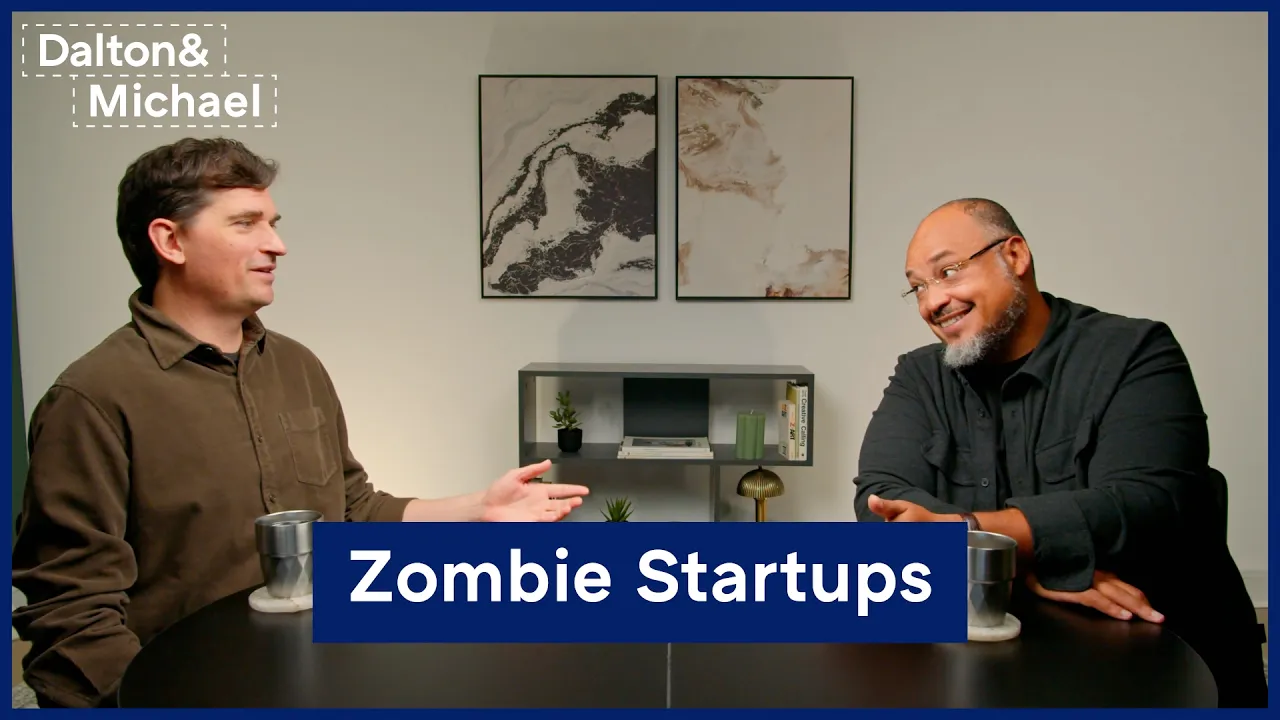
Dalton + Michael · @daltonplusmichael
This video has no Most replayed graph yet: YouTube shows one only once a video has enough views. These are the moments viewers replayed most in Dalton + Michael's most watched videos.
Most replayed moment at 9:40
2.3x that video's typical replay level
a company is winning, you might not understand the value they create for their customers, but don't dismiss it to zero. >> Well, that's the classic thing of um dismissing a product because the design is bad. >> Yeah, man. This HRS looks like crap.
Said at 9:33
Most replayed moment at 9:46
2.1x that video's typical replay level
of founders is, "What do you think is the failure rate for a series B company?" Because like I think in their minds before I ask the question, they think every series B company wins. And then after I ask it, they're like, "I guess mathematically that wouldn't work."
Said at 9:40
Most replayed moment at 14:24
2.8x that video's typical replay level
it is hard to feel like you're working on something where a lot of people think it's a bad idea. That's hard. And I like talking about this because you should brace yourself for that. Like, that is 100% the experience of
Said at 14:17
The graph counts replays. It does not show where viewers stopped watching.
Words
3,551
Runtime
17:36
Speaking pace
202wpm
Reading time
15min
202 words per minute, above the 201 75th percentile of 349 measured videos. That distribution comes from the 349-video hook study.
Opening (first 30 seconds)
If none of your current efforts have worked, you need to do something that you would never do on your own. You need to do something so uncomfortable. Yes. Cuz your current tactics haven't worked. Yes. Right? And so I'll encourage founders to be like what's something that seems way too radical or scary that you never would have thought trying before? This is permission. Why don't you try it? >> This is Dalton plus Michael, and today we're going to talk about zombie startups. Dalton, tell me, what is a zombie startup? >> Okay, yeah. So this is another one
101 words, the words spoken in the first 30 seconds at 202 words per minute.
Free, no signup. See how the first 30 seconds hold attention, with rewrites.
Sentence shape
| Measure | This transcript |
|---|---|
| Sentences | 293 |
| Average words per sentence | 12.1 |
| Longest sentence | 59 words |
| Questions asked | 34 |
| Sentences containing a number | 10 |
Most used terms
Filler phrases
189 in total: like 122 · you know 16 · kind of 15 · right? 14 · um 14 · actually 5 · I mean 1 · sort of 1 · uh 1.
A literal whole-word count of the same phrase list the Prepublish browser extension uses, so a phrase inside another word is not counted and a phrase used in its ordinary sense still is. It is a count and not a judgement.
Run the check on the words above: where attention is likely to drop, with a rewrite for each weak line. The free check shows the scores and the one issue costing the most.
What this transcript is
Every word below is the caption track YouTube publishes for this video, pulled from the video itself and reproduced unchanged. It is not Prepublish's writing, not a summary, and not a re-transcription: it is the video's own published captions. English captions, generated automatically by YouTube, in the video’s original language. Source: the video on YouTube. A channel that would rather this page did not exist can ask for its removal through the contact page, and it is removed.
If none of your current efforts have worked, you need to do something that you would never do on your own. You need to do something so uncomfortable. Yes. Cuz your current tactics haven't worked. Yes. Right? And so I'll encourage founders to be like what's something that seems way too radical or scary that you never would have thought trying before? This is permission. Why don't you try it? >> This is Dalton plus Michael, and today we're going to talk about zombie startups.
Dalton, tell me, what is a zombie startup? >> Okay, yeah. So this is another one of those where we're going to kind of use our own internal lingo that we've been using for a long time, and maybe it'll it'll resonate with the world and maybe it won't. So a zombie startup is a startup that is not dead. >> Nope. >> Um like it's there's money in the bank. Like they're making payroll. They have revenue. They have customers.
Um but it's not really growing. >> Not growing quickly. >> be growing a little bit, but it's not growing fast. And so it's not living per se. It's in a interesting state between living and dying. >> Yeah. >> Um hence the name zombie. Usually the mentality of a zombie startup is different than a super fast growing one, where it's kind of like low energy. There's sort of just like going through the motions. Nothing that exciting is happening.
And it's always like it's like you're waiting for something to happen. There's a lot of stalling >> Yeah. >> for some event external event to happen. >> I honestly think one of the things that characterizes zombie startups after a while is like the creep of bureaucracy and planning and the kind of big company think. >> Yeah. >> And the slowing down of of dev cycles. So it's almost like the metabolism of the company is slowing down.
It's like the cell is aging. It's less efficient. It's like >> When you have PMF and you're growing really fast, your job is just to hold on. And you're like, "Oh, this is chaos." Every day is like a fire fight, and you're just trying to make it. When you're not growing that fast, what will often happen is process seeps in, >> Yes. everyone's like, "Oh, it's time for our quarterly planning meeting." And like like suddenly we get >> Yes. >> There is no chaos.
There is no excitement. And parts of the company that are more process-oriented tend to take over. >> Yes. >> Um and so it can feel really slow. >> Well, and and arguably the planning is the thing that's exciting. >> Yeah. >> Like the product's not that exciting. The user growth is not that exciting. The planning becomes the thing that's exciting. >> So, you know, when there's in this state, it would be remiss for us to not talk about like should a company in this state shut down?
I mean, it doesn't mean to shut down. >> I think to speak to that, um you know, every time you start a startup, there's only a a few things that can happen, which is you shut it down which is you shut down, you get acquired, or you IPO. >> Yep. >> Isn't that weird? There's only three doors you ever really can go down. >> Well, let's not talk like those doors are like equal in terms of frequency. >> how many people go through the IPO door?
We know you know, it's not a lot. Acquired, okay, it's it's a decent amount. And then shut down is is up there. Um and I think a lot of folks >> Dalton, shut down is the expected outcome. IT'S NOT UP THERE. It's up there. >> TOP THREE, MICHAEL. >> IT'S IN THE TOP THREE OPTIONS. >> I DON'T KNOW WHERE it ranks, but Look, people don't talk about it a lot. Again, this is not the most engaging content of this But like let's because I haven't seen much content about shutting down, let's just talk about it for a second. >> Yeah. >> Um what does that actually mean? >> So, I think then um the most common two emotions that I see amongst founders.
The first is the kind of personal failure emotion, but I don't see but I'd argue that like by the time I'm talking to them, they've kind of processed that. The second set of emotion are their obligations to others. And that really grinds on founders. Like I made an obligation to my employees and I made an obligation to my investors and I've let them down. And the most common thing that I say is in that situation is one, like, did you act ethically? >> Yep. >> Did you work hard?
Did you lie to people? It's like did you run the experiment that you tried to run? And like, if the box is checked on all those four, like, you fulfilled your obligation. >> Yeah. >> Your obligation to all of these people wasn't to win, right? Because >> the expected outcome is not winning, >> The obligation was to try hard and try smart and try ethically. When I can break through with the founder, you can kind of see the relief.
Like, oh, you know, I did try hard. Like, you know, like I did like and I try to kind of convince them on the investor side. Hey, the investors hedged. No good investor is making their hay on you winning or losing, right? And what I try to convince them on the employee side is like, giving the employee the freedom to do the next thing in their career is a gift >> Yep. >> versus strapping them into a zombie startup is not really a gift.
So, to me when they're considering the shutdown, it's a lot about getting through these emotions cuz the actual kind of mechanisms are not that hard. >> Yeah. Like, I think again, there's there's so much content about it, but one the hard part is emotions. >> Yes. >> If you can get through them, the mechanics are easy and you probably have a lawyer if you raised money. So, you can get advice from your lawyers and if you have an investor who's sophisticated and done a lot of investments and you're just like, "Hey, we we're going to shut down and here's why." They'll be like, "Okay." >> Yeah. >> And they'll give you advice.
And so, I do a lot of those office hours with founders where I kind of walk through the mechanics. And again, the key thing is to get really clear and to put a timeline on it. >> Yes. >> And so, sometimes people have these really amorphous ideas to get acquired, but they have no idea how to begin and there's no time frame on it. >> Yeah. >> And that never works. >> Yeah. >> And so, if someone decides it's not working and they're a zombie startup, it's like, "Okay, well, give yourself 2 months to try to get acquired." >> Yeah. >> Put put a time frame on it.
Let's go through the mechanics of doing introductions to potential acquirers and talking to people. Try it, but then once you hit that timeline, if you don't get acquired by that date, you should just shut down. >> Yeah. >> And it's totally cool. And it's almost like a relief for them to hear that it's not this like endless process. >> Yeah. Yeah. >> It's actually straightforward. Doesn't mean it's going to be a great outcome, but the way to to get out of a zombie startup is not that hard. >> I think that speaking on acquisitions, I think one of the challenging things that I do when I give advice is I just think there's an assumption that acquisitions are far more common. >> Yeah. >> And then there's an >> It's cuz you only hear about the ones that worked.
They're like, "Congratulations, we failed to get acquired." Right? And so there there's a big warping of how common these are. >> And then I think the second one is the number of acquisitions where like they're a TechCrunch post, an asset sale, and a job offer. >> Yeah. >> Where suddenly it's like, "Oh, like the like you thought that when you read about an acquisition, you thought everyone got rich." It's like, "Mhm, that's even less common." The other thing I talk about a lot with acquisitions is that it's really hard to go from no relationship with a potential acquirer >> Yep. >> to an acquisition in 2 months. >> Yes. >> So it's like there's a set of companies maybe been interacting with or they've been interacting with you and so forth.
Those are all great conversations to have, but to have in your mind this is almost be like a fundraising process and like I'll go from like not knowing this investor to like this investor being on my board in 3 weeks. >> Yep. >> Way less common in the um acquihire world. And the last thing I talk about is just like does your revenue matter to an acquirer? >> Yep. >> Like if you're a let's say a 1 to 20 million-dollar revenue company that's growing less than 10% year over year.
And the company that's buying you generates a billion plus in revenue. >> It doesn't It doesn't move their stock price. It doesn't do any Like the revenue doesn't do anything. Like so shouldn't I be valued at 10 x my revenue? It's like >> I think the real talk is like once you're to the point of being a zombie, the odds that you will get rich from an acquisition are effectively nil. And I would actually frame it in a different way, which is if you're working at a place that is not growing, you're taking an opportunity cost on your life by continuing to work there versus doing something else. >> Yes. >> And so the actual reward is to do something else. >> Yes. >> Yeah.
Yes. >> And >> And like >> Again, I'm probably thinking of an acq-hire >> Yeah, let me anonymize a couple of details, but I can think of someone that made this choice not because they were out of money, and they ended up getting a very good job at one of the labs, and I'm sure they're really happy. Like this was They They made the decision to shut down like 4 years ago. And yeah, I think that was pretty >> smart. >> I think that we are independently thinking of people who made >> Yeah, I'm not I'm Again, I'm changing some details, but I That was a very adult decision to make.
And like yeah, that was That was the smart move. >> And then also we we've been remiss to say that if you want to start another company, often times those same people, if you shut down your company responsibly and well, and you communicate clearly, those same people often want to invest in your next company. >> Yep. >> Um so we've talked about shutting down. Let's um now address the people who do not want to shut down. >> I've got this thing going.
Yep, I love it. Help me figure out how to make it work. And I think to start there, I kind of want to talk about the things that won't rescue you and just get them out of the way. >> Yep. >> Um hiring a bunch more people, like some last kind of splurge >> Let's burn all the money before you That's That's the ticket. >> Yep. >> The secret executive, it's really the chief of growth or the chief of monetization who's going to turn this thing around. you know, they'll tell you to send more push notifications.
Um spam or other kind of low ethics way of juicing sales. Like, "Hey, we have this leaky bucket. Let's just shove as much top-of-funnel as possible." Fundraising, well, if investors just give us Yeah, we'll just then we'll pretend like we're growing. They won't notice that we're not growing and they'll lose money, right? Yeah, especially if we're pitching something that's like on trend. We have this cool AI idea. They'll just give us money and that, right?
That's what investors do. So, false escape paths. What are good escape paths? I think that like a lot of things in life, step one is to admit you have a problem. And to be honest about it. And it's it's surprising how often people are just in denial where like part of their brain knows they're a zombie startup and part of them is like, "Well, you know, but but" There's like all these excuses. There's all this cope. And so, I think you just have to like get real.
This isn't working. We're not on the right trajectory. And then what I would usually tell people is to kind of like have like a come-to-Jesus moment about how you're going to radically change something about the business because a bunch of small incremental changes that you've been trying for the past year or two, that hasn't been working, right? So, you need to do something radical. And there is a risk that you do something that's radically wrong, but I'm arguing you're kind of dead anyway.
So, again, this is the logic is if if it's if none of your current efforts have worked, you need to do something that you would never do on your own. You need to do something so uncomf- uncomfortable cuz your current tactics haven't worked, right? And so, I'll encourage founders to be like, "What's something that seems way too radical or scary that you never would have thought trying before? This is permission. Why don't you try it?" And I would say often what's the challenge with that is sometimes these teams are too big.
And you know, the feedback we'll get from a founder is like, "Oh, well, like this person would say or what about this department or data >> Yeah, our director level >> Yeah, yeah, yeah, I'm going to have someone and it's like you have permission to maybe ask some of those people to leave Yeah. Because hey, the ship's going down and like they're not helping right the ship. And so often it's easier to steer a smaller ship.
Um I think the other thing I like to talk about when >> I see founders in this situation is like, "Let's bring back the pre-product market fit playbook. Like I think very few things about a product should be sacred when a company is pre-product market fit. Everything should be questioned. And oftentimes in the zombie company, they're just assumptions about how the product should work that like haven't been questioned years.
I you know, I was talking to a startup the other day and they were showing me their onboarding flow and it was a was just like a nightmare. And they tested it, they AB tested it. It was like, "This is the local maxima of this bad uh onboarding flow." And crazy enough they were working on a completely different kind of product as just like an offshoot for a couple weeks. So, they had to build a new onboarding flow from scratch.
And then they were like, "Oh, we can like like our onboarding doesn't have to have all this stuff. We don't have to ask 65 questions about this. Like we don't actually have to do it this way." And you could see them being excited cuz they were like, "Oh, that means our current onboarding flow could be like 10x better." And so to me it's like, "Can I try to find some of the sacred cows >> Yeah. >> unsacred cow like look at them with fresh eyes. >> Yeah, you almost want to get them to name what are the sacred cows? >> Yeah.
Yeah. >> Let's do a thought experiment. Let's pretend you weren't afraid. What would you change about your business? >> Yeah. >> Let's do the exercise. >> Yeah. >> And they and they people can always come up with ones like, "Oh, I hate that, but I can't You You have all these justifications that those are unfixable or unmovable. >> Yeah. >> But, hey, if you're already dead, what what's the harm of changing some of those things, right? >> No, break glass in times of emergency. >> Yeah. >> Like, and I think what's what's interesting and and oftentimes we joke that we see companies make the most progress when they have low runway.
I think when you have low runway, that's like the moment where you actually realize >> You're like, "Aha, it's time to get real." >> Yeah. All those half measures, we can't do those anymore. And I I feel like if I could bottle that up and give that feeling to the companies in the zombie mode who, like, you know, oftentimes they have years of runway. >> Well, that's the irony is overfunding causes zombies. Like, all the the unicorn stuff where there's >> Yes. >> you know, it's way more likely to end up with a zombie >> Yes. >> when you've raised way more than you thought you needed. >> Yes. >> Right? >> Yes.
Last one this point about conviction. I see a lot of founders in this position who are like, "I don't know what to do." And so, the solution is to hedge across five different things. >> Right? >> And what do you say to the founder who's like, "Okay, you know, I I acknowledge I'm in zombie mode. I'm going to make a good plan. Like, we're going to figure this out. But, like, Dalton, rationally, we don't know which one of these to do.
Like, I can't like I you know, shouldn't we be trying a bunch of stuff?" >> At the end of the day, the real job of a founder is to point the way forward and to believe harder than everybody else. >> You mean it's not to sit back and send scouts out? >> But, it's But, it's true cuz, like, imagine working for someone and the person you're working for doesn't seem like they have a clue. Right? Imagine you're an investor in someone and the people you're investing in don't seem to have a clue. >> Yeah. >> And they have no vision. >> Yeah. >> And so, if you truly have no idea what to do, it's very hard like I don't know how to advise you. >> Yeah. >> But, I have seen people that have strong conviction and are wrong motivate the people around them and then recalibrate.
Like like keep changing the thing that they're strong conviction about. That totally works. >> That counterintuitively works, right? Starting in the wrong direction. >> But, like being really hardcore about it, you can get people to follow you and you could like make stuff happen. >> And if you're wrong >> But, if you're just completely lost >> Yeah. It's funny cuz when I find founders in that situation, often times what I try to communicate to them is that like you know so much more about the user than you did when you started.
You know so much more about the industry than you do. Like you have so many more raw materials to have conviction about something now than you did when we funded you at YC. And like it's almost like yeah, your startup might not be working, but you are 10x smarter about this. And like if we were to flip this, right? And you were an investor, you'd be able to look at other companies in this space and you'd have some opinions about like what users want, what's big and what's not.
I try to give the founder confidence like that work that they did was useful. Like even though that work they'd done so far might not have produced a billion-dollar company it was useful and their ideas are weirdly more likely to work. >> Yeah. Cuz they know something. It's way more likely. WELL, THAT'S WHY OFTEN IF THEY'RE like yeah, I don't see it. I don't believe in the space at all, I believe them. Like you just worked on this for 2 years and you're telling me there's nothing here.
I'm not I I have no argument. >> Yes. Yes. >> And so I think that's like the cool thing is that if you give yourself permission to take the big swing it's counterintuitively more likely that swing will work cuz you know what you're doing now. >> Yep. >> And man, like knowing what you're doing is pretty helpful. I'd recommend it. Yeah, if all things being equal. Anyways, great chat Dalton. All right, thanks Michael.
The words are the caption track's own and nothing is reworded or re-transcribed. Paragraph breaks are placed between sentences so the text reads as prose.
Free tools for your own script: paste a draft and see where it stands before you record it.
Paste your draft and see where viewers are likely to drop off, with a rewrite for each weak line.
Paste the first 30 seconds of your own draft for a hook score and rewrites.
Check your draft against YouTube's advertiser-friendly guidelines before you record it.
Read this channel's public videos and transcripts, and download a writing brief for it.