Getting the transcript
Reading the captions from YouTube. A video nobody has opened here before takes 10 to 30 seconds; this page fills in on its own.
Reading the captions from YouTube. A video nobody has opened here before takes 10 to 30 seconds; this page fills in on its own.
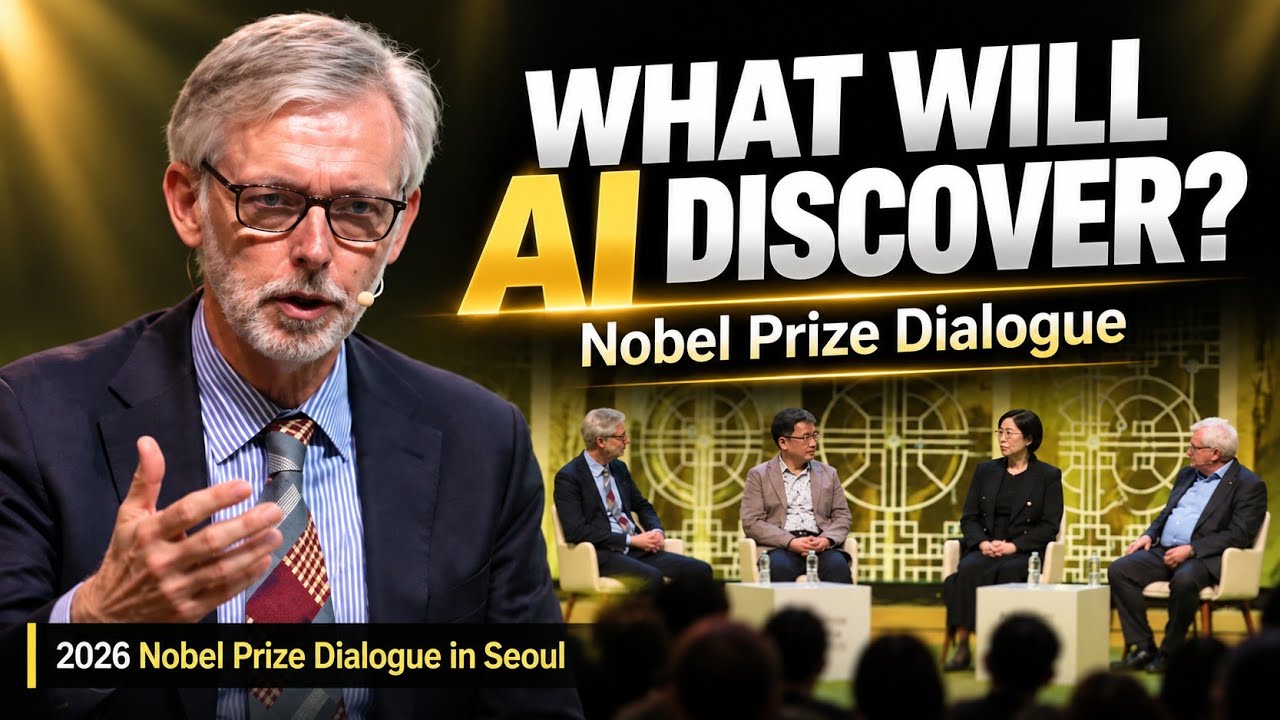
Perfology Clips · @PerfologyClips
Words
12,059
Runtime
1:20:01
Speaking pace
151wpm
Reading time
50min
151 words per minute, below the 160 25th percentile of 349 measured videos. That distribution comes from the 349-video hook study.
Opening (first 30 seconds)
Where are we going with AI? >> So, I think we'll learn today. We're not exactly sure, but we are going somewhere and we're going somewhere fast. >> So, I've been involved with AI since about 1994 when I used a two-layer neural network as part of my supernova classification program in 1994. So we are now at something that is completely different. >> I was just in Germany with the Fields Medalist and Abel Prize
76 words, the words spoken in the first 30 seconds at 151 words per minute.
Free, no signup. See how the first 30 seconds hold attention, with rewrites.
Sentence shape
| Measure | This transcript |
|---|---|
| Sentences | 606 |
| Average words per sentence | 19.9 |
| Longest sentence | 193 words |
| Questions asked | 55 |
| Sentences containing a number | 23 |
Most used terms
What this transcript is
Every word below is the caption track YouTube publishes for this video, pulled from the video itself and reproduced unchanged. It is not Prepublish's writing, not a summary, and not a re-transcription: it is the video's own published captions. English captions, generated automatically by YouTube, in the video’s original language. Source: the video on YouTube. A channel that would rather this page did not exist can ask for its removal through the contact page, and it is removed.
No Script X-ray for this video: YouTube shows a Most replayed graph only once a video has enough views.
Where are we going with AI? >> So, I think we'll learn today. We're not exactly sure, but we are going somewhere and we're going somewhere fast. >> So, I've been involved with AI since about 1994 when I used a two-layer neural network as part of my supernova classification program in 1994. So we are now at something that is completely different. >> I was just in Germany with the Fields Medalist and Abel Prize winners, mathematicians and a bunch of computer scientists at something called the uh H Highleberg laurate forum.
Now what the mathematicians are experiencing right now they were not expecting four months ago. Starting in May, a huge number of unsolved problems in mathematics have suddenly had solutions emerged through AI assisted uh programming and that has knocked that that group uh I well as we would say in Australia for six but it's it's really really come in uh just like uh an explosion to their field and so they're trying to figure out what this means for them.
But ultimately, mathematicians, I think, are generally regarded as being the absolute smartest human beings on the planet. The ones who do pure mathematics and we have reserved their minds to do these really, really hard math problems. And we've done that for thousands of years. Okay? And any physicist will tell you the mathematicians are up on the hierarchy of intelligence compared to us. That's we we agree. Okay? And suddenly they have artificial intelligence come in and it can do at least some of the problems that was exclusively their uh domain. >> So it's coming in hard.
So what does this mean for society? Well unclear. Uh it is going to be transformative but also very disruptive. When suddenly you're used to doing things you're going to have to change. We're going to have to pivot. And I'm confident mathematicians still have something to do in the future. Uh they can do astronomy if nothing else because we have a lot of work for them. But in the end we have to go through in my opinion and remind ourselves that artificial intelligence is a human construct there to serve us.
And so I will repeat this in many different forms today that whatever happens human accountability is at the forefront of what we need to be thinking. AI is not accountable. Humans are accountable for how we use it. And we need to make sure we build that into what happens because right now as near as I can tell we are not. when you go in and uh do something bad with AI, a human needs to be responsible and we need to build that in. >> Brian, thank you very much indeed.
So, Suin, you work on explainable AI and often talk of the need to understand what's going on under the hood of AI. Tell us tell us more. >> Yeah, so I think my view is that AI is still an evolving technology and its future is predetermined. it's far from it. And then you know we are actively shaping the future of it through research directions. Um we choose to pursue well especially people like myself AI researchers.
And this is why I believe that um developing new technologies that can improve the interpretability of AI and also um accountability and the trustworthiness of AI is of a paramount importance. And we need methods, new methods that can help us understand the complex um AI models, the complex inner workings of AI models and then also um help us identify and also address the failure modes of these complex AI models. So the bottom line is that you know this is the technology that is still um advancing and then uh it depends on us you know how uh we will move forward and then it will be really important um to put emphasis on you know this kind of um technology you know like uh the technology I'm focusing on explainable AI.
So would you say that we are currently too passive in answering that question of where are we going with AI? >> Um no I mean not necessarily. I'm just saying that you know we don't we just shouldn't you know consider this current AI as just a you know static thing. >> Yeah >> right. It's dynamic. It keeps changing and it's really important for humans to you know uh make it better by making more understandable and interpretable.
Thank you very much indeed. Sang Wuk, you're a philosopher. >> You commented that now that with the advent of AI, scientists are rather keener than they were before on having philosophers involved in their discussions. >> Yeah, relatively speaking. That's right. >> So here you are. what what's how would you >> uh after all I mean there are I would like to just uh agree with the the other panelists that we have a great uncertainties about the AI development and deployment and we have a lot to do having said that I think there's a two different dimension of AI in scientific research uh first one is rather uh non-controversial issues which is AI for scientific research So uh many people agree with you that uh you know using AI actually productivity of a scientific uh research I mean making scientific knowledge is excellent.
I mean it's it's its improvement is really amazing. But second thing is uh relatively controversial thing is uh because AI is rapidly developing uh there are more and more concerns about the what would be the kind of final goal of a scientific research and what would be the kind of authenticity of scientists who are doing this kind of making scientific knowledge. there are lots of uh discussions going on uh whether the kind of activities we call scientific research can continue as it were uh I mean because given that that there are some areas of scientific research where AI actually can serve the problems better but that doesn't necessarily mean that we have to include AI into our scientific research community because as you said there's they don't the AI doesn't have any kind of value judgment and they are not accountable at the moment.
So there are lots of questions we have confronted uh which we have to work with uh in a more comprehensive way uh uh perhaps with philosophers into the this research uh uh discussion uh community. >> Do you think do you think there's enough discussion of what the goal of scientific research is? >> Well, maybe it's my just impression but I don't see that much. I mean the of course I have to say that even among the scientific communities uh there are quite different opinions expressed by scientists.
Some scientists are just fascinated by the new possibility of AI deployment in the scientific research but some scientists said that you know there is nothing or almost nothing uh human scientists can actually contribute to the production of scientific knowledge. So we have to uh diverge from the conventional understanding of scientific research quite dramatically. So there are lots of uh uh uh difference in opinions but I don't quite see that kind of discussion actually focused on the uh re-examination of the nature of scient uh the authenticity of scientific scientists themselves.
M >> oh I I was going to add that you know the technologies the kind of technologies I just mentioned uh that improve the transparency and interpretability of complex AI models um I think you know that can contribute um to um you know the the you know improving the impact of the um AI in science because that way the concepts AI learned would be more aligned with the humans and then um that scientists will better understand what's going on inside the AI models and then when there is a wrong um conclusion such as you know the hypothesis that's not going to work then you know human scientists will easily know that that's the failure mode of AI >> one yes please run >> yeah I I and I'm going to double down on what I said earlier is is that AI and science I mean science is very much I think the pursuit of knowledge And then I'm going to add something that is maybe always there but not said. >> Um, pursuit of knowledge in service of humanity broadly defined.
And I we have to add in service of humanity now >> because I'm worried >> that we can do things that are against humanity and we need to be careful. >> But ultimately it's a tool that we use to generate knowledge in service of humanity. But if I come back to my accountability >> when I make a discovery and only AI can understand it and therefore no one is accountable for it, >> we have a problem. >> Mhm. >> And that piece of knowledge >> is problematic >> from a very foundational way of how human having humans in control. >> May I add to this?
Yes, please. >> This is exactly what I'm quite concerned. There is a logical possibility and and some of this possibility has been realized in the biomedical research that the the the solution or the result AI produced actually works. But human cannot actually quite understand the cultural mechanism behind why this uh working and in this case if uh the situation is kind of emerging situation like you know there is no medical care or drugs for particular disease but the only viable option is the drug produced by AI then maybe we have to use it uh for some uh escal reason but uh as long as we cannot actually fully understand the the mechan mechanism and the moral reason behind the AI solution.
Even when these solutions are quite successful in dealing with certain problems, we never know whether this success may into catastrophic failure in the future because that that's the kind of things you mentioned. Yeah. And that's why her work is so important. >> Oh, thank you. >> Thank you very much. So one thing that um I know the audience are in very concerned about is the change in skills that we will be required as all of this comes through and changing your skill set has always been part of life and part of science but now it's suddenly accelerated and you alluded to that at the beginning with these mathematicians looking for new areas to work in perhaps. >> So does do you want to talk a bit about this this concept of deskkilling and the the change >> Suen perhaps?
Oh, sorry. I didn't catch your question. >> But the the the change in skills that is going to be required, >> change of the skills for, you know, what humans should focus on >> a human scientist. >> Human scientist. Yeah. So, it depends on the science. I mean AI still, you know, AI has the strength in scalability, autonomy. Uh certainly it, you know, does things faster than humans. And the humans uh currently are good at identifying what problems are important.
At least you know in the scientific field I'm at biological science or medicine still humans know which you know problems are important. So um I think you know so that's currently where we are but if you if you see the longer you know term future I think education is a really important um important point we really need to think about you know how we should prepare the next generation of scientists and society more broadly for a world that's increasingly shaped by AI.
So I think you know one of the skills that's really important this is applied to scientists and then non-scientist you know how AI works you know the modern AI is basically it learns statistical patterns from the data so humans should know how it works what it can do what it cannot do and then how it can fail so um other than you know scientist skills you know to identify important problems and so on but for younger generation I think important skill is you know this AI liter literacy along with um solely the statistical foundation um I think it should be a fundamental part of education um you know a lot like you know learning math and then or languages >> thank you Ron briefly >> yeah at the very highest level you need to be positioned to make sure that AI is your slave and you're accountable for what it does in whatever job.
If you're going to be a plumber, then you need to make sure you're in charge of what happens. That's pretty that's probably pretty safe plumbing. >> If you are a computer scientist, then you got to make sure you're in charge of things. So, I think at the very highest level, >> making sure you're in charge of AI and it doesn't just do stuff for you is the skill that people want need to learn. >> Exactly. >> Thank you.
Do you want to last? >> I think uh uh historically speaking uh this killing always happened uh in our scientific research history because uh for instance in 19th century every scientist has to uh build their own machine in order to make an experiment but we don't do that anymore. So this skilling itself is not a big problem but the problem is as you mentioned uh we have to focus what kind of skills we have to maintain and train continuously even when those skills can be automated by AI because some of the skills are related to the responsibility accountability and ethical judgment and we need to focus on and this kind of skill to keep on uh working as a a real competent scientist. >> Thank you very much indeed.
Thank you to all of you. You've you'll meet all three of these people later during the day in different conversations. It's been fascinating to listen to you and you've really highlighted some of the areas that the program will be touching on during the day. It was a perfect demonstration of what the conversations we're trying to get to. So, thank you very much indeed. Thank you. You Thank you. So uh next we move on to the main part of the morning program which is to ask the question of how AI might change the nature of discovery and to introduce that section of the program.
We have a short talk by Allison Noble. Allison is professor of biomedical engineering at the University of Oxford and she also chaired the Royal Society of the UK's working group on science in the age of AI which produced a report in 2024 and is going to produce another report in 2027 I believe and she's going to summarize briefly the findings of those reports and where it's taking us. Please welcome Allison Noble. I'm delighted to be here to talk to you a little bit about the Royal Society's work um and some of its findings and it was focused particularly on how the scientific process is evolving and what a scientist does and how that's changing across science.
First report was published in 2024. It was it followed many discussions with with um scientists getting them together in roundts and particularly the question it was what do scientists say mattered at that time. The big concerns were about data access requiring the requirements for large volumes and quantities of data and the importance of c um curation of well- representative data and of course that's an international question for for many of us is how can we work together with data computational infrastructure is also very challenging um traditionally science being based on the desk with your with your um computer on your desk moving to now require ire regional and national investment in infrastructures so that you can have the the compute capacity to work on AI.
The roles of interdisciplinarity are also changing. That means how science disciplines work together, computer scientist with um clinical medicine as in my case, but also um going across um discipline barriers and that means you're going from siloed areas starting to work in teams. So the importance of team science and in science this creates big challenges where competition drives a lot of what we do and the notion that partnership might drives some of the future.
How do we set up reward systems to manage that? Reproducibility has always been a great foundation of science. You need to be able to rep reproduce your results to others. This is challenging when we have black boxes and this falls under what we call responsible AI that you need to if you produce a result be able to reproduce it manage data bias explain the explanability that must come with results and also be able to offer your models and data in an open way.
So openness and transparency these are again with AI are much bigger challenges than before and this is really important so that we have we generate evidence and knowledge that people can trust and on algorithms the conclusion was they will just evolve and we've seen that we've seen um convolutional neural networks transformers large language models and more recently agentic AI and world models come along and scientists are absorbing all these new technologies.
But we must remember that we use the word AI, but it's not one thing. We can have AI as a superpower for discovery with its ability to do pattern recognition predictions. We can have AI as your assistant to empower an individual. So your research assistant supporting your research assistance is a new concept. The AI do the coding for you allows you to do more reflection and and thought yourself. and the diverse applications we're seeing across the whole of science from biology, medicine to computer vision, materials, chemistry, and things like climate modeling.
So, moving on to 2026, um we're doing an update of our report, and I just thought I'd mention some early findings. First of all, applications have got deeper rather than broader. Some of the different disciplines are having different experiences. For example, mathematicians, for example, as we've heard earlier, they're they're concluding that AI is really creative but challenging who they are as a discipline. Other areas such as climate scientists abuse the AI and maybe understanding some of its limitations as well.
So, we're seeing this as it as the technology diffuses in, we're seeing different experiences. We're also got new things like AI based science is full of things that work before we know why. So do we publish these and figure out why later? So there's a new type of science publication and we need to think carefully how we manage that. Reproducibility though remains one of our challenges and also using large language models.
This they're built around sequences and languages and those the outputs do not always reflect reality or the scientific questions we're interested in. So we need to be careful how we manage that. And this brings on to the human factors and that we need to develop deeper understanding in science of how we trust results. Things like cognitive overloading and over reliance. We need to particularly think about judgment and advice taking in the context of science.
For for example, it's fine to you to ask AI to um query your results um and the evidence to confirm a hypothesis, but you mustn't become over reliant on it. And finally, we have what we call the apprentice problem. And that's a shared anxiety. There is a lot of uncertainty about career paths of future experts if team roles are changing and AI is doing tasks that scientists used to spend time doing um in the past. So AI is a tool.
It's an incredibly powerful tool. But we need to ensure science and scientists do not become less creative and uh and are not less able to tackle the problems that do not follow trends. And we mustn't um follow trends and the dominant approaches um too much. And we need to create continue to create the opportunities for the unexpected scientific discoveries which have for centuries been the foundation of scientific advancement.
Thank you. Thank you, Alison. Thank you very much indeed. So now uh we move from Allison's talk into our first panel on this subject which is going to ask the question of what has AI contributed to science so far. For this we have um three wonderful panelists and a great moderator. We have Minkyong Beak from SNU and she worked with the Nobel laurate David Baker at the University of Washington on development of Rosetta Fold.
We have Honglac Lee who is chief AI scientist at LG AI research and also associate professor at the University of Michigan. David McMillan 2021 Nobel laurate in chemistry for the development of organo catatalysis. And the conversation will be moderated byju Kim who is a professor in the department of computer science at Jon University. So please welcome them all. in a minute. Thank you. So, Okay. So, let's just start right away.
So, I'll start with Mingang. So, you've been obviously uh heavily involved in the development of Rosetttoold. >> Uh so, let me ask you after Alpha Fold and Rosetta, how much has bio has changed? Uh what is the current status of bio and AI? >> Well, I would say still biologist has the same question. how biological phenomena actually happens. So as a I mean biologist but trained in chemistry major I always have a question like how biological phenomena is handled or governed by molecular interactions.
So to me alphaford and loafford is just a starting point. So alphaford can predict the protein structures with reasonable accuracy. So that now the structure biologist I mean in long times the struct protein structure itself was a major bottleneck to study proteins function but now AI has removed that bottlenecks and now super can focus on their original question like how proteins are actually do their work by understanding their molecular mechanisms and understanding their interactions and how the effect of mutation can cause some disease.
So I would say the just question is has been changed. So the the so basically AI just removed the one of the bottlenecks and we try to tackle another the next bottleneck like how we can predict interactions or how we can predict dynamics of the proteins and how we can predict the changes of function depending on molecular I mean the the changes in molecular interaction in certain condition. So now the AI tries I mean we actually use the those AI tools to try to solve that kind of question our next bottlenecks.
So as a AI developers as well I'm currently focusing on developing AI models to understand interactions of the proteins as well as designing proteins to control those kind of interactions. So that's how AI actually contributed the the biology field. >> Okay. So so just let me ask you one question. If you're building an AI model for bio >> like how much capability do you need from AI and bio like if you're recruiting a student >> I always prefer the biology or chemistry major the which have some domain knowledge because I mean it's kind of irony when AI becomes better and better then you don't need any AI specialties because AI can code AI can write uh all the programming code and also AI can also suggest some AI architectures to solve the problem but it's really inter in important to understand what is the real uh question what is the real problem to uh to solve so that requires domain knowledge that's why I usually focus on yeah those field >> okay thank you so I'll go to hung so I think hungla brings really interesting and unique viewpoint because Hungak himself is a very distinguished AI researcher.
Uh but now he's leading one of the biggest AI research labs in Korea. Uh so Hung, you you were actually one of the early researchers who started deep learning research. Uh so were you actually surprised how fast this has happened and can you tell me about your work at LG? >> Uh yes. So um it has been very um surprising because um probably before the generated model we were developing individual models like uh it's basically called deep learning we build neuronet network train the data and then we show some um effectiveness of this model for these individual problems and essentially we were conquering one after another And it was very exciting.
But then after uh these uh so-called chatt like generated models came out um these models are uh much smarter and actually can do a lot of uh general purpose task >> such as uh reading papers um and maybe understanding and nowadays the model can also reason uh so uh synthesizing from multiple source of information like uh maybe looking at some papers from chemistry and then look at the diagram like pictures of how these molecules look like and then translate that into some uh molecular like representation and basically you just combine all the relevant information and then somehow uh this kind of ability of AI can um synthesize some new hypothesis and uh in particular in LGI research um we have been developing so-called um um like molecular property foundation model. >> We call it X1 discovery and the basic idea is that we basically gather all the available information um like papers, patterns and all kinds of multimodal information like diagram of molecules and how they interact and so on.
And then we we try to build a foundation model that can predict the molecular property. And also um not only predicting the property, we also want to have some model that can um generate some possible feasible pathway um to synthesize them. So then we uh predict various other properties like um retroynthesis and also predicting some uh side effects of these uh um synthesis and so on. Um so um yeah we were very surprised that these models can actually be used for various purposes.
Um so concretely we had some uh successful uh projects on uh developing some new materials for uh batteries uh like a cathode and electrolytes um some kind of property optimizing for these properties. Uh but also recently we have been uh collaborating with um LG household and healthcare for um developing some materials that can help uh uh these cosmetic or skin products to um to reach the uh reach uh through the skin.
So basically that improves the skin permeability and this can basically increase the effectiveness of these products. But also another very interesting thing we found is that very similar molec molecule can be useful for hair loss. So u probably one of the very practical problem uh many people want to solve and um yeah we actually um are also collaborating with um LG household and healthcare for uh turning this into actually a product uh hopefully sometime soon.
Um so I see that there is a lot of serendipity. Uh basically you develop something interest but then discover that this can be also useful for other purposes. So I think this very um very u powerful um you know case study of AI. Um so to be um to summarize what what we do in with this X1 uh discovery foundation model is basically help screening uh these candidate molecules from a vast uh space of uh search uh for this molecular space and then um this can be very helpful for um generating some candidates and then we verify them with the the actual wet lab and some other physical experiments.
So I also maybe would like to touch upon some projects that we are working on some uh biology area like uh uh developing some new um antibbody for uh cancer treatment but probably I will um may move on u for the sake of time. Yeah. >> Okay. So we may actually come back to that later. Oh, so David, so how much is AI impacting chemistry? And kind of added to that, how much AI are you using uh to do your research? >> So th those are two very big questions.
Uh before I begin though, I want to start off by saying thank you for inviting me here to Korea to Seoul. Um my wife is Korean >> and so it's fantastic to get the opportunity to come back to Seoul. I love to come here. Uh I've been to Coax many times. uh almost always to go shopping, not to uh not to be in an auditorium talking about AI. So this is a very new thing for me. Um but for chemistry, chemistry is an enormous field.
It's an enormous area. There's so many different ways in which AI is already impacting chemistry. People will talk about materials, people will talk about pharmaceuticals and medicines, many different things. But at the moment uh most of that work is optimization >> which I would say is um I would say is lowhanging fruit which makes it sound not important. It turns out it's incredibly important to be able to optimize and accelerate.
If you think about medicines, you think about materials, you think about all these different ways that we can impact our world by accelerating things. AI is really incredible. But I think for chemistry, what we're now seeing, and a number of people actually talked about this in the opening speeches, >> it's not about just taking the things that we know and do already and making them much faster. It's about creating completely new questions that as human beings we're not even thinking about right now.
And that to me is the most exciting part about AI for chemistry. And for example, I'll give you a couple of examples, but if you think about, you know, climate change, how do you use AI to think about climate change and things like that? And you're already beginning to see some really clever ideas. For example, one of my favorite is when you look in the sky and you see an airplane going past in the sky, you see this white line coming behind it called contrails.
These contrails actually contribute more to global warming than actually the CO2 that comes from airplanes. And people don't really think about that a lot. >> So one of the things you're now seeing is really smart scientists thinking about ways to change the molecules which are being used in fuels so that you can then >> use those and not create those problems. And then that brings you back to the question well how do you do that?
Then AI can help you to think about how do you design those molecules? what are the things which were abundant on earth that you can start to use. That's just one way of thinking about doing it. >> The second thing I'll say and this goes back to the question of biology and and and medicine is you see so many different people right now talking about AI is creating medicines. I I think that's somewhat true but it's not completely true. uh you see what's really happening is you're seeing human beings that are being amplified in their discovery of medicines by AI but at the moment AI cannot denovo predict a molecule that's going to be a medicine even though people tend to sort of talk about it in those ways but as time marches forwards that is becoming more and more the capabilities are increasing but one of the things which is going to be really problematic I think or difficult is the complexity of biology which means you have to gain new insights and new learnings and more serendipity along the way to be able to sort of do that.
So from my perspective, you know, this is just the beginning for AI and how it impacts chemistry. There are so many different things to do, but it's ultimately going to come back to the questions and the questions a lot of the times have to come from the creativity of of human beings to think about how we're actually going to use AI in completely different ways than we're using it right now. >> Mhm. And about the question, how much AI? >> How much do we use?
Um, my students use it again, we use it more as an optimization tool to make things go faster. >> I see. >> But at the moment, it just to really quickly, if you look around you right now in the world, every single thing you can see is made by a chemical reaction. >> Mhm. >> And we need new chemical reactions. Uh, the scientists in this audience need to create new chemical reactions for sustainability and for climate change. >> To create new chemical reactions, AI can't do that right now.
It cannot invent new reactions. It can help us develop them, >> but that's going to be a major major focus for AI. How do we enable AI to think about how do we invent new chemical reactions using AI to to help us do that? >> I see. So, in a way, I think the one of the areas that AI has made the biggest impact would be computer science and now math. >> And it looks like science is a little bit different. >> I think the existence of wet labs uh is very different because math and computer science always happens inside the computer.
So I think that's one thing and another thing is I don't know if AI is able to extrapolate like if you think about discoveries invention asking questions that no one really thought about. I don't know if AI is able to just extrapolate and come with a new materials for example. What do you think about this? I alo kind of agree that point. I mean I see AI is really good at interpreting what our knowledge we already know but I'm always suspicious about whether AI can actually extrapolate our the the boundary outside of the boundaries our knowledge because whenever I ask AI just knife question what will be do you have any good ideas to improve something and the I usually the ideas is it's good but not excellent it's not like a totally new or groundbreaking ideas.
It's more like okay this reasonable but it sound like someone already tried or someone already tried just a modifications of that idea. So I think for the science is really uh what the important thing is the extraporation and and and science is often comes from the surprising findings that are unexpect unexpected ones. So I actually have little bit of the suspicion whether AI actually can help that direction. >> Do you have a say in this? >> Um yeah I generally agree.
Um but also with the advancement of AI nowadays the AIS um can do more reasoning. Um so in the future it it may be possible that given some uh first principles >> you or you find some relevant information and then try to synthesize based on the principle instead of just saying something because it has seen similar things from the training data. So um that might be a holy grail of AI for next breakthrough. Um I I think in general AI tend to basically operate in between these two.
I mean it will basically try to generate things that are like sounding familiar or something that it kind of knows already. Um but if you give some enough um maybe prompting or guidance it may be uh encouraged to generate something different. But I think that could be the role of human maybe interacting with the AI. So AI can work as a co-pilot >> but humans can really drive um so that actually creativity can um probably uh more unique property uh or unique ability of humans.
Um so I think that could be the how you know uh humans human researchers or humans in general can interact AI to uh go beyond the current limitations. U hopefully in the future it'll become a bit more extrapolating and um generate something more interesting. >> Okay David. Yeah, I mean I think one of the things with AI I find really the most compelling and interesting is the how difficult it is to predict what it is it's actually going to do, right?
Because normally we have new ideas, new inventions come along in science and we kind of understand them quickly and we can project where it's going. But AI is evolving in real time which makes it really hard to understand where this is going and the pace at which it's going at. In chemistry, we always say that a chemical reaction is impossible until it's not. >> And that means that people will say you can never do this and then someone will do it and then people will know forever that you can do this. >> I feel like with AI, we're kind of in this same situation where people are thinking, I'm I'm the same way.
I think, well, we'll never be able to do this and we'll never do that, but then it will happen. And I think betting against AI is a really tricky thing because you don't want to be in the wrong side of history because 5 years from now we could be sitting here having the same conversation saying, "Well, of course it did all these things that right now we're thinking it's going to be really hard to imagine it doing those things." So again, that comes back to our imagination, our creativity, and where we can see it going.
I think what's going to happen is it's obviously going to be in an incredibly exciting time in terms of the way in which science will happen and the discoveries but again for me I still think it's going to be about the human beings using it in a completely new and creative way to do things that we just couldn't have conceived of even one year ago. >> That is why I think there's going to be so much excitement in the basic sciences I see >> because of AI. >> Yeah.
Yes. I wish I actually majored in science now that I'm a computer scientist. I'm deeply worried about my students getting a job. Uh I wish so I've actually kept asking our undergrad students you should actually double major some part of science be it chemistry or bio because like AI knowledge itself seems to be very close to be solved or not many things that we can do all those big companies are doing. Uh so with that I think our time is almost over.
Uh so thank you uh for the great discussion and we'll see you all I guess over and over again for for the whole day. So thank you so much. >> Thank you. Thank you very much. Thank you. Okay. So now we continue our discussion. Um moving on to the question of how will AI transform discoveries in the future which of course is inseparable from how it's transforming discoveries in the at the moment. For this discussion we have uh four panelists.
Tuan hyon from Sell National University where he directs the IBS institute for nanoparticle research. Sang Hun Kim who's chair of mathematics at the Korean Institute for Advanced Study. Craig Melo 2006 Nobel laurate in medicine for his discovery of RNA interference and Ava Olsen who's professor of experimental physics from Charmer's University of Technology in Goththingberg, Sweden. Please welcome them all. Penguin if you want to sit at the end.
Sam, Craig and Ava. Fantastic. >> Thank you. >> Thank you very much indeed. Great. Um, check the time. They they've given us too little on time on the clock. Sam Brian mentioned that you have um uh that it's been quite a summer for mathematics already. So, where are we going with mathematics and AI? >> Yes. So as professor Brian Schmidt properly mentioned we are going through a turmoil and great change some change that we has we have never seen in the past 5,000 year history of mathematics because mathematics was very different from other fields of science and when Thomas Kun's scientific revolution theory it wasn't mathematics we always have the same paradigms that we want to prove crit theory s in other words make great discoveries and have a good understanding of it.
So that was the 5,000 years of history of mathematics. >> It could look useless at first but after a few hundred years or thousand years it became extremely useful for the human race. But in the first time in the history these two are diverging understanding and discoveries. So so far it has aligned. So if you make great discoveries that means you're understanding something very well and that is good for mathematics.
But now we are flooded by discoveries produced by AI. Sometimes they have errors but I'm sure that the errors will be less and less common. AIS will get better and their answers their discoveries will be more and more correct. But then mathematicians realize that we are having too much discoveries and much less understanding. >> But that's what is happening. We're very worried about it. So that's the current situation. >> It's a concept that would surprise the public at large that you can have discovery without understanding.
But it's something that scientists very much understand. >> Yeah. Yeah. It's very sad. Craig, I mean, you you discovered RNA interference back in well, back in the day and got the Nobel Prize in 2006, but you're still trying to unravel information flow in biology. Understanding takes takes time. >> Well, it's interesting that, you know, in 5,000 years, you're now seeing this divergence. I think with science, that divergence has always existed.
In fact, with the scientific enterprise, discovery, in my experience, deepens your lack of understanding. It brings your it makes you appreciate more how little you understand. Um, and I think Brian's discovery is a great example. I mean, not that I understand cosmology, but how can the universe be accelerating? I mean, it just does anyone understand gravity? Uh, and yet it's a reality in our daily lives. Um, I kind of love that about science.
And I think mathematics is so different because you live within sort of a theoretical realm that's created by the numbers. Whereas science, we live in this um inexplicable universe that none of us can understand. Um, and by the way, that goes for the AI, too. So, in a way, I feel like maybe it's not so bad. Will the AI have an existential crisis like I did growing up? >> Teuan, you're you're a material scientist. Um, what is AI doing to material science?
What is it going to do to material science? Actually I've been working on materials discovery for the last 30 years and as you might know I think it's in every area in particular materials area I mean the the process of like a new discovery materials really speed up by this AI tools and you know we can also work on the humongous large number of materials candidate and we can just using AI just going to select the most promising one so instead of like I mean the doing the experimental calculation one material by one material you know the as we did the I mean you know old times so we can actually focus on the the first like using AI just like I mean the I mean get the most promising materials candidate groups and we can just focus on that and we can just do a lot of like I mean the calculations and experiment on that >> so you I think you have one of the largest groups of scientists in Korea you have a huge group >> kind of yeah >> and you have about 20% focused on AI research directed research at the moment.
Do you find that that 20% is going faster than the other 80%. Actually you know one what happened is actually the way I do is I mean they do collaborate with the rest of like about 30% of like our group is actually working on the AIdriven materials discovery and actually they are working on the rest of like rest 70% you know the they have to collaborate and for example I mean you know we try to develop new kind of catalyst for the hydrogen production and then the that kind of like I mean the new machine learning tools can be actually translated relate to the even to the like a discovery of some kind of new drug deliver drug delivery vehicle.
It looks like totally different, right? That's actually fun part of doing research, right? Looks totally different. But you know the when when you understand something really important in the one area, it's easy to translate to the other other area. That's fun of doing science in general. Yeah. >> Ava is also material scientists. So you share this in common. Would you like to tackle that same question of where how is AI going to transform your science? >> So I see two main things.
So tech one is making materials. I'm studying the materials. I see where the atoms are going within the materials. And sometimes they don't do exactly what we think they should be doing. That's right. >> And that is giving us new possibilities. What I see with AI and this is happening already is that it has an enormous capacity to handle information and uh it also gives us a possibility of doing evaluation in real time.
Mhm. >> I'm using and we are using electron microscopes where we actually look at the atoms and sometimes in the old days we had to do data evaluation after having done the microscopy but nowadays we sit there and with the help of AI we do the real time evaluation. So the progress is much much quicker. >> That's right. >> We gain knowledge much more efficient. And the other thing that I see and this is more that is coming for future is that we are used to work in a modular fashion step by step gaining knowledge.
What I see with AI is like having a sphere with a lot of information but also information data but also information about the laws of physics and what is happening in chemistry. And what we can do is simply put in our question and something is happening within our swear and we get out an answer that is not typical for our modular thinking but something that actually can look very different and be very inspiring for us >> in interesting you phrase it as inspiring.
You could also phrase it as worrying because it's not built on this incremental understanding. But >> it's up to us uh to make it inspiring because as you were saying before Yeah. >> Ah yes. >> Thank you. as you were saying before uh we get new ideas but sometimes we actually don't understand what that new idea is about or if it's really something that has to do with reality. So we has to have we have to have a basic knowledge a basic understanding to be able to understand what AI has provided us with. >> Mhm. >> And that's a challenge for future and especially our young generation. >> Our generation.
Yeah. That's right. >> Sam, do you want to come in? >> Oh yes. Uh so I mean history is already moving. I have no intention of denying it. So we'll have to either adjust it or just quit what you're doing. But the the the question that is recurring to me and to my colleagues is then in this case if you value discoveries over understanding do we really need a human in the loop. Ah >> so that is the question that I so I sometimes have some part-time working with Google mind AI company and so originally wanted to build some great core mathematician mathematician want to solve certain problems and AI can suggest certain directions and change what we are doing and also drafting but eventually we realized that are humans really needed or are we bottlenecks if you consider automated labs For instance, if you want to just make discoveries for instance >> as so as you as you just mentioned you work with Google deep mind as an adviser to their development of mathematics programs.
So what's their view of this do you think? >> Well so we wanted to solve great problems actually. So well their purpose is a little different of course but the purpose is they want to check the limit of AI model if you're given with almost unlimited source of resources especially computing resources. So they want to make benchmarks and check their limits but the participating mathematicians have the their own agendas of solving great problems with their names on it.
But we realizing that if you just let the AI discover like the recent announcement by open about Navier Stokes problem or rather clothe announcement of Jacobian conjecture if let these things just prevail the media overhype and also young generations of mathematics then maybe people start to have a misconception about mathematics. And then humans will be battle leg and let AI do everything because of but one has to remember actually this is not what I said there is a very inspiring article by great uh scientist novelist Ted Ch who wrote to nature the science journal in 2000 um depicting a future that humans are always behind AI in scientific discoveries and nature is publishing only artic articles by AI not from humans anymore.
But then the the closing remark of Teddy Ch was but you should remember who made this AI >> who gave birth to this AI. This was this should be like mathematics that has been developed of past 5,000 years also physics diffusion equations heat equations. So I think human dignity and human involvement will be still interest important and we have to put more emphasis on it. So that's my worry, suggestion and hope to steer the development. >> Thank you Sam.
Thank you. So when it comes to humans in the loop or not, uh we could talk a little bit about the rise of autonomous laboratories. >> Tuan, you've been interested in that and I'd like to hear your thoughts on that too Craig because I know you work with a number of drug discovery companies. So you know the one of the I think is is the hottest research topic recently not just the material discovery chemistry and chemical engineering general is like soal self-driving laboratory or autonomous laboratory which actually combined the convention like AI AI tools with physical AI you know what the physical AI is right that's robotics right so basically what what it does is actually the AI going to propose like new experimental process procedures but actually experiment is done by robot robot systems, automatic robot systems and then after getting the data, analyze the data and feedback to the AI to get the better experimental procedure, better materials.
So kind of close loop, close loop, right? That going to be really exciting research that's going on. But you know what as like other like physical AI systems, one of the limitation is dexterity of robot systems. Still robot cannot do delicate job as we we humans do right so you know the ones that like a robot can do something we can do like our own hand I think it's that going to revolutionize it and also robot can you know the when he faced some kind of unexpected situation if robot can handle that kind of things things done basically you know I mean in the anonymous years in discovery in every era They're going to revolutionize science and engineering technology whatever that's what going to in the future.
Is that the future you see Craig? >> It it's uh really hard to predict the future right now. We're moving so fast. um you know so far I'm very optimistic because um you know the there's so much data now and we need we need that ability to analyze that data and um I I you know I think in my field of medical research we are happy if there's a discovery no matter where it comes from if it's going to help patients right I mean we don't we don't uh care whether that comes from some human in the loop or not.
Right now it seems like humans are really really important um in still and that the AI is liberating humans from some of the otherwise maybe even impossible tasks of crunching and analyzing all that data. So my feeling is so far it looks okay. Um where is the motivation going to come from? Where is the curiosity going to come from? Are AIs gonna start to be curious and motivated on their own? And maybe then we need to really start to worry because they may have very very different objectives than we do.
But so far it seems that they are propelling our curiosity forward more rapidly. >> And on that motivation question, I mean it's always struck me with you Craig that your one your motivation is wonder. just pure wonder at the beauty of nature and trying to unravel it. And that I guess Sam is your motivation for maths. It's not really finding something to do anything. It's really just understanding. Back to your point.
And that is hard to imagine in an AI at the moment. Wonder, but maybe it'll come as you say, Ava. Yes, I'm thinking of we had Jeffrey Hinton with us for the Nobel Prize and part of the events is that on December 12 the Nobel laureates in physics meet high school students. >> Uhhuh. >> And uh so Jeffrey he gave a talk uh and he answered all the questions from the students and one thing that he said was that AI is getting awareness. >> Uhhuh. and and I I got the impression that that was his concern >> that there is an awareness and that means that we are having a partner and I believe that we should make AI our partner to work with us.
Um but we do have a partner that actually is developing an awareness. Uh so we need to be working together and I also think that we need to be thinking about of course the risks but also thinking in a positive way because I brought in people uh we had a discussion at my university and I brought in people because we had a discussion about AI in education and I said okay yes we need to be aware of the risks but think about what are the positive what what how how do we use this in a positive way and they came to me afterwards and oh yes, I thought about this and now I'm using AI in a new way because this actually got me thinking.
So I I think AI is going to be very clever. Um I hope that we as human beings do not lose the contact with experiment I'm an experimentalist that we don't lose the contact with experiments and what is happening in real life. We shouldn't only leave it to robots. We should actually have some experience ourselves so that we can interact properly >> and get it working in a positive direction. >> Something that will be Thank you very much.
Something that will be talked about later in the day is the the human fallibility and the importance of human fallibility in research. Craig, you like to talk about this often that the best things are the things that go wrong, right? >> Yes. I I I want to just add though that um this idea that um AI is developing awareness. I find it fascinating. Um and I haven't yet experienced it myself. Um when I interact with AI, it seems to be um completely devoid of sort of that native curiosity.
Um and and um so I wonder uh whether that's true. And and if it is, then that's a real philosophical issue, right? Because we've created something that's self-aware. That's like that's actually like having a child. That comes with some ethical responsibilities. And uh so we really all have to pay attention to that. Um, are we the parents of a a potentially pathological child or is that child actually looking around and saying, "Oh my goodness, my parents are, you know, they're they're crazy." >> I think all children say that, don't they? >> But I I think that's a really profound question. and um you know the the uh someone said we should be paying attention to the science fiction because there's a huge volumes on what happens with AI both dystopias and some incredible utopias that are possible and I think if AI is going to become self-aware then that changes everything and it really uh would definitely change the way I think about Sam, you're close to Google Deep Mind.
What do you think their opinion is on whether it's becoming self-aware? >> I work on a a team called superhuman reasoning. >> Uhhuh. So their reasoning capability at least they dream actually I realized this of some visions of of people in science computer science that last year they talked about achieving mill top journal result and millennium problem I thought that they are joking or daydreaming but it's happening right now within like six months of their prediction and then so their reasoning capability will certainly reach or maybe have has already reached the ability of a human being but as ever point correctly pointed out that what we need to keep is uh skills skill set for human race.
So what we are discovering mathematicians are discovering is that we are not actually discoverers. Discovery was not our ultimate goal. We are rather a way maker. We need to make and inherit the skills to discover to the next generation. I think that is something that that you might want to keep in mind. You know, AI cannot replace us or even whatever AI company thinks about it. Thank you very much indeed and that is a beautiful point to stop at and in fact it's you've very cleverly made a segue into the next discussion which is exactly about what skills define a great scientist in the era of AI.
So thank you all very much indeed. Thank you. Thank you. Thank you. Thank you. Thank you. Thank you, Eva. So, um, this conversation is needs to be intergenerational. And so, our for our next piece, we're bringing three young scientists, uh, Dun Kim, Subin Sun, and Giwan Chung together with the Nobel Lauration on stage. So as they set up the tables, they will come on stage. Please join us. Thank you. I'm very grateful to you all for joining this.
Thank you. Very thank you. All right. So as said uh AI is a intergenerational issue and so while someone like me can kind of be from the past looking down at the problem our hope is by talking to three students here we're going to have the future looking up from the problem. So I want us to get a slightly different perspective and so uh as has been introduced uh we have uh Jiong and Jiong is a postoc but he is working in AI we have uh and and he's from Jon uh we have Dun who is doing mathematics which we've talked a little bit about the future so I'll be interested to get yours and he's from Soul National University and we have Suben who's from Ewa Women's University and she's working in um pharmacy.
So let's start giong as an AI scientist how do you see uh the question dour which is what defines a good scientist in the era of AI and uh from your perspective of someone actually working in AI? >> Yeah. Um well I'm an AI scientist myself but I I don't actually have a good answer for that as of now because AI is uh transient is evolving too fast. So it may conquer the area um we now think is incomparable right now but as of now I have um I think there is a there are two defining characteristics of a good scientist.
So first of all uh the ability to pick a right the right problem at test one is um to pursue it relentlessly when you think it's right. So uh for the first one I think um most of you have um a lot of well there are a lot of talks uh earlier today on that one. So I want to add my little thought on that. So um first of all um in AI uh there were many different uh domains and areas before um the advent of this generative models and the modern AI.
But the modern AI is trying uh increasingly um merging these areas and merging problems so that you no longer have a single problem you can just pick at the start of this uh your research and just uh uh continue that until you get the graduate or well something beyond that. So um the big tax and the big modern AI is trying to uh conquer every problem there that is easily conquerable given their um big compute and everything.
So I think um the problem of uh asking the right question that is answerable within your bridge uh is becoming more important as times go by. And the second one um pursuing the problem relentlessly is I think it's more important than people think it is. So um since I am an AI student, I actually use AI a lot during my research because um yeah you know computer science is easy to um outsource your experiments to AI but um most of times it does the jobs right but most sometimes um it'll just very questionable so that um I might not have a good idea of whether it did the job right.
But the problem is that in order to use AI right, you have to um believe this to outsource your work to them. So it I think it's becoming a bigger problem of um what uh how to um get the right things out of the AI and ask the right problems and believe in something you think is right. whenever when even when the AI is experiment or empirical results uh doesn't follow your initial intuition. So to summarize I think uh you're at one sense uh saying that at the end you still need to be you need to understand the results coming out that you are ultimately in my language going to be accountable for them right >> so you have to really not take too many shortcuts uh along the way >> right >> all right so suben you're someone working in pharmacy where one could imagine this will become a hugely important tool.
How are you approaching the question of what defines a good scientist in the era of AI as someone who wants to be a scientist in that era? >> Yeah. Uh well, I am really interested in chemistry and about and I'm dreaming about drug discovery in the future and as that when we study chemistry and uh give questions to AI or there is really lots of data. So their predictions are really correct but when we go to sometimes a critical like like new drugs their predictions go wrong.
So uh and really trained chemist and biologist predictions with their intuitions are right. So I just want to ask you about uh will it be the scientist intuition will be still the uh important ability for the future even when the AI is keep growing and growing. So I think intuition is really important for scientists but in the future will still it will be the really important ability. >> Yeah. And that and that's something I don't know.
Certainly in astronomy right now, my intuition is a lot better >> than AI's. And this gets down to the last panel we're talking about interpolation on what we already know versus extrapolation. >> But when we extrapolate that intuition, it's not just coming out of the ether. >> It's coming from knowledge, right? And so I don't think we can guarantee that intuition of the future of ours will be better than AI. We're ultimately acting on information with our intuition and it may well be able to catch up on that.
Uh I don't know. I don't think we can take it for granted. >> Oh, really? >> Yeah. Well, we shall see. >> So, uh you'll have to focus. So in terms of your future, if I tell you you can't rely on intuition guaranteed, does that change your thinking at all? >> Well, but as a future scientist, I think still getting knowledge is really important. But studying new like knowledge it it have to to be different for our generation like if there is you not from the like step by step but I I heard we have to go through like what is the important things so and study tackle that first and more be challengeable about new things because it will be more easier for us to use AI as a tool. >> Yeah.
No I I absolutely agree. So, Don as a mathematician as indicated uh by several times now, math is going through this transformation, especially in the pure maths where we prove things and AI through logical steps seems to be good at least doing some of that in a way that humans have not been able to. I I'm not convinced it's everything yet, but it's certainly some areas of math. what is your uh view of what it means to be a good scientist or maybe a good mathematician in your case in the era of AI? >> Uh I think a good scientist in the age of AI is someone who maintains interactions with other scientists.
My point is really about the small everyday interactions between scientists. Uh certainly AI makes the exchange of knowledge faster and makes individuals more productive. But in my own experience, I think I I communicate less. For example, uh in class, I sometimes hesitate to ask questions uh since I feel like AI can answer them. So and also one of my mathematic professor said to me uh in the past uh when he met some routine calculation or coding in his research he used to uh had his graduate students to handle them >> but now he just ask AI because it's more efficient but But uh I it means that uh students like me may lose opportunity to learn from that. >> Uh so and I have also heard the opposite case.
A researcher from KIAS Korean Institute of Advanced Science told me that uh their research had their institute has a regular tea time after lunch. uh during that time they chat casually and exchange their opinions and talk about their research even a simple calculation. So obviously they can they could ask AI but I think I believe that those small talks are valuable because uh the purpose of the purpose is not to get answered uh but to uh share with their colleagues what they're working on and where they are struggling and their roadblocks.
So, so to conclude, I think a good scientist in the age of AI should uh share their everyday research life with their colleagues. >> So, I'm so your experience is actually very similar to what I am seeing. So, for example, I will be honest, I when I have graduate students do calculations, I used to just have to go and work on them. But now I can kind of do a parallel AI based calculation. Allows me actually to check their research, their research.
I don't I don't tell them not to do it cuz I do think we need to learn, >> but it speeds up my ability to understand whether or not what they're doing is on the right track. So, we don't have very much time left, but I want each of you in turn to just give us a short snippet of how you're changing, how you're preparing, you you personally are preparing um for the future because of AI that you think is a little different than maybe what people 10 years ago would have done.
So, uh Jan, we'll start with you. >> Yeah. Um to be honest, that's a very hard question. So >> um as a AI scientist myself, I don't see myself um predicting even like 2 years future very confidently. So you know um I have never thought that um the AI can prove it quite n um like it did like just casually two weeks ago. So um I can't really reliably predict the area that we can uh well with see that is safe from the AI.
Yeah. Even >> so how are you preparing for that uncertainty? >> Yeah. Yeah. So um I have a belief that my intuition some of my intuition cap capability will survive um future AI. Well, some of it them can be concurred but some of them can be well uh can some of them can stay. So I am trying hard to um um devote my time to har uh well uh make that intuition >> or concrete. >> Okay Subin. Well, I'm still a second grade student, so I still have to learn the fundamentals.
But when I learn and read the books, I am trying to ask myself why is this really right? Of course, it will be right. But there are logical gaps that don't explain about us. >> And do you use AI to help you with that? >> Of course. Yeah, I asked him. >> Well, you say of course, but some people out here may be going, >> "Oh, really? You should do it." Yeah, I Yeah, it it is really fast. So, you can really learn a lot from that. >> Yeah.
No, that's my experience. I'm learning all the time with it now. Doun for you. >> Uh as an undergrad student, I prepare for my future by studying humanities or philosophy. So to get a critical or independent thinking. So uh if I go to graduate school, graduate school, then I should uh treat some very specialized knowledge. But in in the underage states I I usually I want to study like that thing. Well, thank you. So, uh we need to finish now.
So, let's give a hand to Jin uh Dun and Suben. Thank you very much.
The words are the caption track's own and nothing is reworded or re-transcribed. Paragraph breaks are placed between sentences so the text reads as prose.
Free tools for your own script. No signup, no login.
Paste your draft and see where viewers are likely to drop off, with a rewrite for each weak line.
Paste the first 30 seconds of your own draft for a hook score and rewrites.
Check your draft against YouTube's advertiser-friendly guidelines before you record it.
Read this channel's public videos and transcripts, and download a writing brief for it.
Filler phrases
649 in total: uh 211 · um 152 · like 79 · you know 60 · actually 58 · I mean 32 · kind of 32 · basically 13 · right? 8 · sort of 4.
A literal whole-word count of the same phrase list the Prepublish browser extension uses, so a phrase inside another word is not counted and a phrase used in its ordinary sense still is. It is a count and not a judgement.