Getting the transcript
Reading the captions from YouTube. A video nobody has opened here before takes 10 to 30 seconds; this page fills in on its own.
Getting the transcript
Reading the captions from YouTube. A video nobody has opened here before takes 10 to 30 seconds; this page fills in on its own.
The Fifth Person · @TheFifthPersonChannel
This video has no Most replayed graph yet: YouTube shows one only once a video has enough views. These are the moments viewers replayed most in The Fifth Person's most watched videos.
Most replayed moment at 5:34
13.0x that video's typical replay level
designated brokers, all right? So, even until today you can sell it. And then in the past before this transfer announced most of the shares that you sell for Singtel will go back to your CPF because you use CPF money to do it. But after the April announcement I think
Said at 5:27
Most replayed moment at 3:35
4.6x that video's typical replay level
ETF side I think he mostly buy into those us ETF and the whole portfolio is around 95,000 in terms of value market value so he owns like ETF like uh I share core S&P 5 small cap uh he owns uh
Said at 3:27
Most replayed moment at 5:43
7.8x that video's typical replay level
thing will continue to go, okay? I'm happy for all the investors who made money on DBS, but at the same time I'm very worried. >> Okay. >> Because the valuation is way overstretched. Okay. >> All right. So I guess that's the next natural question is how high can it go looking at the chart here?
Said at 5:36
The graph counts replays. It does not show where viewers stopped watching.
Words
8,030
Runtime
36:34
Speaking pace
220wpm
Reading time
33min
220 words per minute, above the 201 75th percentile of 349 measured videos. That distribution comes from the 349-video hook study.
Opening (first 30 seconds)
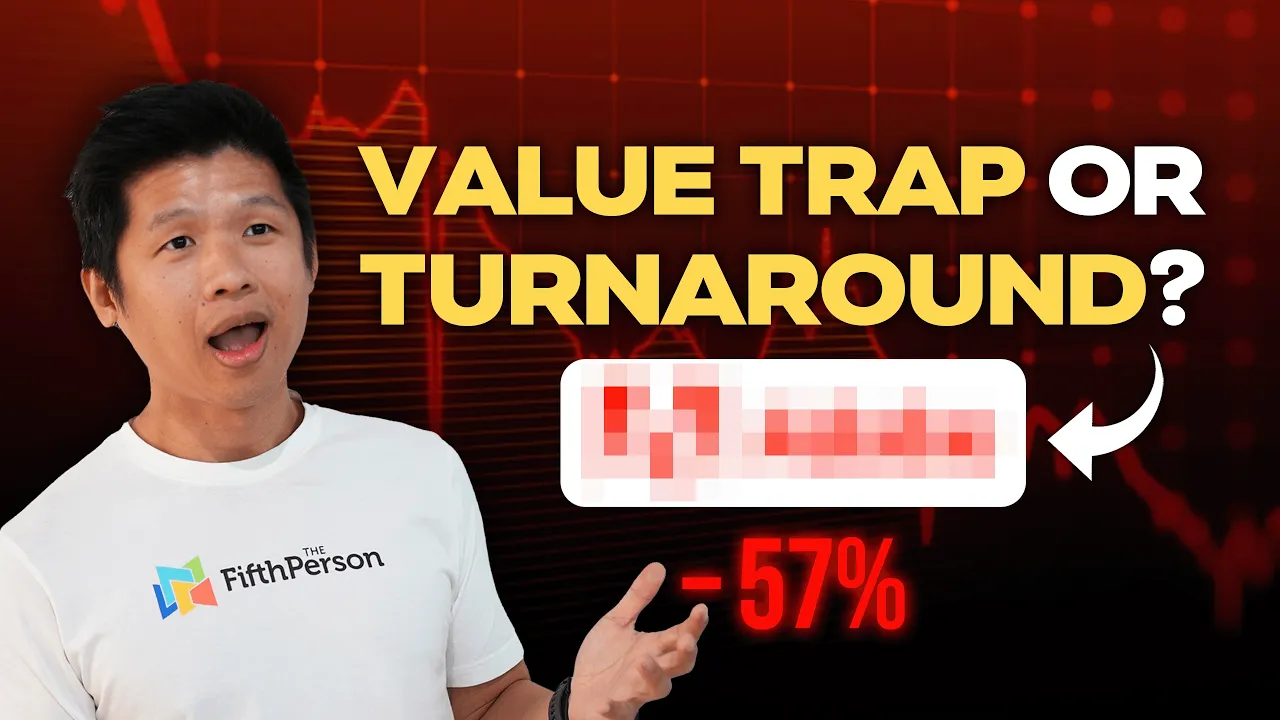
Welcome back everyone. My name is Adam Rus me. >> Hello. >> Victor. >> Hi everyone. >> Thanks for joining us. Today we wanted to talk about one particular company. It's a really really good company. It has been It's It's the market leader in its industry. >> Yep. >> But it's been hit by AI and could potentially be disrupted. >> Disrupted. >> Yeah. And from the peak to now, I think it's about 40% drop in stock price, which is quite a lot. Is it more than that? >> As much as 60% depending on which point you measure. But right now it's about more than 50% 57%.
110 words, the words spoken in the first 30 seconds at 220 words per minute.
Free, no signup. See how the first 30 seconds hold attention, with rewrites.
Sentence shape
| Measure | This transcript |
|---|---|
| Sentences | 750 |
| Average words per sentence | 10.7 |
| Longest sentence | 66 words |
| Questions asked | 133 |
| Sentences containing a number | 76 |
Most used terms
Filler phrases
350 in total: uh 99 · right? 93 · like 71 · actually 28 · you know 19 · I mean 11 · um 10 · kind of 7 · basically 6 · sort of 4 · literally 2.
A literal whole-word count of the same phrase list the Prepublish browser extension uses, so a phrase inside another word is not counted and a phrase used in its ordinary sense still is. It is a count and not a judgement.
Free, no account. See where attention is likely to drop, with a rewrite for each weak line. The free check shows the scores and the one issue costing the most. Or run it on the words above first.
Free · No login · See a sample audit first if you prefer.
What this transcript is
Every word below is the caption track YouTube publishes for this video, pulled from the video itself and reproduced unchanged. It is not Prepublish's writing, not a summary, and not a re-transcription: it is the video's own published captions. English captions, generated automatically by YouTube, in the video’s original language. Source: the video on YouTube. A channel that would rather this page did not exist can ask for its removal through the contact page, and it is removed.
Welcome back everyone. My name is Adam Rus me. >> Hello. >> Victor. >> Hi everyone. >> Thanks for joining us. Today we wanted to talk about one particular company. It's a really really good company. It has been It's It's the market leader in its industry. >> Yep. >> But it's been hit by AI and could potentially be disrupted. >> Disrupted. >> Yeah. And from the peak to now, I think it's about 40% drop in stock price, which is quite a lot.
Is it more than that? >> As much as 60% depending on which point you measure. But right now it's about more than 50% 57%. >> the measure from earliest 2024, so it was actually more than 50%. >> a big drop. >> Yes. >> So you can see a leading company like that drop in a so so like massively. You're like, "What's happening, right?" So this company is none other than Adobe. So Adobe is known for Photoshop, all the creative apps that you have out there. >> Yeah. >> All the design professionals use Adobe.
All right. So we want to understand whether this threat from AI is actually going to disrupt the business or maybe just a temporary thing. Because a lot of times when we talk about opportunities in investing, you want to look at companies that actually been a little bit of trouble, but you want to know what is permanent, structural, or temporary. And then we invest accordingly. So why don't we have a look at why it's it's suffering so badly right now. >> Yeah.
So for Adobe, I think it started as early as 2024. And there was a time when OpenAI launches launch Sora. All right. So there was like text based prompt where you just key in something that you want to create and then the AI will create that video. >> Yeah. >> All straight. And that was like in 2024 when OpenAI launched it, it was really popular. You could see video was being created right away with a simple text. Okay.
And that sort of like, you know, a lot of people started to get worried about Adobe business business, right? Because Adobe business is really provide the creative tools for creative people, right? When it comes to like producing videos, right? they can edit it. And now with AI you can just simply use text and then create a video whatever that you want. >> Mhm. >> It looks uh slick, I mean it was amazing, innovative, very impressive right at the start, right?
And that was the time where you see the share price of Adobe literally dive down until today it's as low as um right now I think at the time of this recording the price is >> 256.51 >> Yeah, 256 thereabout. Okay, so it's almost more than 50% down. All right, so the main concern that is really the big elephant in the room. There are many other things, all right? Um but that is a big elephant in the room. Okay, so uh and and then in the first quarter of uh this year they reported the result, all right?
Even with that concern that AI is disrupting their main business, uh they still report good result. >> Mhm. >> All right, and then the CEO decided to step down. >> Mhm. >> All right, and that of course create more panic. So if you back to the business that the Adobe's that in, I know they have a sort of like restructure the way they report the business, but if you look at their digital media business, which I think account 74% of the entire business as of 2025, and digital media media business is basically your uh Adobe Photoshop, your Premiere Pro, your Acrobat Readers, right?
And yeah, so all these uh product, all right? Which they call it Creative Suite, all right? Which you can subscribe, all right? I mean if you are in the creative industry or even if you are businesses, you may need to edit photo, video at any point of time, right? So you need these software suites, all right? And this business is their main core business. It's about 74% of the business, right? So right now, I think there are a lot of competition, all right?
Even before AI you have like uh Final Cut Pro, DaVinci Resolve for Adobe Premiere Pro. I mean I I do video editing, so I know there are alternatives out there besides Adobe Premiere Pro, all right? Which is you need to pay on recurring basis versus like Final Cut Pro, which is entirely uh you pay one-time fee and then >> Mhm. >> you can just use it permanently, okay? So I'm not a professional creative professional, all right?
So I use uh Final Cut Pro. >> Mhm. >> All right, but there are professionals who have been trained since young, all right? They've been using Adobe, so they kind of like stuck into that workflow. So they're very used to that whole uh system. Okay, so right now, of course, with AI, uh people are really concerned that okay, so you may no longer need it anymore, right? You can go to Google uh Google Nano Banana, key in the image that you want to produce by text.
But your text has to be very precise. >> Yep. >> All right, to create the image that you want. Okay, after that uh and then editing part is a tough part, which I tried to create it create a image or even video from time to time, but I find it very difficult. So, I always go back to the old book >> Mhm. >> All right, which is I actually using Canvas. I would just call competitor of uh Adobe, but it's a for layman people like me.
It's very easy to use. All right, so I'm not really a professional in this space. >> So, basically the threat is like the market is seeing hey, in the past everything if you wanted to do some creative work, usually you go to Adobe cuz that's the industry standard. If you're a professional, if you're working in an enterprise, if you're a student in design school, everyone uses Adobe, the Creative Cloud, right? The Creative Suite of everything, that's the industry standard.
And once you get familiar with that, you tend to stick to it because you don't want to learn new software. It's a bit hard to switch. But now, there's an alternative where you can just kind of like vibe with the AI and say I want you to create this, and you don't need to learn how to use all these tools. >> Yeah. >> So, the threat the market is seeing is that if you no longer need those tools to do all these things and you just use AI, then maybe in the future Adobe is not going to sell as many subscriptions. >> Yeah. >> And that's why their share price has come like down 40, 50, almost 60%.
So, that is the threat that we're seeing. >> Yeah, and some people are also worried that the creative jobs might be at risk, right? Those people who do like uh photo editing, video editing, right? They may no longer need be needed, right? Because since AI can do all this image creation, then the license the seat base that Adobe is charging might disappear. >> Yeah, I think one of the main distinctions is I think some people may think it's going to be disrupted.
I actually think it's not going to replace Adobe's business. You still need those tools to do whatever you need to do, but you may need fewer seats, fewer subscriptions because maybe in the past if you want to do like you did this particular marketing campaign, you need 10 designers working on it. Yeah. Now maybe you just need two with AI. You know? So, that's the that's the that's the worry, right? >> Yeah. But I think the space that this AI is disrupting is the I feel it's the low-end design space. >> Mhm. >> Yeah.
When it comes to the high-end space, right? To me, right, when it comes to doing design, right, you require a very uh creative person to >> Yeah. >> to do the design. >> Yeah. >> But typing the the design out is a very logical person doing it. >> Mhm. >> You get what I mean? >> And it's not easy. I type it out and it's not easy cuz I type it out multiple times and it does You don't get what you want. >> And I don't get what I want.
I got And then you get frustrated. So, I'm going to do it myself. So, I'm going to do it myself. >> Yeah, you know? >> Yeah, and those creative people >> Mhm. >> they when they design certain things there's a certain reason behind those image, right, that will trigger certain emotions for the >> Yeah. >> for the consumer to react to. So, I don't think at this moment the AI can replace that. >> do you think like AI could get that advanced?
They're to I mean, it's a big question because not just in design. This is cuz this could be a question for everything. Do you think AI could be cuz so advanced that one day it replaces human engineer engine uh Let me I chew on my words. Okay, do you think AI will be so advanced one day that it could replace human thinking and judgment? >> Maybe, but um I don't know whether when that is going to happen. But right now the AI's model is very smart, right?
I mean, you can just I've been seeing that you might some of you might have like noticed on the social media that you have a lot AI produced videos. >> Yeah. >> Right? And the short videos that you watch and then you know that it's AI. >> Yes. >> Yeah, those are actually produced using uh text-based prompt. >> Yeah. >> Right? And it's very easy to produce to make them. Right? But for like in the in the in the industry social media industry, I think that AI has been widely deployed. >> Mhm. >> Right?
I mean, you have CapCut and all that, right? So, those are very popular apps that people use it to do video editing. Right? Adobe Premiere Pro again is they are targeting at a very different crop, the enterprise, the professional, all right, who really need after that they do a prompt on that on that on that we say Google nano banana. I mean so I have very close down, right, because they realize that the business model they are not making money and the cost to produce that video every 15 seconds 30 seconds is really expensive, yes, right, and they have to shut it down.
All right, and they say that they shut it down because of the company reason but actually the I read the report that they shut it down because it's the business model doesn't make sense. So when the business model doesn't make sense obviously they have to shut it down, all right, and of course creative tools like Adobe Figma they are the one that will continue to you know dominate the space, right, whether the workflow will really move towards that text space I highly doubt so at this stage.
Yeah, and of course the threat right now is whether the AI can get to a level where it become very it's so smart it can think on behalf of you like what Victor said the creative parts where AI can't replace it right now. And then individual may need you may not need creative and >> But that's a question that we don't really don't know the answer to. No one knows, right, yeah. How far it's going to go. >> And also I think the concern regarding the the seat based subscription.
Because if you notice right quite a lot of the subscriptions, right, they are moving towards usage base. So I think in the future there may be Adobe may have a subscription. You subscribe to Adobe but on top of that it until a certain level, right, you have to pay it by the usage. Let's say you you finish the tokens, right. So I think that may be the future of subscription. That we are seeing it right now. >> All right, so so just to summarize we see a threat in the sense that maybe in the future Adobe will sell fewer subscriptions because now you have alternatives where like you said the low end consumers casual users prosumers don't need that high end creative power of Adobe.
They just want to use AI cuz spit something out on social media is done. You know, that's true, right? So you do that you you Yeah. So maybe because of that you're going to see slower growth. I think we've seen that happening with Adobe. It is growing, but maybe you it won't grow like you used to. I remember I've been been following Adobe for some time. Used to grow at 20%. >> Yeah. >> Now it's about 10% which is still growing.
And it's a bigger company just to keep in mind. So these are some of the the the threats that we see. But do you think that Adobe can withstand these threats and actually turn the business around or kind of like build a moat around this to protect itself? >> I think right now you if you look at the models like Anthropic the Claude, right? They are getting a lot smarter. And what Adobe did is that you know, if you are really love this like it large language model and you think that they can produce a great images or videos, right?
They offer the alternative, right? Where you can actually plug into your your your AI your gen AI that you prefer, right? Whether it's a Claude Copilot ChatGPT, right? You can actually use it on the Adobe platform. And they've been trying to integrate their Firefly also into their platform where it is a commercially free to use I you know, safe to use, right? In a sense because a lot of time when you go to like Nanomana and you might not know that whether you're actually infringing on certain copyright issue.
Right? So Firefly essentially remove that, right? So it's targeted at the professional who needed to use it for commercial licensing, right? Which is very very important. They want to have like they don't want to get sued. >> Yeah. >> For using certain videos like from Disney or what, okay? So So this is something where I think the the disruption is still ongoing, okay? And right now even though the gen AI has been around the market since 2024 2025 and now we are entering the third year, right?
The Adobe subscription is still solid. Mhm. And our recurring revenue is still growing at double digit, low teens, are not like in the past used to be quite high. Uh and and they have like quite a lot of active users, all right, on the monthly basis. AR over a million people use Adobe Acrobat. Right now they are saying that okay, they are annual recurring revenue from AI-related product is actually already more than 1 billion. >> Mhm. >> Right.
And I think the market still need to see whether they can really monetize it uh through AI. >> Mhm. >> Right, from the existing product right now. Okay, so this is something where I think no one really knows whether um uh there will be a smarter AI model will come out and then replaces the entire workflow. I think the replacing the entire workflow is something that I'm more worried uh because uh professionals, all right, if they can solve the problem uh especially the editing part by, you know, highlight this part and then suddenly you get what you want. >> Mhm. >> I think removing people from a photo is a lot easier.
Now you can do it even with the iPhone. >> Yes. >> Right, you can just circle there, bam, gone. >> Yeah. >> Right, but when it comes to professional, there needs to be more specific. They want certain thing. Uh whether can you do it through a large language model like a clock or whichever, okay, model that is very popular out there. Uh if they can do that, then people no longer need the tools to do the editing. Uh that's where the big core business of Adobe is rely on, the advanced, the more higher tier workflow there.
Right, so I've been asking um even including Odi, I mean he's the one that editing our video, all right. Uh can I take away Adobe from you, right, and you just use your uh >> AI. >> AI, right, model to help you edit. >> So you can, but you look very different. Yeah. >> Yeah, so there's no way, right? So I think uh I tried many times. I still find that uh it's overhyped. >> Okay. >> And the kind of video that you see online, what Sora is trying to market out there, it's like, "Wow, fantastic, you know?
So real, you can't even tell the difference whether which one is real, which one is fake." But actually, when it comes to real work, I don't know if you are creatives out there, share with us your experience, right? We want to hear because I've been reading a lot of reports from like users who find that it's really uh uh not easy to >> It's actually really sticky, right? >> It's very sticky. They still come back to this. >> Mhm.
Because it's something they've been using for many, many, many years. Yeah. >> I think the the concern with Adobe is will they be the next Kodak or Blockbuster? >> Yeah. Correct. >> That's the biggest concern. So, if you would bring back to the history of Kodak and Blockbuster, um there's a few signs that they that caused their disruption. Okay. The first sign is actually when they were being disrupted, their revenues are is already decreasing.
So, in this case, Adobe revenue is still growing. >> Mhm. >> So, but also read in some of the other uh famous investor, they talk about this Blockbuster investment back in the timeline. Some value investors do bought and make money off Blockbuster because when Blockbuster when they bought in Blockbuster, it was traded so cheap, but the disruption didn't come immediate. It takes time. And they still can profit out before the the real disruption destroy the business.
Okay. But now with the AI, I think it's AI thing is a bit fast, so we don't know what's the timeline. Okay. This is the first thing. Second thing is at that point of time when Kodak and Blockbuster were disrupted, the management sort of um still thinks that they are dominant, they are existing business is still dominating. They didn't switch, they didn't adapt. >> adapt, yeah. >> Yeah. But if you look in the case of Adobe, right, they are adapting.
Exactly like how uh Alphabet and Meta that at a point of time they their share price tank, they are still adapting, the revenue is still growing. So, now we are seeing these uh similar uh trends for uh Adobe. >> Yeah, I think that's a good point because like we remember going through this uh with Alphabet, you know, like that is chat GPT going to replace search. >> Yeah. >> And you if you look at the chat the chat of of Alphabet, it went down.
Right? And that was like the time to go in. But at the point in time you you would you weren't sure whether >> Yeah. They were going to like adapt and use AI successfully within Google. >> But they done a really good job at it. Now nowadays I kind of like use a lot of Google as well just to search and then you go to AI mode and then check out stuff like that. I don't even go to chat GPT. So they've managed to keep me into in the ecosystem within Google.
And through that of course they can show you more ads and stuff. >> Yeah. >> So the the the question at time was that could they monetize all that extra uh you know eyeballs on AI and stuff. So the same question is happening now with Adobe. >> Exactly. >> Exactly the same. But of course it's a different business. >> And they have a huge distribution point across all the professional. >> Yes. >> And that is the same advantage that I'm seeing with like Google Alphabet, right?
So that time the boat was really strong because they had a hold of the entire uh Android user base. >> And they are the >> keeper for the operating system for the mobile, right? So that's the reason why I think it's a lot easier for Google to push out that smarter AI model and then reach out to everybody. >> It goes out everywhere. >> Whereas chat GPT of course they had a first mover advantage and viral effect, but then eventually Google already have the existing distribution channel.
When they roll it out, everybody just get to see it. >> That's a good point about distribution channels because everyone's already using Adobe. You just roll it out. >> Yeah. >> But now it's the question of whether they could just monetize it well enough. >> Yeah. So I think the question is really whether the the the they are implementing all these model into their software. >> Yes. >> Right? So whether the professionals are using the software on the existing platform.
Are you Audrey? Yeah. She's starting to use those model on the Adobe software. >> Yes. >> Then obviously >> you stay there. >> Adobe will still stay there. >> So I mean the point that you Sora is closing down is advantage to Adobe because even though you could say hey another company is is offering this, but if they can't monetize it. >> Yeah. >> If if they don't have the distribution channel for you to use it, then it's going to be a lot harder.
If they are losing money, then Adobe has But Adobe is making money. >> It's producing cash flow. Always. Let me share with you the cash flow that they are making, all right? It's about 10 billions a year. >> Okay. >> So, if you do the math, very simple. But right now the market cap is about 100 billion. They demand making 10 billions a year. All right? And they have already initiated a 25 billion share buyback authorization.
All right? They're going to execute until 2030, but I think they will use up very quickly. All right? So, each year they produce 10 billions, and now they are trading at 100 billion market cap. If they were to use uh 10 billion a year, which they have done that in the last 2 years, that do the share buyback, there is a 10% reduction in share count. All right? So, every 10% reduction in share count, your EPS, if your earnings stay the same next year, you will grow 11%.
Mathematically, right? And then if let's say uh earning per share grow, that that the earnings grow grow, right? You're actually getting >> More than that. >> 18% more than that. >> Yeah. >> I saw mathematically the valuation justify uh them to do a lot share buyback. And of course that is provided that the share price stay depressed >> Okay. >> at this level that we are talking about, all right? Before any re-rating.
Uh all right? So, right now of course Adobe have to really convince the market that hey, they are not being disrupted. They are actually benefiting from AIs. >> Mhm. >> Okay? So, that narrative hasn't changed yet, all right? And we will see down the road whether the narrative will change. Because a lot of time market prices is driven by narrative, all right? And narrative usually right now is like, okay, Adobe will get disrupted.
All right? And but you look at the business, no matter how I see, I've been paying a lot attention. I've been like going into the business, look at the creative professional. Are they switching out? >> Mhm. >> They are not. They are still stuck. >> Mhm. >> All right? And it has been 3 years. Okay, maybe AI next year come out is entirely different. It replaces the whole workflow. There is something where Is it that >> Then you re-evaluate. >> Then I have to re-evaluate, and that could be a mistake if it turn out to be the little bit the way it is.
Even today the AI The is so smart, it's still not replacing it yet. All right, so since you're talking about valuation, let's go into that. At this point you're talking that the price to free cash flow, right? >> Yeah. >> Is 10 times. >> 10 times thereabouts. >> Thereabouts. Yeah, and I think if you look at at the PE chart, it's about 15. Which is actually for a company that's quite entrenched. Yeah, PE of 15 is actually pretty reasonable. >> Yeah, it's highly recurring. >> Yeah. >> Um yeah, so unless the creative lost their job because AI, people don't use AI to produce all the video.
Of course, if you are Shutterstock, you're in business. >> Mhm. >> Uh you'll be in trouble, man. Because people go to Shutterstock to buy all those media kits which they can use now using AI. Even Adobe, I think stocks uh they were their sales were down because of that. But that is just a small part of the business. >> Yes, yes. >> So I think in the risk-reward sense, uh it looks attractive. >> Mhm. >> Right. So now the share price we are looking at is about 256.51.
Uh you can see from this uh risk-reward comparison that I I did I'll explain how they are calculated all these. Uh but the irony is I use AI to create this image. >> Okay. >> Okay? Yeah, this basic image, okay? Let's talk about the downside first. If you go and look at the history of Adobe's PE chart all the way to before they turn into subscription, right? The lowest PE that they ever hit is about 10 10 time. And that is only one time in '08-'09.
The other lows are the lowest they get is about uh 11 to 13 time. >> Yeah, but this range. >> then their business model is different. >> Yes, quite license. Yeah. >> So that one is more uh slightly cyclical. That's why they they have big drops in the past. So so taking all these three low points now, I average out uh it's about 11.3 times PE. >> Okay. >> So let's say uh the the trailing TTM EPS right now is about 17.15.
And I give uh 20% discount. >> Okay. >> And say that they're going to drop moving forward. >> Mhm. >> And I give uh the 11.3 time I round it up down to 11 time. >> Mhm. >> That will give me a bear case of about 150.92. So, that means uh from the price until the price now are all the way to this 150.92, there's a potential 41.2% drop. >> drop. >> Yeah, 41.2% drop. >> Okay. >> Then, let's talk about the uh base case scenario.
I don't talk about bull case. I just talk about base case base case. They they continue making this flat earnings. >> Mhm. >> 17.15 their TTM EPS. And if you see before the drop, their average PE before the drop 2025 after the full transition year >> Mhm. >> was 50 times. >> Yeah. >> Let's say I don't get the 50 time. The lowest of that transition year drop right was 27 time. So, let me assume that they go back to the 27 time uh PE. >> Mhm. >> So, that will give me roughly uh the the base case upside valuation about 436.05. >> Okay. >> So, that is a 80.5% upside. >> Yeah. >> So, if you were to compare the upside and downside, uh right now based on the base case scenario, your risk reward is already close to two.
It's about 1.96. >> two to one. >> Yeah, I'll just say it's close to two. >> Yeah. >> Okay? So, but you also need to take note that their long-term medium is 38. >> Okay. >> So, even at 27, you're still below their long-term uh medium. >> Mhm. >> Okay? So, so, so, if you were to look at Adobe right now, you must also be prepared that there's a possible drop of 40%. >> Mhm. >> So, as it drops more, the lower price, the risk reward get more attractive.
But, the question is right, whether you can get back to the base case scenario. So, that is how you supposed to assess whether is this a situation temporary, whether they can beat the AI. Uh that is to everybody how you think about the business. You know, some people they may think that okay uh they cannot >> Okay. people will think that actually Adobe can fight with the the AI war. The next is what I call opportunity cost.
So right now you look at the risk reward, right? Your upside is about 80.5%. 80.5% if they were to revert back to this within the next 2 to 3 years, your capital returns is going to be high. But if they revert back in the next 5 years, it's going to be less than 15%. If they revert this amount to in the next 10 years then it's going to be less than 7%. So it really depends how fast are they going to revert back. And this is I exclude the growth of this company.
It That means they flat only. Okay? So So that is the main concern that everybody is trying to predict and trying to deduce like what's the timeline for Adobe to recover. >> Yeah, that's going to be hard to predict, but I think based on what you know is it worth the bet at this current price? >> I think it was because you you you see uh there's another risk that we talk about in the valuation is the AI risk. Because the the the AI um the way they are growing right now is very fast.
And every year the ChatGPT now and the ChatGPT that just came out is totally different. So the AI is moving at a very I would say lightning speed. So if the the AI growth is very very fast eventually every year got new AI things come back, right? Adobe valuation may be depressed because people will keep thinking hey AI AI. Right? Because the AI news is coming very fast. So the re-rating to to 27 time may not happen if the AI speed is very fast.
Okay? But in the event let's say Adobe continue to grow their earnings. Let's say 10%. And this one is based on the no growth and they continue buy back the share. So if they can if their earnings can grow at mid teens just by share buy back you don't need to look at actually a higher multiple even at a 20 multiple you can see the the the growth. >> Same multiple 15 times. >> Yeah. >> You are already growing that effect of share buy back. 10% high single digit to low teens. >> Okay. >> Right.
So this is the kind of expectation that I'm getting. Anything that surprise on the upside is a bonus. >> Bonus. Yeah. >> Yeah. So So right now is that whether the key is usually AI, right? The pace of development AI is so fast. Right? And that's how the market is now is pricing this stock as being disrupted. As literally is almost dying. All right? But they are not. Okay? Fundamentally people still need them. So in the future, right?
If I were to I like to do video, right? So if I can take a lot of clips video and I just go into the model maybe cloud. Okay, can you help me create a video that I want that I always do my style. And then cloud can just 1 hour later come back done. Then I don't need any video editor or any software. That will be the day where Adobe will die. >> That is a really interesting one. I I was laughing when you were saying that because that would require a human >> Correct. >> to communicate really well. >> Yeah. >> And you know as humans even human to human is not easy to >> Yeah.
So maybe I don't know what you're saying. >> This is the creative space. >> Unless the AI can read your mind. And it's like I want this and then they can just figure it out. But if not, you got to be really good at communicating what you want into the model and the model is fine enough to like they can do it to some to some extent. But it's it's going to be I mean it I think that the the the bottom line is still the human actually.
It's still the human. >> Yeah. So the question Now I think AI is very good at like you know asking you asking question that no one can answer. >> Yeah. >> The way creative works, I find it very difficult. >> All right. >> Yeah, but that may change. >> Yeah. >> So So now, right, when you look at this risk reward, right, then what is the strategy? >> Mhm. >> That's the most important thing that I think. If you are looking to just buying the Adobe right now and with all your position, that is very risky. >> Yeah. >> Because the the the future right now is sort of like offsetting each other.
That means there's this things that hurt negative that hurting Adobe Adobe have this positive thing to cover it up. >> Mhm. >> So it's just like 50/50 right now the in terms of uh probability. Unless you tell me Adobe becomes like Google and uh Meta that they they they they already past that stage already. >> Mhm. >> Then the risk will drop significantly. But then the share price will also react. >> Yeah. >> Right? So it's us as an investor to see how can we deduce, right, uh the probability.
So right now in this kind of scenario, right, that is like a 50/50 and you know that it's it's there's pros and cons on each side. >> Mhm. >> Then your strategy going in should not be 100% of full position into Adobe because there's a possible 41.2% drop. >> Mhm. >> So with that, right, which is why as an investor we always split our allocation in tranches. >> Yeah. >> And we and we have it to average down the position.
Okay, this is the first thing. Second thing, uh if you want to look at Adobe, right, you have to be on your toes. You cannot slack. >> Mhm. >> You have to go and read the every quarter result if you really want to uh have an investment in Adobe because you need to know because as an investor we need to be uh uh nimble, I think, right? When situation change, we have to switch the thesis or change. Because right now that's If the AI really continue come very fast, then again the probability is too ready.
Right? At the end of the day, as an investor, when we look at this, we want to look at is this a high probability bet or low probability bet? And based on every day we check, right? If the bet still seems maintain the same probability, we will average down. If it's not right, we may want need to pull back or may we may have to say that, "Okay, we made a mistake." So, it's not as simple as, "Oh, this is cheap, you buy." It's not like that.
Right? If If it's like that, then everybody will become investor already. Right? You have to have a lot things. You have to calculate the probability. You have to assess the situation. Right? And you have to accept the fact that if you are wrong, you have to get out already. But, as a because in investing you won't get 100% right. I just need to get most of my case right. I'm okay. And I size my position properly. That's the most important.
Sizing your position properly. >> If you are someone who's really new watching this, and then you realize actually we are going into quite a little bit of technical here and there. Okay? Actually, behind all this like case study, we have a framework that we use, all right? And I think we will use it to analyze the stock. So, actually we have done a deep dive on Adobe before, Adobe. Right? Uh and what we are sharing with you is just the main point.
We didn't cover almost everything. Okay? So, if you really like want to know the whole framework and what's the thinking process behind um the investment before you make any investment decision, all right? You can always check out the uh Alpha Quadrant. Okay? >> So, this is a course that I think we are launching again, opening up. >> Yeah. >> This time around to basically uh teach you how to find those uh high-growth companies. >> Undervalued ones. >> Undervalued one.
Okay? And yeah, so we are looking for return for most of the stock that we invest, uh at least two times, three times in the next 5 years >> All right. >> to 10 years. >> All right. So, do check out uh alphacallger.com. We open this once a year. It's basically our our growth investing investment course. It teaches you how to invest. And Adobe is one great example of where you're looking for great businesses like that, but they're hit by something and the valuation goes down.
And then you have to make a decision whether this is going to be a temporary thing or is it a structural thing. Structural, you avoid it. But if it's a temporary thing, this is where you want to go in. And I think a lot of times when you look in hindsight, oh, it's very easy, I should have bought it then. But now it's like we're in the spot where we are not sure whether Adobe is going to make it. Do you invest or not?
So this is the point this is your litmus test as an investor. >> Yep. >> When when you're when you don't know, are you able to make that bet? And we've done all this homework on Adobe because we follow this framework in Alpha Quadrant. And we basically teach you how to like go through the business model and the finances so you know that I think I know I'm doing with this investment, I'm comfortable. And then of course the valuations are really important.
We teach you how to value and do all the valuation charts. All this is Alpha Quadrant Alpha Quadrant, so do check out alphaquadrant.com open once a year. Uh right now it's open till the 31st of May. After that it's going to be closed for the rest of the year. >> Yeah, if you are existing members of Alpha Quadrant, all right, I think you will have like it's easier for you to digest all this. If you are relatively new, then of course you can consider checking out >> All right.
So this is Adobe. Again, no recommendation to buy or sell. We really want to share one current opportunity. >> Yeah. >> And our thought process. >> And our thought process, how we actually do it. And this is a real one because like right now, what do you think about Adobe? If you are a creative professional, maybe you have more insight. But this is a real example of right now what you think. >> Yeah. >> How are you going to if this opportunity is right, are you going to take it?
Or do you think it's going to be not I don't know. >> I'm going to touch that. It's really It's really happening right now. >> I think you might be a creative professional you might have to switch up recently for Adobe to maybe DaVinci Resolve. Let's say if you're doing video editing. I think those competition has been around even before your Sora app app came out come out all right at that time, right? So the competitions are are still ongoing even like Apple recently launched their Apple create creator studio.
I'm not sure who will sign up because I got my one at one time fee and then I will never consider this. Why would I want to pay recurring, right? But the same thing can be said with a time when Adobe transitioned to a cloud model >> Subscription. >> Right, subscription business model, right? So, uh now even Apple is also moving towards the same business model as Adobe because they realized that there's a lot of money to be made.
Okay? So, uh whether again the the the question really is will AI >> Mhm. >> All right, remove the entire workflow and take care take over human to do all the creative works. >> Okay. >> I think that is still remain a distant future for me. >> All right. >> Right now. All right. So, again we are have a vested interest. >> Yes. >> I think we we are invested in this. >> that we have a position in this. >> we have already done our deep research, do our homework.
Okay? So, you need to do your homework as well. Use the AI. >> Okay. >> Or check out Alpha quarter. >> Yeah. Okay. So, again, uh I think to summarize, we just want to share what this Adobe is all about. There is a There is a threat of AI in place to Adobe. There is There is a threat. And the threat could come in a sense that you may not see growth like it used to like grow in the past, like only just 20% growth. >> I don't think they'll revert back to 50. >> Yeah, for example. >> Or I don't think so. >> there's a threat to that.
But the question is is it going to replace the business model? And I don't think so. But again, you have your own take on that. Uh and the And once you understand all the threats, and this is the business as it is, it's still making money, it's still growing at 10%. Then it comes down to the price. Is it worth the bet? So, we shared our opinions on that. You shared your your bear case and your base case. >> Yep. >> Uh and then you can make your own, you know, value judgment on whether it's actually uh worth worth it. >> Yeah. >> Uh uh we also want to hear your thoughts about uh what you think about Adobe.
So, do type in the comment. >> So, yeah. Again, when you share your thoughts, don't base it on the share price drop so much. You lost money. You think it's a crap. Okay? Those are the comments that I don't want to see. You have to share with me the fundamental what is your thing about it because people sometimes misjudge by uh the stock because it drop, oh it's a lousy stock. But you have to link back to the fundamental.
Yes, the narrative now has shifted more pessimistic, right? But now I'm become more optimistic. Because of the valuation, right? It's a lot cheaper. And the business itself still remains intact. Although a lot people trying to attack the castle, the moat is very strong >> Okay. >> at the moment. >> Yeah, so I think this is when you really find out whether you can cut it as an investor. Are you able to invest during times of pessimism and whether you can get you get it right?
Because I'm not saying that we are definitely going to do well in Adobe. We don't know. >> Yeah. >> But we think that the valuation makes sense. >> Yeah, and >> Bear in mind that there's also portfolio management risk that we are doing on ourselves, right? Victor mentioned about it. So we never ever >> all in >> all in in one stock. >> Yeah. >> Yeah, any stocks. >> Okay. So again, no recommendation to buy or sell Adobe.
This is really based on our research, based on the framework that we use in Alpha Quadrant. It's got like a really thorough process. So we're comfortable with our investment. >> Yeah, and we still got a lot of questions to cover this, right? So that's why we are doing this. >> Some people were asking like what about Adobe, uh can you share something that's actually undervalued right now? This is what we think about this particular undervalued opportunity. >> Yeah. >> Adobe. >> All right.
So again, no recommendation. Please do your due diligence and your homework, okay? And do share what you think in the comments about what you think about Adobe. And of course, uh check out alphacourant.com uh till the end of May 31st. Uh you guys will be doing live web classes and you can have a basic online class of framework, everything. Uh there's even a question answer segment where you can ask questions directly to you guys. >> Yeah. >> Cuz there's a lot of basically after course support as well.
You're not going to be on your own, all right? >> Yeah. >> Yeah, if you miss this year batch, you can wait for the next year one. >> And we'll share >> bring two undervalued ideas >> Yeah. >> that are >> They're not listed. >> asset stocks, but they uh their probability of recovery is very high. >> Okay. >> Yeah. >> All right. So all that alphacourant.com, do check it out uh till end of May 31st, all right? So with that, my name is Adam. >> Thank you. >> Victor, thank you so much for joining us.
This is going to be This is a long one because we really want to cover all the bases. Uh but again, there's so much more that we didn't cover because it's a it's a lot of things when it comes to investing. Uh any questions, comments, put them in the comment section. If you like this round table, please hit the like button. And of course, subscribe. Many more round tables coming up and we'll see you again.
The words are the caption track's own and nothing is reworded or re-transcribed. Paragraph breaks are placed between sentences so the text reads as prose.
Free tools for your own script: paste a draft and see where it stands before you record it.
Paste your draft and see where viewers are likely to drop off, with a rewrite for each weak line.
Paste the first 30 seconds of your own draft for a hook score and rewrites.
Check your draft against YouTube's advertiser-friendly guidelines before you record it.
Read this channel's public videos and transcripts, and download a writing brief for it.