Getting the transcript
Reading the captions from YouTube. A video nobody has opened here before takes 10 to 30 seconds; this page fills in on its own.
Getting the transcript
Reading the captions from YouTube. A video nobody has opened here before takes 10 to 30 seconds; this page fills in on its own.
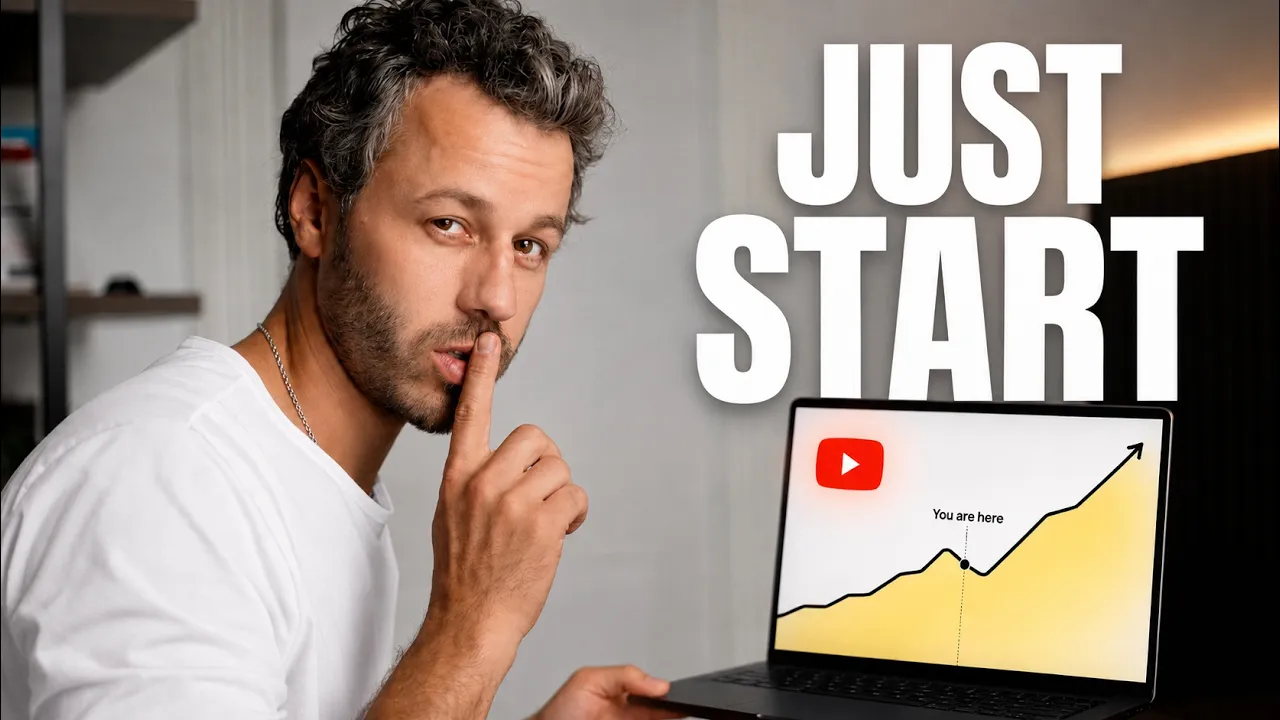
Gabe Bult - The Process · @GabeBultTheProcess
This video has no Most replayed graph yet: YouTube shows one only once a video has enough views. These are the moments viewers replayed most in Gabe Bult - The Process's most watched videos.
Most replayed moment at 9:14
3.0x that video's typical replay level
subscribers. Again, 1300 videos. And these are mostly him just talking, not really doing anything, not much editing, not much B-roll. Anybody could make this video. Literally, anybody could make this video. You can edit this yourself. You can hire out an editor. He's not really editing them. Again, either it is
Said at 9:07
Most replayed moment at 8:54
7.1x that video's typical replay level
will make. So, there's generally a four-step method that will work for this strategy. Number one is strategic YouTube content. And do not post short-form videos. Other creators might tell you to do that, but if your goal is to make money and especially like evergreen income, don't start with that, please. I've seen it
Said at 8:46
Most replayed moment at 6:57
4.0x that video's typical replay level
but averaging 50 to 100,000 views per video. If you see, they're all just screenshots of him talking about something that he knows, something that he does personally, investing in options trading. [music] And he showed me his analytics. He's making 50 to 100,000 per month in AdSense and another minimum
Said at 6:50
The graph counts replays. It does not show where viewers stopped watching.
Words
4,195
Runtime
16:22
Speaking pace
256wpm
Reading time
17min
256 words per minute, above the 201 75th percentile of 349 measured videos. That distribution comes from the 349-video hook study.
Opening (first 30 seconds)
After working with 600 creators, the number one reason I see why creators fail, especially smaller ones, is that they quit before their big break through. And the only problem is your dashboard doesn't tell you when the break through is about to happen. Sometimes it happens for some people quicker than others, but most people are going to get at least a shot. And you just have to keep improving your skills and stick in the game long enough to take advantage of that and see if that can change your life. So, I wanted to go over some signs that you might be close to having a break through and why you might be closer than you think to blowing up. The first sign is that
128 words, the words spoken in the first 30 seconds at 256 words per minute.
Free, no signup. See how the first 30 seconds hold attention, with rewrites.
Sentence shape
| Measure | This transcript |
|---|---|
| Sentences | 304 |
| Average words per sentence | 13.8 |
| Longest sentence | 75 words |
| Questions asked | 28 |
| Sentences containing a number | 50 |
Most used terms
Filler phrases
100 in total: like 52 · right? 12 · you know 11 · kind of 7 · literally 7 · uh 6 · actually 5.
A literal whole-word count of the same phrase list the Prepublish browser extension uses, so a phrase inside another word is not counted and a phrase used in its ordinary sense still is. It is a count and not a judgement.
Run the check on the words above: where attention is likely to drop, with a rewrite for each weak line. The free check shows the scores and the one issue costing the most.
What this transcript is
Every word below is the caption track YouTube publishes for this video, pulled from the video itself and reproduced unchanged. It is not Prepublish's writing, not a summary, and not a re-transcription: it is the video's own published captions. English captions, generated automatically by YouTube, in the video’s original language. Source: the video on YouTube. A channel that would rather this page did not exist can ask for its removal through the contact page, and it is removed.
After working with 600 creators, the number one reason I see why creators fail, especially smaller ones, is that they quit before their big break through. And the only problem is your dashboard doesn't tell you when the break through is about to happen. Sometimes it happens for some people quicker than others, but most people are going to get at least a shot. And you just have to keep improving your skills and stick in the game long enough to take advantage of that and see if that can change your life.
So, I wanted to go over some signs that you might be close to having a break through and why you might be closer than you think to blowing up. The first sign is that you're no longer making videos for yourself. See, a lot of creators start making videos and they are very selfish. I used to be this way as well. I just talked about what I wanted to talk about. Honestly, like I was into debt, I read this book, I did whatever.
I wanted to talk about that. And my audience did not. They did not care at all. Very few views. Bye-bye-bye. And so, if you can't look at your channel and just kind of like point to a video and be like, "This one solves this specific problem for these specific people." then it's probably not going to be great video. If it's just something that you thought was a good idea, you made a thumbnail that you thought was interesting and it had no proven format on YouTube.
Like everything you do is just like, "Oh, why'd you do that?" Well, cuz I liked it. I thought it was cool. I like the colors here. I like the style. I like making this stuff. Just cuz you like the color purple on your thumbnail doesn't mean that any successful channels in your niche have purple in their thumbnails. And therefore, your videos will tank because you're only doing what you care about, not what the audience wants.
So, that's number one. If you get past that and you start listening to what your audience you start listening to what other people are doing, what your space likes, you start creating things not just for yourself, but that are for others that are proven, you're probably getting close to that break through. This second one is is when you can move past the emotion. So, a lot of times you will have a video that'll get a little push, it'll go up, and then it'll just go bam, flatline, die.
And if you can get past the point where you don't spiral, you don't let that impact your day, you don't start blaming the algorithm. I think that is a a huge thing is that people think they're shadowbanned, they're they're blaming the algorithm, they just hate the algorithm like it's a person. When the algorithm is really just your audience. If you make amazing videos that have high quality thumbnails, proven ideas, proven titles, your videos will do well.
I've literally helped hundreds of people have this giant spike who've gone through our stuff because it's all just like following what's proven instead of doing what you like, right? And so, there's a reason that all these people have these giant spikes in their channel and it's because they're going off of analytics, they're going off of what is proven and they're not blaming the algorithm. Like, if it was just the algorithm, it wouldn't matter what you did.
It wouldn't matter if you make a better thumbnail. It wouldn't matter if you AB test. It wouldn't matter if your video was better, your idea was better. None of that would matter if the algorithm hates you. And then, if you can get past the point where you're constantly checking your analytics every day, you're like, I know that I have 37 subscribers. You shouldn't know you have 37 subscribers. You should be focusing on, you know, gaining skills, making better videos, being consistent, actually doing the work and not just following in on every analytic not letting a 10 out of 10 ruin your day, not letting a one out of one make your day, right?
Like, I've had that recently where I had on the main channel, I've had a bunch of that where they just apparently weren't as good ideas as I thought they were. They land at like 50k and then I had one that got 600k. And this was after giant streak of having, I think like five or six over 100,000 each. But, while I had those best couple months that I've ever had, I didn't really care all that much cuz I knew it would come back down to an average.
And then, when I have this, you [music] know, this dip that I've had recently, I don't really care cuz I know that it'll come back up eventually. So, I've learned that there's going to be dip, there's going to be bad ones, there's going to be good ones. Might be every other month that you have a banger video and the rest of them are probably going to underperform. That's totally okay. That is what the game is. I'm in this for the next five years.
I'm not in this for next week. I don't care how a video does more or less besides like just looking at the data. It doesn't affect me emotionally at all. And when you can get to that point, you know that you're in it for the right reasons, you're in it for the long haul and it's just a matter of time. You're serving the same person. So, if you can look at your channel and you can see who the last, let's say, three to five videos, they were all pointed at the same person, they're all pointed in the right direction, then you know that you're on the right track, right?
If you're doing a decluttering video and then a personal finance video and then a how to grow on YouTube video and then you're doing a cooking video. I used to do that, I didn't have any success. But once I narrowed down and I found, yes, I can do some of those, even like I on the main channel, I can do a decluttering video and I could do a personal finance video, I can target them towards the same person. So, even though they're different topics, it's not necessarily topic related.
Who is this serving? This is serving a person who is fed up with their job, who wants freedom and that's who I am going after. And so, it can encompass a bunch of different topics, but it's always the same person. And that person is generally like seven years ago me, who was out of a job that they hated, who wanted freedom really bad, who wasn't really interested in stuff, but was interested in, you know, building a lifestyle, building a a life that I don't want to escape from and that is who I try to serve.
And so, every video, no matter what it's about, is always serving that person. Next up is when you make the packaging before you make the video. Most people make a video first and then they figure out the title and thumbnail as they're uploading it. I used to do that as well. It's a very common trap and it's generally the sign that you're not a great YouTuber and you're probably not going to have much success if you're just spending 20 minutes coming up with a thumbnail and title before you upload.
It's probably not going to do well and you really honestly shouldn't even bother making the videos. Like for real, if you don't have good packaging, you could literally have the best video ever, but nobody's going to click on it if your packaging sucks. So, [music] you should really take a lot of time, figure out the packaging, it's way more important than the video itself. And there's a tool that I use for this, it's 1at10.com.
Pretty much, you should be coming up with your title and thumbnail first and then making the video off of that. That is always the format we do. We'll actually work things into the script so that we make sure that we have the thumbnail that we want to have in the text and stuff. And so, this not only has outliers in different areas where you can figure out, you know, what are some trending ideas, but it also has an idea generator where I can uh come up with ideas for my main channel.
Some of these have turned into video. And then we come over to the thumbnail generator and we can say my minimalist paycheck routine. The main problem that I see with a lot of people, they don't know how to make good thumbnails. If you're making like some green screen background, it just looks cheap. It's not going to do well. It just never will. And so a lot of times you're just honestly wasting your time if the thumbnail, the packaging is not good.
And so >> [music] >> learning the skills of making a good thumbnail are incredibly important. And if you don't have the skills to do that, or even if you do, and you just [music] want an extra tool, One of 10 can be really cool for that. I've actually been using this cuz I'm honestly not great at editing thumbnails. I can do very basic ones. I'm not very good at it. And so I've been using One of 10. We've AB tested this versus other stuff.
It actually works pretty well. Not all of them are going to be good. Like this one right here, I would say is pretty solid. We could always change stuff. This one right here could be good. We could change some stuff there. These ones, the face doesn't super look like me. So we could either edit [music] and we could add in my face to make this correct, or we could just keep spinning until we get one that we want. Ultimately, this is way faster than me trying to like come up with something. >> You're not doing a live. >> No, I'm just recording. >> Oh.
Okay. Florence, Italy. >> Yep. >> Mykonos, Greece. >> that you're saying it wrong. >> Okay. That's where you want to go? >> I think so. >> We're going to Europe again. So Meredith wants to go to Florence, Italy. If anybody has Italy or Greece recommendations, let me know. Another fun thing about YouTube, you can literally do it anywhere. And so we can pretty much travel indefinitely if we wanted to. And I can just work a couple hours a day in cafes and whatever and just I love it.
So anyways, you can make thumbnails with this. You can add in text. You can make sketches. Lots of different things that you can do. You can analyze winners. And what's one of my favorite tools is that you can uh check out these formats. So it's top 10 worst thing in place history. Uh top 10 worst comebacks in in TV history, whatever, ranked. So there's like different formats that you can just fill in your blanks and get proven stuff.
So if you're interested in checking them out, I'm a really big fan. We've been using them. My whole team uses uh >> [music] >> one of 10. So, there's a link down below. You can get started for just a buck, which is really cool. And if you don't like it, you're in it for a buck. So, I think for most people it'll end up helping their channel. So, definitely check them out. But regardless, packaging should be a priority.
If packaging [music] is a priority, you do that, you make the title and thumbnail before you make the video, then you're probably on the right path when it comes to YouTube. Next up is the 90% rule. I've talked about this. I use it my entire life. It's kind of like the 80/20 principle, but a little bit more extreme. I think in essentialism, there's this idea of the 90% rule, where there's 10% of things that lead to 90% of the outcomes.
You can use this a lot of ways. A lot of times, the last [music] 10% will also take a lot longer than the first 90%. If you're getting a video edited and it's pretty good, but you can always keep tweaking it, right? That last 10% you could do that for like a month. You could just keep making it better, keep re-editing intros, keep doing whatever. And so, if you get it to 90%, you're like, this is good enough. We're going to ship it.
We're going to move on to the next one. That is a good sign. If you're perfectionist, if you're always delayed on your videos, you're always behind cuz you keep tweaking things, it's going to be really hard to be sustainable for a long time. So, you can get to that point where good enough is good enough. This is very solid. I know I could have tweaked a few things, but I just need to move on to the next video. If you're doing that, you were in a good spot with YouTube.
Next up is the quiet metrics. So, if you're taking a look at your metrics and you're seeing that your baseline views are slowly going up. It might not feel like a lot, but if, let's say, 2 months ago you averaged 20 views per video, now you're averaging 40 views per video, it's a really good sign. You just doubled your baseline views, right? The main thing is to just get that baseline. Let's see if we can get to 500 views per video.
Let's see if we can get to 1,000 views per video. And that baseline is going to be the thing that really matters. The outliers don't super matter. You can get a video with a million views, but then if the next video you post only 500 people show up, that didn't convert to building your business, right? It didn't convert to a long-form audience. And this happens all the time. People get one banger, and they don't know how to convert those people, bring them into their sphere, bring them into other videos, make follow-ups for them.
And so, pretty much, you're trying to get your baseline higher. I've gotten into the point on the main channel where I can have pretty much 50,000 people, more or less, show up to almost any video that I do. And that is because I'm really focused on the baseline. I'm focused on building depth. I'm not focused on making as much money as possible, as fast as possible. Not focused on always gaining new subscribers. I'm focusing on building a relationship, being real, connecting with my audience, and having them care about me, not having it be a transaction, but having it be kind of like [music] a two-way thing where I give to them, and they give to me.
And that's how I've built a lot of sustainability on that channel, rather than just having huge spikes and then huge dips, which a lot of other people in my space have. [music] You build a system that allows you to run your channel even on a bad week. So, my general rule of thumb is, unless you're making mega production videos, you should be able to run your channel in under 5 hours a week. That's why I created the 5-hour YouTuber.
That's how I have multiple channels that I post, sometimes even multiple times a week on, and I can do each channel in under 5 hours a week. I'm at generally between 1 and 2 hours per video. So, technically, like when I'm traveling, I can work 30 minutes to an hour a day and be good. And I could do that indefinitely if I didn't keep adding any new businesses because [music] I'm bored. But, that means that you have a system where you're having a bad week, you can still make your videos.
You're having a good week, you can make two videos, and then makes up for some of the bad weeks and whatever. And if you can get to that point where you're ahead, you're always [music] two to four weeks ahead, you're in a really solid spot. This means that you can sustain. It means that you've gotten your system down to making videos where you're not stressing out, where it's not like Friday. I used to have this all the time where it's like, I posted on Saturday morning.
Got to get all the stuff done. I've just got to, you know, finish editing it one more time, and then I'm like, exporting right before it's going to and trying to get it up cuz I'm trying to stick with my deadline. It's a sign that you're not good, right? You're just not managing your time well, maybe, or you just don't know good systems, right? And so, this is kind of what I teach inside the 5-hour YouTuber, where it's everything is just designed, how do we run this as efficient as possible?
How do we focus on the 10% of things that drive 90% of the results, the 90/10 rule, and that's generally a sign that you're doing well. When you have a system that just kind of keeps running, you have ideas that are flowing in, you have a pipeline of videos that you're making, you have the four different buckets that you're filling, you have the evergreen, you have the ones that are building relationships, you have the ones that are trying to go viral, you have all these different things going on, and you know what you're supposed to do next.
That is the sign that this is you know, a business, and you're not just winging it every single week. Things are different, you're all over the place. That's a sign that you're probably not going to last all that long, you're probably going to quit before you have the breakthrough. Do you have a good system? Next up is identity. One of the major things that helped me get through this period, right? I had this period for 6 months when I was very small.
A point where I was not getting any subscribers, no breakout videos. Every time I posted I'd lose subs. [music] It was terrible, right? But I wasn't really emotionally invested in how the videos were doing. I became a YouTuber. This is what YouTubers do, they make videos. I make a video every week. This is just what I do. And I didn't give myself the opportunity to quit. I saw other people blow past me. Like I remember this one guy who's at uh 12,000 subscribers, I think, and I was stuck at like four, and he started after me, and I was like he started literally like we're in the same space.
[music] Started after me, he blew past me, and I can't get any videos to take off. He's getting like 5,000 views per video. I can't break like 200. It was so frustrating, but also like quitting never was even an option for me. It's [music] not something I can do. I'm a YouTuber, I enjoy what I'm doing. I know that at some point it'll stick, but even if it doesn't, I just enjoy what I'm doing. I'm sticking with this for 3 years, so I don't really care what happens right now.
I could have 6 months, I could have a year that sucks, but if I have a year later, that's good. Like it doesn't matter, right? And so I became that identity of I am a creator. This is my thing that I can create. I can't draw, I can't paint, I have no other skills. I I'm good at making YouTube videos, I like making YouTube videos, even if I wasn't great at it. This is what I do, right? And so when creators create, when you show up to work even when you don't want to, you have that discipline, and discipline is really like when you don't want to do something, you don't feel like it, doesn't matter.
You do it anyways, cuz that's what you do, you know? And so if you're at that point, I will say I remember looking back every one of those people I have at least doubled to like 50x all of those people. They saw early success. All of them have quit. Some of them quit at 10,000 subscribers. Some of them quit at 300,000 subscribers cuz they didn't [music] have good money systems in place to make money. I have stayed consistent for 7 plus years every single week.
And it's because I'm a creator and I create. It doesn't matter that 3 months ago I was having the best streak I ever had in comparison. This is actually still really good, but it's not even comparable to what that It doesn't matter. I'm doing this for the next 5 years every single week. What is that? What is that? 250 more videos on the main channel that I'm going to do, minimum. Probably another 200 videos on this channel that I'm going to do.
So, another 500 videos. It does not matter if a hundred of them get zero views. It literally doesn't matter. I have good systems in place. I can keep making them. I have monetization systems set up. It literally doesn't matter. So, if you move past that, you can zoom out. You're going to make it. It's a matter of time. And uh really comes down to are you improving 1% per week per video? Are you getting better at your craft?
Are you honing in? Are you only looking at the analytics to see what's working and what's not and you're not emotionally attached? Can you zoom out and see the long-term? This is going to work if I keep getting better. If my skills get good enough, it'll work eventually. Not blaming anybody else, not the algorithm's fault, nothing else. It's that your skills aren't there yet or it's a bad idea even if you thought it was a good idea.
The audience said it wasn't. Whatever. And so, if you can get past that emotional connection and you can just do like this is what I do. It's just going to be a matter of time for the most part. And I think what really helps a lot of people is accountability. It's seeing other creators on the same journey. It's being able to ask people, why are my videos not doing well? Why are my thumbnails not good? You know, what's wrong with this?
That's what helps a lot of people. And that's one of the reasons I made the inner circle. We've already had 50 people join in the pre-launch. And so, we're opening up 50 more spots. And this is a year-long program where I am teaching you directly how to grow on YouTube. There's going to be monthly coaching calls with me and my team. We're doing workshops. We're having guest people come in. There's hours and hours of recorded stuff.
Everything there is possibly to do on YouTube, thumbnails, titles, ideas, editing from my editors, from me, how I film a video in 5 hours a week step-by-step. Like literally every single step of the process, researching ideas. It's all broken down in there. And then there's also this community of people who you'll get to know over the next year, including myself. Like I know every single person in there individually cuz we hop on calls.
We talk face-to-face. If you want to talk to me, you can message me. And all that happens inside there. And so my main goal with creating this was giving people enough accountability for enough time and enough support for enough time that it eventually sticks. You know, stick with something for a year, your odds go up an insane amount than if you're just like kind of trickling here and there and then you stop for a few months and then you go in here and there.
You stop for That's why I kind of built this. So if you're interested in joining, we're opening the doors for a week and then we're closing for quite a while. So feel free to join the waitlist down below or it might be open by the time this comes out. I'm not sure. But thanks for watching. Hope this video helped. Please don't quit. I'll see you next week.
The words are the caption track's own and nothing is reworded or re-transcribed. Paragraph breaks are placed between sentences so the text reads as prose.
Free tools for your own script: paste a draft and see where it stands before you record it.
Paste your draft and see where viewers are likely to drop off, with a rewrite for each weak line.
Paste the first 30 seconds of your own draft for a hook score and rewrites.
Check your draft against YouTube's advertiser-friendly guidelines before you record it.
Read this channel's public videos and transcripts, and download a writing brief for it.