Getting the transcript
Reading the captions from YouTube. A video nobody has opened here before takes 10 to 30 seconds; this page fills in on its own.
Getting the transcript
Reading the captions from YouTube. A video nobody has opened here before takes 10 to 30 seconds; this page fills in on its own.
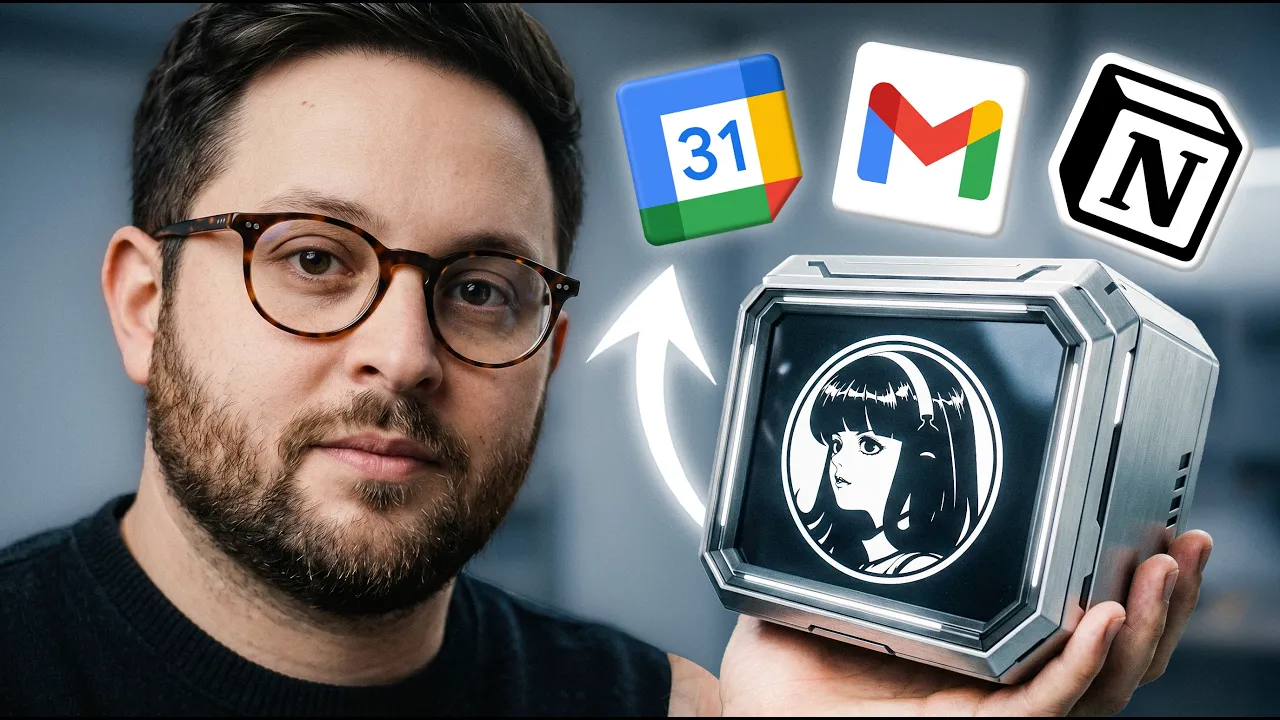
Sharbel A. · @sharbelxyz
This video has no Most replayed graph yet: YouTube shows one only once a video has enough views. These are the moments viewers replayed most in Sharbel A.'s most watched videos.
Most replayed moment at 13:32
3.9x that video's typical replay level
built-in memory, which is great. Here is how I would think about memory providers. Memo is interesting if you want a dedicated memory layer for personalized AI agents. It focuses on extracting, storing, linking, and retrieving memories efficiently. Their
Said at 13:25
Most replayed moment at 6:37
5.8x that video's typical replay level
trading strategy. Tests it. If it's better, it keeps it. If it's worse, it discards it and tries again. So, that's exactly what I built. Okay, here's the system we have at play. I gave it two years of crypto data,
Said at 6:31
Most replayed moment at 1:53
3.7x that video's typical replay level
let's install it together. Okay, so for step one, we need to actually start by installing Bullpen's CLI so that we can actually do everything that we want to do. And for that, let's first open Claude and put in the dangerously skip
Said at 1:47
The graph counts replays. It does not show where viewers stopped watching.
Words
3,262
Runtime
20:30
Speaking pace
159wpm
Reading time
14min
159 words per minute, below the 160 25th percentile of 349 measured videos. That distribution comes from the 349-video hook study.
Opening (first 30 seconds)
I think the first mistake people make with Hermes agent is they open it and immediately try to think of tasks for it. That sounds normal, but it's backwards. Hermes is not just a chatbot where you need to bring it a perfect prompt. It has memory, tools, scheduled jobs, skills, sub-agents, files, browser access, and it can do work across your setup. So, the first thing I would do is not ask Hermes to summarize a PDF or build
80 words, the words spoken in the first 30 seconds at 159 words per minute.
Free, no signup. See how the first 30 seconds hold attention, with rewrites.
Sentence shape
| Measure | This transcript |
|---|---|
| Sentences | 249 |
| Average words per sentence | 13.1 |
| Longest sentence | 68 words |
| Questions asked | 6 |
| Sentences containing a number | 8 |
Most used terms
Filler phrases
58 in total: like 21 · uh 17 · actually 7 · literally 4 · basically 3 · um 3 · I mean 1 · kind of 1 · you know 1.
A literal whole-word count of the same phrase list the Prepublish browser extension uses, so a phrase inside another word is not counted and a phrase used in its ordinary sense still is. It is a count and not a judgement.
Free, no account. See where attention is likely to drop, with a rewrite for each weak line. The free check shows the scores and the one issue costing the most. Or run it on the words above first.
Free · No login · See a sample audit first if you prefer.
What this transcript is
Every word below is the caption track YouTube publishes for this video, pulled from the video itself and reproduced unchanged. It is not Prepublish's writing, not a summary, and not a re-transcription: it is the video's own published captions. English captions, generated automatically by YouTube, in the video’s original language. Source: the video on YouTube. A channel that would rather this page did not exist can ask for its removal through the contact page, and it is removed.
I think the first mistake people make with Hermes agent is they open it and immediately try to think of tasks for it. That sounds normal, but it's backwards. Hermes is not just a chatbot where you need to bring it a perfect prompt. It has memory, tools, scheduled jobs, skills, sub-agents, files, browser access, and it can do work across your setup. So, the first thing I would do is not ask Hermes to summarize a PDF or build me a random app.
The first thing I would do is make Hermes interview me. Because if you do this properly, Hermes can figure out what parts of your life and your work [music] it should help with before you even know what to ask for. In this video, I'm going to show you the exact system I would use to set up Hermes as a daily assistant. We're going to make it audit your work, find the best task to delegate, turn those into real workflows, [music] and then set up a morning check-in so it improves every single day.
And I will give you the full prompt I will be using throughout this video [music] so you can copy it into your own Hermes agent. Let's get started. The hard part with Hermes is not understanding that it's powerful. You can feel that immediately. You see the interface, you see the agent runs, it has tools, it remembers things, it can use your computer, and it feels like you're sitting in front of something that should be useful.
But then you hit the real problem. What do I actually give it? This is where people get stuck. They know Hermes can help, they just don't have a clean map of what Hermes should help with. So, they try one-off tasks. Summarize this, research that, write this message, build this app. Some of this is useful, but it misses the point. The real leverage comes when Hermes understands your recurring bottlenecks, your responsibilities, the things you keep delaying, the decisions you make every single week, the tabs you keep reopening.
I could go on and on. That is why the first workflow is a Hermes life audit. This isn't a fancy automation. It's not a complicated setup either. It's just a structured conversation that turns Hermes from a blank agent into an assistant that knows where it can actually help you. Here is the first prompt I would start with. I want you to interview me and figure out where you can help me most. Ask me questions about my work, my recurring tasks, my decisions, my messages, my research, my content, my admin, so on and so forth.
Ask one question at a time. After each answer, identify possible workflows you could take over or help with. At the end, give me five things: the top 10 tasks you can help with, the three easiest workflows we can set up today, the three highest leverage workflows we should build this week, >> [snorts] >> four, the tools, files, permissions, or context you would need for each one, and five, a daily check-in prompt I can schedule every morning.
Do not suggest vague ideas, only suggest workflows based on what I would actually tell you, and send that. And that last line matters a lot because the goal is not for Hermes to hallucinate some generic productivity system. The goal is for Hermes to learn your actual life. I mean, if you're a founder, it might discover you need help with investor updates. If you're a developer, it might find code review, bug triage, or release notes.
If you're a creator, it might find titles, thumbnails, or video ideas for you. The point is that Hermes should not start with a generic list of use cases. It should start by finding your personal use cases. With that, let's fill out the interview. Question one, what are the three to five recurring work responsibilities that currently take the most mental energy each week? I have to always keep track of our client's experience, our client's journey, and make sure that our team members are delivering above and beyond on every measure of our client experience.
We do have a dashboard, by the way, that helps us keep track and measure of that. It might be helpful for you to um clean it up, make sure that it's working, make sure that we're pulling the most important data, and even more importantly, maybe bring up the points that need review. Like, hey, for example, today uh this client, we haven't checked in with him in about 4 days. Maybe check in with him. Something like that.
Uh second thing is content creation. I spend a lot of time working on my content creation so that we could get a lot of inbound leads. Number three would be the calls that I get into. Uh what are the follow-ups? What are the action steps afterwards? Whether that's calls with my team, whether that's calls with customers, whether that's feedback that I receive on calls from customers on how to improve our product even more.
Those are the three that I'm going with. Now, I'm going to speed run this example, but I highly recommend that you take your time with this. Give it as much information as possible. I've given it hours of voice recordings of me explaining what is it that we do, uh every single step of the way, not just what it is that we do as a business, but also what is it that I do on a personal level. Uh so that it can help find ways to help just improve my quality of life.
Got it. Based on that answer, the first concrete workflows showing up are client experience watchdog. I review the dashboard daily. Dashboard cleanup plus signal audit. I inspect what the dashboard tracks now, propose a cleaner version. Call follow-up extractor. After team client customer calls, I turn transcripts or notes into action items or follow-up messages. Continue, Hermes. Don't leave me hanging. You just teased us with point number four and then disappeared into oblivion.
All right, the current client experience dashboard lives in MaxHQ. Uh, you can find it on our GitHub. It's set to private. Uh, I've also included that or snippets of that into our Notion dashboards, uh, but yeah, the main data lives on MaxHQ under something like client data, if I, uh, remember correctly. And this is where I recommend you do the full interview. I'm going to go ahead and continue answering its questions and we'll come back once I'm done.
Jesus, 17 questions in total it ended up asking me, but we are finally done and look at all the different workflows that it suggested throughout this conversation with literally this master, uh, workflow, or not one workflow, a bunch of workflows, which can feel overwhelming, which is exactly why step two is so important. Don't just go ahead and tell it, "Let's go. Let's do every single one of them." cuz I'm just overwhelmed looking at all of these.
Let's move on to step number two. Once Hermes interviews you, the next step is to make it organize everything into a delegation map. This [snorts] is where the agent decides what it should do now, what it should help with later, what it should never do without approval. Here is the second prompt. Take everything I told you and create a delegation map. Split it into four sections. One, [snorts] tasks you can do fully without me.
Two, tasks where you should draft or research but I approve before anything happens. Three, tasks where you should only remind me or prepare context. Four, tasks that are too risky and should stay manual. For each task, explain the following: why it belongs, what you need to do to do it well, uh what the first version should be, what safety boundaries should apply, how I would know if the workflow is working. And that's it.
All right. I think I I double copy-pasted, so that's fine because Hermes is capable enough to understand that. But, there we go. Now, let it work through it and we'll come back once it's done. All right, and here we go. We have this mammoth mammoth of a message, which again, I don't want you to get intimidated by yet. This is literally Hermes going through every single thing it can it thinks it can help you with. So, don't get intimidated by it just yet.
Look at how massive this is. This is literally when the message starts and this is where it ends. >> [snorts] >> Um from here, and this is why this prompt is important, we want Hermes to outline to us what it thinks it can fully automate on its own because there are tasks it can do uh where you don't really need to be monitoring it. For example, scan competitor data. Like you don't need to be giving it approval to do that.
But, then there are tasks where you should have the final say. It can automate 90% of it, but you should have the final say like sending emails or replying to emails. At least unless you feel comfortable with its performance, then you can be like, "Okay, we've worked on this. We've refined it. You're coming up with fire output. I'm approving every single thing you're giving me, so just automate it from now on." And there are things you should never automate like it posting content for you cuz you know, that's against terms and conditions of most kind of social media platforms.
Um that being said, this is where we take this mammoth of a reply and we move on to step number three. The next mistake is trying to automate everything at once. Don't do that. Pick three workflows. One easy workflow, one useful recurring workflow, and one high-leverage workflow. This is what that could look like. The easy workflow could be something like every morning Hermes asks what your top priority is and suggests three things it can help with.
The recurring workflow could be something like every day Hermes scans something you care about and sends you a short report. For me, that is AI news like what is happening in the world of AI. I need to catch up. It could be YouTube competitor outlier ex-reaction opportunities. And then the third type is high-leverage workflow. That could be something like Hermes turns a a real process into a repeatable system. For me, that might be my YouTube agent checking my YouTube content board, scanning competitors, pulling transcripts, and helping me choose what to film next all on its own.
And this would be the third prompt I give Hermes. From this delegation map, help me choose only three workflows to set up first. I want one easy workflow, one recurring workflow, and one high-leverage workflow. For each workflow, give me the following information, such as the name, why this is the right first version, the exact input you need from me, so on and so forth. And do not pick more than three. Keep the setup small enough that I will actually use it.
Super important. Don't just go all in. Don't just go all out. Take it one step at a time. It's fine. We have time. It's fine. Just relax. Calm down. >> [snorts] >> And just like that, it is giving us the workflows. I'm going to just let it finish. And there we go. It just gave me its three recommendations. The first one it gave me is an X reaction packet, which is it's basically surfacing uh the X content that it thinks I should react to because I've told it most of the time I have a bunch of calls lined up.
Uh I don't have time to check on the timeline, and the day finishes and I find myself not having posted anything. So, super useful, super fast and useful win. Number two, it suggested pre-PM call client brief from one Fireflies transcript, which I absolutely love. Basically, what it means by that, PMs are our product managers, or a lot of people call them client success managers, which is it's summarizing how the calls between our client success managers and our client are going, uh and giving me a report like, "Hey, today, this is how the calls went.
Everything's going well." Or, "Hey, like, there's a fire here. Maybe you should check into it. Ask the PM. See what's happening. Here's how you can fix it." And three, mini client risk digest with three clients. Proves the monitoring workflow before we automate it, which is something I absolutely love. Uh so, it's suggesting it comes up with a client risk uh report of like, here's how our relationship with these three clients are, and once we approve that, once I approve that this system actually is accurate and it works, then we can run it on all of our clients, so that we can always be on top of our clients' experience and deliver the best value.
So, from there, if you like the three workflows it suggests, go ahead and tell them to go for it, set it up. These will save you hours of your day, they'll improve your quality of life so much. But, once you're done, there's something else that will greatly improve your quality of life. We'll move on to step number four. Here [snorts] is the morning check-in prompt I would schedule. One of my absolute favorites. Every single day you should be running this.
Let me show you. Create a morning check-in workflow for me. Every morning at 9:00 a.m., ask me what my number one priority is today. Now, input this at whatever time you start working. After I answer, do four things. Summarize what I'm trying to accomplish in one sentence. Look at my delegation map and suggest three useful ways you can help today. Three, ask if I want to start any of those tasks. Four, if my answer reveals a durable preference or recurring responsibility, suggest a memory update, but only save it if it will still matter later.
Keep the check-in short. Do not overwhelm me. The goal is to help me start the day with you with useful leverage, not create more work. That is super important to include at the end. Again, I don't want this to be overwhelming. Hermes can just yap and yap and yap for hours. I don't like that. I like my Hermes concise, straight to the point, fast, and helpful. That's it. That is the daily assistant loop right here. You're not trying to create a giant automation that runs your whole life on day one.
You're creating a tiny daily ritual where Hermes learns what matters, suggests work, does the safe parts, and slowly becomes more personalized to do more and more over time. And over time, this becomes extremely powerful. If the same task keeps appearing, turn it into a skill. If the same report is useful every morning, schedule it. If the same decision keeps coming up, make a checklist. That is the whole real point of Hermes.
It's not just one good prompt, it's a system that gets better because you keep turning repeated work into reusable workflows. And that's it. In the time of me yapping to you, it has completed it and scheduled a cron every single day at 9:00 a.m. It will ask me this question. The quality of this whole system depends on context. If Hermes does not know your work, your tools, your constraints, or your preference, it will give you generic advice.
So, after that first audit, I would give it a short operating profile. You can write this manually or ask Hermes to build it from the interview. Here's the prompt I would use. And by the way, all of these prompts will be included in a PDF that you can download, copy, and send to your Hermes, or just copy each individual prompt and send it to yourself to Hermes. Create a one-page operating profile for me. Include what I do, what I care about, my recurring responsibilities, the tools I use, decisions I make often, tasks I dislike, so on and so forth.
Keep it short. Only include things that will still matter next month. And And last sentence is important. Memory should not become a junk jar. You do not want Hermes remembering every random thing you said at 2:00 a.m. You want it remembering the few facts that make it better at helping you. For example, I prefer concise operator first replies. Do not post publicly without my approval. For YouTube ideas, scan competitors and VidIQ first.
That is all useful memory. The goal is to make Hermes feel like someone who understands your way of work, your preferences, and not someone who has a thousand stale notes about you. Once you have a delegation map and a morning check-in, you can start watching for repetition. Every repeated workflow is a candidate for a skill. A skill is basically just an SOP, standard operating procedure, Hermes can reuse. If you notice yourself saying the same thing every time, that should become a skill.
If you correct Hermes the same way twice, that should become a skill. >> [snorts] >> If Hermes finds a process that works, that should become a skill. For example, if I ask for YouTube video ideas, I do not want Hermes guessing. I want it to follow the same research process every single time. And this is literally what I ask it for Nova. Check posted videos, check what is already filmed, and scan competitors, find outliers, pull their transcripts, check VidIQ, improve the titles.
There's a whole list and an entire process that has become a skill. And [snorts] this is why Hermes can become better on day 30 than day one. Not because it magically understands your life, because you keep converting messy, repeated work into clean and reusable instructions. So, the whole setup is pretty simple. First, make Hermes interview you. Second, turn the answers into a delegation map. Third, pick three workflows.
Fourth, schedule a morning check-in. Fifth, give it a short operating profile. And sixth, turn repeated work into skills. That is it. That is how you go from I have Hermes installed to Hermes actually helps me every day. The goal is not to automate your entire life in one sitting. The goal is to create a system where Hermes keeps discovering better ways to help you. That is the massive unlock here. If you want the full Hermes life audit prompt and all the prompts I used in this video and even three extra ones, I will put it in the description so you can copy it into your own agent.
And if you try it, comment the first workflow Hermes suggested for you. I actually want to see what it finds and how it's helped you. >> [snorts] >> And if you enjoyed this video, make sure to subscribe because I have a ton more content coming your way. Oh, would you look at that? The algorithm gods have predicted that you are very likely to enjoy this video. Could it be? I don't know. Guess I'll see you there.
The words are the caption track's own and nothing is reworded or re-transcribed. Paragraph breaks are placed between sentences so the text reads as prose.
Free tools for your own script: paste a draft and see where it stands before you record it.
Paste your draft and see where viewers are likely to drop off, with a rewrite for each weak line.
Paste the first 30 seconds of your own draft for a hook score and rewrites.
Check your draft against YouTube's advertiser-friendly guidelines before you record it.
Read this channel's public videos and transcripts, and download a writing brief for it.