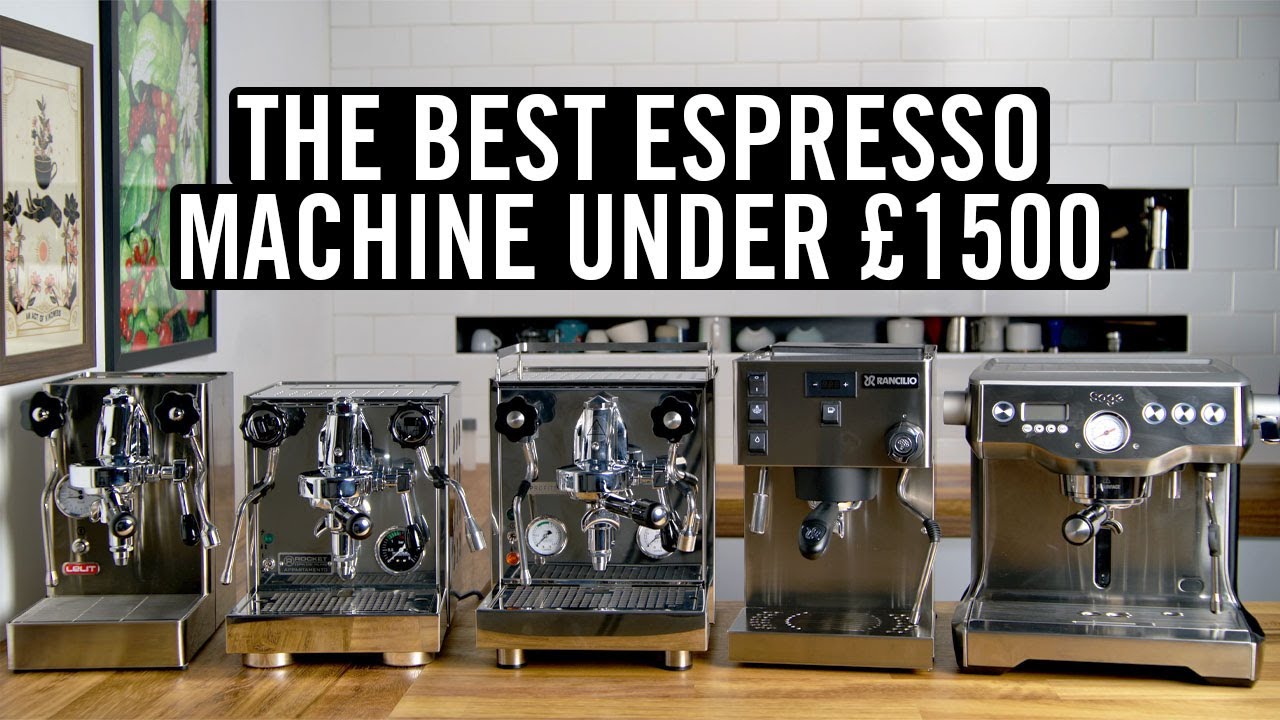
The Best Espresso Machine Under £1,500 transcript
James Hoffmann · @jameshoffmann
Words
8,252
Runtime
38:45
Speaking pace
213wpm
Reading time
34min
213 words per minute, above the 201 75th percentile of 349 measured videos. That distribution comes from the 349-video hook study.
Opening (first 30 seconds)
- Welcome to today's video. Today, we're going to be looking for the best espresso machine under £1500. Now in the past, we've done under £100, under £500. There wasn't actually a lot at the £1000 point so we jumped all the way to 1500 and if you haven't seen those other videos, they'll be up here and in the description. Check 'em out too if you're shopping for a new espresso machine. Now, these machines were picked through a poll of my Patreon supporters. There's lots of choices but these are, I think, a great selection of what's out there. They're all pretty available worldwide, they're
107 words, the words spoken in the first 30 seconds at 213 words per minute.
Sentence shape
| Measure | This transcript |
|---|---|
| Sentences | 394 |
| Average words per sentence | 20.9 |
| Longest sentence | 81 words |
| Questions asked | 38 |
| Sentences containing a number | 38 |
Most used terms
- machine92
- pressure55
- temperature51
- steam47
- sort39
- brew38
- machines36
- espresso33
- bit29
- heat28
- boiler24
- nice24
Filler phrases
215 in total: kind of 58 · like 50 · sort of 39 · you know 35 · right? 18 · actually 12 · I mean 3.
A literal whole-word count of the same phrase list the Prepublish browser extension uses, so a phrase inside another word is not counted and a phrase used in its ordinary sense still is. It is a count and not a judgement.
What this transcript is
Every word below is the caption track YouTube publishes for this video, pulled from the video itself and reproduced unchanged. It is not Prepublish's writing, not a summary, and not a re-transcription: it is the video's own published captions. English captions, published by the channel, in the video’s original language. Source: the video on YouTube. A channel that would rather this page did not exist can ask for its removal through the contact page, and it is removed.
Transcript
- Welcome to today's video. Today, we're going to be looking for the best espresso machine under £1500. Now in the past, we've done under £100, under £500. There wasn't actually a lot at the £1000 point so we jumped all the way to 1500 and if you haven't seen those other videos, they'll be up here and in the description. Check 'em out too if you're shopping for a new espresso machine. Now, these machines were picked through a poll of my Patreon supporters.
There's lots of choices but these are, I think, a great selection of what's out there. They're all pretty available worldwide, they're all very popular choices and I can't wait to see how they stack up against one another. Let me walk you through what we've got here and what they cost. First up is the Lelit MaraX. This is the cheapest of the machines at £999 so just scraping in under £1,000 then we have the Rocket Appartamento, another popular choice at £1,225.
Next up is the Profitec Pro 500, the most expensive machine today at £1,399 and then we move into the Rancilio Silvia Pro, £1,320, and on the end, the Sage or Breville Dual Boiler at £1,199. These three machines, all heat exchanger machines. They have a single boiler inside them that produces steam and very hot water and that heat is exchanged into brew water on its way to the group. They have what are called E61 style group heads where you control the machine with a little lever on the front.
If you lift it up a little bit, it will allow water to flow from the group head, lift it all the way and it engages the pump and you will get your nine bars of pressure. This technology is named after the E61 released in 1961 by Faema and it's still a very popular technology today. These two machines are both dual boiler technology where you have a separate boiler to heat your brewing water and then a boiler just for steam and hot water, you might want to take off for tea or an Americano or something like that.
Generally speaking, you know you can control the temperature of your brew water independently of your steam pressure with a dual boiler so if you want a hotter brew temperature, you don't have to increase your steam pressure or vice versa, you can have cooler brew temperature without losing steam power. Here, with the heat exchanger, your brew temperature and your steam pressure are interlinked so if you want a cooler brew temp, you lose steam pressure as your kind of trade-off.
Now these machines will be used sort of factory set. I've not opened to the inside of them up at all. Anything that I've changed would be changed through programming. I might have changed their brew temperature through a control on the front of the machine but I'm not going to get inside them at all because that's not really the point of this today. One other quick change, they're all going to use the same basket. I've taken their stock baskets out for the sake of sort of ease, they're all using a VST 18 gram basket when I come to do shot tests and that kind of stuff, it just makes evaluating the machine that little bit easier.
I would say in almost every case, I would get rid of the stock basket and replace it with a VST or similar pretty early on so that's what I did. Otherwise, they are as stock sort of factory set. Here's how the review is going to work, we're going to break it down into some sections. Firstly, we're going to talk through the build and the aesthetics and some of the features of each of the machines then we'll talk a little bit more about sort of brewing espresso with each of these machines, how they perform, how the shots taste, then we'll do a little bit of steaming tests, right?
How quickly do they steam milk? Do they produce a good texture? And at the end of all of that, I'll come back here, I'll wrap up, and I'll tell you which one I think is the best. So let's start with the Rocket Appartamento, the first of the heat exchangers, the E61 machines, and talk about how it looks. And I think of the machines here, actually it looks pretty good. I like the detailing that they have on the side panel here, I think that gives the machine some character.
I think sort of size-wise, feel-wise, it feels compact, doesn't feel too big but it also doesn't feel particularly cluttered in that regard. Obviously, there's a lot of stainless steel here and that is good from a sort of premium feel perspective, bad from a fingerprint and polishing perspective, there's a lot to keep clean here, but it does feel solid, substantial and well-made. I'll say also as a little detail, I quite like the feet, they've done a good job here.
Feet are not always done well, I quite like the feet. Styling-wise, you know, with the E61 machines, there's a lot of similarities. The little details around the steam wand valve are kind of nice. Now, let's talk about the kind of usability piece of it as well. And I'll start with a little bit of a weird complaint and that is the portafilter. The portafilter comes with some spouts in a weird position. I really don't like it when you have spouts facing forwards like this, they should be to the back.
Now what's weird in the manual, they appear in both configurations, sort of spouts fronts, spouts back, I dunno. I also don't particularly like the little shield cover-y bits that they put on here. It just makes a really important piece harder to clean. So this just annoys me, it's clearly supposed to be this way, it shows it this way round in the manual but it's just, it's just wrong. It makes you push the cups right to the back and I just don't like it.
As for the rest of the machine, well, there's not actually that much you interact with. You have a very standard E61 control lever, you know, you have an open position that allows liquid to pass through, you lift to engage the pump and close again and that's your primary point of interaction and with all of the heat exchanger machines, it's the same point of interaction. It is a little cluttered. Right at the back here, you've got your hot water tap and spout, it's not, I don't like it.
It's just cluttered in here, it's not nice from the usability perspective, tons of space on the side for the steam wand. Beyond that, well there aren't really any other controls that you're supposed to interact with. With this machine, you have no direct way of controlling the temperature of the steam boiler which therefore impacts the temperature of your brew water through the heat exchange so you kind of get what you're given.
Similarly pressure from the vibration pump. Yes, there's an over pressure valve but to adjust that involves, you know, getting inside the machine and doing some maintenance work that technically would invalidate your warranty. It's not really a consumer-facing part of the machine, something you can change or adjust easily. So really it's kind of on-off, open or closed, that's your interaction with this machine and from the simplicity perspective, that's not bad.
I don't mind a simple machine but a little bit more control would be desirable, especially at this price point. One more piece of usability and this will come up again and again with the heat exchanger machines in particular, it's heat up time. This is at least a 30 minute heat up time to have everything fully up to temperature and that's a long time. It's a machine where I would want to have it come on in an automated way well in advance of me wanting to make coffee.
If I get up, I want coffee and then I have to go and switch it on, that's frustrating. That's too long a time between desire for coffee and getting coffee so the 30 plus minute heat up time for me is a bit of a negative. Last thing to talk about before we sort of talk about, you know, the next machine and then we talk about making coffee later is gauges. This has just one, this has a steam pressure gauge and that's it, you really don't know what's going on with things like pump pressure, you just know how hot your steam boiler is and you can sort of deduct-ish, are you at temperature for your brew boiler?
But really there's not a lot of insight into what's happening in the machine, especially when you're brewing. One nice feature though increasingly common across the machines, it is a cool touch steam wand. (steam hisses) So from a safety perspective, that's kind of nice, though obviously the very tip here does get very hot. So the Lelit MaraX is the smallest of the footprints of the machines we have here today and that is very likable, right?
The more you can get into a smaller footprint, frankly the better. What's interesting to me is where it doesn't compromise, right? It's no more kind of cluttered around the group head than any of the other heat exchanger machines. It still suffers the same level of clutter where your brew activating lever is close to your hot water tap but it feels like the other machines are just wider past these points, rather than having these things further away in a kind of notable way anyway.
So tons of stainless steel, feels well-made, well-built, looks relatively neat. I won't say it's proportions are truly aesthetically pleasing, something about it just feels a bit disproportionate in a funny sort of way. It doesn't feel, maybe it's just a bit too tall, I can't quite work it out but it doesn't kind of feel quite balanced in its design but that's a very personal thing so you may feel totally different to me.
What it doesn't do well is feet, it has bad feet. Very small little rubber feet under here. It's almost impossible to get your fingers underneath the machine. If you want to lift it and move it, that's extremely awkward. Don't drag it, which I did. The little rubber feet pop off at the back and that's kind of annoying but once it's in place, you should be fine, right? From a sort of user interface perspective, you have a couple of lights.
You've got a up to temperature or a heating light and you've got a hot water level light, let you know if your tanks running empty or if your machine is heating up, obviously your main power switch. There is one more switch. (drip tray rattles) And we'll talk about the drip tray in a second. Under here, there's a switch with three positional settings, zero, one and two, and that's for low, medium and high temperatures.
It being a heat exchanger, this temperature setting for your brew temperature will impact your steam pressure so know that going to the highest temperature will yield very high pressures of steam, thing to bear in mind. In my testing, the low temperature seemed to be in the region of sort of 85 to 87, maybe 88, and the high temperature roundabout 92 with a little variation depending on how you were using it, how you were flushing it, that kind of a thing.
If I was brewing lighter roasts, I would want to be at high. If I was brewing medium to dark roast, I would want to be at medium to low temperatures. So I like that, you know, there is some control of a brew temperature. It's a little simplistic, it's a little brute force, but ultimately, truth be told, I think the changes you would need to make to brew temperature to see a substantial impact on flavor also need to be pretty brute force, pretty big changes so I don't actually have a problem with that.
I dislike the lack of transparency in terms of what exactly am I doing? What am I getting? But as a solution, you know, for the money, it's not bad. Now we do have to talk about the portafilter design for the Lelit 'cause it is very strange. You'll see here the splitter on this portafilter is an unusual shape. Now the upside is that as you're brewing, the espresso kind of falls out towards you. The downside is you've added quite a long path of travel in the portafilter, I don't think for really much in the way of a benefit.
It's more to clean, it's not particularly easy to clean. I just find it a kind of weird design. I suspect some people really like it, I just find it a bit odd but as with the other heat exchangers, that's the sort of beginning and end of your interaction with the machine. You've got your two valves, your steam and your hot water, and your brew lever and that's really day to day. how you're going to interact with this thing, how you're going to use it.
On top, there's a little space on your cup warmer for some cups, as many as you might need at home I suspect, so for me, while it is a compact machine, that's enough space on top for me to be pretty happy. From an information perspective, last thing to note is that this machine does have two gauges which is good. You have a steam pressure gauge and you have a brew pressure gauge. The brew pressure gauge is kind of interesting, in that it seems to show you a little bit more of what's happening inside the brew chamber than other brew pressure gauges often do.
Often, you would put a Scace in and you would see nine bars on a gauge and maybe eight bars in the group head. Here, what you see on the gauge is much closer to what you see on the Scace gauge which is kind of interesting. This running a little high for me, higher than I would want based on this sort of information, I would want the gauge to show more like eight bars and again, it's an OPV so you're going to go in and do sort of the hard work of adjusting an over-pressure valve that is awkward and frustrating to get exactly what you want so from that point of view, a little annoying, but to have the information is kind of nice.
And as you'll note as we talk about espresso in a little bit, the way it comes up to pressure is kind of interesting too. Anyway, that's the interaction with the Lelit MaraX. So the Rancilio Silvia Pro, obviously based on the very popular Rancilio Silvia, probably the most modified domestic espresso machine in the world. I suspect there's more PID kits running on Rancilio Silvias than anything else and this feels like a response to that.
You know, the users were fixing aspects of a machine, Rancilio fixed it themselves. So they did a dual boiler, this is it and it's a lot like it's just a lot, it feels very big. As a machine, it does feel like it lacks just a little bit in the way of elegance. It feels like a kind of brute force solution here and that's from the size and the shape kind of throughout. Now I have a couple of little complaints on the sort of user experience side of things, some things that quite make sense to me.
There are things that I like though. But let's start with the rocker switches on the front. Now these are similar than you would find in the Silvia. They don't act in a uniform way and that kind of bothers me. The main on-off switch as you'll see, it's off, it's on, up and down, that's how a rocker switch works. All the other switches don't do that, they bounce. Now the rocker switch I just hit is the steam function and on a Rancilio Silvia, on a normal Rancilio Silvia, that heats the machine up to a sort of higher temperature so you can get steam out of it.
Here, it just turns off the steam boiler, which is kind of interesting as a solution. You know, if you don't want to steam milk, then don't heat up a steam boiler. You've got a dual boiler, you can just heat the coffee boiler. I think that's a nice touch, though it's kind of a weird use of a button that has an existing kind of design language in coffee machines, I don't know, it's just kind of weird. Same again actually with the shot button, right?
If you start to pull a shot, if you turn it on, it bounces back up. Obviously you can hear the machine is running. (machine whirs) But why doesn't the button stay down? Just stay down, be on or off. I just find it a really weird behavior for the switches. On here, you do have your control box. Again, it's not hidden the way it is in other machines, it's front and center. The upside of that is that it works as a shot timer while you're pulling shots so that's a nice use of that, otherwise it shows you the live temperature of the boiler of the machine.
There are more functions in here, they're not hugely intuitive in my experience. Like there is a sort of program to shut down and wake up but you're programming how many hours until the machine wakes up again. You don't program a clock and say wake up at 7:00 AM, you say, wake up in 23 hours or something. I find that a little odd, a kind of reasonable usage of a key pad to do a little bit more in terms of functionality but I don't think that's superb user interface design if I'm totally honest.
My only other real significant complaints around this side of stuff is around the drip tray actually and this there's two things. They've kind of brute forced another solution which is you can change the height of the drip tray. In here, there are these pieces on the side that sort of vaguely lock into place with little locking wheels and you can change the height of them. (machine parts rattle) Let me just do this now.
Oh, there we go, so let's drop it all the way down and now my drip tray will sit lower when I put it back on there, right? Little bit lower down. It works, okay, I don't think it's a particularly elegant design if I'm honest, right? Like it's a little bit brute forced in a way, like it works, it's okay, it's kind of useful I guess. Again, if you were using this as a pure espresso machine, you would want this higher up you know, you don't need to put a big mug underneath but if you're doing a big milk drink, that's an option.
That's a smaller complaint than my larger complaint which is the decision to put a lip here, right? Because you can't see how full the actual drain tray is underneath the drip tray grid here, right? So if it got very full, you wouldn't see until it was potentially too late and if it was very full, you've got a problem because I can't, you know, gingerly slide this out, I have to lift it. I have to lift it up to that angle to get it out and if that's full, that's going to make a terrible mess.
That is a really weird design choice to me. I do not understand it, it's incredibly frustrating. I think it's a bad design decision if I'm honest because I could foresee someone making a terrible mess of their kitchen counter by accidentally having a very full drip tray and trying to find a way to get it out. You can't just lift it straight up 'cause it's stuck underneath here. Very frustrating. So let's have a little look at the Profitec Pro 500 and it is our most expensive machine.
And if you look at it, it's a lot of stainless steel, it's a lot of uninterrupted, shiny, fingerprint-attracting stainless steel. I think it looks quite nice. I think the build is quite nice, it's quite boxy and if that's your vibe then you're probably really quite into this but yeah, it feels substantial, it feels spacious. It feels the closest to a kind of pro machine in some ways, certainly of the three E61 style machines.
Few things to talk about in terms of the externals. Firstly, the water tank sits underneath this entire tray, right? So you need to lift off your cups and everything else to sort of get into your water tank. It makes for a bigger cup warming tray, a more functional cup warming tray, but it is also just a bit weird as an experience. I'll say it again, I've said it lots of times; from a user perspective, the clutter around the brew handle and the hot water tap is the same, it's the same frustration.
There's a little bit more space between these two valves, there's a little bit more width to the machine but it's a centimeter or two compared to the others so it's still relatively crowded. Now the Profitec being the most expensive, it is, of the heat exchangers, the most feature-rich so on the front, you can see you've got your steam pressure gauge, you've got your brew pressure gauge so that's nice. Both are there, that's good, and then if you pull the drip tray out, here underneath, you've got your control for temperature.
Now, as we've talked about before with a heat exchanger, you're controlling the temperature of the steam boiler so 126 degrees Celsius seems very high, obviously that's for steam and you'll lose heat in the heat exchange process so this is to produce, I think, somewhere in the region of like 94, 95 degrees Celsius, which it mostly does. Programing this as an experience isn't lovely. I feel like it's slightly convoluted as a menu and not particularly intuitive but it works fine.
They could have done the work in terms of giving you the option to just see your brew temperature and change that and algorithmically have them do the backend work of converting your desired brew temp to the correct steam boiler temperature. This is a little bit more simplistic and I think that's kind of a shame for the money, like I don't care what my steam water temperature is, I care about my brew boiler and I know it's not a direct correlation and you can't just offset it but still, that's not complicated maths, I don't think.
That aside, it is nice to still have control over your temperatures and in your manual, and don't lose that, you would have a chart giving you the sort of conversion of steam temp to brew temp. Similar to the other machines, heat up times are very long, changes in temperature sort of coming through have been quite slow so again, it's one you'd want it on a timer in order to have this be hot and ready to go, you know, turning on 30 to 40 minutes before you want to make coffee.
Again, it's a frustrating aspect of the user experience of these kind of machines. Feet, reasonable feet, certainly easy enough to move, lift up, deal with that kind of stuff. Not beautiful but certainly adequate. One quick note before we get into actually pulling a shot and talking about temperatures and pressures, I did have the single incidence of thermosiphon stall with this machine. Now I don't want to go too deep into this, it can happen to any heat exchanger machine.
It's when the water stops cycling in the thermosiphon properly and your group head goes relatively cool. You need that movement of water happening constantly to maintain a temperature here. That didn't happen and I was getting shots in the sort of mid 80s in terms of brew temperature, flush through a bunch of water and it seemed to correct itself. I know other machines can suffer from this so it's not a particular, you know, negative for this one machine but I do want to point out the fact that it did happen and it can happen with heat exchangers.
So let's talk about the Dual Boiler from Sage or Breville, depending where you are in the world and I think this machine is another great example of their particular approach to product design because from a sort of features perspective, it crushes the competition, right? Like on paper, the features here exceed everyone else and what do I mean by that? Well, you've obviously got a dual boiler, you've got control of your temperature to a degree Celsius.
You've got a shot clock on here but you've got a clock on the machine as well so you can program your morning wake up or shut down so it's always hot and ready when you want to go. You can program pre-infusion in this machine, both its duration and its pressure. You can use this as a time-based delivery on the pre-program buttons or a volume based delivery on those buttons and I'll show you my one tiny little feature that I think is emblematic of their design, here, the little knob under the machine and you twist it, lifts up, oh, it moves around.
How nice is that?! You know, it's a little detail, but it matters. And they do all this at what is kind of in the middle of the pricing for this thing, it's about £1200. Well, how? And the answer, very obviously, is build. Like these are all built out of metal, they're heavy, they're substantial. This... (tapping) Is not, you pick it up, it feels lightweight compared to everything else. It doesn't feel built with the same quality or, quality is not quite fair, the same kind of heaviness and weight of materials.
It's not stainless steel everywhere, it's not that kind of a thing. If I was to describe those other four machines, I would use the phrase pro-sumer, that's quite a common word, you know, it's a professional consumer machine, it's sort of in that middle ground. This feels like a consumer machine, feels like a very nice consumer machine but it feels like a consumer machine. It feels like it's targeting a different audience.
It's the only machine that tells me, "Don't put milk in the water tank." I don't know what you make of that but clearly that's happened often enough with their products that they needed to put it in writing where you fill the water tank. That just says they're targeting a different audience with less knowledge, less interest, less investment in espresso but they're still trying to build features that appeal to the espresso enthusiast and that's what makes it kind of interesting.
Now one of the frustrations is that their portafilters are very slightly different. They're 58 ml portafilters so I'm using the same basket that I've used for all the others here, but the little lugs on the side here are a different size so I cannot put my Scace 2 into the machine to test its pressure and to test its brew temperature. There's various ways you can try and hack it, you know, you can put a little probe on top of a bed of coffee and sort of sneak it in and see what that's giving you.
It's pretty much delivering on temperature, I don't have any concerns there. Pressure, I have to trust the gauge, and the gauge is telling me that the OPV is not set correctly. This thing will hit comfortably 10, 11 bars while brewing, you'll see that pressure decline during the shot as the sort of puck erodes or it creates channels in the puck and finds easier ways through but it should never hit those pressures in the first place.
I don't want a machine brewing at that high of a pressure, I want the over pressure valve to bleed off pressures above nine bars. I know you're probably tired of me saying it but I'm also tired of saying it, like this is basics of good coffee brewing and I'm just very annoyed in four of the five machines tested to be raising the same point. Just to wrap on the sort of experience before we pull a shot, you know, it feels both quite substantial and quite compact, you know what I mean?
Like it's not a small machine, it's not the smallest machine but it's not particularly deep and I think that matters to a lot of people and a lot of people's kitchens. It doesn't feel as compact as the Lelit over there, but they've done a good job of making it feel, you know, a nice balance between substantial and small enough. You know, I don't think the space saving stuff about putting a tool storage tray here is particularly useful.
I don't want to be pulling my drip tray in and out, but you know, they're trying and I appreciate that. So now, we're into talking about making espresso and we are back to the Rocket Appartamento. Now my experience with this has been kind of mixed. I've quite liked the coffee coming out of here, though it isn't brewing in a way that I would really want it to. Once I put a Scace device into here, I began to understand why and primarily it's because of pressure so let's have a look at the brew pressure. 145 PSI on a Scace 2 means that the pump is producing probably something closer to 160 PSI, that's nearly 13 bars of pressure.
I don't want to see 13 bars of pressure at the pump, I want to see nine bars of pressure at the pump and once you accommodate losses, I want to see like 110, 115 PSI something there on a Scace 2 like this for a nine bar pump. Higher than that and I will have some additional bitterness in my experience and a much higher likelihood of channeling in my shots. That's to me unacceptable in a factory shipped unit. This should have been fixed at factory, I have no idea why the pump is running this high.
Yeah, I can mod the OPV but I shouldn't have to. Brew temperatures ranged from sort of 92 to 94, which was pretty good and they were generally pretty stable. Occasionally, a little slow to recover after pulling a shot, you know, before you get the next shot and a little drop in temperature but overall, no real complaints about brew temperature. Let's pull a shot. (machine whirs) Not a bad shot, you know what I mean? It would be better at a lower pump pressure, I would enjoy it more and it would make making espresso easier for me because I'd have less issues with things like channeling most likely but it strikes me as a capable machine that would need a few little tweaks to really perform at its best, from an espresso brewing perspective.
Obviously, now the heat exchangers have a shot timer because of the nature of how you turn on and off the grip with that kind of lever, I suppose it could be done but none of them have that function so you'd want to use a scale or something else for timing, which from an espresso brewing perspective is not truly ideal but it's certainly workable in most situations so I would say a capable machine. The only thing I would be aware of is if I was brewing lots of different styles of coffee, I was brewing light roasts, dark roasts, that kind of stuff, I would be frustrated that I couldn't tune my brew temperature around my coffees, right?
Like that would be a frustration. Yes, you could run a different heat exchange routine, you could flush more water out, cool the group head down and try and go that way but it's a difficult thing to be accurate with. I would much rather have a machine where I could program my desired temperature and have the machine take care of the difficult stuff. Good shots, could it be better with a little tweak but certainly capable as a machine and for, you know, producing great espresso.
So pulling shots with the Lelit, interesting experience. Let's have a look at brew pressure quickly. (machine whirs) Now this is a really slow ramp up to pressure. (steam hisses) Now you can see on the gauge here, just above nine bars and here, just above nine bars here too. Now, you know, based on this, it's running about a bar and a half higher than I would want it to run but it's interesting to see the similarities between the two gauges, that is definitely interesting.
So brew temperature wise, as we said, generally it's been around 92, give or take a degree-ish. Certainly for me, a nice place to be brewing espresso and it's performed actually quite consistently shot to shot which I have liked about this. Let's make an espresso now. (machine whirs) The espresso has been very good, brew temperature is good, brew pressure has been high, and you can taste that, again, it's that same sort of thing where you have this additional kind of layer of bitterness that you don't necessarily want or shouldn't really be there.
Having this very slow ramp up to pressure, it means you can grind much finer and you know shots have had relatively high yields and very good extractions from that point of view, potential channeling aside, it's made nice coffee. It's set up so the temperature is kind of where I want it to be, it's just frustrating that again from factory, it's not right in terms of pressure, it's running too high, it's running higher than I would want and that really, really frustrates me.
It really annoys me. I don't want to have to fix that problem. It should not be on the consumer to fix that problem. So lots to like about this, especially at its price point compared to the others here but frustrating that it lets itself down in these little ways. Let's talk about some good things though. Now, this machine is unusual when it comes to temperatures and pressures in that it does what it's supposed to do right out of the box, right?
Compared to the others here, that's kind of surprising. You get the temperature you expect from the gauge here and it brews at the right pressures. Let's have a look. (machine whirs) So what was kind of interesting there was that the programming was set to 94, 93 was on the screen indicating it was a little bit cool, but actually brew temperature suggests no, it was in the 94 range. Pump pressure's about 150 in PSI, indicating it's probably 130 PSI at pump, nine bars, eight sort of measured in a flowing working group head as you would want.
So from that perspective, it's doing what it's supposed to do and that is shockingly surprising at this point when it really shouldn't be. You know, points here, it's the temperature I want, it's the pressure I want, let's make some coffee. (machine whirs) The espresso has been very good. It's been as good as the coffee I've put in and the grinder that I've used to grind it, right? Like a good espresso machine should kind of become almost invisible, it just reliably delivers the temperature and pressure that you want.
If it's distributing water properly onto the puck then any complaints with the shot you have really should be pointed elsewhere in the whole kind of process. So from an espresso perspective, it is a solid performer, I have no real complaints at all. Stop me if you've heard this one before, but the pressure on this machine runs too high. We're getting pretty much 10 bars on the gauge, we're seeing at least nine bars in the group, it's at least a bar too high for me.
I don't really have a good explanation as to why other than it just wasn't properly set at factory. This is going to be a theme it seems that comes up again and again and again. Let's make some espresso. (machine whirs) Now, espresso from this has generally been good. I have no real complaints, the higher brew temp works for me. The shots have tasted a little bit high pressure-y and I wish the pump was running lower from factory, that would make the shots better.
Again, it's not super difficult to go in the back and do an OPV adjustment, I just don't want to have to do it. I don't think I should be expected to do it to have an optimally functioning machine, especially for this kind of money. But overall, no real complaints. Performance sort of back-to-back has been okay. You know, with all the heat exchangers really, if you go too hard, too much sort of throughput for them, they will decline in temperature but under normal usage for homes, I've certainly had no issue.
It's another very capable machine but it's not necessarily making better espresso than any of the other heat exchangers so to speak, like I think they are all making very good espresso, relatively easily. Now it's interesting to look at this machine with some context of previous machines we've looked at. If you go back to the previous comparison review, the £500 review, we had the Breville Bambino Plus and that felt in some ways more advanced than this machine with the one exception with that machine, that you had very little control over brew temperature and you didn't have a 58 ml basket.
Here you do and that sort of makes it a more espresso-focused machine but the rest of it in terms of how it steams or that kind of stuff just doesn't feel as up-to-date as that particular machine, which just is I think worth noting. But let's make some espresso. (machine whirs) So you catch the slow ramp at seven seconds up to full pressure so you've got seven seconds pre-infusion. (machine whirs) And then straight up to 10 and a half bars.
Dropping now to nine and a half... Dropping down to nine. (machine whirs) That's kind of weird. You've seen me use this machine on this channel a bunch of times in the past. It can make great espresso. It again just bothers me that I'm just so close to what I want but I'm not there. Again, the shots taste that little bit harsher than I would want with this pressure configuration. Now on the other machines here on the sort of four pro-sumer machines, you can see nuts and bolts and screws and places to get into the machine and there's a sort of subtext of you may wish to open this machine and get inside.
That's not how this looks and feels. There are no screws anywhere that you can see. The message is do not open me but people do and have and they've modded these machines and fixed OPVs or done what's called the Slayer pressure mod that's not for today's video but interesting that you can modify this machine in a bunch of interesting ways. And stop me if you've heard this one before, I shouldn't have to do it, I should not have to spend £1200 and then be tweaking things like pressure, that's not the way it should be.
So I'm close to what I want. Temperature tastes good, I've had reliable temperature from it, I just want to fix that pressure issue but it's a capable machine when it comes to brewing good espresso. (relaxed piano and drum music) Steaming-wise, certainly quick enough for me. Steam was nice and easy to work with. It's a single whole steam tip but certainly very easy to work with, got some great texture, no real problems whatsoever with steaming, this steams very well.
Now, steaming with the MaraX has been kind of interesting. Now I suspect it's to do with the way that this thing controls its temperature. It has two temperature probes, I presume one is in the steam boiler and one is in the thermosiphon and it's going to control the steam boiler to kind of regulate the thermosiphon temperature and that's meant that actually the steam pressure during operation has varied quite a lot, depending on what you're doing with your brew water too and that's been a bit of a surprise actually, useful to know, but a bit of a surprise.
It's meant that I've had pretty high steam pressures and kind of middling steam pressures. Steaming with this is easy, texture has been great, like I have no complaints about it whatsoever but performance has varied a little bit, depending on where the steam boiler is sitting and that's just kind of odd to me, a little unusual. I'm not sure this is really a complaint because even at lower pressures, I've had enough steam to get nice texture, though I might wonder at higher pressures if it would be more difficult to control, just having that much more steam pressure.
Overall, no real complaints just worth noting that that has been a strange one. To steam with, the Silvia Pro is lovely, very easy, tons of pressure, not too much flow so you've got lots of time to do what you need to do but enough force in the steam to have great texture in that kind of churning phase in the second half. It doesn't steam with the sort of aggression of a commercial machine, it still feels like you're steaming on a very nice domestic machine.
Steaming with this is very nice actually. The tip on here restricts the steam flow enough that you have nice pressure but not excessive flow. That means that you have plenty of time to do what you need to do in terms of texturing and getting your sort of foam created and then rolled around nicely. Overall, steaming with this, very nice, no issues at higher temperatures. You know, I'm at 126 in the steam boiler, about a bar and a half of pressure but yeah, easy, easy to work with.
To steam with, super good. Very easy, plenty of pressure, not too much flow so it's quite a slow process but it's easy. You've got time to do what you need to do, good at steaming milk. So let's wrap up. I'll give you a quick rundown of each of them, a quick summary of each of the machines and then I'll tell you which one I would buy if you gave me £1500 to spend. At the beginning, the Lelit MaraX I really quite liked.
It's small, it's the cheapest of them here. You don't get fine temperature control but I think you get enough. It brews pretty good espresso. We'll not talk endlessly about pressure but it's kind of fine. I think it's a good value machine, I think at the price point it's out-competing something like the Rocket Appartamento. Here, I feel like this was a difficult bracket for this machine. It's well-built, it looks good, but it does not have the feature set of a cheaper machine or a very slightly more expensive one, right?
It sort of sits at a difficult price point where I'm not sure, you know, other than maybe I've got a great deal on it or I have great support and after sales. You know, that might be a reason I would pick this over something else but the lack of temperature control is frustrating for me in this regard. The Profitec Pro 500. Of the machines, of the heat exchangers, it's the most expensive but I think the best performing.
Most features, most useful, most usable. I thought this was a very well-made machine, I liked a lot about it, factory pressure aside. I wouldn't feel bad recommending this, it is a good machine and I think it looks nice, it feels nice, no real complaints outside of the whole pressure thing. it did what it was meant to do, it hit the temperatures, the pressures, it was easy to use, it makes great coffee, but the experience of it just frustrated me at times.
The Sage, kind of the opposite. The experience is kind of great generally, all the features are wonderful, I think it's a good machine. I just wish it was doing what I wanted it to do a little bit more. But there's no question, if you're just looking at features, this destroys everything else. It has a better interface, it does more, it's more useful, it's just not built the same way as these. It doesn't feel as heavy, it doesn't feel as long lasting, it doesn't feel like a pro-sumer machine, it feels very much a consumer grade thing.
And if that bothers you, that's going to be an issue, right? It doesn't feel like it's going to have the longevity of these other machines. Now that's just a feeling, I'm not saying it doesn't have the longevity, it's kind of an experiential aspect of the machine. When you interact with it, it feels lightweight in comparison to everything else. Now, in terms of what I would recommend. Well, firstly, if you have one of these machines, I'm not sure I'd recommend upgrading to another machine from this group.
Maybe if you have a Rocket and you're frustrated by not being able to play with temperature easily, then you might consider something like this and upgrade but really you're not going to see a substantial improvement in your espresso, right? If you've got one of these, you've got a great capable machine. If you get those pressures dialed in, temperatures dialed in, you are very capable of producing incredibly good espresso if you've got a good grind.
However, to answer the question of which would I buy with £1500, I would be torn between these two. I know this made better espresso and I'm not going to discount that fact, this did a really good job. The user experience of these is a little bit nicer. They're a little bit more attractive looking and depending on lifestyle and how I want to make espresso, these would be my pick but it's tough. And in truth, I'm a little disappointed across the entire bracket by the experience on offer at the price point.
Now I know I often have more expensive equipment on here, right? I have, you know, £3,000, £5,000 machines and so is this unfair of me to have higher expectations of these at a lower price point? But the thing that bothers me is that the same components could do a better job if they were set up properly. And if that were the case, if they were all brewing beautifully from factory, oh, then I would really be torn between these two and it would be a difficult decision and it would be about after sales or getting a deal or who am I buying it from?
What support will I get? You know, that kind of stuff, that would probably tip me over the edge one way or another or which one fit better into my kitchen. But that's my feeling. Now I'd like to hear from you down in the comments below. Do you have one of these? Did I miss an aspect of one of them that you think is worth talking about? Share it down in the comments below. Do you know why all of these machines are not set to the correct pressure except for this one?
Am I missing something? Am I unfairly angry about this? Is there a really obvious reason that I just don't get, other than they just weren't set up properly? Let me know down in the comments below and if I've made a huge mistake, I will most definitely publish a retraction but I will say I'm frustrated but I'm curious, I'd love to hear your thoughts, your comments. Did we miss a machine? I don't know, I don't get to keep these machines.
These go to my Patreon supporters who help me with this channel, allow me to go out and buy these things like a consumer and tell you my honest thoughts about them. I look forward to your feedback on this video but for now, I'll say thank you so much for watching
The words are the caption track's own and nothing is reworded or re-transcribed. Paragraph breaks are placed between sentences so the text reads as prose.
Use this transcript
Three free tools that work on the material around a video like this one. No signup, no login.
Hook Analyzer
Paste the first 30 seconds of your own draft for a hook score and rewrites.
Policy Pre-Flight
Check your draft against YouTube's advertiser-friendly guidelines before you record it.
Channel Skill Generator
Read this channel's public videos and transcripts, and download a writing brief for it.