Getting the transcript
Reading the captions from YouTube. A video nobody has opened here before takes 10 to 30 seconds; this page fills in on its own.
Reading the captions from YouTube. A video nobody has opened here before takes 10 to 30 seconds; this page fills in on its own.
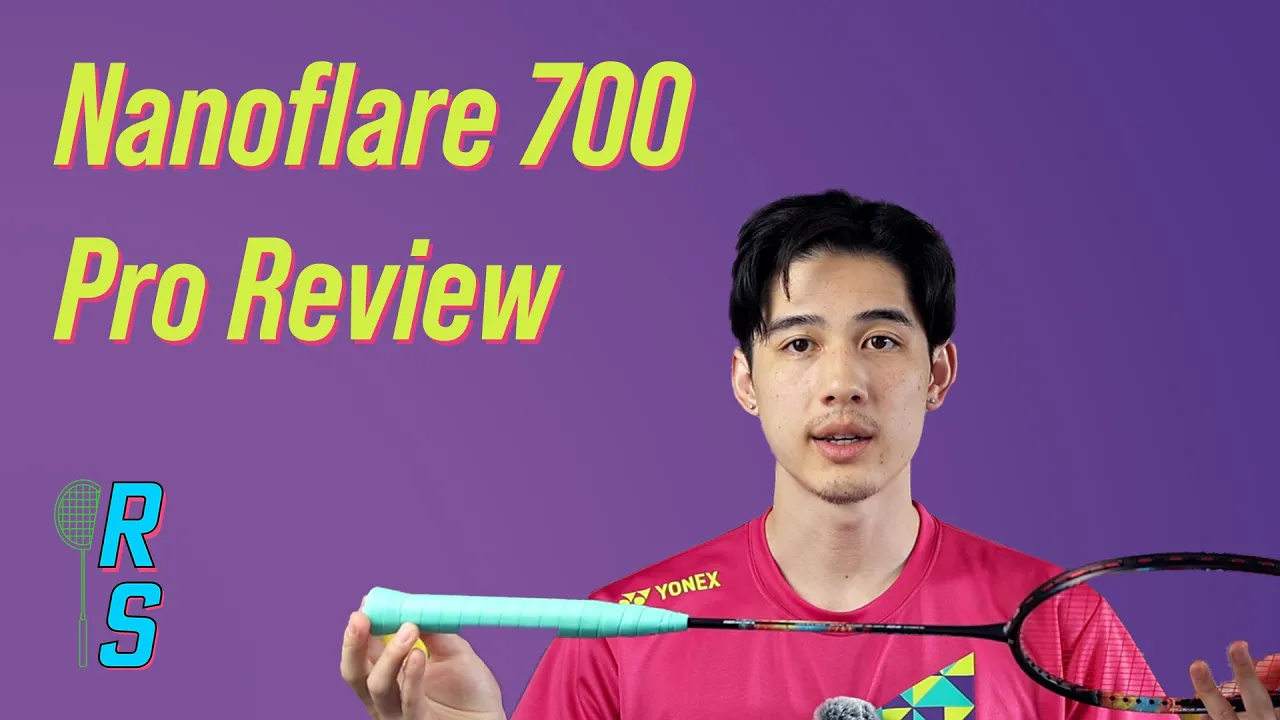
Eric the Racket Scientist · @EricTheRacketScientist
Words
3,734
Runtime
16:41
Speaking pace
224wpm
Reading time
16min
224 words per minute, above the 201 75th percentile of 349 measured videos. That distribution comes from the 349-video hook study.
Opening (first 30 seconds)
Good afternoon, Eric the Racket Scientist here and today I'm here to talk to you about the Yonx Nanoflare 700 Pro. It's a racket review that I've been alluding to for a while. So, I bet you're wondering why it took me so long to film this review. So, the first reason is I got a Nanoflare 700 Pro earlier this year. During a club session, I lent it to one of my friends and unfortunately they broke it. So, it took me some time to source another one. Second of all, when I go to make my review on rackets, I really like to take my time and play with them
112 words, the words spoken in the first 30 seconds at 224 words per minute.
Free, no signup. See how the first 30 seconds hold attention, with rewrites.
Sentence shape
| Measure | This transcript |
|---|---|
| Sentences | 195 |
| Average words per sentence | 19.1 |
| Longest sentence | 78 words |
| Questions asked | 4 |
What this transcript is
Every word below is the caption track YouTube publishes for this video, pulled from the video itself and reproduced unchanged. It is not Prepublish's writing, not a summary, and not a re-transcription: it is the video's own published captions. English captions, generated automatically by YouTube, in the video’s original language. Source: the video on YouTube. A channel that would rather this page did not exist can ask for its removal through the contact page, and it is removed.
No Script X-ray for this video: YouTube shows a Most replayed graph only once a video has enough views.
Good afternoon, Eric the Racket Scientist here and today I'm here to talk to you about the Yonx Nanoflare 700 Pro. It's a racket review that I've been alluding to for a while. So, I bet you're wondering why it took me so long to film this review. So, the first reason is I got a Nanoflare 700 Pro earlier this year. During a club session, I lent it to one of my friends and unfortunately they broke it. So, it took me some time to source another one.
Second of all, when I go to make my review on rackets, I really like to take my time and play with them a lot. do several drills and spend a lot of time in game playing with it trying to figure out how it works. I don't really like to write my reviews just based on first impressions because I think it takes some time to really get to know a racket. All right, so let's talk about it. So, we got our Nano player right here.
I think it gets overlooked a lot because it has a rep for being a racket for more beginner intermediate players due to its headlight and slightly more flexible nature. I think it also gets overlooked because people think it's a really weak racket in that it can't generate the same power as say the 88D Pro or the 100Z or the thousandZ. You know, people really like to hit hard. So like a lot of people are going to overlook rackets that they don't think are going to let them hit hard.
Now I can tell you that I think this racket is very underrated overall. I think it's a racket that's really easy to pick up and use, which is great for intermediate and beginner level players. But I'm also going to explain why I think this is a really good feature for advanced players as well. I'm also going to explain why I think the racket's lack of power is kind of a fallacy. In other words, I don't think power is really a weak point of this racket necessarily.
The main strengths of this racket lie in its wide operating window. That means its ability to perform well in a huge variety of situations for variety of players in a variety of conditions. While it might not be able to reach peak performance of other rackets in terms of raw power output, control, or even just feeling, I would argue that this racket's ability to have such high baseline performance. Baseline performance meaning even if you're having a bad day, you can still play well with this racket is much more valuable than people realize.
So, let's get into it. So, as I said, this is a racket made by Yonx. It was it's one of their more recent models. In fact, it might even still be their newest high-end model. It's a very interesting looking racket. The graphics on this racket are very different from any other Yonx racket. So maybe you love it or hate it. Uh that's that's up to you. This racket is offered in 4 G5 and 5 U G5. But if you are sourcing it from Asia, like in Japan, this racket's also offered in 4 G6 and 5 U G6.
In my hand, I have a 4U G5 model, which I believe to be kind of the most standard. So, as for the racket itself, this racket weighs about 90 g as tested. Meaning, this is 90 g while strung and with the grip as I've prepared it, which means removing the stock grip, putting electrical tape, and then putting the overgrip on top of that. The balance point is about 287 to 288 as tested, which yeah, puts it in headlight territory.
And because this is technically my second one since the first one was broken, the other one measured almost exactly the same. So, pretty consistent. So, we have this trademark trapezoidshaped frame from Nanoflare. Kind of a hybrid. It's It's not quite a sword frame, but it's a little bit more rounded and it's only tapered on the inside edge and not the outside edge. The outside edge is relatively smooth. It's fully recessed all the way around.
Isometric frame, traditional 76 hole pattern, medium stiff to medium flex shaft. Shaft length is about standard by today's standards now that we have a lot of rackets with shorter shafts, but the overall length of the racket is a little on the short side. Redson RG08 has a similar racket. It's also a speed frame headlight racket from Victor. you might consider some of the RS speed models. So, let's talk about how this racket performs in the field.
So, I got some hitting footage for you here. Start with drives. It's very easy to do kind of defensive drives without using your arm or your shoulder. You're just like squeezing your wrist, which is good cuz in in doubles, you know, you don't really have time to do that swing. So, as expected of a headlight racket, drives are really easy. It's super easy to get the proper timing on this racket and for light shots, the feedback is really good since there's not as much head weight.
What you're really going to notice that's kind of trademark of headlight rackets and especially with this racket is that it's really easy to pull back for repeated drives and that it's really good at pivoting. Meaning that if you go from backhand drive to forehand drive, if you're changing your grip to maneuver the racket, that action is usually really fast. The racket is also very fast to react, meaning that if you suddenly need to change the direction of the racket and maneuver into a certain place, that's usually very easy.
And again, that's just usually trademark of headlight rackets. But just as a reminder, as a coach, nothing's quite a good substitute for actually being ready with your racket in the right place at the right time. Just because you have this racket doesn't mean that you should get lazy. So, let's talk about moving drops next. The next drill, you can see me moving back and forth on the court doing backdrops. Right. So, the purpose of this drill is mainly to test overhead shots while moving.
Because of the maneuverability of this racket, it's really easy to time shots on the move. Now, this is something that beginner and intermediate players sometimes tend to have more trouble with. I think when you're moving back and forth and swinging overhead and moving your body and pivoting, you're going to be a lot less likely to mist time or mishit a shot as you might with a head heavy racket. In terms of swing action, because you don't have that momentum loaded up in the racket head, you do have to be a little bit more deliberate with your swing.
Even when just doing drops, usually better to keep close to your body and just have a nice little snap. But because of its slightly flexible nature, you can whip the racket a little bit if you're not in a great position. So overall, pretty forgiving. Okay, so let's move on to four corner shots. The purpose of this drill is to also test hitting while moving, but we're also adding in net game and like pivoting movements.
So, one thing we're going to notice here is that again because of the lack of head momentum, hitting behind the body is going to be a little difficult because you have to generate more racket head velocity, you don't really get as much help from the racket when hitting outside your body. The other shortcoming you're going to notice is that when you go to the net, because there's not as much weight in the head, you get a little bit less stability.
So for tight nets, it can be kind of hard to control exactly your depth. I mean, generally this is thought of as a doubles racket anyways. And so you are going to really want to push more often with this racket rather than do tight net. When we take this drill slowly, more like in a singles format, this racket doesn't really perform that well. But when we start to push the pace and do this drill in more of like a fast pace, that's where this racket really starts to shine.
And uh while you can open up, you'll see that it's much more effective to keep it close to your body and just have a very quick action. So it's much easier to be consistent while you're running and jumping. While this racket does have a tough time doing recovery shots, what you can do with this racket is quickly snap it, even if you're off balance. Unlike with a heavier racket where you generally need to be on balance and have a good plan in order to get a good swing.
What this means is you can usually hit the bird down and with some pace even when you're kind of offbalance and moving quickly. Meaning that in game you would be able to stay on the attack very often. So in this drill you can see that even though I'm running around I'm able to drive the bird downward with some pace and follow it up quickly in the front court with a push. So, let's get to the part people are actually excited about.
Let's talk about the smashes. So, I think this is where everyone's really expecting me to say that the smash on this thing is weak, but I'm going to talk about a few attributes that you probably haven't thought of and that a lot of people generally don't talk about in their racket reviews. First of all, the energy efficient smash. Okay, if your opponent is constantly lifting to you in a rally, it is usually not a good idea to go for a full smash, especially if their lifts are good, because that's just going to tire you out.
They're usually going to try to make you run back and forth while waiting for a chance to counterattack. >> You see uh CSMJ do this a lot cuz when he's running and gunning, you need to be patient, right? So, this is enough to apply pressure. Now, the nice part about this racket is that you can get fast drops or half smashes with not that much energy input. You actually can load it up slowly if you want to. You won't get big power like that, but it's usually good enough to keep the bird down and enough pace so that your opponents can't counterattack it.
So, if you want to save energy, you can use your full body like I'm doing now, very relaxed, barely any energy. It's not enough to put you off balance. I find that this works really well with a long grip. So, holding the racket at the bottom of the handle, you can kind of open up your body and just let the racket sail through by itself. >> You can do slow setup. Half smashes are very nice when you open up a lot. I think one of the greatest abilities of this racket is its ability to attack low lifts and punch clears.
I think in a lot of fast doubles matches, your opponents are generally going to try not to high lift to you because that gives you a lot of time to attack, especially in amateur gyms that don't really have high ceilings. And so, a lot of times they're going to try to lift it low and fast to get it over you as fast as possible to get you off balance. Now, because you can swing this racket with such a fast action, you will be able to attack things while offbalance that you wouldn't normally be able to with other rackets.
Like, if the bird is going over you, usually you can raise this racket. And with just a quick wrist action, you can get that bird going in a downward direction. If you want to be more accurate, you can start to use your wrist more. Like my footwork is still calm, >> but I'm able to place my smashes a little better just cuz I have that quick release, quick action. Now, you can go even quicker than that. That's me holding it at the bottom.
So, you can uh smash really quickly like that. So, I'm holding it at the top of the grip. Now, you can see that no matter how little room I have, I can have time to inject pace into the the attack. So, if I'm the backourt player trying to keep the pressure on, I can kind of do that. Once you do get that quick smash and the bird gets going in a downward direction, it's really easy to quickly follow up because you can quickly get that racket up again and then the action to hit the next shot is really quick.
Yeah, like that. So, makes it much easier to follow up cuz your action is so quick you recover fast, too. It's usually quite rare for a racket to be able to respond really well to a variety of different swing types, but as I've said, this racket works really well with both really quick smashes and it still works reasonably well with wide or long smashes. See, now this is an interesting one because like for a head headlight racket, this is pretty effortless. >> What's cool is you can do both a long slow swing, >> but you can also do quick snap swing like that as opposed to the controversial Victor Thruster F Ultra which has a much more narrow operating window and only works with a very specific type of swing.
So, let's do a little bit of recap here. The main strength of this racket is that it has a really wide operating window. That means that you can use this racket in a wide variety of situations, have consistent timing, and reliable response from this racket. Although some of these traits may seem like they're targeted more towards beginner and intermediate players, they're also really important for highle players to succeed in more scramble situations and to quickly follow up on attacks to keep the pressure on in really fast rallies.
Now, I think the big thing that people misunderstand about this racket is they pick it up and they're like, "Oh, this feels pretty good, but it doesn't feel as good as X." Like, the Smash doesn't feel as good as 100 ZZ or it doesn't feel as good as 88G Pro. The drives don't feel as good as the original Nanofare 700 or the 1000Z. So then why would you buy this racket? I think a lot of people who say those things kind of miss the point a little bit.
It's like, yeah, of course there are going to be rackets that feel better than this one in specific situations. I mean, if you're practicing smashes with an 88D pro in ideal situations with someone just lifting to you, of course it's going to feel better, but you really need to think about the use case of when you're in the match. Doubles is very fast-paced, and the higher level you go, you're really not going to get a lot of opportunities to hit that perfect shot.
And it's in your opponent's best interest that you don't hit with good timing. So, you're going to encounter things like pace changes or deceptions or whatever. So, having a racket that you can hit with good timing even when you're not on balance or you've been tricked or whatever, or you're quickly trying to move your body and pivot is a lot more valuable than you think. In other words, even though the peak performance of this racket may not exceed other Yonx rackets, I would confidently say the baseline play of this racket can be higher in a lot of situations.
Like, the Yonx 100Z is going to feel really good when all the conditions are just right and you're not under pressure and you can hit as hard as you want. But when the conditions are a little off, it's a little bit humid, you're playing against people who are better than you, the bird isn't quite in perfect condition, then you start to hit off timing, you feel some vibration, you start putting strain on your shoulder, then you start to understand the use case of a racket like this where theoretically, even on your worst days, you should be able to play reasonably well with this racket.
Now, there's a big asterisk here because I said you should be able to play well with this racket because it has a wide operating window. Yonx has designed this racket very cleverly to work with a wide variety of swings, but it's still possible that something like this may not quite suit your swing style. So, definitely still try it out, but my point is that it may surprise you with how versatile it is compared to most headlight rackets.
Now, let's talk about another one of the elephants in the room compared to the original Nanoflare 700. A lot of people say that it doesn't quite feel the same, and I think that's true as well. Just the other day, I had the opportunity to play with a friend's Nanoflare 700 side by side. It wasn't the same string setup, but I still could tell the difference. I did compare the two rackets. The frame and the silhouette overall are actually quite similar.
Head shape and frame shape are almost the same. The T-jint is a little thicker on the Nanoflair 700 Pro, the newer model. The biggest differences are probably ones that you can't see. So, apparently they've put some vibration dampening material inside the frame of this newer 700 Pro. And some people say that it feels more numb than the original one. And I kind of have to agree. I think the original Landoflair 700 was really hailed for its resonance.
So when you hit it, you got this really satisfying resonating feel to it that just punch through the bird. You don't quite get the same here. Now, does that make the original better? Well, like I said, it's not quite that simple because when you're playing with the original Nanoflare 700 in ideal conditions, yeah, of course, that's going to feel better. The trade-off you get with this vibration dampening material is that you lose a little bit of the resonance when you have perfect contact.
But when you hit off timing or off the sweet spot, it doesn't feel quite as bad and you can recover better. Now, if you really liked or missed the resonant feeling of the original Nanoflare 700, you can still pick up the ThousandZ, which kind of gives you a little bit more of that similar feeling. So, some of the other weaknesses of this racket overall, I would say that it lacks a little bit of stability. That's just something that the headlight nature is associated with.
So, it's not really a flaw that we can fix here in this racket. It's just not what it's meant to do. If you do decide to pick up this racket, just know that generally you wouldn't want to be playing tightnet. You know, go more for pushes and cut offs and drives. And then finally, of course, coming to Smash, will you get the best top end maximum raw power with this racket? No. But basically, to summarize and put a real period at the end of the sentence, this racket will give you more effective attacking power in a lot of tight situations than something like a 100Z will.
Like, if you're playing a slow rally against players who aren't quite as good as you, and you have plenty of time to set up for really strong smashes, sure, a smashing racket is nice. But if you're really better than your opponents, you don't really need that extra power. And then if you're playing people who are better than you, who can constantly catch you off guard and lift over you, and you need to learn how to react fast, a really heavy smashing racket isn't going to do you any favors in those situations.
And that's where a racket like this shines, where you'll be able to cut off and hit things down that you normally wouldn't be able to with a heavier racket. You can jump out and cut things off more aggressively. So, as for what I think could be improved with this racket, there's actually not a whole lot. I think that if you like the resonant feel of the original Nanoflare 700, go ahead and buy it. There's no need for this to have that because there's already model for that.
If you want something with more top-end power, go and buy an 88D Pro. There's no need for you to buy this if you don't want it. For what it is, I think it does a really good job at being that really easy pickup and play racket that could be friendly for both beginners and intermediate level players, but also really easy to use for someone who's more advanced and is looking to get faster in doubles. And I actually plan to use this in my next tournament myself.
I think the only thing that I could think of that I would want from this racket is maybe a 3U model. I think some extra weight in the handle could improve the stability, which would increase the ability to play at the net better and could potentially increase the raw power of the racket without sacrificing that much maneuverability. Anyways, hope you enjoyed my review of the Nanoflair 700 Pro. If you have any opinions or comments, go ahead and ask me in the comments below.
Until then, see you in the next video. [Music]
The words are the caption track's own and nothing is reworded or re-transcribed. Paragraph breaks are placed between sentences so the text reads as prose.
Free tools for your own script. No signup, no login.
Paste your draft and see where viewers are likely to drop off, with a rewrite for each weak line.
Paste the first 30 seconds of your own draft for a hook score and rewrites.
Check your draft against YouTube's advertiser-friendly guidelines before you record it.
Read this channel's public videos and transcripts, and download a writing brief for it.
| Sentences containing a number | 27 |
Most used terms
Filler phrases
59 in total: like 30 · kind of 12 · actually 6 · uh 4 · you know 3 · I mean 2 · basically 1 · right? 1.
A literal whole-word count of the same phrase list the Prepublish browser extension uses, so a phrase inside another word is not counted and a phrase used in its ordinary sense still is. It is a count and not a judgement.