Getting the transcript
Reading the captions from YouTube. A video nobody has opened here before takes 10 to 30 seconds; this page fills in on its own.
Getting the transcript
Reading the captions from YouTube. A video nobody has opened here before takes 10 to 30 seconds; this page fills in on its own.
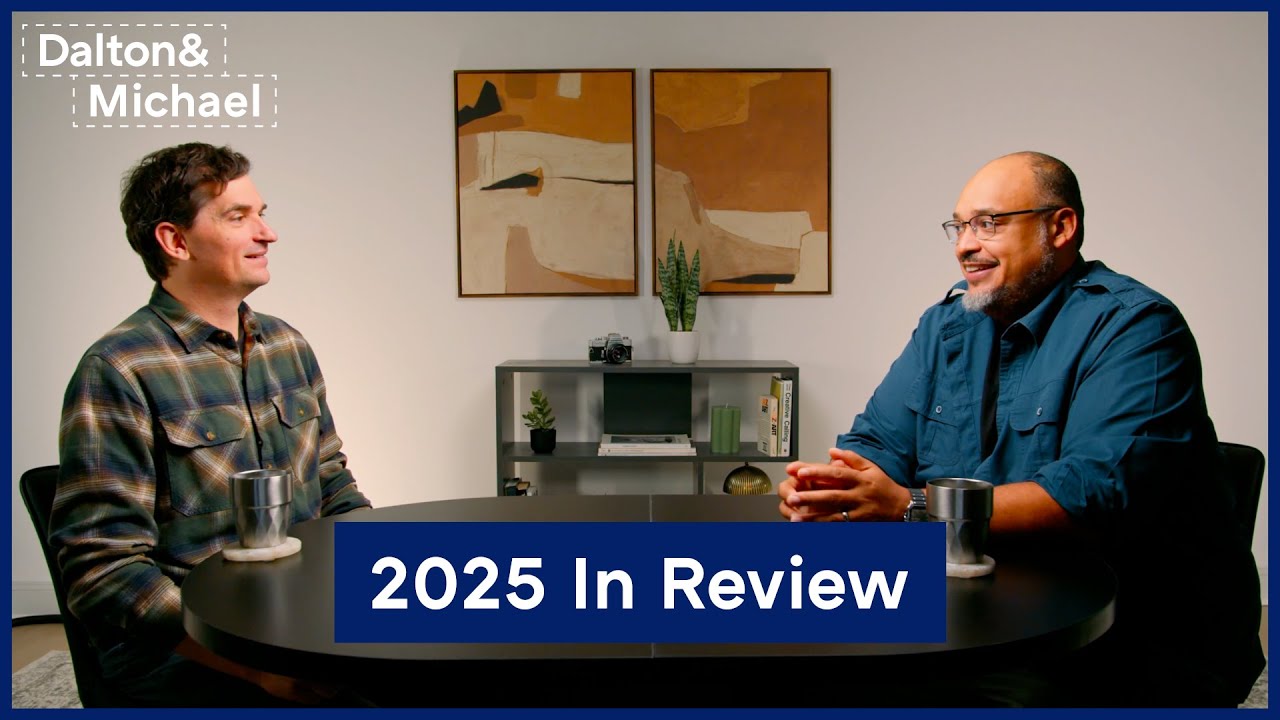
Dalton + Michael · @daltonplusmichael
This video has no Most replayed graph yet: YouTube shows one only once a video has enough views. These are the moments viewers replayed most in Dalton + Michael's most watched videos.
Most replayed moment at 9:40
2.3x that video's typical replay level
a company is winning, you might not understand the value they create for their customers, but don't dismiss it to zero. >> Well, that's the classic thing of um dismissing a product because the design is bad. >> Yeah, man. This HRS looks like crap.
Said at 9:33
Most replayed moment at 9:46
2.1x that video's typical replay level
of founders is, "What do you think is the failure rate for a series B company?" Because like I think in their minds before I ask the question, they think every series B company wins. And then after I ask it, they're like, "I guess mathematically that wouldn't work."
Said at 9:40
Most replayed moment at 14:24
2.8x that video's typical replay level
it is hard to feel like you're working on something where a lot of people think it's a bad idea. That's hard. And I like talking about this because you should brace yourself for that. Like, that is 100% the experience of
Said at 14:17
The graph counts replays. It does not show where viewers stopped watching.
Words
5,123
Runtime
26:19
Speaking pace
195wpm
Reading time
21min
195 words per minute, between the 181 median and the 201 75th percentile of 349 measured videos. That distribution comes from the 349-video hook study.
Opening (first 30 seconds)
Hot take, depopulation. Is humanity going to make it, Dalton? And will it be too few people or too many? Yeah, I mean, the graphs look bad. They look really bad. This is Dalton plus Michael, and this feels to be a little different. We're going to do a little bit of 2025 in review. What are hot takes from 2025? >> of takes, Michael. >> of takes. Dalton was inspired by the Colin Jost Michael Che end of the year SNL skit where they give each other extremely challenging jokes to say aloud that will get themselves
98 words, the words spoken in the first 30 seconds at 195 words per minute.
Free, no signup. See how the first 30 seconds hold attention, with rewrites.
Sentence shape
| Measure | This transcript |
|---|---|
| Sentences | 475 |
| Average words per sentence | 10.8 |
| Longest sentence | 44 words |
| Questions asked | 54 |
| Sentences containing a number | 26 |
Most used terms
Filler phrases
269 in total: like 194 · kind of 22 · you know 16 · basically 11 · right? 10 · I mean 5 · uh 4 · actually 3 · um 2 · literally 1 · sort of 1.
A literal whole-word count of the same phrase list the Prepublish browser extension uses, so a phrase inside another word is not counted and a phrase used in its ordinary sense still is. It is a count and not a judgement.
Run the check on the words above: where attention is likely to drop, with a rewrite for each weak line. The free check shows the scores and the one issue costing the most.
What this transcript is
Every word below is the caption track YouTube publishes for this video, pulled from the video itself and reproduced unchanged. It is not Prepublish's writing, not a summary, and not a re-transcription: it is the video's own published captions. English captions, generated automatically by YouTube, in the video’s original language. Source: the video on YouTube. A channel that would rather this page did not exist can ask for its removal through the contact page, and it is removed.
Hot take, depopulation. Is humanity going to make it, Dalton? And will it be too few people or too many? Yeah, I mean, the graphs look bad. They look really bad. This is Dalton plus Michael, and this feels to be a little different. We're going to do a little bit of 2025 in review. What are hot takes from 2025? >> of takes, Michael. >> of takes. Dalton was inspired by the Colin Jost Michael Che end of the year SNL skit where they give each other extremely challenging jokes to say aloud that will get themselves canceled.
Let's not do that. We're not going to do that. No, but it's a cool idea. Maybe next year. Anyways, where do you want to start? Where where what's the first first hot take topic? So, let's start with San Francisco, Michael. Let's start at the the hottest of hot takes. So, what's your hot take on the status of the city and politics and like the whole shebang? My hot take is like, if you're reading it on Twitter, it's like it's there's a greater than 50% chance it's wrong.
In what way? >> Just just wrong. Just like just assume anything that is meaning about San Francisco, either positive or negative, on Twitter is wrong. >> So, is it better? You're just saying it's different. >> It's just different. It's just like it's just like there's no signal. Like the signal that you're getting on the things that are meaning is like you should ignore that signal. It's the fuzz. It's not real signal.
I'm sure they're all going to listen to you. You solved it, Michael. Thank you. >> Solved the problem. Nothing's going to trend be San Francisco. I think my second hot take, people give politicians way too much agency. I don't care who the people leading San Francisco were, if you have COVID, if you have the emptying of downtown's office spaces, and if you have a defund the police movement, you're going to be in a challenging situation.
I don't care who's leading a city, if you're emerging from those things, Yep. [laughter] you're going to be in a better situation. And all too often I feel like humans need like viral narratives to explain simple things. And like yes, there are, you know, there's more work to be done and blah blah blah, all these things, but like those two trends are generally going to hold. And probably the people running the city are just trying to do best with the general >> [laughter] >> situation that they're in.
What's that phrase or like the king goes down to the thing and tells us I'm going to show all of my citizens how powerful I am, and I'm going to I'm going to command the tide to go out. >> [laughter] >> And the tide doesn't move, and he's like that's that's my power. That's what I I don't know that one. Those are my moves. So anyways, I think that's my hot take on San Francisco. Yeah. The Twitter narrative is basically completely incorrect.
All right, what do you got for me? Hot take, depopulation. Is humanity going to make it, Dalton? And will it be too few people or too many? Yeah, I mean, the graphs look bad. They look really bad. I remember a long time ago when I was like an undergrad at Stanford, I remember seeing a building on the campus. Yes. And there was a dumpster next to it. Yes. >> And it was full of books that had clearly been thrown out of the building. >> Interesting. >> And of course this evoked my natural curiosity.
It steered me away. It's trying but why would you throw a bunch of books and journals into a dumpster? >> Yeah. And it was all from something called, I think, the Stanford Food Research Institute. >> Okay. And I looked into it a little bit at the time, and basically it was a whole department {slash} think tank Mhm. that as far as I could tell, again, I could maybe get some of the subtlety wrong. >> Sure. >> But it was basically encouraging people to stop having children because there wasn't enough food to feed people in the world.
Yeah. >> So, there may be more to it than that, but >> Yeah. >> Stanford shut that down, which is why all the journals that were studying the like theory of this ended up getting shut down. Obviously this theory became very popular in certain countries. I might argue it became part of public policy globally. >> Interesting. >> And so, I think if you read a lot of books in what, like the '60s and '70s, >> Yeah. this was like if you were really into like environmentalism and trying to save the world, trying to slow the rate of population was like the coolest thing you could be. >> Yeah.
Wow, is that different now? And by the way, I think the evidence that this wasn't the problem was a bit hiding in plain sight. Well, it's almost like it was so effective of raising living standards in places that that it all kind of solved itself. Like basically the Yes. a bunch the abundance of raising standard of living caught fixed all the stuff. It was almost as if we have an equilibrium, and we thought we had to manage the like it's a very human perspective like obviously we have to manage our population equilibrium.
We've never done that ever until this point. We've been around for a while, but obviously now we're smart. It looks bad. It looks bad for Japan. I mean, I don't know. Look, I I'm not It looks not my line of work. It looks bad for America. Like I love how it's like I I see these graphs where it's like China population depopulation is going to like kill everything, right? >> Yeah. And then like America, fine. And then it's like America fine includes immigration.
And you're like, well, great. Like that's not repopulating the world. That's just Yeah. [laughter] us opening our doors, which I love immigration, but like it's not solving the larger problem. I want to give PJ a little bit of credit here. I think that you know, going to Yale and kind of seeing people talking about ideas who didn't always seem that smart, I think I kind of just dismissed the power of ideas a little bit.
I think I dismissed academia a little too much. And I remember kind of, you know, PJ talking about something sort of like, hey, this stuff happened. Like I I just feel like we just ignore college campuses. Just ignore that. That's like it, whatever, who cares. And like it's like there's some ideas that when they take hold, they can have a lot of power. And I think this is one of them. You would assume at some point someone would do the math and be like, no no, folks.
Like I think there's still people who aren't having kids today cuz they believe that we are like going to overpopulate. It's bad for the environment. >> Environmentalism. >> Yeah, and it's like Wow, that's a powerful idea. And what's crazy is like the solutions are all kind of random from governments. So, like, well, we'll give people a tax credit. The solutions are not good. >> The solutions are [laughter] basically tax credits, and I I think I read that in all the attempts thus far to do those, it's like 0% effective.
I read that basically when you do it, you basically push up the people who were going to have kids into getting the incentive, and then you have this like fall off because like, well, I had my kids early. Like I don't I'm shocked the government isn't great at figuring out incentives for humans to do things. And then it's like, wow, shock. Especially things that involve watching something for 18 years. That's like a big one.
All right, so that's one. Next one, AGI, Dalton. January 1, 2025, did you think we were going to be closer or further from AGI than you believe today? I think it depends on how you define it. I think the models improved faster than I would have expected January 1, 2025. >> Yes. Just in the past two or three weeks, Yeah. there have been a bunch of new models that dropped. Literally in the past two weeks, Google's coming on strong. >> everyone put out new models, and they all seem pretty good.
And the other funny thing about the new models is it takes a while to know how good they are. >> Yep. You can't just run the benchmark and automatically know if they're good. >> No. And so, I think the rate of improvement is higher than I expected, but I'm not sure, depending on how you define AGI, this is way better than I would have expected at the beginning of the year. I still think the timelines are similar to where we started the year.
I'll answer the same way, but I think because I was skeptical of AGI in January, and I'm skeptical now. Okay. >> Yeah, I think that like AGI is such a cool and almost viral idea, and such an impactful idea, that it can it can suck up all the oxygen in the room. Yeah. I remember talking to a founder August, and she was like, oh, you know, I talked to all the people working on this stuff, and they're like, yeah, we're you know, we're like six to no more than 18 months away from just superintelligence.
And you know, they were sitting there just imagining what the world would be like, as if they're making plans. >> Yeah, like near-term plans, right? It's weird. I feel like that did not help this founder at all. One, I think that those people while making their plans were not operating their businesses as if AGI was six months away. Still, it was like this weird kind of duality that's hard to capture. But two, I think that like I'm always skeptical of ideas that take all the oxygen out of the room.
I think this is related to our next hot take topic, which is self-driving. And so, let's start by by what I think the parallels are. >> Yes. >> Is man, in 2015, Yes. it felt like we were at the precipice of self-driving working. >> Yeah. >> And I spent a lot of time being like, man, my kids never going to need to learn how to drive. >> [laughter] >> And And remember we had a colleague who didn't know how to drive. And he pre-ordered a Tesla full self-driving in like 2016. >> Yeah.
Cuz he was like, oh, well, this is going to self-drive in like 2017. >> Yes. >> And so, I think we were living in an environment where it really did seem like ubiquitous self-driving would happen in 2017, 2018. >> Yep. Your former co-founder Kyle was a founder of Cruise. And And so, I just I think we were like really drinking the Kool-Aid. >> Yes. I think with hindsight, we were totally right. Yes. And I think in hindsight it took longer than we thought.
Yes. Like the thing that we thought was going to happen in 2017 is now happening in 2025. The tricky thing was like I would say it's like it's it's not it's happening. It's started to happen. It's happening in the Bay Area. Yeah. Not across the US. Yeah, I took Yes. I'm in the Tesla Robo-Taxi beta. >> Yeah. I took one here. Yeah. And I take Waymo constantly. Yes. I would still give that a maybe. What is the ratio of teleoperators to cars on the road at Waymo?
Yeah. I still think this would have been within the range of what we would have satisfied us in 2017. I'm not saying I know the number. It You don't think it is? I I think it is. I think that in to 17, I No, no, I think I thought self-driving was going to be a solved problem. There are no humans in the loop when I'm doing a Google search. Yeah. And then to your point, and then of course, have we rolled it out to yet any of like the Yeah, right.
So to me And actually there was a technical bottleneck. Again, this is the other fellow. Yeah. My My understanding of people that work on this, when I've spoken with them, is that they ended up deleting a lot of like hard-coded C++ rules. And it's just all ML stuff that wasn't even invented. Yeah. Computer science had to catch up is my understanding. Again, maybe someone in the comments will disagree, but that is my understanding from people that work on this stuff.
I think that's what kind of frustrates me about these topics is that like if we're directionally correct, but the time frame's off, it really impacts how you should like operate your life. There's a meaningful difference between an AI model that can do a lot of work for you that like makes you a superpower. I mean, whatever street like let's say an AI model or a foundation model company that can make every person feel like they get the value that cursor gives an engineer.
There's so much distance between that and superintelligence. Yeah. I wouldn't be surprised if we had a whole new job of teleoperators, and there wouldn't be hundreds of thousands of teleoperators that are helping manage a self-driving fleets as they expand across the country. And we would call that self-driving. And it it would work for as a user, it would feel like it, right? I'm not driving. To me, there's a parallel there, right?
Like versus like AGI superintelligence, I think we have to define a kind of cross the line, and I think like we could be way further away. I think that's fair. But again, I think the parallel is the crazy utopians, I think we're right about self-driving. I would basically make the bet that the wacky AGI people are right Mhm. just on a longer timeline. Do you know Do you know what I'm trying to say? Like Well, I think I think they'll probably be right about every every wacky thing we're hearing, I think is going to end up being true.
That's my bet. I think long enough timeline, I would completely agree with you. Yeah. I just think that when I start seeing people making strategies about their startups or making strategies about their life Yes. >> assuming we're on an 18-month timeline. >> Yep. Delaying having kids, say. >> Yeah, yeah. Yeah, I'm like >> [laughter] >> The timeline caveat's a large caveat, I would say. >> Yeah. I would say. All right, what's the next one?
Space. It's been an interesting year for space. We have seen Starlink basically go mainstream. Yep. We've seen a lot more space startups being funded. Yep. We've seen space defense kind of take a little bit. What's your sense? >> Yes, I I think I put out a YC video request for startups about this. But basically, as a side effect of SpaceX working, Yes. the cost per pound to get something into space Yes. is dropping rapidly.
It's like Moore's law, where remember the number of transistors in a chip was doing this. The cost to send something into space is doing this. Yes. So it's getting exponentially cheaper. Yes. So now you can do all sorts of wacky stuff, cuz you can get Yes. things in space. Sounds like the SpaceX IPO is real. Yeah. So I think this is a really exciting time. My space hot take is very similar, which is like we haven't experienced cheap launch yet.
Yeah. People who've been in the space industry for a while are like, "Oh my god, we finally have cheap launch." And I think we're going to look at back at this time and be like, "God, that was expensive launch." Yeah. [laughter] If you told me we've reached the iPhone moment where it makes sense to start building iPhone apps, I would believe you. If you told me that we haven't yet, I think I still might believe like Yeah.
I still might believe Starship is the iPhone moment. I'll give you another one that's interesting though. Free space. What do you think about space companies having to compete with SpaceX for launch space? Right? It's tricky. I've been multiple companies now that have gotten bumped off their launches. And I'm like, "Oh, can you like negotiate like who was it?" And they're like, "It was It was SpaceX." It was Starlink.
Wow. And I was like, "Yeah, I guess you can't really negotiate, can you?" So what you're saying is we should buy SpaceX stock at IPO. No, no. There's no No. No. Another big topic from the COVID days. What's your hot take on in-person versus remote? Obviously, in-person is better, and it's depressing how much of big company stuff is putting the toothpaste back in the tube when they went remote. I do think there's stuff that stuck from that era that was probably good, where people are way more willing to do Zoom meetings now.
I think the norm has changed in some ways in a positive, where Imagine how weird it would have been to try to do nothing over a Zoom. Yeah, yeah, yeah. That wouldn't Like I'm glad I can just like hop on Zoom to send to you certain types of meetings. >> I agree. Like how That's way better. >> Yep. Real-time communication, chat got way more popularized. Yeah. I am torn about this in-person versus remote. I think this is what I'd come to believe.
I think large companies are always remote. You know, you get over some number of employees, and the chances that the three people you work with most closely are have their desks next to you basically goes to zero. >> Yeah. So I never really thought this was a fair debate, cuz I think the debate was really for startups. It always seemed obvious that like you should be in-person. Yep. And so I felt like this was a fight that we had to fight for a while, which was just kind of silly.
And now it's like, "Okay, can we go back to the normal?" Have we not run this experiment involuntarily? Yeah. >> [laughter] >> Yeah, but to me, I think that was the shocking thing was that like a bunch of startups that did not want to run like big companies were copying the best practices of big companies. >> Yep. What do we have left? Are we in a bubble, Michael? I think that like as long as there's another bubble that keeps whatever bubbles going inflated. >> Yeah, yeah, yeah.
There's always going to be a new bubble. Yeah. I'm going to say no. And I'm usually the skeptic. I don't think we know the amount of impact that even today's AI tools can have in business. >> Yeah. I think we are so early in the adoption cycle that even if all AI development stopped today, like we would still get like tons of improvement. Cuz like adoption is Yeah. very, very small. I think my nuanced take is the following.
As a founder, I learned that debt is bad, because debt like causes startups to blow up. >> Yeah, ask PG about this, right? This is one of his like evergreen topics, which is never put debt on your startup. It feels like free money, it feels like cheap money. There's all these covenants in the contract that comes when you take debt. So that when debt goes bad, it goes really bad, and you lose your company. >> Super fast. >> Okay?
So debt in startups is like a bad mix. And then if you look at prior bad economic cycles, Yes. debt is in there somewhere. Like I think if you go all the way back to like the 1929 stock market crash, people were like taking out loans to buy equity. So taking out debt to buy equity, I think we can say is probably a bad idea if you don't know what you're doing. The great financial crisis was very similar. Right? It was It was debt-driven. >> Yes.
And so my nuance here is of all the things that I see that kind of concern me, it would be debt issuance to finance data center spend, to finance buying graphics cards. And that is downwind of all the stuff we do. Again, we're not in that business, man. Yeah. >> But if you look at the whole machine, there's a lot of debt that's being issued right now. If we were to reframe it like, was the internet a bubble? No. Was there a bubble in the deployment of fiber optic cable?
Yes. And did [laughter] the people in the business of laying the fiber optic cable lose their ass? Yes. Yes, they definitely did, and we as consumers benefited >> Yes. from the fiber optic cables getting laid. You know, our startups benefited from these things. We're all downwind of it. But the actual people that were in the business of financing that fiber optic cable, that was That was bad. I am quite positive that somebody is overbuilding or inefficiently building at some level of the AI stack.
Like it seems like it's almost impossible Yeah. that wouldn't be the case. And so that does worry me, but that doesn't mean that this stuff doesn't work and isn't solving problems for customers and all that on the like user-facing stuff. But I do wonder how much debt is actually in this thing. That worries me, man. >> from the perspective of a participant in the stock market, those kinds of things can have short-term negative impacts on the stock market.
But in terms of the Well, and I do wonder, let's say all the AI stuff works, which again, I I think it will. Yeah. The value of a lot of the legacy software companies that are going to get killed goes down. There's going to be some churn, man. You're It's so funny. You >> [laughter] >> This is You're defining bubble in a like how someone might experience the world way. I think I'm defining I'm defining it in a very narrowly Yeah, yeah.
Like yeah. Could there be a lot of AI-caused turmoil in public markets? Probably there will be. >> [laughter] >> Are you sure? If you define bubbles like that, Yeah, who might a Use the actual definition, Michael. Ugh. But if you define this as like, is this a hoax? No. You know, when we were giving out like mortgages to people who couldn't afford mortgages because we could resell them before anyone would figure that out.
That's like a hoax. Like that's there there's no value creation happening. Yeah. I think in this situation we definitely have value creation, but like Public market turmoil could be caused for all kinds of reasons, right? It's fair. So, in any way, that's the thing like of all the things I've seen in the past in the 2025, what has worried me Sure. some of this data center stuff seems a little scary, man. Uh the market turmoil.
All right, and the last one, this is probably secretly my favorite. Uh abundance versus affordability. Let me Let me set this up. The Democratic Party is searching for a message. The Trump era theoretically is coming to a close or a change, and it seems like there's two competing messages. There is more of a moderate abundance, can we make government work better? And there is more of a progressive affordability. What are the things that happen in the economy or amongst business or even in the government that makes it harder for you to pay for everyday things.
How do you think about this dichotomy here? Technology has consistently delivered us um abundance. Sure. And if you just think about all the cool stuff we get, like smartphones and Sure. good health care and cheap clothes, like all this good stuff. We live in an age of abundance and it's only um increasing. It's funny you say that cuz like I think somebody that was like examining the fossil record would obvi- I think would agree with you. >> Yeah, if you're like like what kind of What was the life in the 1930s like? >> Yeah, yeah.
Well, I don't think they had a lot of this stuff, man. I don't I don't I objectively I could Well, like what's weird is that like isn't it interesting the idea of like what percentage of the population of America would say I feel like I'm living in a time of abundance? I think stuff used to be cheaper. And again, this is this isn't my area of expertise, but the housing stuff It's a real a really an affordability type There is not an abundance of cheap housing. >> Nope.
And I think it's easy to look at the past with with rose-colored glasses and gloss Remember when gas used to cost whatever per gallon and when a house cost a hundred thousand dollars Yeah. and not admit that there's a trade-off that you had to live without the internet or you know, like there's all these other trade-offs. Yes. Yes. I think it's easy to like forget that there was a trade that we all implicitly taken. Maybe some people would say, "I don't want to make that trade.
I'd love to go live in Well, like I could be 6 again, right? Well, since you go back to the 50s, a big trade is like the number of employed women in the market in the workforce. Well, that's a trade. There's like big trades. Like, yeah, like I think what scares me about this question is that like and this is what kind of both both scares me but comforts me about politics and government. Affordability is clearly the short-term campaign message that is like a better campaign.
Like if you asked me, "Hey Michael, you can run." And they'll be like, "Your banner can either say abundance or affordability." I'm like, "Got it, affordability." Abundance is clearly the good governance. Like if we actually want our government to deliver goods and services, we should be doing abundance work. I think the problem that I have, but then also with the hopeful side, is like I just don't think we do long-term planning well.
I think abundance is like a hey, you know, if you eat your vegetables when you're 70, you'll live another 10 years. >> [laughter] >> And I think affordability is like, "Hey, do you want to go to the movies and like do something like this weekend?" And I think that as humans and therefore as societies both of humans, we don't do long-term well. However, we made it. Something about this like what seems like awkwardly short-term optimizations >> seems to somehow keep working.
Yeah. And so it's like I can sit back and judge academically and was like, "Well, you're not You're not eating your peas and carrots, like da da da da da." But like maybe we should take a second and not on a system that is kind of working, right? Like I think it's been my experience just even locally in San Francisco. Like at first you're like, "You do it this way? Like how could that work?" And then you're like, "Well, it is kind of working." Like I was looking at like Department of Public Works, like they pick up tons of trash every day. >> [laughter] >> If you were to say, "Michael, would you design it like that?" I'd be like, "Maybe I would.
Maybe I won't." But like it's kind of working. Yeah. Let's not just on it cuz like No, I mean that's not the way I would have done it. So, I don't know. For this abundance versus affordability, I'm kind of like, "Oh, man." My heart is in abundance, but like I think my brain is in affordability. And that's what kind of scares me a little. My brain is in the campaign message over the governance. That's like that's a little scary for me.
Yeah, but maybe that's just kind of like a deep-seated like lack of faith that we will do good government quickly. We're talking about 2025, what does that mean for 2026? What does that look like in practice? That means I believe the Democratic Party will have a populist message that like bad people make things too expensive. Wow. Just like I think the Republican Party has had a bit of a populist message that immigrants make the country worse.
And it's a little scary that we're going to have kind of two populist messages kind of fighting each other that I think are like kind of hiding the real facts. But uh you know, it's not the first time you've had populist message. >> [laughter] >> You know, it's like it's like Yeah, we've gotten through this stuff before. Yeah. When people are like, "Oh my god, social media is making things horrible. Like America There's never been a worse time in America." Like oh like is that I don't want to be that guy, but [laughter] You know, it's like I know these are problems, but like we we've dealt with worse problems.
Like that one's hard. It's it's uh especially for a process-oriented person like >> Yeah, you're on the front lines. I don't I don't I'm glad [laughter] this is not my Yeah, I don't have to go fix this one. Well, I guess that was 2025. We'll see what happens when AGI takes us over. This will be produced by AGI in 2026. >> [laughter] >> They have enough footage of us. They could definitely replicate it. They do. They do.
And I've been saying thank you every time I use a foundation model, so we'll be safe. >> [laughter] >> Great chat, Dalton. >> thanks, man.
The words are the caption track's own and nothing is reworded or re-transcribed. Paragraph breaks are placed between sentences so the text reads as prose.
Free tools for your own script: paste a draft and see where it stands before you record it.
Paste your draft and see where viewers are likely to drop off, with a rewrite for each weak line.
Paste the first 30 seconds of your own draft for a hook score and rewrites.
Check your draft against YouTube's advertiser-friendly guidelines before you record it.
Read this channel's public videos and transcripts, and download a writing brief for it.