Getting the transcript
Reading the captions from YouTube. A video nobody has opened here before takes 10 to 30 seconds; this page fills in on its own.
Getting the transcript
Reading the captions from YouTube. A video nobody has opened here before takes 10 to 30 seconds; this page fills in on its own.
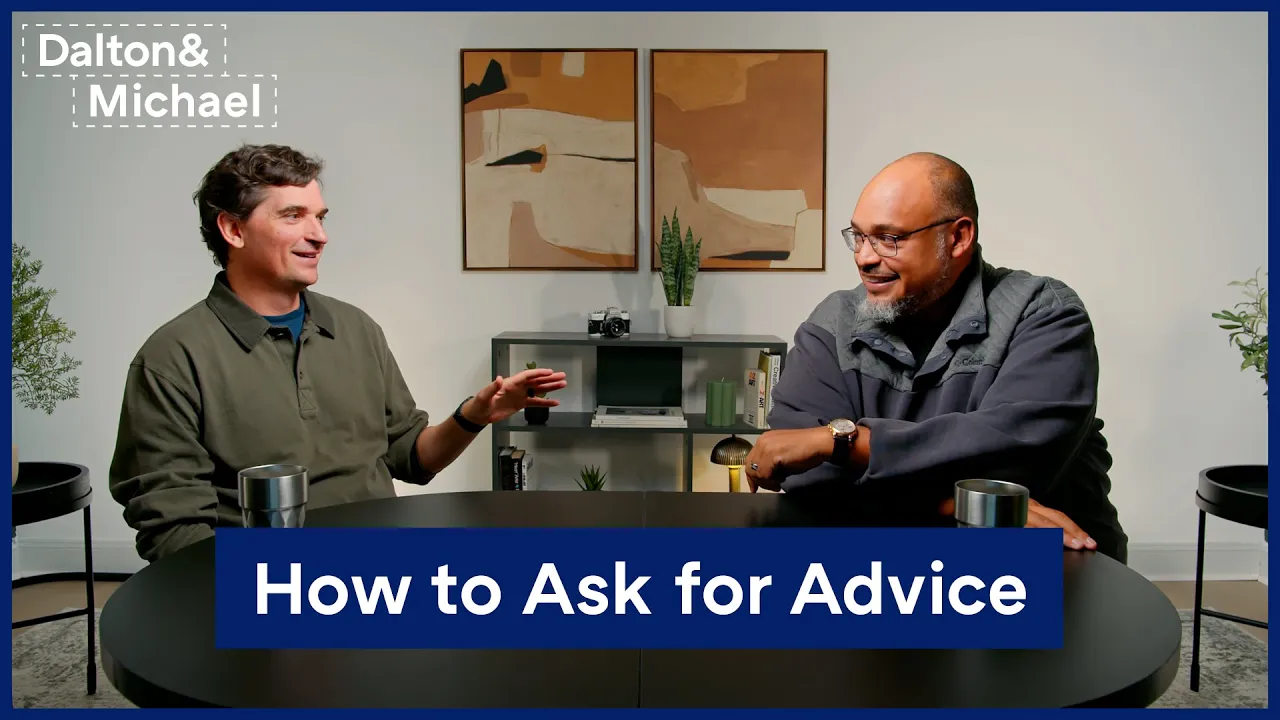
Dalton + Michael · @daltonplusmichael
This video has no Most replayed graph yet: YouTube shows one only once a video has enough views. These are the moments viewers replayed most in Dalton + Michael's most watched videos.
Most replayed moment at 9:40
2.3x that video's typical replay level
a company is winning, you might not understand the value they create for their customers, but don't dismiss it to zero. >> Well, that's the classic thing of um dismissing a product because the design is bad. >> Yeah, man. This HRS looks like crap.
Said at 9:33
Most replayed moment at 9:46
2.1x that video's typical replay level
of founders is, "What do you think is the failure rate for a series B company?" Because like I think in their minds before I ask the question, they think every series B company wins. And then after I ask it, they're like, "I guess mathematically that wouldn't work."
Said at 9:40
Most replayed moment at 14:24
2.8x that video's typical replay level
it is hard to feel like you're working on something where a lot of people think it's a bad idea. That's hard. And I like talking about this because you should brace yourself for that. Like, that is 100% the experience of
Said at 14:17
The graph counts replays. It does not show where viewers stopped watching.
Words
2,540
Runtime
12:06
Speaking pace
210wpm
Reading time
11min
210 words per minute, above the 201 75th percentile of 349 measured videos. That distribution comes from the 349-video hook study.
Opening (first 30 seconds)
If I'm super honest, [music] what are the three things in my business that kind of gave me a stomach ache? And to your point, one of them often is I'm not having fun. >> Yeah. Like [laughter] >> we have low morale. >> Yeah. >> We feel bad and we want to talk about it and that's totally cool. Like on the agenda, >> let's do it. Like let's talk through it. >> All right. Welcome to Dalton Plus Michael. Today, I think we're going to ask a question that I think as office hourgivers, we've learned to ask ourselves quite a bit. When
105 words, the words spoken in the first 30 seconds at 210 words per minute.
Free, no signup. See how the first 30 seconds hold attention, with rewrites.
Sentence shape
| Measure | This transcript |
|---|---|
| Sentences | 198 |
| Average words per sentence | 12.8 |
| Longest sentence | 119 words |
| Questions asked | 45 |
| Sentences containing a number | 3 |
Most used terms
Filler phrases
125 in total: like 75 · you know 18 · kind of 10 · actually 8 · right? 8 · uh 2 · um 2 · I mean 1 · basically 1.
A literal whole-word count of the same phrase list the Prepublish browser extension uses, so a phrase inside another word is not counted and a phrase used in its ordinary sense still is. It is a count and not a judgement.
Run the check on the words above: where attention is likely to drop, with a rewrite for each weak line. The free check shows the scores and the one issue costing the most.
What this transcript is
Every word below is the caption track YouTube publishes for this video, pulled from the video itself and reproduced unchanged. It is not Prepublish's writing, not a summary, and not a re-transcription: it is the video's own published captions. English captions, generated automatically by YouTube, in the video’s original language. Source: the video on YouTube. A channel that would rather this page did not exist can ask for its removal through the contact page, and it is removed.
If I'm super honest, [music] what are the three things in my business that kind of gave me a stomach ache? And to your point, one of them often is I'm not having fun. >> Yeah. Like [laughter] >> we have low morale. >> Yeah. >> We feel bad and we want to talk about it and that's totally cool. Like on the agenda, >> let's do it. Like let's talk through it. >> All right. Welcome to Dalton Plus Michael. Today, I think we're going to ask a question that I think as office hourgivers, we've learned to ask ourselves quite a bit.
When a founder comes in to talk to us, I think the question we sometimes ask ourselves is exactly what advice does this person want? >> Yeah. [laughter] >> What are we going to be doing today? >> I'll just I'll just ask them. [laughter] >> I'll be like, what kind of office hours is this? What advice do you want to hear from me? Let me start off with like a really common example I hear, >> which is >> they'll be like, "Oh, we got an offer to get acquired." >> Yes. >> What do you think we should do?
And I will say, "Look, let's be real. >> Is what's going on here? You've already decided that you're going to do it." Y >> and that you just want to tell me about it in a roundabout way and you want me to be excited for you. >> Yes. >> Or do you not want to do it and you just need the pep talk that it's a good idea to not take it? >> Exactly. So, I've just learned to ask that at the front of the office hours. >> And it's it's actually helpful for both parties to know which way they want to take it, right?
It's funny because we have this concept in YC called shopping for advice, right? And we often say some version of if you already know what you want to do, you know, step one isn't go talk to a bunch of adviserss and find one who agrees with you, [laughter] like just like do the thing. Like do the thing. Where I get in trouble as an advice giver is when the topic is meta advice and I don't realize it. Like when the topic is like I want a cheer up and I think the founder actually wants to talk about practical things to do in their startup, you know, and I'm sitting here trying to get details and they're really trying to tell me I'm thinking about shutting it down, >> right?
[laughter] In which case, like the design of the front page is not really, [laughter] you know, it's like >> no. And then what they'll do is they'll bring it up in the final two minutes. They'll be like, "Oh, by the way, three of the four founders are leaving and you know, don't you love those where they just like slip it in at the very end?" >> What would you do if you only had three months of runway? [laughter] Like as a founder, I think you can just be upfront, right?
Like the best teams have agendas, but not just kind of like what do I think the adviser wants to talk about? like actually what's our purpose here? The other thing that comes up a lot is as an advice giver I'm always telling myself I just don't know enough facts on the ground or actually said more broadly I want to draw a line around stuff where I'm not going to give good answers and I want to have like a really solid borders like tell me what my customer wants like I don't know right or like summarize the entire history of my industry for the past 25 years [laughter] or can you make a list of every investor who likes investing in company >> [laughter] >> So, I almost just want to like create like a border and be like, "Hey, don't ask me." >> In this area [laughter] where on the flip side, I'd love your thoughts on this.
I find that what I'm really good on is trying to probe the founder on where should they be focused. And we've talked about this a little bit before about hedging, but like often times I kind of find myself asking questions over and over again like what's the best opportunity? What's the biggest problem? Wh what's on your to-do list and what's the order? >> Yeah. >> How do you think about that? >> One of the meta pieces of advice that we always give is to learn how to work with lawyers.
And I'm going through this a lot. We're leading rounds into companies and so I'm dealing with a lot of lawyers right now, man. That's like 20% of my calendar is lawyers. >> Okay. >> So, here's how we advise founders out there to to deal with lawyers. You ready, folks? >> Tell the lawyer what you want and give them constraints. >> Yes. >> And then ask for legal advice. >> Yes. Yes. [laughter] And and the reason is if you don't do that, they can go way out of scope and often will go like red line a lot of documents and come up with all these extraneous points.
You're basically the boss of the lawyer. Like they're service providers. But Dalton, that takes work. Like they're the expert. They've done this 100 times. I just want them to do it. I just want them to tell me the answer. Isn't that why I pay them? Same with an adviser, right? Just tell me what to do, right? Isn't that >> Isn't that your job, adviser? [laughter] I think that these folks are used to having clients that give them advice.
And so what happens with startup founders are inexperienced is they never learned this lesson. Like this is one of those lessons you learn in practice, which is you kind of want to rein in. You want to ring fence. Here's the type of legal advice I'm looking for. Make sure I don't go to jail. >> Make sure like something really bad isn't happening. Otherwise, I want to get this deal done. Sign the deal. >> How would you apply those same thinkings to when someone is talking to their angel investor or their adviser or their friend doing startups and trying to get advice?
I think you want to explain what kind of advice you're looking for. Like what is your goal of the advice session? >> Yeah. >> Like, hey, do you think right now is a good time to fund raise? Okay, that's like a that's a good agenda to ask an investor. Yes. >> But if it's completely open-ended, you you tend to get extremely random advice. >> Yeah. Rand and random in this context is probably not what you're looking for.
Now, okay, I'm going to play devil's advocate. I've been accused of this. I assume you've been accused of this before where a founder comes in and their agenda is missing the core issue. It's like, "Hey, we've been shot eight places. There's a hole in our order. Can we talk about the sprained ankle?" >> Yeah. >> And there's a whole sprained ankle agenda. >> When do you feel like you need to be like, "Hey, why are we even talking about this?" Like, "Hey, can let's talk about the important thing, not the unimportant." think it's when you can sense that someone is dancing around the core topic.
And again, you could be I could be wrong, but sometimes I can kind of read between the lines. Yeah. >> When it's like filler content. >> Filler content. >> They they just don't want to go for the main uh topic. A founder that I worked with a few uh years ago wrote a LinkedIn post. It was pretty funny. It's one of those, you know, where they anonymize what partner told them the advice. Definitely me >> and they're like, "Our first office hours at YC, we had one agenda item, which is should we rename our company to a better.com?" And the partner told us Yeah.
[laughter] the part our YC partner told us to not waste our his time like this ever again and to come back [laughter] >> when he had a real problem. And then and then in the wrestling temple, he's like, "This was the best advice we ever got. You know, this is so awesome." And you know, I wanted to be like just at me next time. You know, >> getting good advice requires some prep. Sometimes people are elevated into these, you know, oracle style figures.
And it's kind of like, you know, even if you talk to who's an oracle, Peter Teal is an or like you talk to Peter Teal, he does nothing about your business. You're not raising any agenda. You're completely focused. And it's just like tell me things that could help my startup. Maybe not setting things up for success. The other bit on this that I think is a little bit tricky is how often you want to make sure you're getting the right expertise out of the person you're talking to.
Like how would you advise founders to understand what the person they're talking to is actually expert in and what they're not expert in? >> It's a great question because I've seen this backfire. [laughter] And so when I was a new YC partner, >> yeah, >> it was like, "Okay, Dalton, you know a lot about consumer and the music industry, >> so let me ask you questions about the entertainment industry." >> And run. [laughter] >> Okay.
A, >> that's a really small set of expertise that's not useful. Yes. >> B, it was stuff I never wanted to talk about. And C, I missed the point where I actually think the stuff that I was best suited to talk about was things like hiring and firing and growth. We had a lot of growth. So did you. You were growth. We were both growth experts when we were, you know, early in our career as startup adviserss. Fundraising. I knew a lot about um actually a lot of developer tools.
So how is this something how would a founder know that about you know you're the you're the music guy, right? Like how would the founder actually get a real dossier? >> That's a great question. I think you want to realize that just looking at the superficial parts of someone's bio may miss the points. And I think you would have known that I was someone that wanted to talk about developer tools and infrastructure a lot and was really interested in it because you would have saw that I was a that I was a programmer and that I was really into open source.
I think you would have been able to figure that out even when I was a new partner. And then now you could look at my portfolio and if you were to look at my portfolio and be like, "Wow, Dalton has funded a lot of open source companies." >> Yeah, >> he probably has a lot of opinions about that. >> Yeah, >> that would be a good way to do it. I definitely found founders being much more interested in my operating past than my investing past.
You know, you and I have funded so many companies in so many industries that people wouldn't even expect. I mean, like I don't know, like >> developing country lending, you know, we're [laughter] on that. >> Yeah. And and sometimes I think what founders are really trying to do is figure out everyone else who I have funded in their general category and kind of try to get out of me what I've learned. And I wish sometimes they had just asked that straight, [laughter] you know, like and if the answer is I have never funded anyone in your category, let's get that out like right away. >> Yeah. >> You know, often times I get founders ask me some version of like, oh, how have you seen other companies in our category die?
And I'm like that is a really good question. like I can I can go through that. >> So, how would you wrap this up, right? I'm a founder. What would you put in my mind before going and talking to an investor or any type of adviser? >> I think it's almost like how you would view any meeting, which is what is my goal of this meeting? And so, before you even have it, >> yes. >> What would you view success as? Is it getting answers to these questions?
Is it talking through your feelings so you feel better? Again, a lot of office hours >> really are talking Yeah. And that's okay. But if if if what the founder wants to do is they're like, "Hey, honestly, I've just been having a really hard time the past few months." Yeah. >> I just want to like talk things through. I'm like, "Great. Happy to provide that service." Um, and so I think, yeah, having a personal goal, yes, for what the outcome is from meeting with someone I think is a good idea.
I think the only thing I would add is like what are the top three real problems in my business? Not pop problems or fake problems or things I read about Twitter, but like if I'm super honest, what are the three things in my business that kind of gave me a stomach ache? And to your point, one of them often is I'm not having fun. >> Yeah. Like [laughter] we're >> we have low morale. >> Yeah. >> We feel bad and we want to talk about it.
And again, that's totally cool. Like on the agenda, >> let's do it. Like let's talk through it. >> I think maybe the the only last thing I will say is in this setting, honesty is so important. Man, the quality of what you give us is is the only factor in the quality of what we give you back. Well, again, it goes back to prompting, which is if you type in a really generic, lame prompt, you're probably going to need a generic lane answer.
But if you spend the time to craft like a really good prompt with a lot of unique >> aspects to it, you'll get really interesting answers. >> Yes. >> Well, and often time when you're super honest about something that you think is really bad, like our reaction is like, "Oh, no. You see that? Like, you think that's bad?" But when you hide that, you might leave that meeting being like, "Oh, we're totally screwed." and not need it.
Now you know what type of advice to ask for. Cheers. Thanks.
The words are the caption track's own and nothing is reworded or re-transcribed. Paragraph breaks are placed between sentences so the text reads as prose.
Free tools for your own script: paste a draft and see where it stands before you record it.
Paste your draft and see where viewers are likely to drop off, with a rewrite for each weak line.
Paste the first 30 seconds of your own draft for a hook score and rewrites.
Check your draft against YouTube's advertiser-friendly guidelines before you record it.
Read this channel's public videos and transcripts, and download a writing brief for it.