Getting the transcript
Reading the captions from YouTube. A video nobody has opened here before takes 10 to 30 seconds; this page fills in on its own.
Getting the transcript
Reading the captions from YouTube. A video nobody has opened here before takes 10 to 30 seconds; this page fills in on its own.
Omega Beast · @OmegaBeast.youtube
This video has no Most replayed graph yet: YouTube shows one only once a video has enough views. These are the moments viewers replayed most in Omega Beast's most watched videos.
Most replayed moment at 5:17
2.3x that video's typical replay level
30-day routine. Tack this onto the end of any existing workout. 10 to 15 minutes maximum. Leaning lateral raises, three sets of 15 each side. Slow and controlled, no momentum. Pike push-up variations, three sets to near failure. Feet elevated by
Said at 5:10
The graph counts replays. It does not show where viewers stopped watching.
Words
744
Runtime
5:06
Speaking pace
146wpm
Reading time
3min
146 words per minute, below the 160 25th percentile of 349 measured videos. That distribution comes from the 349-video hook study.
Opening (first 30 seconds)
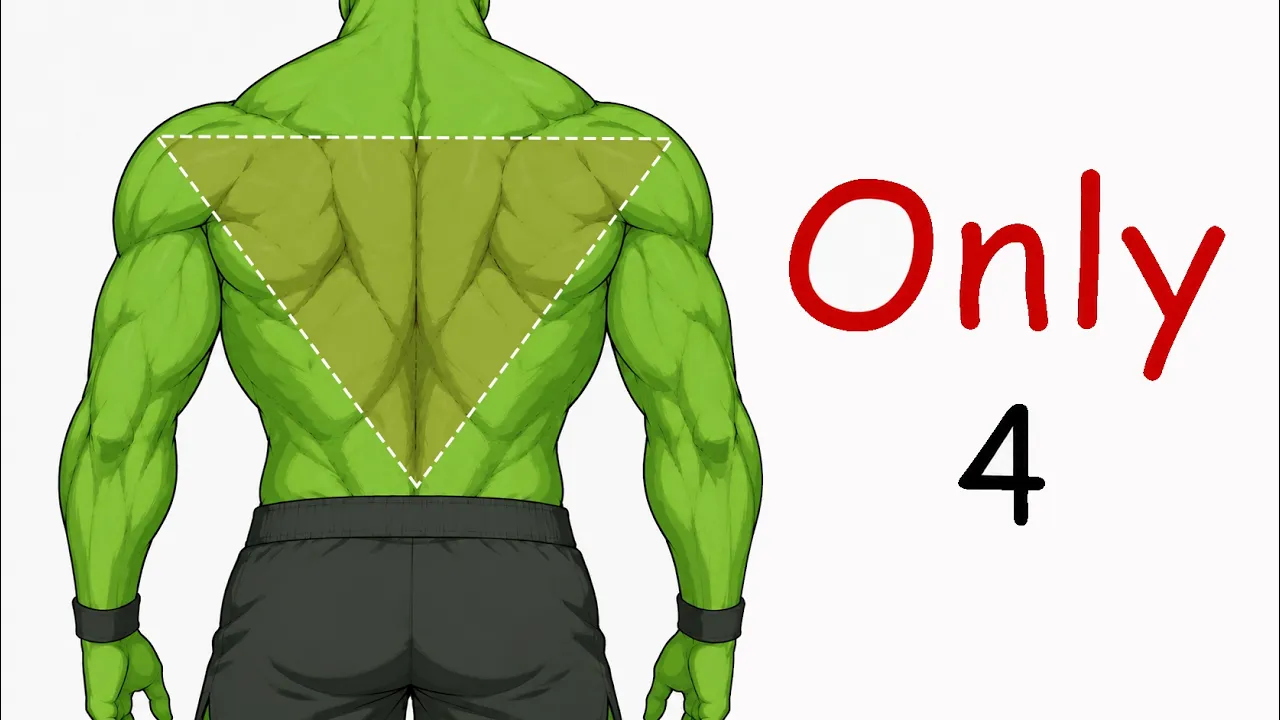
Most people's back training is 80% lats, pull-ups, lat pull-downs, cable rows, and then they wonder why their back looks wide from the front but completely flat from behind. Here's the problem. Your back isn't one muscle. It's four distinct zones, and standard back training barely touches two [snorts] of them. Here's what's actually missing and the exercises that fix it. Zone one, the lats, width, the muscle that creates the V taper.
73 words, the words spoken in the first 30 seconds at 146 words per minute.
Free, no signup. See how the first 30 seconds hold attention, with rewrites.
Sentence shape
| Measure | This transcript |
|---|---|
| Sentences | 65 |
| Average words per sentence | 11.4 |
| Longest sentence | 33 words |
| Questions asked | 0 |
| Sentences containing a number | 10 |
Most used terms
Filler phrases
5 in total: like 3 · actually 2.
A literal whole-word count of the same phrase list the Prepublish browser extension uses, so a phrase inside another word is not counted and a phrase used in its ordinary sense still is. It is a count and not a judgement.
Run the check on the words above: where attention is likely to drop, with a rewrite for each weak line. The free check shows the scores and the one issue costing the most.
What this transcript is
Every word below is the caption track YouTube publishes for this video, pulled from the video itself and reproduced unchanged. It is not Prepublish's writing, not a summary, and not a re-transcription: it is the video's own published captions. English captions, generated automatically by YouTube, in the video’s original language. Source: the video on YouTube. A channel that would rather this page did not exist can ask for its removal through the contact page, and it is removed.
Most people's back training is 80% lats, pull-ups, lat pull-downs, cable rows, and then they wonder why their back looks wide from the front but completely flat from behind. Here's the problem. Your back isn't one muscle. It's four distinct zones, and standard back training barely touches two [snorts] of them. Here's what's actually missing and the exercises that fix it. Zone one, the lats, width, the muscle that creates the V taper.
Most people train their lats with the wrong muscle. When you grab a bar and pull, your brain immediately recruits your biceps, the strongest available muscle, and your lats barely fire. The fix is one cue. Stop pulling with your hands, pull with your elbows. Think about driving your elbows down towards your back pockets on every rep. That single shift moves the work from your biceps directly to your lats. The exercise, wide grip pull-ups with a 3-second descent.
The wider grip reduces your biceps' mechanical advantage and forces the lat to take over. The slow descent keeps the lat under tension three times longer than a normal rep. That's where the growth actually happens. The descent is the workout. Zone two, the rhomboids, mid-back thickness. This is the zone that separates a flat back from a back that looks like armor. Pull-ups and lat pull-downs build width. They do almost nothing for mid-back thickness.
This is why people who do pull-ups consistently still have backs that look underdeveloped from behind. The rhomboids sit between your shoulder blades and are responsible for pulling them together. They only get trained under load when you deliberately retract your scapula at the peak of a row. Most people don't do that. They pull to their chest and lower back down without ever squeezing the shoulder blades together. The rhomboids get a free ride on every single rep.
The exercise, chest supported dumbbell rows. Lie face down on an incline bench. Row both dumbbells up and at the top, squeeze your shoulder blades together as hard as you can. Hold for 1 full second. That squeeze is the rhomboid working. It's the difference between a row that builds mid back thickness and a row that just tires your arms. Zone three, the lower traps. This is the most neglected muscle in back training and the one that controls whether your entire back looks three-dimensional or just flat and wide.
The lower traps pull your shoulder blades down and back creating that open commanding posture where the chest is naturally up and the shoulders are pulled back and down. Without them, even a well-developed back looks rounded and hunched. No standard back exercise directly targets the lower traps, which is why almost nobody has them developed. The exercise, Y raises. Lie face down on an incline bench or flat on the floor.
Arms extended above your head in a Y shape. Raise them using only the muscles between your shoulder blades, not your neck or upper traps. Range of motion is small, the weight is nothing, and it will be one of the hardest things your back has ever tried to do because these muscles have never been directly trained. Three sets of 15, light weight, full control. Zone four, the erector spinae. Lower back, the foundation of the entire back, the muscle that keeps you upright, protects your spine under load, and ties everything else together aesthetically.
Most people only train their erectors indirectly through deadlifts and rows. That's not enough for full development. The exercise, the Superman hold. Lie face down, arms extended overhead. Lift your arms, chest, and legs off the ground [snorts] simultaneously using only your lower back. Hold for 2 full seconds at the top. Lower controlled. This is a pure erector contraction with zero other muscles compensating. It builds the lower back thickness that makes the entire back look complete from every angle.
The complete routine. Wide grip pull-ups, three sets of eight, three second descent, elbow drive on every rep. Chest supported dumbbell rows, three sets of 12. One second squeeze at the top. Y raises, three sets of 15. Lightweight, full control, Superman holds, three sets of 10. Two second hold at the top, four zones, 30 minutes, tacked onto any back day or done on its own. 30 days of this and your back stops looking like a pair of lats and starts looking like an actual back.
Comment day one below when you start. Peace.
The words are the caption track's own and nothing is reworded or re-transcribed. Paragraph breaks are placed between sentences so the text reads as prose.
Free tools for your own script: paste a draft and see where it stands before you record it.
Paste your draft and see where viewers are likely to drop off, with a rewrite for each weak line.
Paste the first 30 seconds of your own draft for a hook score and rewrites.
Check your draft against YouTube's advertiser-friendly guidelines before you record it.
Read this channel's public videos and transcripts, and download a writing brief for it.