Getting the transcript
Reading the captions from YouTube. A video nobody has opened here before takes 10 to 30 seconds; this page fills in on its own.
Reading the captions from YouTube. A video nobody has opened here before takes 10 to 30 seconds; this page fills in on its own.
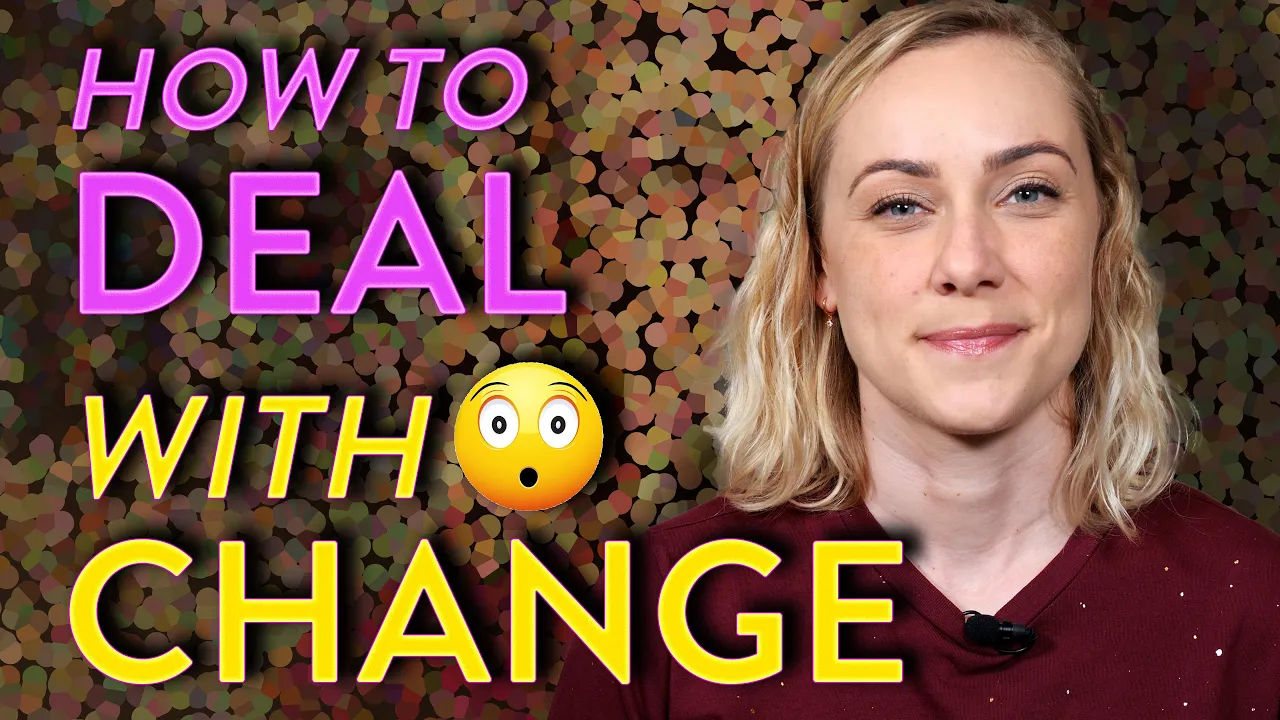
Kati Morton · @Katimorton
Where viewers went back to watch this video again, from YouTube's public Most replayed graph, lined up with what was said at that moment.
The graph counts replays. It does not show where viewers stopped watching.
Words
1,321
Runtime
6:56
Speaking pace
191wpm
Reading time
6min
191 words per minute, between the 181 median and the 201 75th percentile of 349 measured videos. That distribution comes from the 349-video hook study.
Opening (first 30 seconds)
- Hey everybody, happy Thursday. Now today's question is all about managing change. But before I jump into that, are you new to my channel? Welcome, I'm a licensed therapist creating educational mental health videos. And I release those videos on Mondays and on Thursdays, so make sure you're subscribed and have your notifications turned on so that you don't miss out. Now let's jump into today's topic. If you follow me on Instagram, you know that I recently found out the yoga studio that I've been going to for over 12 years is closing. I
96 words, the words spoken in the first 30 seconds at 191 words per minute.
Free, no signup. See how the first 30 seconds hold attention, with rewrites.
What this transcript is
Every word below is the caption track YouTube publishes for this video, pulled from the video itself and reproduced unchanged. It is not Prepublish's writing, not a summary, and not a re-transcription: it is the video's own published captions. English captions, published by the channel, in the video’s original language. Source: the video on YouTube. A channel that would rather this page did not exist can ask for its removal through the contact page, and it is removed.
- Hey everybody, happy Thursday. Now today's question is all about managing change. But before I jump into that, are you new to my channel? Welcome, I'm a licensed therapist creating educational mental health videos. And I release those videos on Mondays and on Thursdays, so make sure you're subscribed and have your notifications turned on so that you don't miss out. Now let's jump into today's topic. If you follow me on Instagram, you know that I recently found out the yoga studio that I've been going to for over 12 years is closing.
I asked around and found that it's because the attendance is low, teachers aren't signing up to teach more classes, and so the studio has kind of slowly been dying over the last year or so. This news was so devastating to me and there's nothing I can do to stop it from happening. And that's really what prompted me to ask all of you on Instagram if you wanted me to make a video about navigating difficult change. And an overwhelming number of you said yes.
So here are my five tips for managing change healthfully. And the first tip is kind of obvious, but I feel like it just really needs to be said. And that is that we need to acknowledge that change is part of life. And I know this isn't necessarily that helpful. But I think it's important that we try to recognize and accept that change is always happening. Some of it we have control over, but most of it we don't. And if we give ourselves a chance to really come to terms with the fact that life will keep moving, people will change and you'll be asked to change to.
So if we do that, it can sometimes help us get unstuck or see things differently than we were before. And I personally love to remind myself of this fact because it means that nothing will stay like this forever. It has to change and that thought can honestly be a little freeing, too. Next up my second tip is that we have to let ourselves feel the loss, upset, anger, sadness or whatever it is that you may be feeling.
Give yourself time to feel it. Talk about it, journal about it, complain to a friend, therapist or family member about it. It's okay, and just so we make sure this time is beneficial, try and keep this venting, feeling time focused on how you feel now. Why this person or place or thing was important to you and what you'll miss in the future. Try to stay out of lamenting about things that we should have done or should have said or living in the past experience that we can't change now.
Or pretty much, you know, anything that could pull us back into that dark pit of hopelessness or helplessness. Let's try to stay focused on the present and what's happening now. How we feel now, what we liked about that thing, what we're gonna miss about that person and all of that. Stay in the present as much as you can. And my third tip, let's write out the story we're gonna tell ourselves about this loss or change.
Are we writing a sad story? Maybe it's hopeful, possibly pain-filled or grief-filled. Or are we trying to predict the future already? I do that. Or are we feeling hopeless about what's coming next? Maybe we're excited about the change and what it's gonna bring for us. But take some time to write it all out. No judgment, just be honest with yourself and your process. This can really help us kind of see what we may be already assuming, or how we're truly feeling about something.
This can be like another way to get into our grief, or upset or sadness or even excitement and figure out where it's coming from and what we're really telling ourselves about it. Now my fourth tip is that I want you to write out the story you want to have about this loss or change. Sure these two stories can be the same if you're feeling okay and you know that it's going to be okay. But these two stories can also be very different.
It's very common for us to get stuck in a certain type of story and we can be so stuck that all the stories in our life have the same style and feeling to them. For example, we may only know how to tell sad, hopeless stories or to always be the victim in a story. Or we only know, maybe, how to tell happy, excited stories. It's really hard for us to tap in to sadness or anger. But either way, we're filtering our experience and only letting ourself see our life in that way.
Does that make sense? We're only able to tell certain types of stories and that can limit our ability to overcome any change upset or even stop us from seeing our life clearly. So spend some time on this tip. Consider how you would like to view this change. And know that just by practicing this, you can actually alter the way that you think about it. It's like therapy magic, I promise. Now my fifth and final tip, is to increase your self-care.
Now I know it seems like everyone is talking about self-care lately. But no one really tells us what it is, or defines it. And no, self-care is not just getting a massage or taking a vacation. Self-care can simply be texting a helpful friend when we need some advice or a new perspective, or walking around the block. Think of anything in your life that brings you the slightest bit of joy, or gets you excited or helps you feel better.
Then just do your best to work in at least one of these into your daily routine. Maybe you could get up five minutes earlier so you have time to sip coffee, watch the news and do some of your breathing. Or maybe you wanna take a bath once a week and take some time to relax. Or plant some new flowers in your garden, or just take a minute to breathe and stretch. Whatever you can make time for and afford, let's try to do that more.
Remember, that it's actually less about the change that's happening and more with how we think about it. So, notice if your thoughts are pulling you in a direction that you don't wanna go, or telling you a very filtered version of the story. Then you can go back to the story that you wrote. You know, the one that you want to have about this change? And reread that one. You can even take it as far as to consider what you could do today to work towards that story.
One thought and one step at a time, we can move closer and closer to it, until the story we want to have, is the one that we are currently living. Now my favorite yoga teacher is always reminding us that it's the brittle trees that break in the wind storm, while the flexible bamboo can ride it out and bend when it needs to. And I hope that all of these tips and tricks just kind of help you feel a bit more flexible, so that you can bend like the bamboo and are able to ride out any storms that come your way because life is constantly changing in big and small ways.
And I just hope that some of these tips are helpful to you in your own life. And as always, please leave any tips that you have for managing change in your life in those comments down below. And I will see you next time, bye.
The words are the caption track's own and nothing is reworded or re-transcribed. Paragraph breaks are placed between sentences so the text reads as prose.
Free tools for your own script. No signup, no login.
Paste your draft and see where viewers are likely to drop off, with a rewrite for each weak line.
Paste the first 30 seconds of your own draft for a hook score and rewrites.
Check your draft against YouTube's advertiser-friendly guidelines before you record it.
Read this channel's public videos and transcripts, and download a writing brief for it.
Sentence shape
| Measure | This transcript |
|---|---|
| Sentences | 79 |
| Average words per sentence | 16.7 |
| Longest sentence | 50 words |
| Questions asked | 6 |
| Sentences containing a number | 1 |
Most used terms
Filler phrases
17 in total: like 7 · kind of 4 · you know 4 · actually 2.
A literal whole-word count of the same phrase list the Prepublish browser extension uses, so a phrase inside another word is not counted and a phrase used in its ordinary sense still is. It is a count and not a judgement.