Getting the transcript
Reading the captions from YouTube. A video nobody has opened here before takes 10 to 30 seconds; this page fills in on its own.
Getting the transcript
Reading the captions from YouTube. A video nobody has opened here before takes 10 to 30 seconds; this page fills in on its own.
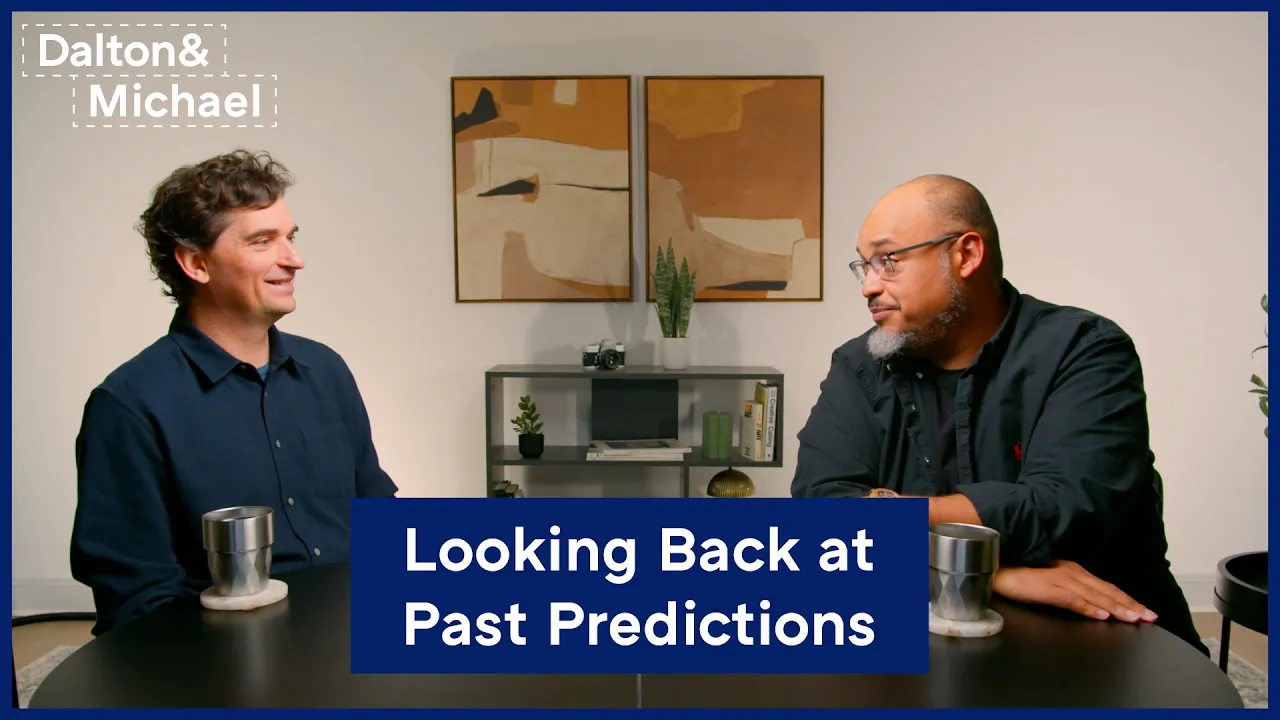
Dalton + Michael · @daltonplusmichael
This video has no Most replayed graph yet: YouTube shows one only once a video has enough views. These are the moments viewers replayed most in Dalton + Michael's most watched videos.
Most replayed moment at 9:40
2.3x that video's typical replay level
a company is winning, you might not understand the value they create for their customers, but don't dismiss it to zero. >> Well, that's the classic thing of um dismissing a product because the design is bad. >> Yeah, man. This HRS looks like crap.
Said at 9:33
Most replayed moment at 9:46
2.1x that video's typical replay level
of founders is, "What do you think is the failure rate for a series B company?" Because like I think in their minds before I ask the question, they think every series B company wins. And then after I ask it, they're like, "I guess mathematically that wouldn't work."
Said at 9:40
Most replayed moment at 14:24
2.8x that video's typical replay level
it is hard to feel like you're working on something where a lot of people think it's a bad idea. That's hard. And I like talking about this because you should brace yourself for that. Like, that is 100% the experience of
Said at 14:17
The graph counts replays. It does not show where viewers stopped watching.
Words
3,947
Runtime
20:52
Speaking pace
189wpm
Reading time
16min
189 words per minute, between the 181 median and the 201 75th percentile of 349 measured videos. That distribution comes from the 349-video hook study.
Opening (first 30 seconds)
Companies like Google could become completely irrelevant. >> Yeah. >> Or they could just become juggernauts even more. >> Yeah. >> They're not like institutions that are going to last no matter what happens. That's what I'm trying to say. I think they seem like infallible. They felt like >> I don't know. >> They have to keep winning. >> Yes. [laughter] >> Yes. >> This is Dolphin Plus Michael. Today we're going to talk about predictions that turned out way better than we ever could have imagined. specifically ones that maybe in hindsight look
95 words, the words spoken in the first 30 seconds at 189 words per minute.
Free, no signup. See how the first 30 seconds hold attention, with rewrites.
Sentence shape
| Measure | This transcript |
|---|---|
| Sentences | 328 |
| Average words per sentence | 12.0 |
| Longest sentence | 117 words |
| Questions asked | 32 |
| Sentences containing a number | 15 |
Most used terms
Filler phrases
202 in total: like 138 · kind of 23 · um 12 · right? 9 · you know 9 · basically 3 · uh 3 · actually 2 · I mean 1 · literally 1 · sort of 1.
A literal whole-word count of the same phrase list the Prepublish browser extension uses, so a phrase inside another word is not counted and a phrase used in its ordinary sense still is. It is a count and not a judgement.
Run the check on the words above: where attention is likely to drop, with a rewrite for each weak line. The free check shows the scores and the one issue costing the most.
What this transcript is
Every word below is the caption track YouTube publishes for this video, pulled from the video itself and reproduced unchanged. It is not Prepublish's writing, not a summary, and not a re-transcription: it is the video's own published captions. English captions, generated automatically by YouTube, in the video’s original language. Source: the video on YouTube. A channel that would rather this page did not exist can ask for its removal through the contact page, and it is removed.
Companies like Google could become completely irrelevant. >> Yeah. >> Or they could just become juggernauts even more. >> Yeah. >> They're not like institutions that are going to last no matter what happens. That's what I'm trying to say. I think they seem like infallible. They felt like >> I don't know. >> They have to keep winning. >> Yes. [laughter] >> Yes. >> This is Dolphin Plus Michael. Today we're going to talk about predictions that turned out way better than we ever could have imagined. specifically ones that maybe in hindsight look a little bit more obvious, but at the time one or both of us didn't quite rock.
I remember one of YC's LPs um very large LPs said to me, historically the venture market something like 97% of returns are generated in the US market. And I remember thinking to myself like I always do like that doesn't really align with my current thesis so I don't believe it. [laughter] Discard opinion discarded. [laughter] You know it's a superpower for a sort of founder. [laughter] >> I'm embarrassed I didn't realize how good the US was. was so privileged to live in a market that is kind of just really big. >> Yep. >> That I could just blind myself my own privilege and be like, "No, it's just as easy to build a billion dollar company somewhere else." And it's like, is it?
No, it's not. Not that you can't do it. It's just not just as easy. >> It's definitely not. >> It's not just as easy. What were your thoughts, by the way, back then? is like we invested in a lot of international companies. >> Yeah, we did as a domestic um I think >> some of them are doing really well. Some of them are like we we just had a bunch of Indian companies um doing phenomenally well like growth just went public which was a really big deal in India so that's um counterex example but yeah I think you're right I think I just didn't know I think that a lot of folks that are investors are basically specialized finance people and I don't mean that in a negative way >> but it's I I just am stating the truth which is if you you're like a stock trader or like a private equity person I think you're more attuned to this.
Yes. We were just startup founders. There was never a time at our startups that we had to worry about capital markets in India and our US based startups like [laughter] this was just >> we were just trying to fund smart people. >> But weirdly I think that's why we got to fund grow and razor pay and nisho like all of these decacorns in India. >> Yes. >> I think it's because we weren't >> sophisticated enough to know that we're not supposed to fund that stuff.
[laughter] >> Like we didn't get the memo >> not to fund these companies. >> Yes. And so there's something beautiful about being naive. >> Yes. >> Well, and I'm so happy we did it, right? But this was researchable. We didn't have Chad Jub. [laughter] >> All right. Well, that's my first one. H how about you? What's one that sticks through your head? >> One thing I remember is right when I was starting at YC, like very, very, very beginning. >> Yes. >> I remember um this is when PG was still in charge of everything.
Mhm. >> I remember sitting down with Sam, who I knew. >> Mhm. >> And Sam was like, "Oh, I'm leaving." And I'm going to go work on nuclear power. I'm going to do a nuclear power startup. I've met all the small smartest reach researchers in the world working on nuclear. >> Yes. >> And I remember being like, "Oh, why?" [laughter] >> And again, I don't mean that in a negative way, like as if I knew a lot about it. I'm just like, >> "That's random." Like, didn't you have the like social network for boost mobile phones?
And this was during the like gig economy. >> This is like 2013. So in 2013 and he was just like electricity and power is everything. Yeah. >> And that it's a total l that nuclear got basically banned by governments >> and that the key to the future is to have unlimited electricity. >> Yeah. >> And I remember again not in a negative way just being like >> oh [laughter] like like I think I just filed it away. >> Yeah. >> And neither was pro or anti I was very neutral about this statement.
And then a few months later he came back to YC. Yep. >> And then he funded some nuclear companies. Yep. >> Which was pretty smart. And like now they're huge companies. Yeah. And I think he was right. Well, and even despite like regardless of the companies he funded, >> the narrative today is >> electricity is really important. >> Yeah. Is the limiting factor for AI, which we'll see >> for like intelligence. >> Yeah. Exactly.
Yeah. Yeah. It's as it turns out, I think Sam was kind of thinking about exactly the correct most important thing. >> Yeah. Just from a zoomed out perspective. No, I think that's a that's a really good one. Another one that you bring up that kind of resonates with me is this one around like smart people win. And I spent a lot of time thinking about this. I think that we don't talk about this enough, but a lot of the people we interact with were not cool in high school.
I [laughter] find that hard to believe. >> You're kidding me. Wait, really? [laughter] >> A lot of compensation for that. The prom king, prom queen. [laughter] >> I dare say some of them weren't even cool in college. >> Shocking. [laughter] Shocking. >> And I think that like a lot of people were smart and they worked really hard and they tried to get good grades and da da da da when for a long time it wasn't clear the payoff was right in front of them.
But then like you come to the Bay Area and it does feel like this weird community of smart people winning. It has all these awkward side effects like probably the general quality of sports is less good here or there other interesting side effects but like you do feel something different about this place. So flesh this out a little bit more like what was the kind of non-obvious thing here? >> I feel like what I was taught was you know a there's no such thing as intelligence.
Um, [laughter] >> okay. >> You know, like, hey, let's just let's it doesn't exist. Okay. >> And then number two, you know, smart people, whatever, but they're just nerds. And ultimately, >> yeah, >> everyone is special in their own way. >> And, you know, there's a lot of factors that go into having an interesting life. >> Sure. >> And intelligence >> is maybe in there somewhere, but it doesn't really matter. >> Yeah. >> And I don't think that's true, Michael.
I guess my point is and and this isn't even something that's restricted to just uh tech. >> Think about people that go into law or people go into medicine or people that go into finance. Like >> kind of seems like the most ambitious and smartest people to do the coolest stuff. I would extend that further to say I think when you look at the people who are actually winning in the macro, you might be surprised at how uncool they were for how long.
And it's like the people who you think are cool now were not cool in high school. [laughter] >> Yeah. And so, um, it's so interesting how something changes where like the population of cool people completely swaps and like smarter people seem to have much more of an advantage later. Anything they do, even if it's strange. >> Yes. >> Like even if it's >> Yes. >> Well, and I would even say strangely cuz like I'm a huge basketball fan.
People talk about this in basketball a lot where like the best players have high IQ and you start looking at interviews like there was this great LeBron James interviewer who was like, "Hey, we're going to run this play. It looked like the team was prepared for it, so let's just flip it and run on the different side of the court." And he was like some my team members just couldn't draw that in their head and do and it's like even as investors sometimes yes I don't think I appreciated like I think I thought who raised the most money >> mattered more or like >> I I don't know I thought a lot of factors matter but it does kind of just seem like >> the most aggressive ambitious just smartest people that can see things other people can't see tend to do better. >> They tend to do better.
They have an advantage. >> Yeah. Yeah. Well, and they have an advantage that might overcome things like did you grow up in a rich family? Like other kind of weird starting conditions. Um especially out here, like especially out here. One that I I'm still having trouble grasping. So when I came out to the valley, we there were some companies that were kind of obviously losing out here, right? Uh Yahoo would be a good consumer example.
Maybe HP would be a good enterprise example. At the time, it was kind of obvious to me. What's happened over the last 15 years is it's very hard for me to really identify the companies that kind of look strong today but are slowly rotting. But I know they exist, right? Because like those companies, HP, Yahoo, we can name others, looked incredibly strong, were incredibly strong, but kind of rotted from within. And we have all these startups that are so intimidated about these big companies, but sometimes I think to myself like which one of them is like a founder taught me this phrase like a watermelon like green on the outside, red on the inside.
Like you know like so how do you think about this concept of like companies right now that look strong, great valuations, public doing great, but like we're going to tell ourselves a story 10 years from now. They just that this was the time that they >> I think the lesson is just it's a topsyturvy world. >> Yeah. And until you've seen it happen a bunch of times, the things that seem unassalably number one can just go away and be gone in 10 years.
All of internet 1.0, so much of that stuff just evaporated. >> Yeah. >> And so companies like Google could become completely irrelevant. >> Yeah. >> Or they could just become juggernauts even more. >> Yeah. >> They're not like institutions that are going to last no matter what happens. That's what I'm trying to say. I think they seem like infallible. They felt less I don't know. They have to keep winning. >> Yes. [laughter] >> Yes.
Well, and there's some Intel versus Nvidia. Intel >> was like >> an institution. >> Yeah. Until it wasn't. >> Yeah. And I think that maybe this is different in other industries or other parts of of America. When I started thinking this way, Microsoft became so much more of an impressive company because I mean during this time when HP and Yahoo were kind of declining, if you had told me, hey, Microsoft is going to be declining too, I would have believed you. >> Y >> they did really good with cloud stuff. >> Really good. >> Well, and also they became like remember when VS Code came out?
Remember when they bought like um >> GitHub? You're just like >> what? I'm so used to big companies making the wrong decisions and then like just you string a couple wins together and it's like oh god at Microsoft scale. So no, I think this is kind of like a a an interesting one. I think if I was a smartup founder, I'd be trying to figure out are the incumbents in my space rotting from the inside? Like are they way more vulnerable than they look?
Another one I think that's kind of fun. You touched on this. Let's talk about hype cycles. Yeah, >> cuz we've gone through so many hype cycles. What's not obvious about hype cycles? What are some hype cycles that worked and that didn't? What do you what do you see? >> Yeah, I I think you know I remember being a teenager and being on stock trading message boards during the com boom and do you remember the company that made zip drives and jazz drives?
People way before these people were born. I >> Omega. >> Yeah, that was a good one. It was like one of the hottest stocks of all time. And they made like basically floppy disc drives, but >> they don't know what that is either. >> Yeah, you could just ask chat too. >> Yeah, like a guy like uh like a USB keys, a bit better. >> Yeah, sure. >> But not no USB keys are better, but like a version of that. Yeah, imagine Dropbox if it worked offline.
[laughter] >> Um anyway, it was one of like the hottest stocks. So, I remember reading about it and of course that went to zero. That was not a good stock. So look, I've seen so many cycles you can start to recognize >> that this is just part of reality is that there are hype cycles and you go through these different emotions about this which is to be angry about it or resentful or judgmental. Yeah. >> No, it's just like it is.
It's like being mad about the weather. Like oh >> I'm mad at the weather. It just happens. >> And you want to identify the the things on the way up and the things on the way down. And um I think when you acknowledge this stuff, you just have be a lot more zen about the world. >> It does seem like people get angry. Hype cycles are very predictable. Like you can't tell which one is necessarily, but you know that there's always a hype cycle or two going on, but people get very angry about it, which I agree.
Like if it's always going to happen, it's kind of >> Yeah. It's just kind of part of the the environment that we're in. And there's often nice side effects of it and there's not nice side effects of them. And so I think it's just like a neutral phenomenon. And so I would advocate neutrality. >> Yeah. Yeah. Yeah. Yes. Versus anger. Yeah. I think the the last one >> for me and I think you brought up Sam before. I've got a good Sam one.
I think I used to think a little too mechanically about what it takes to build a company. You need a big market. You need a good product. You need to price it correctly. any people who are great founders. And I think that like Sam, one of the things that he said that kind of stuck is that like you have to have kind of an ambition or a mission or a goal that people can rally around that fundamentally like a great company has to attract a lot of great talent and all kinds of talent, right?
Whether it's investing talent or technical talent or um talent former customers going to pick you. And like if what you're doing isn't interesting, if it isn't something that people can get excited about, it's hard to rally that talent, it's hard to rally those humans. And and and it was like so funny because in my mind before that, I was just kind of like, well, obviously, you know, 2 plus 2 equals four. If this company has a good product, we're going to work at it.
And then you start realizing like really talented people have a choice. Yep. >> Of where they put their time. And like are you telling them we're going to do something super exciting that might change the world or are you not? >> Are you going to do ad targeting stuff? And the the counterintuitive thing that Sam really got embedded in my brain is like sometimes all it takes for us to do things that look impossible is for there to be attractive enough to attract the smartest people. >> Yes. >> Like the smartest people can make the impossible happen.
And if you can't attract the smartest people, you can't even make the possible happen. [laughter] >> Well, it's like the Apollo moon landing. And you think about it, that was a miracle. >> Yeah. [laughter] >> But those people were pretty pumped to be putting a man on the moon. Yes. >> Like that was like a cool project. >> Yes. >> That people worked really hard. >> A cool. That was the coolest [laughter] coolest thing to work on. >> Literally. >> And it was like really hard.
And what's funny is like obviously he was telling us this stuff and he went and lived that advice. >> He did. He did with open AI, right? Like let's create intelligence. In hindsight it just kind of sounds a little hokey, but it's like oh you should have a mission, right? Like that kind of >> Yeah. Lame. >> It's it's not that. I think it's just like sometimes we have to remind founders to just set their ambitions higher.
Like something that gets you more excited is going to get other people more excited. Like how can you be excited about this for 10 years? versus how can you be excited about this in the amount of time it takes you to raise your next round. And sometimes I think that we feel like founders are being too safe. Whereas I think in the past I might have given people too safe advice. >> Yeah. >> I might have given people advice.
I'm like this is the safest way to get to the series A. It's like is that is that the end that we're going for here? Like [laughter] >> all right. So another one and I think that you and I have experienced this so often. We'll have a company come in and they'll be like, "Well, if a startup, I'm sorry, if a software company buys our product, it allows them to not hire five incremental engineers. Those engineers costs a million dollars a year.
So like that means that like we can charge $100,000. The company saves 900,000. This is incredible. The company should make this trade every day of the week. And so therefore, I guess theoretically, a sizable software company should have 200,000 different software vendors who each save them a million dollars a year. [laughter] It's just that easy. It's just that easy. >> And we're just one of them. >> Yeah. [laughter] I think I did not quite understand. >> Yeah.
It's one of those things where in a vacuum that is a reasonable first principles argument, [laughter] but in no way does that resemble actual buying behavior. It's like it's defeated by all the facts. [laughter] >> Yeah. Like reality calls they say no. I'm not even saying I would have intuited that myself, right? I'm not being like, haha, how dare they think that. I I >> We fun. Yes. Yes. >> But for whatever reason, customers like things that increase their revenue. >> Yes. >> And cause them to grow faster and are willing to spend money on stuff that causes them to grow faster >> and and for whatever reason are not that interested in cost cutting type software, especially hard to measure cost cutting type software.
I didn't understand this until I was on a public company board and then it became so clear I just like I kind of one day I was just like oh no I didn't understand a fundamental truth about business as a as a startup investor fundamentally the market is going to reward revenue generation over cost cutting. >> Yep. Because the market is always betting on how much bigger you can get over time and what's the potential for you to be a company that's 10x bigger and it's very hard to cost cut yourself into being 10x bigger.
The even more counterintuitive thing the market will value your attempts to become 10x bigger >> just trying you will get [laughter] >> a boost in your stock price versus not trying. So a lot of spending is rewarded because like the market wants you to be 10x bigger, right? >> Fundamentally once you appreciate this, it's actually an eyeopening opportunity because whereas there are probably a thousand ways to help a company save a million dollars when they're sufficiently big, there aren't that many ways to help them make a lot more revenue. >> Yep.
And so you can kind of like massively cut down the idea space or if you want to save them a lot of money, you have to realize how much money would you have to save them >> to be in a top five conversation when we're trying to be measurable and immediately provide value, not just vibes based saving money. >> Has to be like right tangible. >> And one could argue maybe AWS made that argument, right? like oh like we can save you so much more money than if you're running your own data >> AWS was more expensive >> but it was less logistically complex and often customers will choose to pay more >> yes >> to reduce problems and so to not have to deal with servers and hard drive failures and all that crap >> amortization >> all that junk so they paid more for AWS >> but man it it just obiated the need for all this other complexity >> well and it's interesting that you say they paid more but I'd argue if you're setting up a data center, you have to think about the flow of money. >> Yeah. >> Right.
Like way less upfront investment to get the benefit on AWS. >> That's a great you have like way more opportunity to offset those additional money with with profits. And it doesn't mean like every company to be a good speed company have to figure out how to make someone more money. It's just surprising how much easier it is and surprising how often in large companies people are not asking how do we save five engineers?
[laughter] Like how just often that's not the conversation and and there's really no world where those five engineers would then be fired. >> No, they >> they just be put into something else. >> Exactly. So just a different set. Long story short, I know we make these videos. There are a lot of things that we didn't know [laughter] that other people knew. That's the way it goes. Great chat. Thanks, man.
The words are the caption track's own and nothing is reworded or re-transcribed. Paragraph breaks are placed between sentences so the text reads as prose.
Free tools for your own script: paste a draft and see where it stands before you record it.
Paste your draft and see where viewers are likely to drop off, with a rewrite for each weak line.
Paste the first 30 seconds of your own draft for a hook score and rewrites.
Check your draft against YouTube's advertiser-friendly guidelines before you record it.
Read this channel's public videos and transcripts, and download a writing brief for it.