Getting the transcript
Reading the captions from YouTube. A video nobody has opened here before takes 10 to 30 seconds; this page fills in on its own.
Getting the transcript
Reading the captions from YouTube. A video nobody has opened here before takes 10 to 30 seconds; this page fills in on its own.
History Helms · @HistoryHelms
This video has no Most replayed graph yet: YouTube shows one only once a video has enough views. These are the moments viewers replayed most in History Helms's most watched videos.
Most replayed moment at 3:13
2.9x that video's typical replay level
there were more rejected changes than accepted ones. I'll show you a few. I think you'll really like this. He wanted to change tongue to tong. Believe to believe. Machine to machine. Soup to soup.
Said at 3:07
Most replayed moment at 5:27
7.1x that video's typical replay level
forcing schools to spend thousands redesigning everything, a brilliant legal loophole emerged. Many major universities entered into gentlemen's agreements, perhaps gentlemen's loopholes, right, with [music] high schools. For example, some colleges allow high schools to use their trademarked logo
Said at 5:20
Most replayed moment at 6:48
9.6x that video's typical replay level
not some monolith. See, the Seminole Tribe of Florida is different from the Seminole Nation of Oklahoma. And if you've seen some of my previous videos on Native Peoples, you know this [music] has not been the only intertribal conflict. Far from it, actually. Now, because of the Indian Removal Act
Said at 6:40
The graph counts replays. It does not show where viewers stopped watching.
Words
1,856
Runtime
10:17
Speaking pace
180wpm
Reading time
8min
180 words per minute, just under the 181 median of 349 measured videos. That distribution comes from the 349-video hook study.
Opening (first 30 seconds)
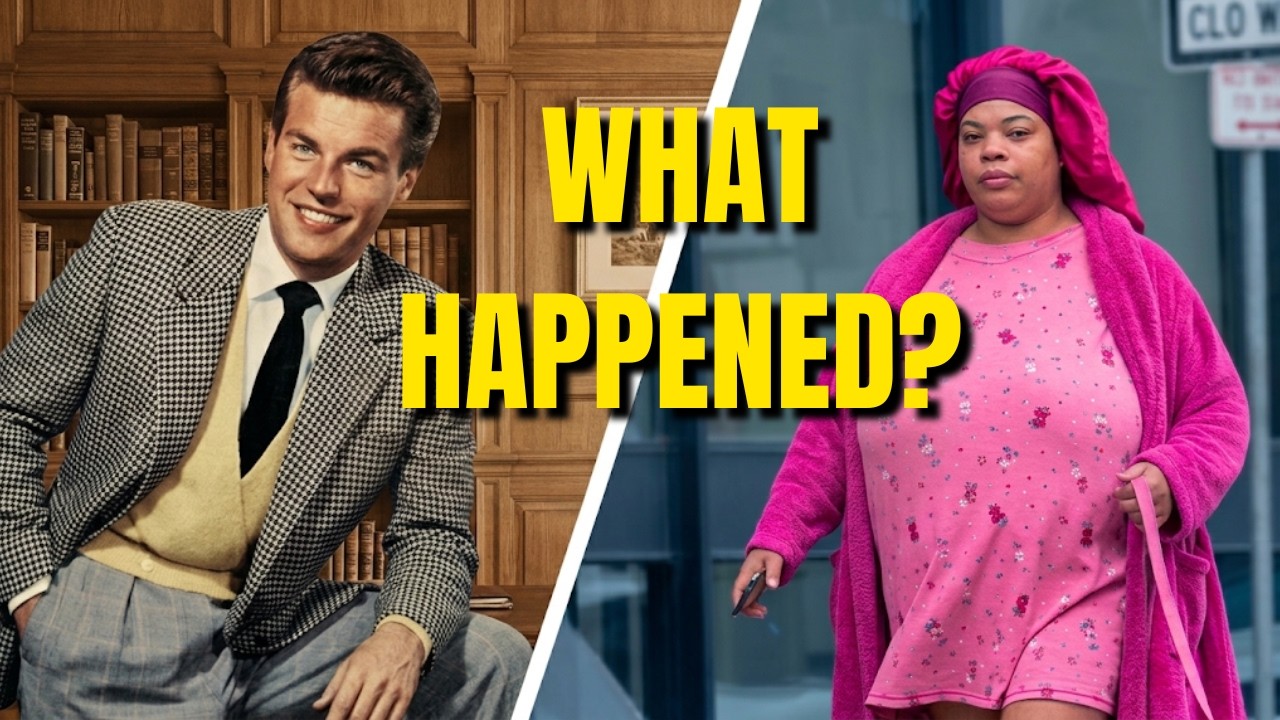
In the blink of an eye, American public dress standards have gone from this to this. What happened? To be direct, people got lazy, yes, but that's only one part of it. Our dress standards were killed on purpose through corporate manipulation, cheap manufacturing, and social decay. Here's what happened. Before the 20th century, custom-fitted suits and structured dresses were about looking sharp and presentable, yeah, but we also need to remember that nice clothing was also a type of social armor that we have removed in modern times. [music]
90 words, the words spoken in the first 30 seconds at 180 words per minute.
Free, no signup. See how the first 30 seconds hold attention, with rewrites.
Sentence shape
| Measure | This transcript |
|---|---|
| Sentences | 112 |
| Average words per sentence | 16.6 |
| Longest sentence | 52 words |
| Questions asked | 18 |
| Sentences containing a number | 13 |
Most used terms
Filler phrases
33 in total: like 18 · right? 5 · actually 3 · you know 3 · basically 2 · kind of 2.
A literal whole-word count of the same phrase list the Prepublish browser extension uses, so a phrase inside another word is not counted and a phrase used in its ordinary sense still is. It is a count and not a judgement.
Free, no account. See where attention is likely to drop, with a rewrite for each weak line. The free check shows the scores and the one issue costing the most. Or run it on the words above first.
Free · No login · See a sample audit first if you prefer.
What this transcript is
Every word below is the caption track YouTube publishes for this video, pulled from the video itself and reproduced unchanged. It is not Prepublish's writing, not a summary, and not a re-transcription: it is the video's own published captions. English captions, generated automatically by YouTube, in the video’s original language. Source: the video on YouTube. A channel that would rather this page did not exist can ask for its removal through the contact page, and it is removed.
In the blink of an eye, American public dress standards have gone from this to this. What happened? To be direct, people got lazy, yes, but that's only one part of it. Our dress standards were killed on purpose through corporate manipulation, cheap manufacturing, and social decay. Here's what happened. Before the 20th century, custom-fitted suits and structured dresses were about looking sharp and presentable, yeah, but we also need to remember that nice clothing was also a type of social armor that we have removed in modern times.
[music] Nothing in history happens overnight, and this is no different. Over about 100 years, mass production, suburbanization, and counterculture have chipped away at the dressing standard. We need to look quickly at how it started before we can explain why pajamas are now outside clothes for some reason. I bet your history class went from the Civil War to World War I and skipped the late 1800s and early 1900s, but that's why you have me.
This time range explains a ton about modern America. Here we see rapid industrialization, capitalism with practically no regulation, and mass immigration to places like Ellis Island. And connect these [music] three things. So, with big industry, millions of non-English speakers desperate for work, and basically no regulations on worker safety or monopolies, you see the rise of cheap factory labor making goods like clothing for retail giants like Sears, Roebuck and Company, and R.H.
Macy and Company. Now, Sears and Macy's, both of which I hated going to when I was a young history Helms, but this is major. Now, instead of making or buying your clothes from the local tailor, you can now just get them pre-made at stores, and even order clothes to your house with mail-order catalogs. It sounds funny, but it was huge at the time. Very modern behavior over 100 years ago. Fast forward just after World War II, and over 15 million American men returned from years of war wearing comfortable, functional field jackets and free-fitting khakis.
They have cars, new highways, and a GI Bill that makes a house in the suburbs realistic. A tailored wool suit and stiff leather shoes are not ideal if you need to cut the grass or host a barbecue, unless you're strange. I know some of us >> [laughter] >> some of us are a bit strange. Then came the '60s and what started as a shift in convenience turned into an ideological war. Youth counterculture recognized that the stiff suit was the uniform of the machine.
Rejecting formal attire Excuse me. Rejecting formal attire with irregular haircuts, blue jeans, and graphic tees became a direct political statement. By the '70s and '80s, corporate America figured it couldn't fight the culture change anymore, so it monetized it instead. Athletic brands re-engineered clothing usually meant for sports and nothing else into daily street attire. Sweatshirts, basketball shoes, and running tights spread from the fields and courts directly into high school hallways and malls.
Then came the corporate Trojan horse that changed office culture forever, business casual. It wasn't just culture and national conditions that shaped attire standards, right? For example, in the late '80s and early '90s, apparel brands like Dockers started sending out aggressive marketing kits straight to corporate HR departments featuring guides explaining how to implement casual Fridays. The sales pitch was actually kind of smart, albeit, you know, a little evil.
Offer employees a casual dress day to boost morale and not boost salaries. HR departments bit hard and within a decade, casual Friday inevitably expanded to casual Thursdays and casual everyday. >> [laughter] >> At the same time, Silicon Valley emerged as the global epicenter of wealth, futuristic power, right? And through that cultural influence, of course, casual attire signaled that they valued raw intellect and efficiency over superficial corporate tradition.
Seeing Steve Apple and Mark Facebook in gray hoodies and simple jeans quietly promulgates that you can successful without a suit and tie And and serving as someone else's subordinate for most of your life. The modern era simply delivered the final blow to an already crumbling foundation. Fast fashion retailer supply chains made high turnover casual clothing basically free while the explosion of remote work completely dismantled the last remaining boundary between public appearance and private comfort.
By the way, if you learned anything at all so far, drop me a like and hype the video. It really does help. Thank you. By the 2010s, modern textile technology blessed us with synthetic elastane. From this point forward, we have been cooked for a lack of better term. >> [music] >> Where the 70s and 80s gave us activewear anywhere, brands nowadays like Lululemon have rebranded leggings and sweatpants into athleisure. There's something of a sneaky economic trap here as well.
In the early 1900s, the average American spent about 14% of their annual income on clothes, but only owned a handful of high-quality garments meant to be repaired when torn or otherwise damaged. Today, the average American spends around 4% of their yearly income on clothes, but have nearly five times as many items. Why is that? Well, it's simple and you probably expect this. The shift from natural fibers like linen and wool to petroleum-based synthetic materials like polyester absolutely annihilated garment lifespan.
And let's be real, how many of us know how to sew or repair anything that we own for that matter? Most of our clothes now just aren't built to last. It used to be the case that the clothes we as a society spent a healthy amount for were worth it. Not just because they looked nice, but because they were good by the natural standard applied to clothing. That being looking nice, sure, but more so the good faith craftsmanship and longevity.
In a similar way to how the baseline natural value of a car would be car exclusive traits like great gas mileage or maneuverability. And you can still buy fine clothing made from high-quality material now, but modern America has effectively replaced the market for fine material with status commodities. In this case, articles of clothing valuable simply because we say they are valuable. The well-made clothing up to the standard of the past is, for people like you and me, an inaccessible luxury and rather impractical for day-to-day living.
However, poorly made cheap clothing with superficial value attached to it is affordable, further justifying dressing ultra-casual or even down to the lowest standard. Now, for the first time in recent memory, public clothing is engineered entirely around how it feels for you, not how it looks for anyone else or any social standard. Here's something we won't talk about much that I think would do us some good. Dressing well used to be that social armor that I mentioned earlier.
At one point, both the accomplished businessman and the working-class clerk dressed to an equalizing standard, granting a level of baseline dignity. Though, that's mostly gone now, as personal comfort is a huge factor for people to juggle when getting ready. It's hard to blame the person in ultra-casual attire when dressing up is expensive and impractical. This is not excusing the pajama wearers, though. I'll address that crowd in a second.
Actually, let's address that right now. Even with the United States changing in the way we dress reflecting those changes, it's not like that history then directly spawned like a stigma around looking decent in public. Like, if you go to your local Publix right now and like you see the lady in the thumbnail, for example, the fuzzy slippers, the robe, right? And you make a comment to her, "Hey, you ought to dress a little better out in public." She's not going to turn around and and tell you about, "Don't you know about progressive era industrialism?
Do you have any idea?" You know, it's It's not happening. Beyond that, [music] do we really think people just don't have enough time to put some effort into their appearance when they leave the house? >> [music] >> No, come on. So, we have to be honest with ourselves. Is dressing to the bare minimum in public lazy? Yes, 100%. We can recognize the well-documented history behind why we dress the way we do now, but we can also understand that Cookie Monster pajamas and Crocs at the DMV is indeed bummy.
Some of us are going to hear History Ham say all that and not be too happy about it. But let me know in the comments. Are pajamas out in public something that we should just tolerate and mind our business about? Or are we right to see that and have some opinions about it? I know I certainly do. And now, this isn't a death sentence. Don't misunderstand me here. I've definitely been caught in basketball shorts in a place where basketball shorts should not have been worn, right?
I don't see a fellow in sweatpants and a T-shirt or a lady in leggings at Target and just start fuming. Nor do I think you should, either. But this understanding of how you feel first in your clothes in public has been internalized by practically all of us. And more dangerously, I would say, this idea has been taken and stretched to the max, explaining how we get this. And if there was ever any social pressure left to always look somewhat presentable in public, the pandemic absolutely killed it.
All of a sudden, it's really simple to see why we stopped dressing nice. We watched piece by piece as conditions directly translate to culture, from factory-made attire to suburban convenience to Cold War counterculture to corporate America finding opportunities to make casual or athleisure acceptable to ultimately the pandemic forcing millions into working from home, effectively blurring the line between home clothes and public clothes.
Sweatpants became business attire from the waist down, and pajamas discreetly stepped outside the front door. I'm going to say, man, I do not like this at all. Conditions changing in this century-long chain reaction is significant, yes. But that does not mean we are required or permitted to strip ourselves of standards or a sense of pride in how we present ourselves and look as a collective. It's all subjective, of course, but it's pretty awful, dare I say, a symptom of social decay that anyone finds it acceptable to go out anywhere in fleece pajama pants, slippers, and robes even.
Like, do do you do you at least want to look good in public? Do you do you want to look okay? Maybe this makes me unk as the young people say, but you actually shouldn't be allowed to do whatever you want all the time. Put some clothes on, man. Some things in American culture, like our current pajama issue, you kind of just see, notice, [music] right? But you don't really think about them too much. For example, why are HBCU bands like that?
And have you noticed you've been seeing the exact same commercials on loop?
The words are the caption track's own and nothing is reworded or re-transcribed. Paragraph breaks are placed between sentences so the text reads as prose.
Free tools for your own script: paste a draft and see where it stands before you record it.
Paste your draft and see where viewers are likely to drop off, with a rewrite for each weak line.
Paste the first 30 seconds of your own draft for a hook score and rewrites.
Check your draft against YouTube's advertiser-friendly guidelines before you record it.
Read this channel's public videos and transcripts, and download a writing brief for it.